
Garden Valley vs. Lowman vs. Idaho City: Three Different Idaho Markets

Updated: Aug 27
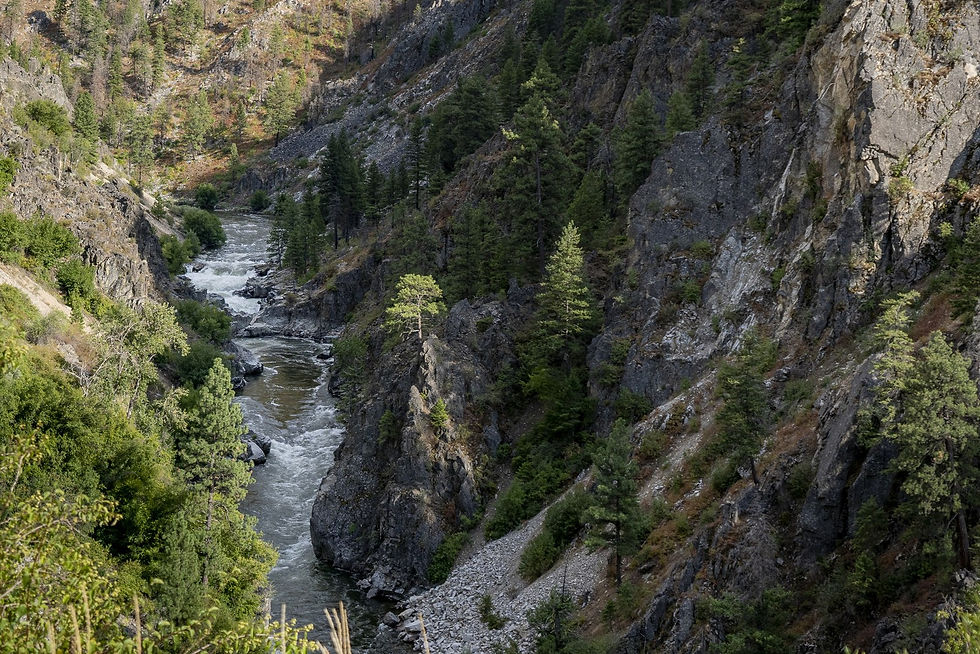
Highway 21 strings Garden Valley, Lowman, and Idaho City together along one scenic corridor northeast of Boise, and a guest scrolling through search results can easily land on any of the three without registering which one they actually booked. That's a problem for the guest, and it's a bigger problem for the host who lets a listing's language drift between all three identities at once, hoping a little bit of everything covers a little bit of demand.
It doesn't. Garden Valley, Lowman, and Idaho City are three separate small markets with three separate revenue pictures, three separate seasonal calendars, and three separate reasons a guest actually books there. A listing that borrows Garden Valley's hot-springs pitch, Lowman's quiet-river framing, and Idaho City's historic-county-seat angle all in the same paragraph isn't casting a wider net - it's promising a stay none of the three towns can actually deliver.
This page keeps the three identities, and the three sets of numbers behind them, on separate labeled lines. This is not legal advice.
Three Idaho Identities, Not One Mountain Corridor
A shared highway and a shared general region don't make Garden Valley, Lowman, and Idaho City interchangeable. Each town has its own specific draw: Garden Valley's hot springs and whitewater access, Lowman's smaller, quieter river-corridor presence, and Idaho City's identity as a small, historic former county seat with its own slower rhythm. A listing that tries to be all three at once ends up being a clear match for none of them.
The guest who typed "Garden Valley" into a search bar wants that overnight - the soak, the rafting put-in, the specific version of the mountains this town actually offers. They didn't type "somewhere along Highway 21," and a listing that answers the broader question instead of the specific one is setting up a guest to feel like they booked the wrong town even when the driveway is technically correct.
Garden Valley Sells Soak and Whitewater
Garden Valley's AirROI extract, vintage August 2025 through July 2026, shows a typical annual gross of $27,102, an average daily rate of $286, and occupancy of 32.6 percent. The market's three strongest months are August, June, and July - the core summer whitewater and hot-springs season - with February as the clear seasonal hole. Year over year, the tracked figure is down 13.1 percent, a decline worth flagging honestly to any buyer rather than smoothing over.
Garden Valley's specific draw is soak-and-whitewater: hot springs access and the South Fork Payette's rafting season. A listing here should lead with those two specific, bookable experiences rather than a generic "mountain getaway" framing that could describe dozens of other Idaho towns equally well.
Lowman Sells Twenty Listings and Its Own Calendar
Lowman's AirROI extract - tracked on a different vintage window, June 2025 through May 2026 - shows a typical annual gross of $13,657 across twenty tracked listings, an average daily rate of $221, and occupancy of 29.2 percent. Both the smaller listing count and the different vintage window are worth noting explicitly: any month-over-month or town-to-town comparison drawn between Lowman and Garden Valley should account for the fact that the two extracts don't cover the identical twelve-month period.
Lowman is a genuinely smaller market by tracked listing count than Garden Valley - twenty listings against a larger pool - which means any single new listing entering the Lowman market represents a meaningfully larger share of total local listing stock than the same listing would in a bigger market. That's relevant both to a buyer weighing competitive pressure and to a host thinking about how much local differentiation actually matters here.
Idaho City Sells a Small, Historic County Seat
Idaho City's identity in this corridor is distinct from both of its neighbors: a small, historic former county seat with its own downtown character, rather than a whitewater-and-hot-springs draw like Garden Valley or a quieter river-corridor presence like Lowman. A guest booking Idaho City specifically is often booking that historic small-town character - not a rafting put-in and not a soak.
A neighboring cluster along this same general corridor prints a typical annual gross of $16,176 in the same research pull - a real, distinct figure for that specific cluster, not a discounted or conservative version of Garden Valley's $27,102. If a Garden Valley listing's pitch would only make financial sense at something closer to that lower number, that's a sign the listing's positioning, not its price, needs the fix.
Do Not Borrow Those Clusters' Dollars
The single most damaging habit a host or buyer can fall into here is borrowing a favorable number from the wrong market to make a listing or an offer look better. Garden Valley's $27,102 shouldn't get quietly applied to a Lowman property, and Lowman's smaller-market dynamics shouldn't get applied to Garden Valley's larger, whitewater-driven pool. Each town's figure describes that town's specific market, full stop.
This matters most at the underwriting stage, where a borrowed number can make a marginal property look viable on paper in a way the actual local market won't support once the listing goes live and starts competing against the real, local comparable set - not the more favorable neighboring town's numbers.
Twenty-Seven Thousand Stays on this market, Not the Next One
Garden Valley's $27,102 figure is a real, town-specific number, and it should stay attached to Garden Valley listings specifically - not get generalized into "the Highway 21 corridor earns about this much," which would misrepresent both Lowman's smaller market and Idaho City's distinct market. A listing's revenue pitch is strongest when it's built on its own town's actual tracked performance, not a corridor-wide average that blends three genuinely different markets into one misleadingly smooth number.
The same discipline applies in reverse: a Garden Valley property shouldn't have its projected performance discounted down to Lowman's or the neighboring cluster's lower figures out of excessive caution either. Both directions of borrowing - inflating a weaker market up, or deflating a stronger one down - produce the same underlying problem: a number that doesn't actually describe the specific property being evaluated.
Gold Fork Isn't Terrace Lakes, and Guests Notice
Gold Fork Hot Springs sits near Donnelly, a genuinely different town and a genuinely different drive from Garden Valley - not a fifth identity a Garden Valley listing can borrow when the valley's own offering feels thin by comparison. Garden Valley's own soak option is Terrace Lakes, and a listing that implies Gold Fork access while actually sitting near Terrace Lakes is setting up a specific, checkable disappointment for any guest who researched the hot springs before booking.
This is a narrow but real trap: two hot-springs names that sound similar enough, in a region known for hot springs generally, that a host might reach for the more famous one without checking which soak their specific property actually sits closest to. State the actual, reachable amenity - Terrace Lakes, for a Garden Valley property - rather than the more recognizable name from a different town's map.
Guests Who Typed the Wrong Idaho
A guest who books expecting a Boise-adjacent downtown walk, or a ski-town experience, has typed the wrong version of "Idaho" into their search and landed on a Garden Valley, Lowman, or Idaho City listing that can't deliver either. Garden Valley is not Boise - if a guest wants a downtown cafe crawl, the honest answer is that Boise is the right booking, not this driveway. None of the three towns on this corridor is a ski town either, and a listing implying otherwise is setting up a specific, avoidable mismatch.
Catching this mismatch before the lockbox, not after, is the entire point of writing specific, honest listing copy. If a prospective guest's message signals they're expecting Boise's downtown or a ski resort's lift-served terrain, the right move is telling them plainly that this property offers something different - soak and whitewater, a quiet river corridor, or a small historic county seat - rather than letting the booking go through and collecting a review from a guest who got a town they didn't actually want.
How to Keep the Three Markets Apart
For any listing, pitch, or underwriting file touching this corridor, state the specific town first and attach only that town's own figures: Garden Valley's $27,102 gross, $286 ADR, and August-June-July peak season; Lowman's $13,657 gross across twenty listings with its own June 2025-May 2026 tracking window; or the neighboring cluster's $16,176, kept clearly labeled as a separate figure rather than folded into Garden Valley's number.
Name the specific, reachable amenity - Terrace Lakes for Garden Valley, not Gold Fork - and name the specific draw honestly: soak and whitewater, a quiet river presence, or small-town county-seat character. A guest who booked based on an honest, town-specific pitch is a guest who reviews the actual stay they got, rather than the mashed-together version of three towns the listing implied they'd find.
Related Reading
More Garden Valley and Lowman, Idaho reading already live on Crest & Cove.
Frequently Asked Questions
Are Garden Valley, Lowman, and Idaho City the same market?
No. They're three separate small markets along the same Highway 21 corridor, each with its own revenue figures, seasonal calendar, and guest draw. Garden Valley sells soak-and-whitewater access, Lowman is a smaller twenty-listing market with its own calendar, and Idaho City is a small historic county seat.
What are Garden Valley's actual numbers?
AirROI's vintage August 2025 through July 2026 extract shows $27,102 typical annual gross, ADR $286, and occupancy 32.6%, down 13.1% year over year. Peak months are August, June, and July, with February as the seasonal hole. Those figures describe the whole tracked sample, not any single property's guaranteed performance for the coming year.
What are Lowman's actual numbers?
Lowman's extract, tracked June 2025 through May 2026, a different window than Garden Valley's, shows $13,657 typical annual gross across twenty listings, ADR $221, and occupancy 29.2%. Both the smaller listing count and different tracking window matter for any cross-town comparison.
Why shouldn't a Garden Valley listing borrow Lowman's or a neighboring cluster's numbers?
Each town's figure describes its own specific market. A neighboring cluster prints $16,176, a real number for that cluster, not a conservative discount of Garden Valley's $27,102. Borrowing either direction produces underwriting or pricing built on a number that doesn't match the actual property.
What is Terrace Lakes, and why does it matter?
Terrace Lakes is Garden Valley's own reachable hot-springs and pool amenity. Gold Fork Hot Springs sits near Donnelly, a different town and a different drive entirely, so a Garden Valley listing shouldn't imply Gold Fork access when Terrace Lakes is the actual nearby soak.
What kind of guest mismatch happens most often on this corridor?
A guest expecting a Boise-adjacent downtown walk or a ski-town experience books one of these three towns and finds neither. None of the three is Boise, and none is a ski town, so listing copy implying otherwise sets up an avoidable mismatch that shows up in reviews.
What is Idaho City's specific identity?
A small, historic former county seat with its own downtown character, a different draw entirely from Garden Valley's whitewater-and-hot-springs pitch or Lowman's quieter river-corridor presence. Guests booking Idaho City specifically are usually drawn to that historic small-town character. A listing here should lean into that historic character rather than borrowing river-and-soak language that actually belongs to Garden Valley.
Why does Lowman's different tracking window matter?
Lowman's data covers June 2025 through May 2026, while Garden Valley's covers August 2025 through July 2026. A direct month-over-month comparison between the two towns should account for this offset rather than treating the two twelve-month windows as identical periods.
How should a buyer underwrite a property on this corridor?
Use only the specific town's own tracked figures, Garden Valley's $27,102 at a $286 ADR, Lowman's $13,657 across twenty listings, or the distinct neighboring cluster's $16,176, rather than a corridor-wide blended average that would misrepresent all three markets. Treating the corridor as one blended market is the single most common underwriting mistake buyers make along this stretch of Highway 21.
What's the single best fix for a listing that mixes all three identities?
Pick the one identity the specific property can actually deliver, soak and whitewater, a quiet river presence, or small-town county-seat character, and write the listing around that single, honest pitch rather than hedging across all three towns at once. A single clear identity converts better than a hedge that tries to appeal to every guest type at once.
Work with Crest & Cove Creative
Garden Valley, Lowman, and Idaho City sit on the same highway and share almost nothing else - three revenue pictures, three seasons, three reasons a guest actually books. A listing that mashes all three together promises a stay none of.
We help hosts along this Highway 21 corridor town down which town's identity, and which town's numbers, their specific property should actually be marketed around. Send us the address and we'll help you write the listing for the town it's actually in.
Reach out at crestcove.co or (256) 998-7502.


Comments