
Great Barrington MA Tourism Peak Occupancy Is Not the Year

Updated: Aug 27
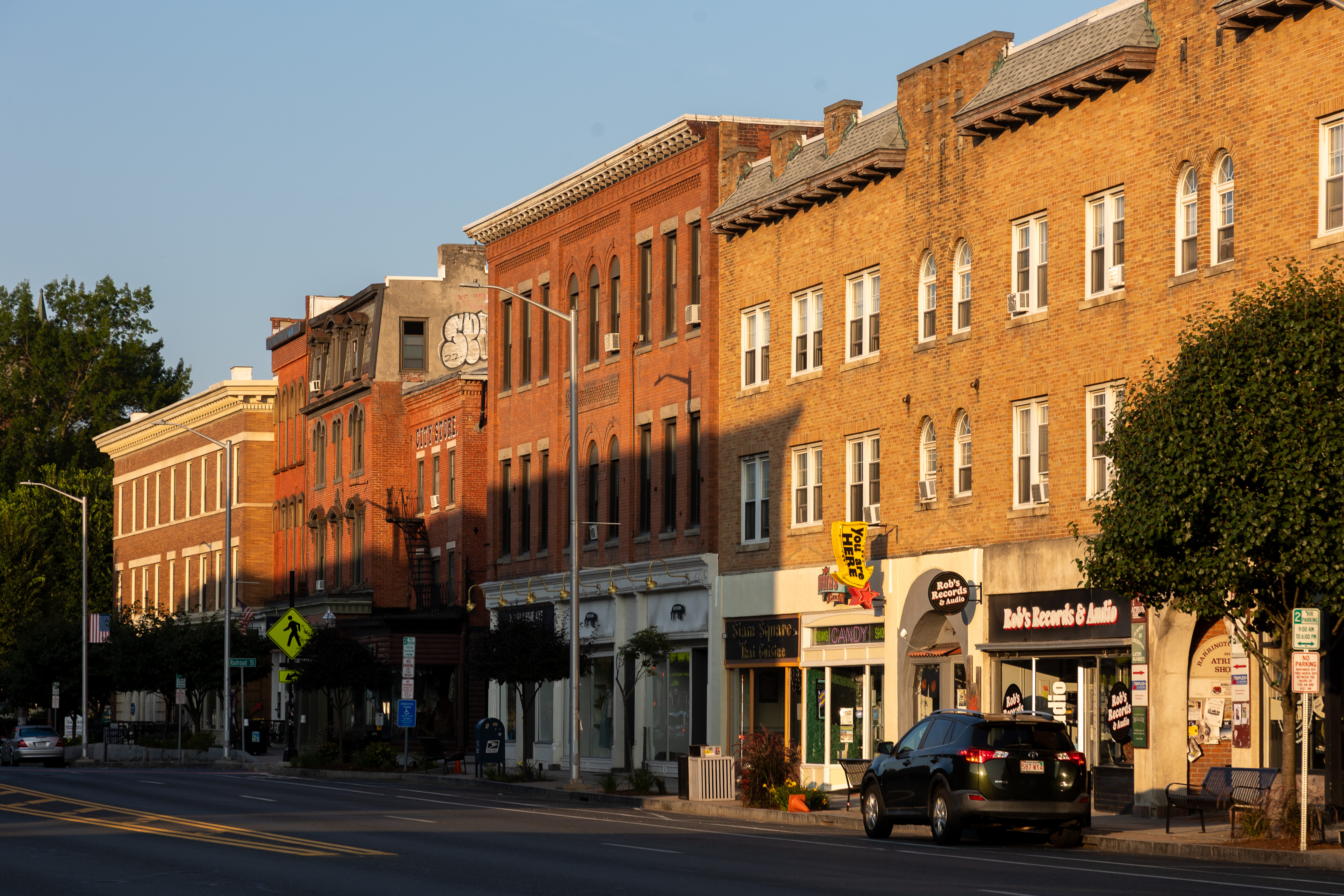
Search “Great Barrington, MA tourism spending” and you will not get a town-level dollar figure. Massachusetts publishes visitor-economy numbers at the state and at the regional tourism-council / county scale. The Massachusetts Office of Travel and Tourism’s 2024 Economic Impact Report, prepared by Dean Runyan Associates and posted on visitma.com, puts direct visitor spending at $24.2 billion statewide in calendar year 2024. The same package’s 1Berkshire regional table , Berkshire County , puts that region at $839.3 million in 2024.
For a host running one registered unit, those totals are not your occupancy forecast. They are the size of the guest economy your guests walk into: lodging, meals, retail, recreation, and gas. Use them as a demand-durability check. Then price from your own calendar and from the locked AirROI extract already on the Great Barrington, MA STR market report. Do not treat $839.3 million as “Great Barrington’s number.”.
This page walks the official 2024 statewide and 1Berkshire tables, names the older $610 million line for what it actually is, and says plainly what is not published for the Town of Great Barrington. AirROI figures below are the locked trailing twelve months already used on this cluster (Airbnb-only, August 2025-July 2026, updated 2026-08-08). No newer ADR is invented here.
The 2024 Headline: $24.2 Billion Statewide, $839.3 Million in 1Berkshire
VisitMA’s 2024 Economic Impact Report states that direct spending by domestic and international visitors totaled $24.2 billion in calendar year 2024, up 2.3 percent from $23.6 billion in 2023. The VisitMA landing page lists 155,808 jobs; the Dean Runyan PDF rounds employment to 155,810. Earnings were $6.5 billion. State and local tax revenue was $2.3 billion on the landing page and $2.32 billion in the PDF. Massachusetts hosted 50.1 million domestic visitors and 2.5 million international visitors , 52.6 million combined. State hotel room occupancy tax collections were $412 million; local collections were $365 million.
Those are state figures. They include Boston, the Cape, the islands, and every inland county. They answer whether Massachusetts still has a visitor economy. They do not belong in a Great Barrington pro forma as if Railroad Street collected $24.2 billion. The geography that touches this town is the 1Berkshire regional tourism council, which Dean Runyan maps to Berkshire County. In 2024 that region recorded $839.3 million in direct visitor spending, up 1.2 percent from $829.2 million in 2023. Direct earnings were $202.2 million, and direct employment was 6,530 jobs. Combined tax was $72.4 million ($18.0 million local, $54.3 million state). Accommodations as a commodity were $204.3 million. Hotel, motel, and short-term vacation rental travelers together spent $482.1 million , $366.2 million hotel/motel and $115.9 million STVR. Read that last split twice. STVR spending in the 1Berkshire table is $115.9 million for the whole county. It includes Pittsfield, Lenox, Stockbridge, North Adams, Sheffield, West Stockbridge, and Great Barrington.The market reportalready told you not to dress a county cell as a town rent roll. This page is that instruction with the official table attached.
What the 1Berkshire Table Is , Including the Older $610 Million Line
Dean Runyan’s 1Berkshire table is a modeled regional visitor-impact series. A visitor, in this study, is someone who travels 50 miles or more from home on a day or overnight trip, in-state or out-of-state. Direct visitor spending is spending on goods and services at the destination. Commodity categories are accommodations, food service, food stores, arts/entertainment/recreation, retail, visitor air, and local transportation and gas. The 2024 Berkshire air line is $0.0 million. That is the model, not a claim that nobody flew into Albany or Bradley and drove over.
Accommodation-type rows split travelers by where they slept. In 2024 the 1Berkshire mix was $482.1 million hotel/motel/STVR, $62.3 million campground, $112.4 million private home, $53.5 million seasonal home, and $129.1 million day travel. Day travel is almost a sixth of the regional total. Those guests do not book your night. They still fill Railroad Street and the trailhead lot. The time series is the honest county story: $674.3 million in 2019, $490.8 million in 2020, $768.2 million in 2021, $862.4 million in 2022, $829.2 million in 2023, and $839.3 million in 2024. 2022 is the peak cell. 2024 is a modest recovery from 2023, not a new high. A 1.2 percent county increase is not a reason to raise every August night 20 percent “because tourism is up.”.
What the table is not: a Town of Great Barrington visitor-spend line, a Railroad Street receipt series, or a reconciliation against AirROI’s sample. It is not Lenox’s rooms-tax story. The January 2023 1Berkshire review mentioned Lenox projecting near $4 million in revenue that fiscal year. That sentence is Lenox, and it stays in Lenox. Hosts still quote “$610 million in direct visitor spending” and “$900 million total economic impact” as if those were Great Barrington 2024 numbers. They are not.
1Berkshire’s January 23, 2023 review of the Berkshire economy, posted at 1berkshire.com and on The Berkshire Edge, said official 2022 MOTT data had not been released yet. The figures it then quoted were MOTT’s 2021 release: total Berkshire economic impact of tourism $900 million, over $610 million in direct visitor spending, and more than $52 million in state and local tax receipts, roughly 50 percent above 2020. That is a 2021 county package, not a 2022 town census and not a 2024 Dean Runyan cell.
The 2024 Dean Runyan 1Berkshire table supersedes that older pair for anyone writing in 2026. Use $839.3 million direct visitor spending (2024), $72.4 million combined tax, and 6,530 direct jobs when you need a current county frame. If you cite the $610 million / $900 million pair, date it as 2021 MOTT via the January 2023 1Berkshire review. Do not Keep “Great Barrington’s $610 million visitor economy.” That sentence is false on the public record. A later 1Berkshire look-ahead (The Berkshire Edge, January 1, 2024) said visitor spending in the Berkshires accounted for $22.1 million in local tax receipts and supported over 4,000 jobs. That framing does not match the 2024 Dean Runyan local-tax cell of $18.0 million. Different years, different methods. Quote the year and the source. Blending them together would only produce a fake Great Barrington figure, so keep them separate.
What Is Documented in Great Barrington , and What Is Not
There is no official 2024 “Town of Great Barrington visitor spend” line in the VisitMA report and none in the 1Berkshire RTC table. If a pitch deck assigns a share of the $839.3 million to Main Street, that share is an assumption, not a MOTT figure. What is documented at the place level: Monument Mountain is in Great Barrington. The Trustees of Reservations list 503 acres on Route 7, Great Barrington, MA 01230. The summit they name is Peeskawso Peak at 1,642 feet, with views across the Housatonic River Valley. The Trustees say more than 20,000 hikers ascend each year. Three trails are all under three miles , Mohican Monument (1.5), Hickey (0.83), and the Peeskawso Peak connector (0.62). Open daily, sunrise to sunset. Members park free; nonmembers pay the fee the Trustees currently list at $10. Dogs leashed, and no climbing. Winter parking is not maintained, and that is house-manual material. It is not STR revenue.
Ski Butternut (also Butternut Basin) is in Great Barrington at 380 State Road. The official site, skibutternut.com, is the operating-status source. The 2025-26 season had closed by late March 2026 on that site. Confirm the current trade name the week you publish. Downtown , Main Street and Railroad Street , is the walk guests type. There is no official Railroad Street receipt series, and tanglewood is Lenox. The Norman Rockwell Museum is Stockbridge, and mass MoCA is North Adams. Those are drive-to search terms, and their visitor counts are not Great Barrington.tourism data. the matching section above (adopted June 2022, effective January 1, 2023) still requires registration even for one night, one unit per owner, and a 150-day cap when the owner is not on premises. Theregulation postis the bylaw walk. Visitor-economy tables do not repeal it.
Hotel, STVR, Jobs, and Tax Receipts Stay at the County
Hosts reach for the STVR row because it has their product name on it. In the 2024 1Berkshire table, hotel, motel, or short-term vacation rental travelers spent $482.1 million, of which the STVR slice is $115.9 million, up 3.0 percent from $112.5 million in 2023. The 2019 STVR cell was $97.4 million. That series tells you short-term vacation rental demand exists in Berkshire County and did not collapse after 2019. It does not tell you what a three-bedroom on a Great Barrington side street booked last October. Inns, hotels, licensed bed-and-breakfasts, and platform listings in every Berkshire town sit inside the same bucket. The study does not publish a Great Barrington-only STVR cell.
Statewide, hotel/motel/STVR travelers spent $16.9 billion in 2024, up 2.7 percent. Accommodations as a commodity grew to $6.9 billion. Those lines answer “is Massachusetts overnight demand dead?” They are not a Great Barrington ADR. The market report already locked the town’s AirROI sample: advertised daily rate $399, occupancy 37.4 percent, formula month , median per month,, peak August at. Keep those cells in a different sentence from $115.9 million. One is a platform extract for listings attributed to this town. The other is a county visitor-spend model. Mixing them produces a third number that neither source published.
The jobs number that belongs in a host conversation is 1Berkshire’s 6,530 direct jobs in 2024. Accommodation and food service was 4,530 of those, and arts, entertainment, and recreation was 820. Retail (including gasoline in the note) was 1,030, and ground transportation was 160. Employment is rounded to the nearest ten. Direct earnings were $202.2 million, slightly down from $203.6 million in 2023. Those payrolls are why a guest can walk to dinner on Railroad Street and why a sold-out foliage Saturday feels tight. They are also why a quiet January week feels empty. The 2024 employment total is below 2019’s 6,890 and below 2023’s 6,680. Do not Keep “Berkshire tourism jobs are at an all-time high” from this table. They are not.
Tax is where hosts get sloppy. VisitMA’s 2024 package says visitor expenditures generated $2.3 billion in Massachusetts state and local tax, with $412 million in state hotel room occupancy tax collections and $365 million local. The 1Berkshire 2024 cells are $18.0 million local, $54.3 million state, $72.4 million total , up 0.4 percent from 2023. That is a county tax impact from visitor spending, not the rooms-tax check you remit. Your remittance is a different stack. Mass.gov’s room occupancy page states a 5.7 percent state excise. Cities and towns may add a local option up to 6 percent (6.5 percent in Boston). Confirm Great Barrington’s current local option on the Division of Local Services Municipal Databank before you model net. Do not copy a 2017 newspaper sentence as the 2026 rate. If the databank and the clerk disagree, call the Selectboard office at.
How Massachusetts Taxes the Night
The state rate is the part you can Keep without hedging. Mass.gov’s room occupancy excise page: 5.7 percent state room occupancy excise. The statute’s base is 5 percent; an uncodified surtax adds 0.7 percent. Short-term rentals are inside that frame. Confirm current filing mechanics on mass.gov, not on a blog. The local option is the part you must look up. Massachusetts lets cities and towns add a local room occupancy excise up to 6 percent. Great Barrington’s current adopted rate is a DOR databank fact, not a sentence this page will invent. Pull the “Room Tax & Impact Fee Effective Dates & Rates” table (the Division of Local Services page notes data current as of mid-August 2026) and Keep the number you actually see. If you cannot open the databank the week you underwrite, leave a blank and a source URL. Do not guess 4 percent or 6 percent because a neighboring town uses one of those.
The regulation post covers town registration, the GovOS portal, and the $200 fee the portal FAQ listed when we checked it , a fee the Selectboard can change. Registration and rooms tax are related and not the same. You can be current on DOR and still be unregistered with the town. You can be registered with the town and still owe the state excise. Model both. Cleaning fees and guest fees often sit inside the taxable rent. DOR technical information, not a host forum, is the source for what is in the base. If you are not sure whether a line is taxable, ask the department or a Massachusetts tax professional. This page will not invent a cleaning-fee rule.
AirROI and Visitor-Economy Tables Are Different Instruments
AirROI’s Great Barrington extract is a platform sample of Airbnb listings attributed to this town. Locked TTM, August 2025-July 2026, updated 2026-08-08,: ADR $399, occupancy 37.4 percent, formula month , median per month, two-unit annual , peak month August at , peak-three August then October then July, professionally managed share 12.7 percent. VisitMA / Dean Runyan is a visitor-spend model. 1Berkshire 2024: $839.3 million direct spending, $115.9 million STVR traveler spending, $204.3 million accommodations commodity, 6,530 jobs. Statewide 2024: $24.2 billion.
Occupancy of 37.4 percent does not contradict $839.3 million. The first number is nights booked over nights available in a town-attributed Airbnb sample that peaks in summer and October. The second is all visitor spending in Berkshire County, including day-trippers, hotel guests, campers, and people sleeping at their own second homes. A county can post $839.3 million and a town sample can still run 37.4 percent occupancy if the nights cluster in a few months and sit empty in others.
Professional management at 12.7 percent also does not contradict $115.9 million in county STVR traveler spending. Most of the Great Barrington sample is independent, and county STVR spending still happens. It happens across many towns and many operators. The thin PM layer is a marketing fact for this cluster, not proof that the county has no short-term inventory. Do not “reconcile” the two datasets into a third, and do not divide $115.9 million by. That arithmetic is not in either source. The locked peak-three is August, October, and July (August ) , a summer-plus-foliage town. Ski Butternut is a real winter amenity when it is open; it does not put February in the peak three. Use the county year as a durability check and the peak-three as the listing calendar. Do not annualize August, and tanglewood’s lawn is in Lenox.
What a One-to-Three Property Host Can Actually Use
Use $24.2 billion as the state floor: Massachusetts still has a large visitor economy in 2024. Use $839.3 million as the county floor: Berkshire County is a real destination region in the same study, not an afterthought under Boston and the Cape. Use $115.9 million STVR traveler spending as proof that short-term vacation rentals sit inside the official county mix. Then close the tab and open your own folio. Use the market report for the town-attributed platform sample. Use the regulation post for the matching section above, the one-unit rule, and the 150-day off-premises cap. Visitor spending does not create a second registration in your name.
Use Monument Mountain’s documented facts in the house manual: Trustees property, Route 7, Peeskawso Peak, more than 20,000 summit hikers a year, $10 nonmember parking as currently posted, sunrise to sunset, leashed dogs, no climbing. Use Ski Butternut’s official page for whether the hill is open. Use Railroad Street and Main Street as the walk. Use Lenox, Stockbridge, and North Adams as drives. Use 5.7 percent state rooms tax as a net-income input. Use the DOR databank for the local option. Use the GovOS portal and for the current town registration fee. If a pitch deck assigns Berkshire County tourism to your three-bedroom, ask which year, which source, and which geography. “The Berkshires do $839 million, so this house will” is not a source. It is a story. This cluster is for the host who would rather have the table.
The rest of this Great Barrington cluster is built to be used with this page: themarket reportand theregulation post,tourism data, thevisitor’s guideand theoverlooks guide,startup costand thefinancing post, andhow to marketthe listing without moving Tanglewood onto Railroad Street. This page walks the official 2024 statewide and 1Berkshire tables, names the older $610 million line for what it actually is, and says plainly what is not published for the Town of Great Barrington.
Frequently Asked Questions
Is $839.3 million Great Barrington’s visitor-spend number?
$839.3 million is Dean Runyan’s 2024 direct visitor spending for the 1Berkshire regional tourism council, which the report maps to Berkshire County. It includes every town in the county. VisitMA’s $24.2 billion figure is statewide. There is no official 2024 Town of Great Barrington visitor-spend line in those tables. If a deck assigns a share of either total to Railroad Street, that share is an assumption, not a MOTT cell.
What about the $610 million and $900 million figures people still quote?
Those are 2021 MOTT county figures as reported in 1Berkshire’s January 23, 2023 economic review , over $610 million in direct visitor spending and about $900 million in total economic impact, plus more than $52 million in tax receipts. Official 2022 data had not been released when that review ran. For a 2026 host page, use the 2024 Dean Runyan 1Berkshire cells and date the older pair if you mention it.
Does 37.4% AirROI occupancy contradict $839.3 million in county spending?
Occupancy of 37.4% is nights booked over nights available in an Airbnb-only Great Barrington sample (TTM August 2025-July 2026,). $839.3 million is all modeled visitor spending in Berkshire County, including day-trippers, hotel guests, campers, and second-home travelers. A county can post that total while a town sample still peaks in August, October, and July and sits quieter in other months.
Can I divide county STVR spending by the AirROI sample size?
The 2024 1Berkshire STVR traveler-spending cell is $115.9 million for the whole county. AirROI’s is a town-attributed Airbnb sample, not a census of Berkshire short-term rentals. Dividing one by the other produces a third number neither source published. Keep the datasets in different sentences. Use $115.9 million STVR traveler spending as proof that short-term vacation rentals sit inside the official county mix.
What visitor facts are actually documented inside Great Barrington?
Monument Mountain is a Trustees reservation on Route 7 in Great Barrington: 503 acres, Peeskawso Peak at 1,642 feet, more than 20,000 summit hikers a year, $10 nonmember parking as currently posted. Ski Butternut is at 380 State Road; confirm operating status on skibutternut.com. Main Street and Railroad Street are the walk. There is still no official town visitor-spend line.
What rooms tax should I model on a Great Barrington night?
Start with the state room occupancy excise of 5.7% from mass.gov. Cities and towns may add a local option up to 6%. Confirm Great Barrington’s current local option on the Division of Local Services Municipal Databank. Leave out unverified a local rate or copy a neighboring town. Town registration under the matching section above is a separate obligation from the DOR remittance.
Is Tanglewood or the Rockwell Museum part of Great Barrington tourism data?
The Norman Rockwell Museum is in Stockbridge, and mass MoCA is in North Adams. Their visitor counts and any town rooms-tax stories attached to those places are not Great Barrington tourism data. Name them as drives in a house manual. Do not put their attendance on a Great Barrington URL as if they were on Railroad Street.
How should a one-unit host use these tables?
Use $24.2 billion as the state floor and $839.3 million as the county floor , demand exists. Use the locked AirROI extract for the town-attributed platform sample and the matching section above for the operating envelope. Visitor-economy tables do not create a second registration, do not fill January, and do not replace a DOR databank lookup for the local rooms-tax rate.
Related Reading
Keep reading in the Great Barrington market spine and nearby towns in the same region: same-cluster pages hosts can use without costume-corridor copy.
Great Barrington MA Report: AirROI Pins, Not Leftover Occupancy
Great Barrington MA Marketing: AirROI Pins, Not Leftover Occupancy
Is Great Barrington MA Agency Math: Costs Without Invented Occupancy
Great Barrington MA Airbnb DIY Ceiling: AirROI Pins, Not Leftover
Financing a Great Barrington, MA Rental: DSCR Without Invented Years
Winning Great Barrington MA Remote Stays: AirROI Pins, Not Leftover
Great Barrington MA Shoulder: Peak Occupancy Is Not the Year
Great Barrington MA Town Rules: Clerks, Not Occupancy Ranking
This Market Host Guide: What Guests Actually Ask for Independent Hosts
Great Barrington MA 150 Investment: AirROI Pins, Not Leftover Year
DIY vs Hire Marketing for Mad River Valley Vacation Rental Marketing
Work with Crest & Cove Creative
Great Barrington MA Tourism Data Visitor Spending Str Hosts STR marketing in Great Barrington MA Tourism Data Visitor Spending Str Hosts fails when a costume coastal packet replaces what this driveway can keep overnight. Guests deserve the stay the gallery and house rules can actually hold.
We help independent hosts keep Great Barrington MA Tourism Data Visitor Spending Str Hosts stay lines in Great Barrington MA Tourism Data Visitor Spending Str Hosts honest against the overnight they can deliver, with a line this driveway cannot keep left on labeled lines. Decide what you can rewrite yourself this week, then hire only the gap that remains. Send the live Great Barrington MA Tourism Data Visitor Spending Str Hosts listing if the about block still could sit on the wrong town.
Reach out at crestcove.co or (256) 998-7502.

Comments