
The Healdsburg Plaza Walk: What Distance the Rate Can Claim

Updated: Aug 27
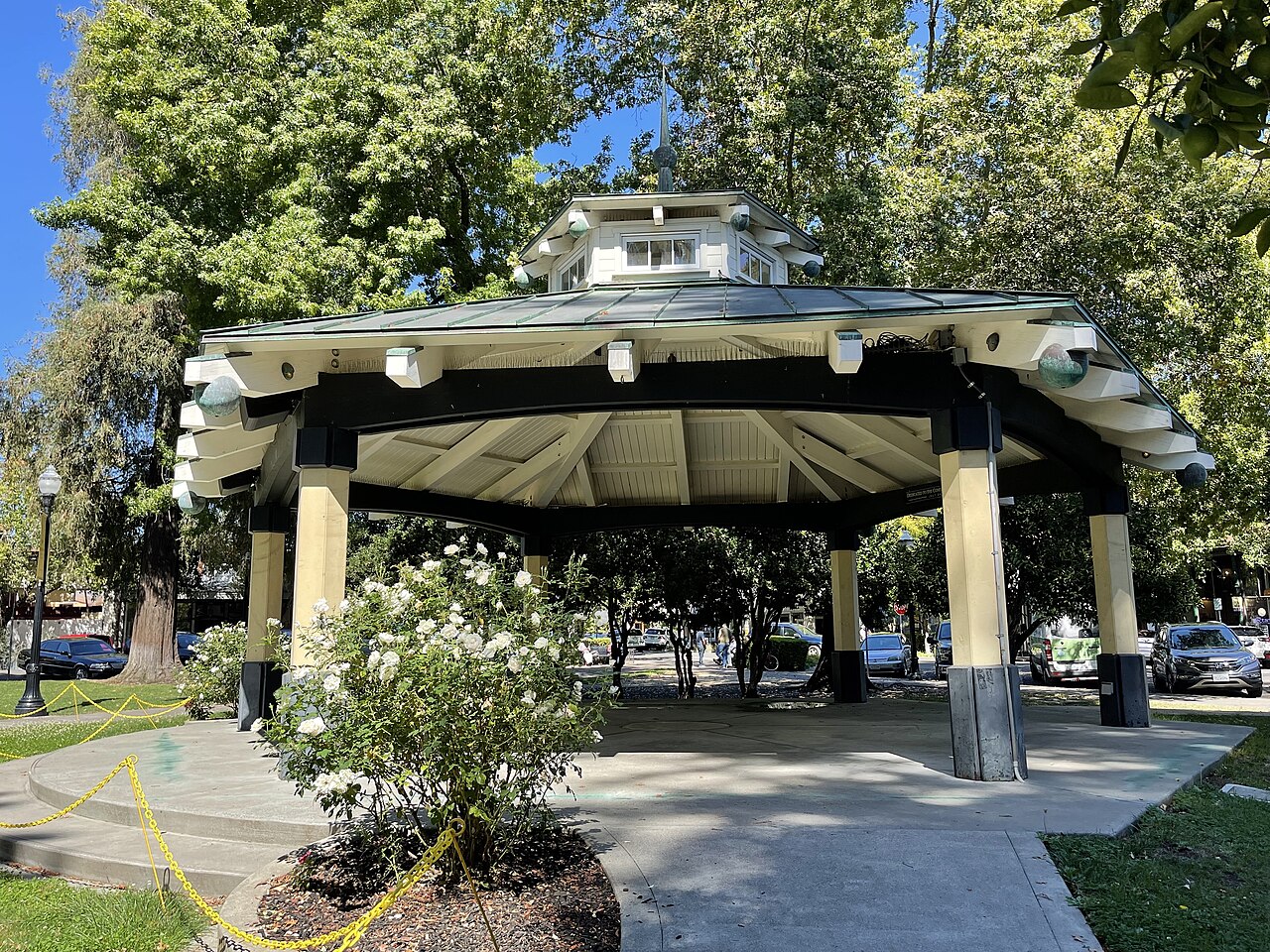
Healdsburg's own market prints $89,368 on a 200-listing extract, ADR near $783, and occupancy near 39.0 percent, dated 2026-08-08 - a genuinely strong wine-country market where the specific claim of Plaza walkability is one of the most valuable and most easily overclaimed pieces of a listing's marketing.
The Plaza is a real lawn ringed by actual storefronts, restaurants, and tasting rooms - not a marketing adjective to paste onto any Sonoma County porch - and a listing's honest distance from it, walkable or a genuine Dry Creek drive, directly shapes what rate that specific listing can credibly claim.
This is a practical guide to the proximity claim itself: what walkable actually means, how boutique hotel listing stock already competes on this exact sidewalk, and why reviews punish a fake walk more harshly than an honestly labeled drive. This is not legal advice.
What the Plaza Actually Is
The Healdsburg Plaza is a real, physical lawn surrounded by an actual ring of storefronts, restaurants, and tasting rooms - a specific, checkable place, not a generic marketing adjective that any Sonoma County wine-country listing can claim regardless of actual distance.
A listing's proximity claim to the Plaza should be verifiable by any guest who pulls up a map before booking, and a claim that doesn't hold up against that simple check is a specific, avoidable credibility problem.
This distinction matters because the Plaza itself is what a meaningful share of this market's guests are actually booking access to, alongside the property - the proximity claim is doing real marketing work, not decorative language.
The practical rule: describe Plaza proximity as a specific, checkable fact about the actual property's location, never as a generic wine-country marketing adjective.
Walkable Versus a Dry Creek Drive
Walkable means a guest can leave the door, reach the Plaza on foot, and do dinner or a tasting room without moving the car - a specific, testable claim, not a loose approximation of 'sort of close.'
A property in Dry Creek Valley, Alexander Valley, near Fitch Mountain, or along the river is a genuine, namable trip in its own right, and a listing there should say so honestly - naming the actual named area and admitting it requires a drive - rather than implying Plaza walkability it doesn't have.
A short drive should also admit the practical realities that come with it: parking on arrival back at the Plaza, and the return trip after dinner, both worth naming honestly rather than glossing over in marketing copy.
The practical rule: claim 'walkable' only when a guest can genuinely leave the door and reach the Plaza on foot; otherwise name the specific area (Dry Creek, Alexander Valley, Fitch Mountain, the river) honestly as a drive, admitting parking and the return trip.
Boutique Hotels Already Compete on This Sidewalk
Hotel and boutique listing stock makes up about 12.5 percent of this market's 200-listing extract, and those rooms already sell genuine sidewalk-level Plaza access to the same San Francisco and New York guest that a walkable vacation rental is competing for.
A house competes with these inns directly, not only with other houses, which means a walkable vacation rental's proximity claim has to hold up against an inn's own genuinely walkable location, not just against other similarly distant houses.
Superhost share sits at 72.0 percent on the home side of this market, suggesting the badge itself isn't the deciding factor against boutique-hotel competition - actual proximity and actual property quality are what separate a listing from both categories of competitor.
The practical rule: benchmark a walkable listing's proximity claim against actual boutique-hotel competition on the same sidewalk, not just against other vacation rentals at varying distances.
Restaurants and Tasting Rooms You Can Actually Name
A listing's marketing copy should name specific, actual restaurants and tasting rooms near the property - the kind of concrete detail a guest can verify - rather than a vague 'walk to dining and wine tasting' claim that could describe dozens of Sonoma County properties at wildly different actual distances.
Naming Simi or Ridge Lytton Springs as destinations this cluster keeps track of is appropriate as a drive reference, not as a walkable package a host doesn't actually run - the distinction between naming a real destination and implying an operated experience matters for accuracy.
This specificity works in the listing's favor when the claim is accurate: a guest comparing several similar-sounding Healdsburg listings will notice which one names real, verifiable stops versus which one uses generic language.
The practical rule: name specific, real restaurants and tasting rooms, distinguishing clearly between a genuine walk and a named drive destination the host doesn't personally operate.
What a Short Drive Should Admit
A property that requires even a short drive to reach the Plaza should admit that plainly in its marketing copy - the actual distance, the parking situation on arrival, and the return trip after an evening out - rather than implying a walk that doesn't exist.
Admitting a short drive honestly doesn't necessarily hurt a listing's marketability; a genuine Dry Creek or Alexander Valley property has its own real appeal (vineyard views, quiet, space) that a walkable in-town property doesn't offer, and the honest framing lets the right guest choose accordingly.
A listing outside city limits should also admit its actual regulatory context - Permit Sonoma jurisdiction and the county's 12 percent transient occupancy tax - as part of the same honesty standard applied to distance claims.
The practical rule: admit the actual drive distance, parking situation, and return trip honestly for any non-walkable property, and pair that honesty with the property's own genuine, different appeal rather than competing on a false walkability claim.
Reviews Punish a Fake Walk
A guest who booked expecting Plaza walkability and instead found a drive is a guest positioned to leave a review reflecting that specific mismatch, since walkability is exactly the kind of claim a guest checks against their actual experience on the ground.
This is a genuinely costly mistake for a listing to make, since a negative review specifically calling out a false proximity claim damages future bookings from guests who read that review and take it as a warning about the listing's overall honesty, not just its distance.
A listing that instead honestly names a Dry Creek drive, and delivers exactly that experience, is far less likely to generate a negative review on this specific point, since the guest's actual expectation matched their actual experience.
The practical rule: never claim walkability a property doesn't have - the cost of an honest drive admission is far lower than the cost of a review calling out a false proximity claim.
Zoning Still Decides if the House Can List
Before any proximity marketing question matters, a host or buyer needs to confirm the property's actual zoning allows short-term rental use at all - within city limits or under Permit Sonoma's county ordinance if outside them - since a beautifully honest proximity claim on a non-compliant property doesn't solve the underlying problem.
This zoning confirmation should happen before finalizing any marketing copy, since a listing built around a specific proximity claim for a property that turns out to be non-compliant wastes the marketing investment entirely.
A Sonoma city comparison figure - that market's own separate $110,370 typical year - should stay on the compare shelf as context, not blended into Healdsburg's own $89,368 figure, since the Plaza doesn't rewrite Healdsburg's own calendar into a different city's number.
The practical rule: confirm zoning compliance first, and keep Healdsburg's own $89,368 figure separate from the City of Sonoma's own $110,370 - the Plaza doesn't turn one into the other.
How to Write the Proximity Line
A defensible proximity line names the actual, verifiable distance - 'a two-minute walk to the Plaza' or 'a twelve-minute drive to Dry Creek Valley' - rather than a vague adjective like 'close to' or 'near' that leaves the actual distance ambiguous and easily challenged.
This line should be checked against a map before publishing, confirming the claim holds up to the kind of scrutiny a skeptical or careful guest would apply before booking a stay explicitly marketed on its proximity.
Median cleaning cost in this market runs around $350, with an average pulled higher to $1,251 by larger properties - a separate operational fact worth citing accurately if referenced, but not one that should be blended into a proximity discussion.
The practical rule: write the proximity line with a specific, checkable distance claim, verify it against a map before publishing, and never pad the car's actual position with a vague discount-sounding percentage instead of the honest distance itself.
Related Reading
More Healdsburg and northern Sonoma wine-country reading already live on Crest & Cove.
200 Listings and an $89,368 Year: Healdsburg STR Report 2026
18% PM and a $6,849 Month: Is an Agency Worth It in Healdsburg?
How to Market a Healdsburg Stay: Plaza Walk, Not Generic Wine Country
Is Healdsburg a Good STR Investment in 2026? CUP First, Then $89,368
Sonoma County Tourism and Healdsburg Hosts: $2.4B Is Not $89,368
What It Actually Costs to Start a Legal Rental in Healdsburg, CA
Financing a Healdsburg House: DSCR on $6,849 and a February File
Frequently Asked Questions
What does 'walkable to the Healdsburg Plaza' actually mean?
It means a guest can leave the door, reach the Plaza on foot, and do dinner or a tasting room without moving the car. It's a specific, testable claim, not a loose approximation that any nearby Sonoma County listing can make, and a guest who books on that promise will check it against a map before or during the stay.
What is Healdsburg's own published typical year?
A 200-listing sample prints $89,368 in average annual revenue, an ADR near $783, and occupancy near 39.0%, dated 2026-08-08. This figure is specific to Healdsburg and shouldn't be blended with the City of Sonoma's separate $110,370 figure, since the two are different markets with different listing pools.
How much of this market is boutique hotel listing stock?
About 12.5% of the 200-listing extract. Those rooms already sell genuine Plaza-sidewalk access to the same guest a walkable vacation rental competes for, so a walkable rental's claim needs to hold up against real hotel-level proximity rather than a softer, more forgiving comparison set, since that guest can and will compare the two options directly before booking.
What should a listing say if it requires a drive to reach the Plaza?
Name the specific area honestly, Dry Creek Valley, Alexander Valley, Fitch Mountain, or the river, and admit the drive, the parking situation, and the return trip after dinner, rather than implying walkability that doesn't exist. A specific, honest area name still markets the property well without risking a mismatch complaint.
What happens if a listing falsely claims Plaza walkability?
A guest who books expecting a walk and finds a drive is positioned to leave a review calling out the specific mismatch, which damages future bookings more than an honest drive admission would have. That kind of review tends to be specific and easy for future guests to find, unlike a vague complaint.
Does zoning matter before writing proximity marketing copy?
Yes. Confirm the property's zoning actually allows short-term rental use, within city limits or under Permit Sonoma's ordinance if outside them, before investing in proximity-based marketing copy for a potentially non-compliant property. Marketing a location advantage on a listing that can't legally operate wastes both time and ad spend.
What is a defensible way to write the proximity line?
Use a specific, checkable distance, "a two-minute walk to the Plaza" or "a twelve-minute drive to Dry Creek Valley," verified against a map, rather than a vague adjective like "close to" that leaves the actual distance ambiguous. A specific number survives a guest's own map check in a way a loose adjective can't.
What is the median cleaning cost in this market?
Around $350, with an average pulled higher to $1,251 by larger properties. This is a separate operational fact and shouldn't be blended into a discussion of Plaza proximity or distance claims, but it belongs in the same pricing conversation when a host is setting nightly rates and fees.
Work with Crest & Cove Creative
The Healdsburg Plaza is a real lawn ringed by real storefronts, not a marketing adjective for any Sonoma County porch. A walkable claim has to survive a guest checking the map - a Dry Creek drive should just say so.
We help Healdsburg hosts write proximity lines that survive a guest's map check instead of a review calling out a false walk. Send us the listing and we'll help you claim the honest distance this property actually has.
Reach out at crestcove.co or (256) 998-7502.


Comments