
Finance Black Mountain Nc Peak Occupancy Is Not the Year

Updated: Aug 28
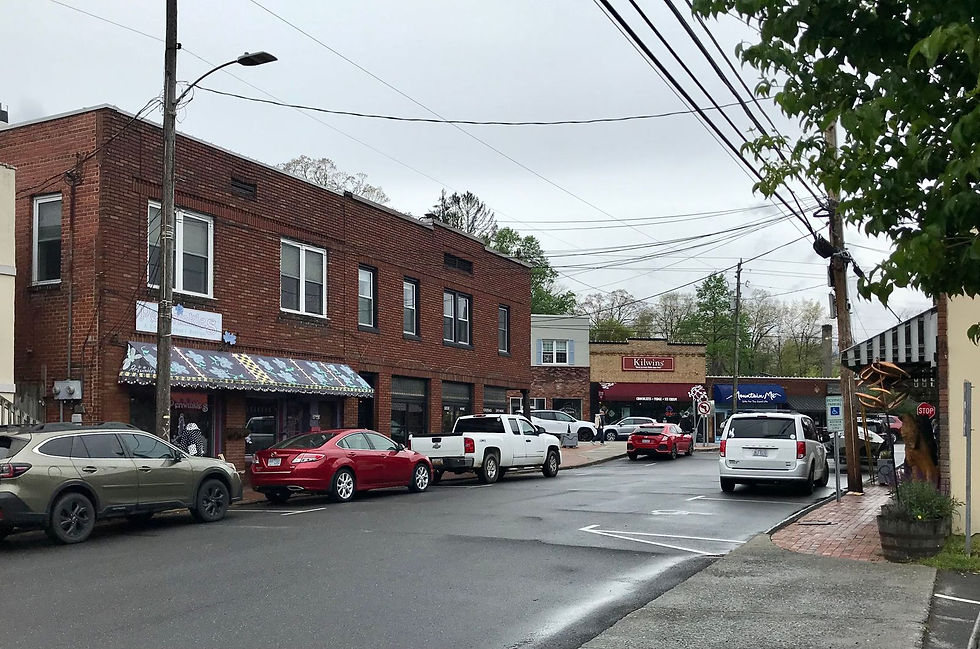
Every Black Mountain short-term rental market report on this site documents ADR, occupancy, and demand trends -- but almost none of that data tells a buyer what loan product actually fits, what down payment to expect, or how a lender will treat projected rental income. This post walks through DSCR loans, vacation-home versus investment-property classification, and a worked underwriting example built directly from Black Mountain's own documented market performance -- not a national average, and not Asheville's numbers borrowed for convenience.
This isn't investment advice, and it isn't a substitute for a licensed mortgage broker who can run actual numbers against a specific property and a specific buyer's credit file. Crest & Cove Creative is a short-term rental marketing agency, not a lender, mortgage broker, or financial advisor -- treat the figures below as a framework for the conversation to have with a licensed DSCR lender, not a quote.
Why Black Mountain's Permit Rules Make Financing More Straightforward Than Asheville's
The financing conversation starts differently in Black Mountain than in Asheville, and the difference works in a Black Mountain buyer's favor. Asheville restricts legal whole-home short-term rentals to a capped, shrinking pool of grandfathered and Resort-zone properties, which forces most Asheville buyers into a homestay-only structure that most DSCR lenders won't underwrite as a rental-income property at all. Black Mountain took the opposite regulatory path: the town permits whole-home short-term rentals across its housing stock, subject to a zoning permit and annual fire inspection, with no cap identified in current town planning records. That means a legally operating Black Mountain whole-home STR is a straightforward non-owner-occupied investment property in the eyes of most lenders -- the financing conversation is about loan product and income underwriting, not about proving the property qualifies for whole-home use in the first place.
That said, the zoning permit is not optional, and a lender or appraiser may ask for proof of it during underwriting on a purchase specifically intended for STR use. Confirming permit status with Black Mountain's Building & Planning Department (, ext. 604) before going under contract, and again before closing, is a reasonable step for any buyer financing a property with STR income figured into the numbers.
DSCR Loans: The Financing Vehicle Built for Rental Income, Not W-2 Income
A Debt Service Coverage Ratio (DSCR) loan qualifies a buyer based on the property's projected rental income rather than the buyer's personal W-2 income or debt-to-income ratio -- which makes it the primary financing tool for buyers who are self-employed, already carry several mortgages, or simply want the property to qualify on its own merits. Lenders calculate DSCR by dividing projected monthly rental income by the monthly mortgage payment (principal, interest, taxes, insurance, and any HOA dues); a ratio of 1.0 means the property's income exactly covers the payment, and most DSCR lenders want to see 1.0 to 1.25 or higher, though some programs will go below 1.0 with a larger down payment as a tradeoff.
The tradeoff for DSCR's income-based flexibility is pricing. DSCR loan rates in 2026 run roughly 6.5% to 8% for most borrowers, meaningfully higher than a conventional owner-occupant mortgage, and down payment requirements typically run 20-25%, with the most favorable rates reserved for borrowers putting down 25% or more and properties that show strong projected DSCR. For a legally operating Black Mountain whole-home STR, this is usually the most direct financing path -- no owner-occupancy requirement, no W-2 income documentation, and underwriting built around the property's own numbers.
Vacation Home vs. Investment Property Classification
Even outside DSCR programs, a conventional lender will classify a Black Mountain STR purchase as either a second or vacation home or an investment property, and the difference changes the numbers substantially. A second-home classification typically requires the property be available for the owner's personal use for at least part of the year and often carries a lower down payment (10-20%) and better rate than investment-property financing -- but most conventional lenders will not count projected short-term rental income toward qualification under a second-home classification, since it contradicts the personal-use premise. An investment-property classification allows a portion of projected rental income to count toward qualification but typically requires 20-25% down and carries a rate premium of roughly 0.5-0.75 percentage points over a comparable owner-occupant loan. Most buyers purchasing a Black Mountain property specifically to operate as an income-producing STR end up financing it as an investment property or through a DSCR program rather than a second-home loan, precisely because the income needs to count for the numbers to work.
How Lenders Evaluate Projected STR Income -- Using Black Mountain's Own Market Data
Short-term rental income is underwritten differently than a standard long-term lease. Conventional lenders financing an investment property often apply Fannie Mae's guidance, which allows short-term rental income to be considered but generally haircuts it to account for vacancy and seasonality -- commonly summarized as counting roughly 75% of documented or projected gross rental income toward qualification, though the exact treatment varies by lender and loan program. DSCR lenders typically rely on a market-rent estimate from a service like AirDNA or a similar STR-specific data provider, cross-referenced against the specific property's bedroom count, location, and amenities, rather than a blanket haircut.
Appraisers use a different method for STR-purpose appraisals as well: rather than pulling comparable long-term lease rents, they typically order a short-term rental income schedule (a Fannie Mae Form 1007 with STR-specific commentary, or an AirDNA-sourced rent schedule) that estimates monthly income based on comparable STR performance in the immediate submarket. The practical result: three lenders looking at the same Black Mountain property can produce three different qualifying income figures, because the income source, the haircut applied, and the comparable set used can all differ.
A Worked Example: Black Mountain's Market-Wide Numbers
Take a property achieving Black Mountain's documented market-wide averages: roughly a $267 average daily rate and named-town occupancy pins as of 2026-07-31 -- figures pulled directly from this site's own Black Mountain & Old Fort STR Market Report -- which works out to roughly $267 x 365 x 0.39, or about $38,000 in annual gross rental revenue. Applying a Fannie Mae-style 75% qualifying haircut brings the lender's usable income figure to roughly $28,500 annually, or about $2,375 per month -- the number a conventional investment-property lender would actually use to calculate DSCR or qualifying ratios, not the full $38,000 a host might reasonably expect to collect.
Now take a property in a stronger-performing Black Mountain submarket or a larger, higher-end home commanding a premium ADR -- say $290 a night at a more competitive named-town occupancy pins as of 2026-07-31, producing roughly $47,600 in annual gross revenue and, after the same 75% haircut, about $35,700 in qualifying annual income, or roughly $2,975 per month. On a $500,000 loan amount at a representative 2026 DSCR rate near 7.25%, a monthly principal-and-interest payment runs approximately $3,410 before taxes and insurance are added -- illustrating why DSCR lenders lean on strong occupancy and ADR performance, and why a buyer should run the property's specific projected numbers, not the townwide average, before assuming a deal pencils out.
Closing Costs and Cash Reserves
Down payment is the number every buyer plans for. Closing costs and post-closing cash reserves are the ones that catch buyers off guard. Investment-property and DSCR closing costs typically run 2-5% of the purchase price, covering lender fees, title insurance, appraisal (often a specialized STR-income appraisal costing more than a standard residential appraisal), and prepaid taxes and insurance. Most DSCR and investment-property lenders also require 3-6 months of mortgage payments held in reserve at closing -- liquid, verifiable funds separate from the down payment -- specifically because rental income, especially seasonal STR income, is treated as less certain than W-2 income.
Put together on a $500,000 whole-home Black Mountain property financed as an investment property or DSCR loan at 25% down: roughly $125,000 down payment, in closing costs, and in required reserves (6 months at a rough monthly payment including taxes and insurance) -- a total cash-to-close figure in the neighborhood of $150,000 to $175,000 before a single piece of furniture is purchased. That furnishing, insurance, software, and photography spend is covered separately in the companion startup-cost post on this site, and it is genuinely additive to the financing numbers here, not overlapping with them.
The Bottom Line for a Black Mountain Buyer
None of this makes a Black Mountain short-term rental a bad investment -- the market's Asheville-spillover demand, permitted whole-home status, and documented ADR and occupancy performance are real advantages relative to more restricted or less-established nearby markets. But the gap between a property's gross revenue potential and its lender-qualifying income is real, and it is the single most common place first-time STR buyers get their numbers wrong. A property that comfortably cash-flows at its full gross revenue potential can look considerably tighter once a lender applies a 75% haircut and a 7%-plus DSCR rate to the equation -- run the qualifying numbers before falling in love with the gross ones.
Frequently Asked Questions
Can I get a DSCR loan for a Black Mountain short-term rental?
Yes, and more directly than in markets like Asheville. Because Black Mountain permits whole-home short-term rentals townwide rather than restricting them to a capped or homestay-only structure, a legally operating whole-home STR is a straightforward non-owner-occupied investment property that most DSCR lenders will underwrite based on the property's projected rental income. Asheville restricts legal whole-home short-term rentals to a capped, shrinking pool of grandfathered and Resort-zone properties, which forces most Asheville buyers into a homestay-only structure that most DSCR lenders won't underwrite as a rental-income property at all.
What down payment do I need for a DSCR loan on a Black Mountain short-term rental?
DSCR loans typically require 20-25% down, with the most favorable rates reserved for 25%-plus down payments and properties showing strong projected debt service coverage ratios. Some programs will accept lower down payments with a correspondingly lower DSCR or a rate premium. DSCR loan rates in 2026 run roughly 6.5% to 8% for most borrowers, meaningfully higher than a conventional owner-occupant mortgage, and down payment requirements typically run 20-25%, with the most favorable rates reserved for borrowers putting down 25% or more and properties that show strong projected DSCR.
How do lenders estimate what a Black Mountain short-term rental will earn?
Common approaches include conventional lenders applying Fannie Mae's guidance, which generally counts roughly 75% of documented or projected gross rental income toward qualification, and DSCR lenders relying on a market-rent estimate from a service like AirDNA cross-referenced against the specific property. Conventional lenders financing an investment property often apply Fannie Mae's guidance, which allows short-term rental income to be considered but generally haircuts it to account for vacancy and seasonality -- commonly summarized as counting roughly 75% of documented or projected gross rental income toward qualification, though the exact treatment varies by lender and loan program.
Does Black Mountain's roughly named-town occupancy pins as of 2026-07-31 and $245-$290 ADR mean every property qualifies for the same loan amount?
No -- those are townwide averages, and individual submarkets, property sizes, and amenity levels vary meaningfully around them. A buyer should request the specific property's projected income from a lender-ordered STR income schedule rather than assuming the townwide average applies. On a $500,000 loan amount at a representative 2026 DSCR rate near 7.25%, a monthly principal-and-interest payment runs approximately $3,410 before taxes and insurance are added -- illustrating why DSCR lenders lean on strong occupancy and ADR performance, and why a buyer should run the property's specific projected numbers, not the townwide average, before assuming a deal pencils out.
Is a Black Mountain short-term rental financed differently than one in Asheville?
Asheville's whole-home STR permit cap pushes many buyers toward homestay-only structures that most DSCR lenders won't finance as rental-income property. Black Mountain's townwide whole-home permitting means a legally operating property is a standard non-owner-occupied investment property from a lender's perspective. That means a legally operating Black Mountain whole-home STR is a straightforward non-owner-occupied investment property in the eyes of most lenders -- the financing conversation is about loan product and income underwriting, not about proving the property qualifies for whole-home use in the first place.
What closing costs and reserves should I budget for financing a Black Mountain STR?
Investment-property and DSCR closing costs typically run 2-5% of the purchase price, and most lenders require 3-6 months of mortgage payments held in verifiable reserves at closing, separate from the down payment. Most DSCR and investment-property lenders also require 3-6 months of mortgage payments held in reserve at closing -- liquid, verifiable funds separate from the down payment -- specifically because rental income, especially seasonal STR income, is treated as less certain than W-2 income.
Can I use a second-home or vacation-home loan to finance a Black Mountain short-term rental?
Only if you plan to use the property for meaningful personal time and don't need projected rental income to count toward qualification -- most conventional lenders won't credit STR income under a second-home classification. Most buyers financing specifically for STR income use an investment-property or DSCR loan instead. A second-home classification typically requires the property be available for the owner's personal use for at least part of the year and often carries a lower down payment (10-20%) and better rate than investment-property financing -- but most conventional lenders will not count projected short-term rental income toward qualification under a second-home classification, since it contradicts the personal-use premise.
Does Crest & Cove Creative help with financing or connect buyers to lenders?
No -- we're a short-term rental marketing agency, not a lender or mortgage broker. We help hosts with listing optimization, SEO, and direct-booking growth once a property is financed, permitted, and ready to market; for the loan itself, work with a licensed DSCR lender or mortgage broker. Crest & Cove Creative is a short-term rental marketing agency, not a lender, mortgage broker, or financial advisor -- treat the figures below as a framework for the conversation to have with a licensed DSCR lender, not a quote.
Keep going on Crest & Cove:the Crest & Cove intro·local SEO keywords that actually book·the five elements of a converting hero·how to compare STR marketing agencies·Asheville paddling spots worth the drive·this cluster against named-town AirROI pins·Destin against AirROI, not leftover year·prior cluster against AirROI pins.
Related Reading
Keep reading in the Black Mountain market spine and nearby towns in the same region: same-cluster pages hosts can use without costume-corridor copy.
What It Actually Costs to Start an STR in Black Mountain, NC
Black Mountain and Old Fort STR Market Report: Asheville Spillover
How Tourism Recovery Is Reshaping Black Mountain's Local Economy
How Visitor Spending Patterns Are Reshaping Black Mountain's Economy
What It Actually Costs to Start a Lake James Airbnb , Dock and HOA First
What It Actually Costs to Start an STR in Hendersonville, NC
Work with Crest & Cove Creative
Peak occupancy is not the year. Named-town AirROI pins only.crestcove.coor(256) 998-7502.
Peak occupancy is not the year. Named-town AirROI pins only.crestcove.coor(256) 998-7502.
Peak occupancy is not the year. Named-town AirROI pins only.crestcove.coor(256) 998-7502.
Peak occupancy is not the year. Named-town AirROI pins only.crestcove.coor(256) 998-7502. Reach out at crestcove.co or (256) 998-7502.
About the Authors
Crest & Cove Creative is a nationwide short-term rental marketing studio helping independent hosts across Western North Carolina and the broader Blue Ridge region grow direct bookings through SEO, content, and listing strategy. This post was researched and written by Jacob Mishalanie. Crest & Cove Creative is a short-term rental marketing agency, not a lender, mortgage broker, or financial advisor -- treat the figures below as a framework for the conversation to have with a licensed DSCR lender, not a quote.



Comments