
How to Market a Geneva-on-the-Lake Stay Before August


Typical listings in Geneva-on-the-Lake earned about $23,170 last year, from 151 active rentals, on Air ROI's extract filed as August 2025 through July 2026, with an average nightly rate of about $301 and occupancy around 32.3 percent. Marketing a Geneva-on-the-Lake stay well means building listing copy and photography that speak to those specific numbers and to the specific guest this market attracts, not generic Ohio lake-town language that could describe a dozen other towns just as easily.
Lead time in this sample runs about 74 days, so copy built for the August peak needs to be live well before summer, not scrambled together the week before. A listing that still says generic Ohio in mid-May is already late relative to that booking window. This page walks through what to name, what to photograph, and what to leave off a Geneva-on-the-Lake listing so the marketing matches the actual market this sample describes.
Cleveland listings earned about $17,631 last year from 1,918 active rentals on the same window, a separate market with its own marketing playbook. That comparison stays on its own line here; nothing about Cleveland's copy, photos, or guest profile should transfer to a Geneva-on-the-Lake listing, and the reverse holds too, since the two markets attract different guests for different reasons entirely. This is not legal advice.
Name the Strip, Not a Generic Ohio Caption
The Strip, Geneva-on-the-Lake's amusement and entertainment corridor, is the single most specific, most useful detail a listing description can include. Naming it directly tells a prospective guest exactly what kind of stay this is: walkable entertainment, a lakeside small-town feel, and a first-night experience that a generic Ohio caption simply cannot convey. A listing description that never mentions the Strip by name is leaving the most identifiable selling point in this market unused.
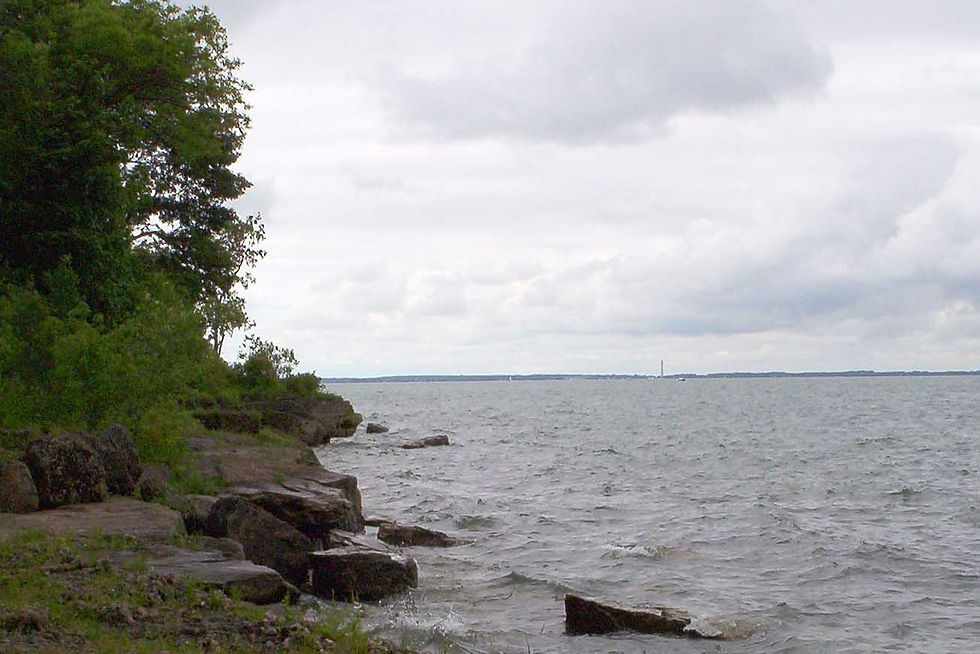
Photograph the Strip this house can actually finish, meaning the specific stretch of it walkable or driveable from the property, along with Lake Erie itself and the first-night walk a guest would actually take after checking in. Generic stock-style photography of a lake or a boardwalk that could be anywhere does less work than a photo set that specifically documents this property's real walk to this town's real landmarks.
Naming the Strip also gives a listing description a natural way to answer the practical questions a guest is actually asking while scrolling through search results: how far is the walk, is it stroller-friendly, is parking available near the entertainment corridor, and what does a typical evening look like after checking in. A description that answers those questions directly, rather than leaning on adjectives like charming or cozy without specifics, tends to do more to convert a browsing guest into a booked guest.
Cleveland Copy Does Not Belong on This Tile
Do not paste Cleveland copy on a Geneva-on-the-Lake listing. Cleveland is about $17,631 on 1,918 listings, a different city stay entirely, with a different guest profile, a different scale, and different landmarks. Leave the neighbor gallery on the neighbor listing, and leave Cleveland-specific phrases, downtown references, stadium proximity, convention center access, out of a Geneva-on-the-Lake description where none of that applies.
If the gallery could sit in any Ohio town, the guest who typed Geneva-on-the-Lake into a search bar already has the wrong stay pictured in their head before they even book. That mismatch tends to surface in guest messages, check-in confusion, or a review that flags the property for not matching its description, none of which reflect the property itself so much as copy that failed to specify which town the guest was actually booking.
This is not a hypothetical risk unique to hosts who copy competitor listings deliberately. Templates, past listings from a different property the same host operated, and AI-generated draft copy can all introduce Cleveland-shaped language into a Geneva-on-the-Lake description without anyone intending it. A useful habit before publishing any listing update is a direct read-through asking whether every specific claim, distance, landmark, or amenity, actually applies to this property in this town, rather than assuming a draft is accurate simply because it reads smoothly.
August Is the Month to Protect
Lead is about 74 days, so August copy needs to be live before the peak, not during it. Occupancy is 32.3 percent and RevPAR is $97 in this sample, and August ranks as the strongest revenue month, with July and June also registering as peak months. A listing that is still running placeholder photos or an unfinished description heading into that window is protecting nothing, since the guests booking August stays are already searching and deciding well before the month itself arrives.
About 48.3 percent of listings already set a 30-night minimum, which is worth noting for a host trying to understand how the current competitive set is positioning itself. A host targeting the short-stay, 2.6-night-average guest this sample describes should make sure their own minimum-stay settings are not accidentally filtering out that exact guest by matching a long-term-rental pattern instead of the short-stay pattern this market's typical guest actually books.
That near-even split between short-stay and long-stay listings in this market means a host's minimum-stay setting is itself a marketing decision, not just an operational one. A property positioned for the 2.6-night average guest should make that clearly bookable in the calendar settings, while a property intentionally targeting the roughly half of the market booking 30-night minimums should build its copy, photography, and pricing around a completely different guest, a longer-term renter rather than a weekend visitor drawn to the Strip.
Write for the Guest Who Is Actually Booking
Cleveland's $17,631 on 1,918 listings is a different city stay, and this market's own guest, arriving from Pittsburgh, then Columbus, for a 2.6-night stay, deserves copy written specifically for them. Naming those origin cities is not required in the copy itself, but understanding who is reading it, a drive-market guest planning a short lakeside trip, should shape the tone, the pacing, and the practical details, like parking and check-in logistics, that the description leads with.
Occupancy was 32.3 percent and the average night was $301 in this sample, figures that describe a market with real but not overwhelming demand outside the peak months. Marketing copy that oversells the property as booked solid year-round sets an expectation the actual seasonal pattern, August, July, and June strong, February a clear hole, does not support, and a host is better served by honest seasonal framing than by copy that promises more than the calendar delivers.
Pricing strategy should follow the same honest seasonal logic. A flat nightly rate applied evenly across all twelve months ignores the reality that August, July, and June carry meaningfully more demand than February, and a host who prices too high in the shoulder months while pricing too low during the peak is leaving revenue on the table in both directions. Adjusting rates to track the seasonal pattern this sample describes, higher during the three peak months, more competitive during the quieter stretch around February, tends to produce a better full-year outcome than a single static rate.
Confirm the License Before the Ad Goes Live
Cleveland Ordinance 561-2026 governs a different city, and this pass does not guess a village STR permit dollar for Geneva-on-the-Lake beyond what the village office confirms. Display remaining license proof once it is real, not before the village has actually issued it, and confirm remaining 2026 requirements at the Village of Geneva-on-the-Lake ahead of any launch date a marketing calendar is built around.
A marketing push, professional photography, finished copy, and a launch date, means little if the underlying license or certificate of rental occupancy is not yet in hand. Sequencing the compliance steps ahead of the marketing spend keeps the launch date honest and avoids a situation where a beautifully photographed listing sits unable to legally accept guests while paperwork catches up.
For a host planning a spring launch ahead of the August peak, a reasonable sequence starts with the compliance documents in late winter, moves to professional photography once the license and certificate are secured, and finishes with the written description and pricing setup in the weeks before the 74-day lead window ahead of August begins in earnest. Compressing all four steps into a single rushed week increases the odds that one of them, most often the compliance paperwork, gets shortchanged in favor of the parts of the launch that feel more urgent, like photos and copy.
Photography That Matches What Guests Are Actually Booking
A photo set for a Geneva-on-the-Lake listing should lead with the specific walk a guest takes from the front door toward the Strip and toward the lake, not a wide establishing shot that could be any small Midwest town. Interior photos should show the actual bedrooms, the actual kitchen, and the actual living space at the actual time of year a guest is likely to book, since a listing photographed in a different season than the one a guest is searching for can undersell the property's real appeal during its own peak months. Summer photography, taken with the same warm-weather scene a guest booking an August stay is actually picturing, tends to outperform winter shots repurposed for a peak-season listing.
Exterior photography deserves the same specificity. A porch, a deck, or a yard that faces toward the lake or sits within walking distance of the Strip is worth photographing in a way that makes that proximity obvious, rather than cropping tightly and leaving the guest to guess how far the walk actually is. Distance claims in the copy should match what the photos show, since a guest who arrives expecting a five-minute walk that turns out to be fifteen minutes is starting the stay with a broken promise, however small.
Evening and dusk photography is worth including specifically for a market built around an entertainment corridor. A guest evaluating a 2.6-night lakeside trip is picturing what the first evening looks like, lights along the Strip, a walk down to the water after dinner, and a photo set that only shows the property in flat midday light misses a chance to sell that specific experience, which this sample's own guest-origin and stay-length data suggests is a real part of why people book this town in the first place.
A Simple Pre-Launch Checklist
Before a Geneva-on-the-Lake listing goes live, a host should confirm four things: the license and certificate of rental occupancy are actually issued, not just applied for; the photo set includes the Strip, the lake, and the actual walk from the property, not generic stock imagery; the description names this town specifically rather than reading as interchangeable Ohio lake-town copy; and the minimum-stay and pricing settings match the 2.6-night average stay and $301 ADR this sample describes, rather than a longer-stay pattern borrowed from a different kind of rental.
Running through that checklist ahead of the roughly 74-day booking window that precedes the August peak gives a host time to fix any gap before it costs a booking. A listing that clears all four items by late spring is positioned to compete for the guests who are searching well ahead of their August trip, while a listing still working through the checklist in July is starting the season already behind.
It is worth revisiting this same checklist again after the first full season of bookings, not just before the initial launch. A host who tracks which parts of the description, which photos, and which pricing decisions correlated with stronger bookings during that first August, July, and June peak has real, property-specific data to refine the listing with, rather than relying solely on the market-level $23,170 and $301 ADR figures this sample provides for the broader 151-listing sample.
Related Reading
More How to Market a Geneva-on-the-Lake Stay Before August host reading on desks, calendars, and listing clarity.
Buying a Geneva-on-the-Lake, OH Rental in 2026: A Buyer's Checklist
Complete Visitor Guide to Geneva-on-the-Lake, OH for STR Hosts
Financing a Geneva-on-the-Lake, OH Rental: DSCR Notes for 2026
Geneva-on-the-Lake, OH Remote Worker Stays: 30-Night Math for 2026
Geneva-on-the-Lake, OH Shoulder Season: Protect the August Peak
Geneva-on-the-Lake, OH STR Market Report 2026: Revenue and Rules
Geneva-on-the-Lake STR Rules: Confirm at the Permit Desk First
Geneva-on-the-Lake Tourism Data: What Actually Fills a Rental
Geneva-on-the-Lake vs Cleveland: Two Permit Desks, Two Files
Frequently Asked Questions
What should a Geneva-on-the-Lake listing description name specifically?
A Geneva-on-the-Lake listing description should name the Strip, the town's amusement and entertainment corridor, along with Lake Erie and the actual first-night walk a guest would take from the property. Generic Ohio lake-town language that could describe any nearby town does less to help a guest picture the stay than specific, verifiable details about this property's real proximity to this town's real landmarks.
When should August marketing copy be live?
Lead time in this sample runs about 74 days, so copy built for the August peak needs to be finished and live well before summer begins, not assembled the week before. August ranks as the strongest revenue month in this sample, alongside July and June as peak months, and a listing still running placeholder copy heading into that window is already behind the guests who are searching and deciding early.
Is it ever appropriate to use Cleveland-style copy on a Geneva-on-the-Lake listing?
No. Cleveland is about $17,631 on 1,918 listings, a different city stay with a different scale and a different guest profile. Leave the neighbor gallery on the neighbor listing, and keep Geneva-on-the-Lake's own landmarks and language in the description. A gallery or caption that could sit in any Ohio town gives the guest who typed Geneva-on-the-Lake the wrong picture of the actual stay.
What percentage of listings set a 30-night minimum stay?
About 48.3 percent of listings already set a 30-night minimum, according to this sample. A host targeting the short-stay guest this market actually attracts, with an average 2.6-night stay, should confirm their own minimum-stay settings are not accidentally excluding that exact guest by mirroring a long-term-rental pattern rather than the short-stay pattern typical Geneva-on-the-Lake bookings follow.
What are the ADR and occupancy figures I should market around?
Occupancy was 32.3 percent and the average night was $301 on Air ROI's August 2025 through July 2026 extract, together producing about $97 RevPAR. These figures describe a market with real demand concentrated in specific peak months rather than even demand year-round, and marketing copy should reflect that honest seasonal pattern rather than implying the property is booked solid every month.
Who is the typical guest booking a Geneva-on-the-Lake stay?
Most guests arrive from Pittsburgh, then Columbus, and the typical stay runs about 2.6 nights in this sample. Writing copy with that drive-market guest in mind, rather than a generic national audience, should shape the tone and the practical details a listing description leads with, including parking, check-in logistics, and what a short lakeside getaway actually looks like from this specific property.
Do I need a village license before I can advertise the listing?
Display remaining license proof once it is real, meaning the license should actually be issued by the village before the ad claims compliance. Confirm remaining 2026 requirements at the Village of Geneva-on-the-Lake, and sequence the compliance paperwork ahead of the marketing push so a finished, photographed listing is not left waiting on a license or certificate that has not yet come through.
Which months should marketing spend concentrate on?
August, July, and June register as the peak revenue months in this sample, while February shows up as the clear revenue hole for the year. Concentrating marketing spend and finished copy ahead of the August peak specifically, given the roughly 74-day average booking lead time, makes more sense than spreading spend evenly across a calendar that this sample shows is not evenly distributed.
How is Geneva-on-the-Lake's typical revenue different from Cleveland's?
Typical Geneva-on-the-Lake listings earned about $23,170 last year from 151 rentals, while Cleveland listings earned about $17,631 last year from 1,918 rentals on the same window. Cleveland is a separate market at a much larger scale, and its numbers should be cited only as comparison context, never blended into a Geneva-on-the-Lake listing's own marketing copy or revenue projection.
Work with Crest & Cove Creative
Geneva-on-the-Lake listings earned about $23,170 last year on 151 rentals, and that revenue leans on marketing that names the Strip, not a generic Ohio caption. Photograph the real walk before the August peak arrives.
Crest & Cove Creative builds listing copy and photography plans around the specific guest a Geneva-on-the-Lake stay actually attracts, naming the Strip and the lake instead of recycling generic Ohio language, so a listing reads as a real, specific stay rather than a template. If your current gallery or description still borrows language from a neighboring market, we can rebuild it around this town's own numbers before the next peak season arrives.
Reach out at crestcove.co or (256) 998-7502.


Comments