
How to Market a Short Term Rental At the Virginia Beach Oceanfront

Updated: Aug 28

The Virginia Beach Oceanfront is coastal Virginia's highest-visibility leisure market — a three-mile boardwalk corridor where high-rise condos, resort whole-homes, and convention overflow compress Mid-Atlantic demand into one of the most regulated short-term rental geographies on the East Coast. AirROI's 2026 vintage shows Virginia Beach citywide at 1,402 active listings, 41% market-wide occupancy, a $373 average daily rate, $163 RevPAR, and roughly $36,916 in average annual revenue per listing, with peak summer performance near $390 ADR and 58.6% occupancy and January troughs near 32% occupancy. Those citywide figures blend Sandbridge weekly houses with Oceanfront condo turnover, but the Oceanfront host's reality is different: the binding constraint is not whether you can take a better hero photo than the listing above yours — it is whether your address holds a Conditional Use Permit inside the Oceanfront Resort STR Overlay District, a grandfathered registration predating July 1, 2018, or a nonconforming status you are about to lose through a renovation that triggers the 25-percent-or-1,000-square-foot expansion trap.
That regulatory scarcity sits atop a demand engine, Virginia Beach's 2024 tourism data makes plain: roughly $3.7–4.0 billion in total economic impact, approximately $2.6 billion in direct visitor spending April through October, 32,700-plus tourism-supported jobs, and 74% repeat visitation among overnight travelers. The guest who books the Oceanfront has already decided they want boardwalk energy, Atlantic surf, and resort-amenity access — King Neptune, the ViBe Creative District's murals and breweries, Atlantic Park's surf park, Rudee Inlet, convention and Sports Center traffic, and Neptune Festival's fall shoulder lift. Your job is to make that decision feel inevitable while proving compliance in a market where the overlay map is literally contested in 2026, and undifferentiated condo listings drown in a supply surge that grew 39.2% year-over-year on AirROI against 15.9% revenue growth.
This is the marketing playbook for independent Oceanfront operators in 2026 — what the demand actually looks like in plain numbers and seasonality, the overlay compliance facts that belong in your listing materials, the competitive reality on the strip, and the concrete moves that separate a positioned boardwalk-adjacent condo from the interchangeable high-rise boxes in the feed. Read it as an editorial strategy document, not a checklist of disconnected tactics. Every section below assumes you have one listing, one overlay status, and one guest story to tell — and that telling it honestly and specifically is how you compete in Virginia's largest and most permit-constrained leisure STR market.
The Oceanfront Market in Plain Numbers, Who Books, and Seasonality
The Virginia Beach Oceanfront occupies the resort core south of the North End through the Rudee Inlet corridor — high-rise condos, a thin band of whole-homes, and boardwalk-adjacent product inside or near the Oceanfront Resort STR Overlay District. Citywide on AirROI's market-wide averages (2026 vintage), Virginia Beach carries 1,402 active short-term rental listings with 41% full-year all-listings occupancy, a $373 ADR, and peak July performance near $8,047 monthly revenue at 58.6% occupancy, while January trough averages run closer to 32% occupancy and roughly $3,064 monthly revenue. AirDNA tracks a broader set of ~2,592 vacation rentals, including seasonal inventory — always name the methodology when citing figures, because platform deduplication and part-year listings materially affect the denominators. Oceanfront-specific ADR typically runs at or above the citywide average for boardwalk-proximate condos with parking and pool amenities, while interior overlay units trade on price against higher-amenity towers.
Booking behavior on Virginia Beach citywide reinforces the plan-ahead leisure model with a 58-day average lead time and a 6.2-night average stay on AirROI, and the Oceanfront guest is overwhelmingly domestic and drive-market — Washington DC and Northern Virginia, Richmond, Hampton Roads, the Raleigh-Durham Triangle, Charlotte, and the broader I-95 Mid-Atlantic corridor supplying summer family weeks, convention attendees, sports tournament families, and weekend festival traffic. Canada remains the leading international feeder at roughly 40% of international visits, led by French-Canadian travelers per the Virginia Beach CVB — a segment worth mentioning in listing copy if your property accommodates international guest logistics. Peak season runs June through August, with July as the revenue anchor, but Neptune Festival in late September, Something in the Water when held, the North American Sand Soccer Championships in June, and Atlantic Park programming add named demand spikes that undifferentiated listings leave unpriced.
The live 2026 wildcard every Oceanfront operator must monitor is the proposed Oceanfront Resort STR Overlay boundary redraw. A Resort Advisory Commission subcommittee advanced a recommendation in May 2026 to pull the overlay's western edge back from North Birdneck Road — a change that would remove Resort Beach, Atlantic Park, and the convention-and-sports-center area from new CUP eligibility if adopted. The Planning Commission recommendation was due approximately July 20, 2026; the status was not final at the draft. Carry a "verify-current-boundary" caveat in every acquisition conversation and in listing compliance disclosures until the city council resolves the map. A second floated item — a $2-per-night-per-bedroom room tax modeled on Norfolk, projected at roughly $1.7 million annually — remained unconfirmed at draft and should not be quoted to guests until enacted.
Tax, Regulatory, and Operational Compliance
Virginia Beach restricts new whole-home short-term rentals to three lanes since the September 2021 ordinance: the Sandbridge Special Service District (by-right), the Oceanfront Resort STR Overlay District (City Council Conditional Use Permit required for new entrants), and grandfathered or registered nonconforming properties. Outside those lanes — and outside grandfathered status — new whole-home STRs are not permitted. Oceanfront operators must therefore confirm overlay eligibility before modeling revenue comps from a neighbor's listing: a property without CUP or grandfathered status cannot legally operate regardless of how strong its boardwalk photography performs.
The Oceanfront CUP path runs through City Council public hearing with five-year renewal cycles, layered on top of the standard $500 annual STR zoning permit, Commissioner of the Revenue registration, $1M liability insurance naming the STR address, life-safety inspection valid five years, structural inspection every three years, and a parking plan meeting current standards — relaxed in October 2025 to one off-street space per two bedrooms. October 2025 enforcement changes also reclassified violations as misdemeanors with escalating fines at $1,000, $1,500, and $2,000, introduced a $200 application fee credited toward the permit, and required property-manager signage. Grandfathered properties include those STR-registered and tax-compliant before July 1, 2018, under City Code §241.2 and those holding CUPs granted before September 7, 2021, outside overlays — but a renovation expanding gross floor area by more than 25% or 1,000 square feet forfeits nonconforming status. State plainly in host-facing materials that your property holds active STR authorization and that guests should expect designated parking, occupancy limits, and quiet-hours compliance.
Guest-paid taxes on the Oceanfront run approximately 15% combined: 9% city transient occupancy tax plus 6% Virginia sales tax in Hampton Roads, layered with a flat $2.00 per room per night fee — distinct from Sandbridge SSD's roughly 10.5% plus $2.00 per night structure. Marketplace facilitators collect and remit applicable taxes on platform bookings under Virginia's accommodations-intermediary framework, but direct bookings remain the host's responsibility for both local TOT and state sales tax within the 30-day and 90-day thresholds, respectively. Mention the tax stack in listing materials; transparency builds trust and reduces checkout-surprise reviews.
The Property Management Landscape and Competitive Reality
The Oceanfront inventory mixes investor-owned condos, boutique whole-homes inside the overlay, and legacy grandfathered properties — a competitive set more fragmented than Sandbridge's Siebert-dominated weekly market but denser and more amenity-comparable within individual high-rise stacks. Supply grew 39.2% year-over-year on AirROI, while revenue grew 15.9%, indicating more units are chasing the same DC-and-Triangle summer demand without adding differentiated stories. Independent hosts compete against professionally photographed condo inventory, resort-style amenity stacks — pools, fitness centers, covered parking — and property-management brands that have optimized the same boardwalk keywords for years.
The realistic path for an independent Oceanfront operator is compliance-forward positioning plus micro-geography depth: boardwalk distance in feet not adjectives, parking space count and garage level, pool and fitness merchandising, ViBe and Atlantic Park anchors, Neptune Festival shoulder tiers, and direct-site content targeting phrases like "Virginia Beach Oceanfront condo parking," "boardwalk adjacent Airbnb Virginia Beach," and "Neptune Festival lodging Virginia Beach." You will not out-distribute the aggregate condo supply in the platform inventory count, but you can out-position the commodity two-bedroom tower unit that says "steps to the beach" without specifying which tower, which floor, or whether CUP compliance is current.
Marketing Moves That Separate an Oceanfront Listing
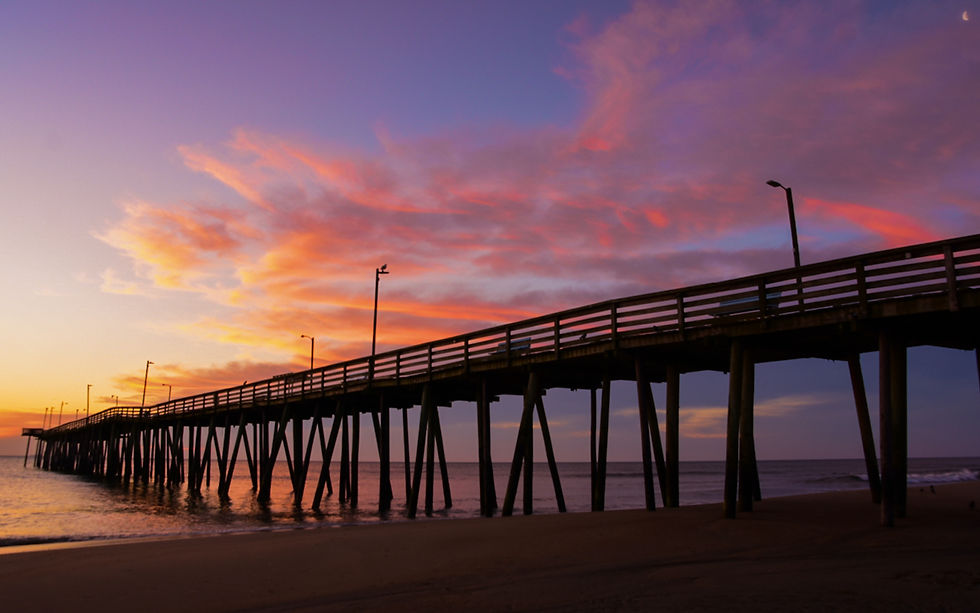
The first move is photography that sells boardwalk energy and the truth about amenities rather than generic coastal interiors. The default mistake in Oceanfront listings is a wide-angle living room shot and a stock sunset, with no proof of boardwalk proximity, parking, or view authenticity. Guests choosing the Oceanfront over Sandbridge are choosing resort-strip walkability, high-rise amenities, and festival-calendar access — not Back Bay quiet — and your first three frames should make that choice obvious. Balcony views with identifiable landmarks, the boardwalk from your actual walk distance, pool and fitness lifestyle frames, King Neptune at golden hour from an honest proximity, and parking spot documentation all communicate the Oceanfront premium a generic interior cannot.
The second move is anchor density in the listing description and welcome book, paired with title architecture that functions as a search filter rather than a marketing slogan. Name the Virginia Beach Boardwalk, King Neptune statue, ViBe Creative District, Vibrant Shore Brewing, Chesapeake Bay Distillery, Atlantic Park surf park, Rudee Inlet, Neptune Festival, the Convention Center, and Sports Center — with distances and walk times, not vague "oceanfront" language — because AI travel assistants surface "Virginia Beach boardwalk rental" and "Oceanfront condo Virginia Beach parking" together and your listing should own that connection in plain, accurate prose. Title patterns like "Virginia Beach Oceanfront | 2BR Condo | Boardwalk 2 Min Walk | Parking | Pool | Sleeps 6" outperform "Stunning Ocean View" because guests search with intent, not adjectives.
The third move is event-calendar architecture and repeat-guest infrastructure built around the Mid-Atlantic feeder market's planning rhythm. Open Neptune Festival windows at premium shoulder tiers in late September, price Sand Soccer and summer convention weekends when schedules publish, capture email at check-in, and offer returning DC families first access to the same July week — repeat drive-market guests are the highest-LTV customer on the strip, and Virginia Beach's 74% repeat visitation rate makes direct-booking infrastructure unusually rational here. Rebuild base tiers every August and merchandise ViBe First Fridays and Atlantic Park programming in the digital guidebook rather than relying on peak-summer volume alone.
The fourth move is compliance visibility without legalism — guests and platforms increasingly surface authorization status, and Oceanfront buyers pay premiums for grandfathered and CUP-held properties precisely because scarcity is real. State that your property holds active Virginia Beach STR authorization, describe parking honestly, and build a direct-site FAQ addressing the CUP-versus-grandfathered framework at a high level with a link to the city's permit page. That is not legal advice; it is trust signaling in a market where unauthorized listings face misdemeanor enforcement and where the 2026 overlay redraw makes buyers nervous.
How the Oceanfront Differs From Sandbridge and Norfolk
The Oceanfront, Sandbridge, and Norfolk share Hampton Roads geography and Virginia Beach tourism spillover — but they operate as different short-term rental products that confuse guests when marketed interchangeably. Sandbridge is the by-right weekly-house market south of the strip — dog-friendly, reunion-scale, Back Bay adjacency, Siebert-dominated distribution, and SSD tax structure. Norfolk is the year-round urban-and-naval market — 43.8% occupancy, 11-night average stays, Ghent and Naval Station demand, and homestay-versus-vacation-rental compliance. The Oceanfront is the resort-strip condo-and-overlay market — CUP politics, boardwalk festivals, Atlantic Park, ViBe culture, and the highest leisure visibility in the cluster with the sharpest permit scarcity outside grandfathered stock.
Position positively rather than comparatively: the Oceanfront is the Virginia Beach address where guests pay for boardwalk walkability, resort amenities, convention and festival calendars, and Atlantic surf at the strip's center — not for Sandbridge's weekly-house quiet or Norfolk's naval urbanism. Selling an Oceanfront condo as a Sandbridge alternative confuses the guest who wanted high-rise pool access, and front-load listing description copy with filterable facts — tower name or address area, floor level, boardwalk walk minutes, parking count, bedroom and sleeps count, pool and fitness access, and CUP-or-grandfathered authorization status where appropriate — then mirror those phrases on your direct site and Google Vacation Rentals feed if you run one.
Keep going on Crest & Cove: Virginia Beach CUP clerks you can prove · Sandbridge clerks you can prove · the Crest & Cove intro · local SEO keywords that actually book · the five elements of a converting hero · how to compare STR marketing agencies · Virginia coast against AirROI pins · Asheville paddling spots worth the drive.
Frequently Asked Questions
Do I need a Conditional Use Permit for a Virginia Beach Oceanfront Airbnb?
New whole-home short-term rentals inside the Oceanfront Resort STR Overlay District require a Conditional Use Permit from City Council via public hearing, renewable every five years, plus the $500 annual STR zoning permit and compliance stack. Properties grandfathered through pre-July 1, 2018 registration or pre-September 7, 2021 CUP may operate without a new CUP acquisition if continuous compliance is maintained. Verify your parcel's overlay status and authorization before listing — and monitor the 2026 proposed boundary redraw that could change eligibility west of the current North Birdneck Road line.
What is the 2026 Oceanfront overlay boundary redraw?
A Resort Advisory Commission subcommittee recommended pulling the Oceanfront Resort STR Overlay's western edge back from North Birdneck Road, which would remove Resort Beach, Atlantic Park, and the convention-and-sports-center area from new CUP eligibility if adopted. Planning Commission recommendation was expected around July 20, 2026; the change was not final at the draft. Verify the current boundary with Virginia Beach Planning before acquisition or marketing claims about overlay eligibility.
How should I title a Virginia Beach Oceanfront listing?
Lead with Oceanfront or boardwalk proximity, bedroom count, sleep count, parking, and amenity differentiators — pool, balcony view, fitness center. Strong patterns include "Virginia Beach Oceanfront | 2BR Condo | Boardwalk Walk | Parking | Pool | Sleeps 6" and "VB Oceanfront | 3BR | Rudee Inlet Area | Parking | Neptune Fest Nearby." Weak patterns like "Amazing Ocean Views" contain no filterable information.
What are Virginia Beach Oceanfront STR taxes?
Citywide Oceanfront guests pay approximately 15% combined: 9% city transient occupancy tax plus 6% Virginia sales tax in Hampton Roads, plus $2.00 per room per night. Sandbridge SSD uses a different structure (~10.5% plus $2.00 per night). Verify current rates with the Commissioner of the Revenue before quoting guest totals. Guest-paid taxes on the Oceanfront run approximately 15% combined: 9% city transient occupancy tax plus 6% Virginia sales tax in Hampton Roads, layered with a flat $2.00 per room per night fee — distinct from Sandbridge SSD's roughly 10.5% plus $2.00 per night structure.
How does Oceanfront seasonality compare to Sandbridge?
Both peak in June through August, but the Oceanfront benefits from the Neptune Festival, convention traffic, ViBe programming, Atlantic Park, and boardwalk events that Sandbridge lacks. Sandbridge runs heavier Saturday-to-Saturday weekly contracts; the Oceanfront mixes weekly families with shorter convention and festival stays. Price Neptune Festival and fall event windows rather than flat off-season discounts.
Can an independent host compete on the Virginia Beach Oceanfront?
You compete on compliance clarity, boardwalk-distance honesty, parking documentation, amenity-specific photography, and festival-calendar pricing — not on out-distributing the aggregate condo supply. Undifferentiated tower units with vague "steps to beach" copy lose to specific listings that name walk minutes, garage level, and authorization status. The realistic path for an independent Oceanfront operator is compliance-forward positioning plus micro-geography depth: boardwalk distance in feet not adjectives, parking space count and garage level, pool and fitness merchandising, ViBe and Atlantic Park anchors, Neptune Festival shoulder tiers, and direct-site content targeting phrases like "Virginia Beach Oceanfront condo parking," "boardwalk adjacent Airbnb Virginia Beach," and "Neptune Festival lodging Virginia Beach." You will not out-distribute the.
What should be in a Virginia Beach Oceanfront guest guidebook?
Boardwalk walk route and timing from your actual building, parking instructions with photos, pool and fitness access procedures, ViBe Creative District map with brewery and dining picks, Atlantic Park and Rudee Inlet day-trip notes, Neptune Festival dates and road-closure guidance, trash and recycling schedules, and quiet-hours norms for high-density condo stacks. A guidebook that names your tower and boardwalk access point beats a generic Virginia Beach visitor PDF every time.
What are the October 2025 Virginia Beach Oceanfront enforcement changes?
Zoning violations are misdemeanors with escalating fines of $1,000, $1,500, and $2,000; parking is relaxed to one off-street space per two bedrooms; the $200 application fee is credited toward the $500 annual permit; property-manager signage is required; and $1M liability insurance naming the STR address remains mandatory. CUP holders are not exempt — compliance failures can trigger criminal exposure, not just administrative citations.
How the Oceanfront Differs From Sandbridge and Norfolk?
The Virginia Beach Oceanfront is coastal Virginia's highest-visibility leisure market — a three-mile boardwalk corridor where high-rise condos, resort whole-homes, and convention overflow compress Mid-Atlantic demand into one of the most regulated short-term rental geographies on the East Coast. The Virginia Beach Oceanfront occupies the resort core south of the North End through the Rudee Inlet corridor — high-rise condos, a thin band of whole-homes, and boardwalk-adjacent product inside or near the Oceanfront Resort STR Overlay District.
Related Reading
Keep reading on same-cluster Crest & Cove pages that stay on labeled local lines without costume-corridor copy.
Work with Crest & Cove Creative
Write this town's year. Do not file another market's number as this stay.
Reach out at crestcove.co or (256) 998-7502.


Comments