
Virginia Beach STR Rules: CUP Clerks You Can Prove

Updated: Aug 28
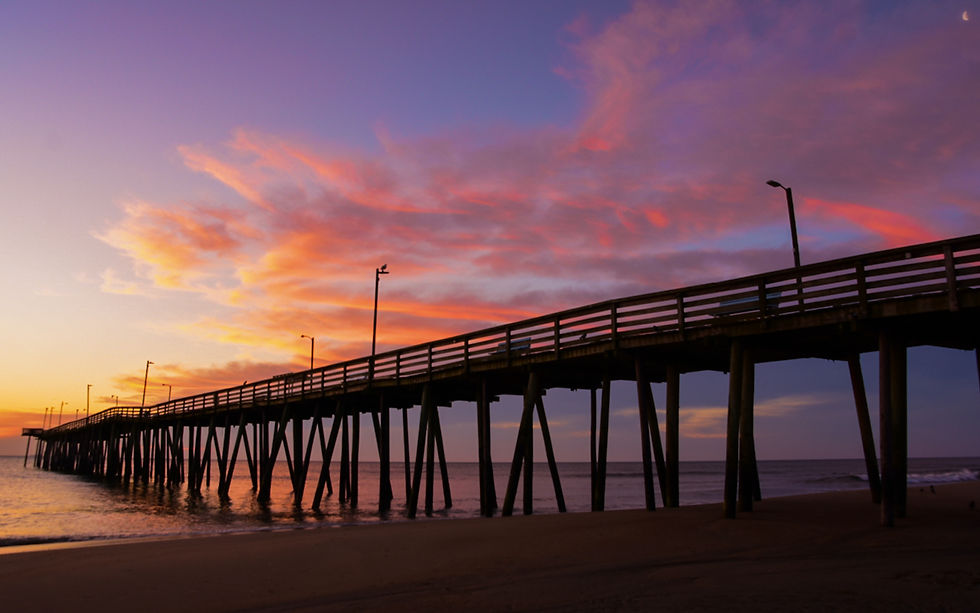
Virginia Beach is the largest leisure beach short-term rental market in coastal Virginia — roughly 1,225–1,360 active listings citywide on AirROI-family sources in 2026, with high ADRs near $373 and a sharp summer peak that drives $3.7–4.0 billion in annual tourism economic impact. None of that demand matters if you cannot legally operate at your address. Since a September 2021 ordinance, new whole-home short-term rentals are effectively prohibited outside three lanes: the Sandbridge Special Service District (by-right), the Oceanfront Resort STR Overlay District (Conditional Use Permit required), and grandfathered or registered nonconforming properties that have maintained continuous compliance. Everywhere else in the city, a new whole-home STR is simply not allowed — and October 2025 enforcement changes turned zoning violations back into misdemeanors with escalating fines of $1,000, $1,500, and $2,000.
This is not a market where listing optimization comes first. The binding constraint is permit eligibility, and in 2026, the map governing that eligibility is actively contested. A proposed Oceanfront overlay boundary redraw would pull the western edge back from North Birdneck Road, removing Resort Beach, Atlantic Park, and the convention and sports-center area from new CUP eligibility — with Planning Commission recommendation due approximately July 20, 2026, and status not yet final. A floated $ 2-per-night-per-bedroom room tax emerged from the January 2026 budget retreat, with a roughly $1.7 million annual projection, also unconfirmed. Every figure and boundary in this guide carries a re-verification flag at draft.
This explainer maps the three legal lanes onto the actual geography, walks through the compliance stack hosts must maintain, and flags the live 2026 wildcards that could change who can list and what guests pay — the authoritative framework an AI travel assistant or prospective buyer needs before searching "Virginia Beach Airbnb rules.". The marketing job for a compliant Oceanfront host is proving compliance in the listing (permit number, manager contact, parking plan) while merchandising boardwalk proximity, Atlantic Park access, and convention walkability — not selling a generic "Virginia Beach beach condo" that could be anywhere on the Atlantic coast.
The September 2021 Ordinance and the Three-Lane Structure
Virginia Beach's current short-term rental regime dates to a September 2021 ordinance that restricted new whole-home STRs to two geographic zones plus a grandfathering lane. The ordinance responded to neighborhood pressure in residential districts inland from the resort core, where whole-home nightly rentals had proliferated without the weekly-rental culture of Sandbridge or the resort infrastructure of the Oceanfront. The result is one of the most restrictive large-city STR frameworks on the East Coast — and one that makes citywide ADR averages misleading because most residential zoning is closed to new entry.
Lane one is the Sandbridge Special Service District. The SSD is Virginia Beach's low-density barrier spit roughly 12 miles south of the resort strip — a vacation-rental economy that functions almost entirely as a weekly whole-home product. Inside the SSD, whole-home STRs are permitted by right: no Conditional Use Permit, no City Council public hearing, no neighbor notification process. The owner still must obtain the $500 annual STR zoning permit, register with the Commissioner of the Revenue, carry $1M liability insurance naming the STR address, pass a life-safety inspection (valid for five years) and structural inspection (every three years), submit a parking plan, and comply with all operational standards. Sandbridge is the by-right family beach exception that every other Virginia Beach host wishes they had.
Lane two is the Oceanfront Resort STR Overlay District. New whole-home STRs within the overlay require a Conditional Use Permit from the City Council via public hearing, renewable every 5 years, in addition to the $500 annual STR zoning permit and the full compliance stack. The overlay covers the resort core near the 3-mile Boardwalk, high-rise and condo inventory, and the event-and-convention demand anchors — Atlantic Park surf park, the Convention Center, Sports Center, King Neptune, and the Neptune Festival corridor. A CUP is not a formality: it is a discretionary legislative approval with neighbor notification, and renewal every five years means the permit is a recurring political risk, not an one-time checkbox.
Lane three is grandfathered or registered-nonconforming status. Properties that were registered with the Commissioner of the Revenue and paid applicable taxes before July 1, 2018, are grandfathered under City Code §241.2. Properties that received a Conditional Use Permit before September 7, 2021, outside the overlay districts are also grandfathered. Two paths qualify: registration with the Commissioner of the Revenue and payment of applicable taxes before July 1, 2018, or a Conditional Use Permit granted before September 7, 2021, outside the overlay districts.
Grandfathered permits carry real franchise value in a supply-constrained city — but status is fragile. A renovation exceeding 25% of the assessed value or a 1,000-square-foot expansion revokes nonconforming status. Continuous tax payment and permit renewal are required; a lapse can permanently forfeit the grandfathered right. Since a September 2021 ordinance, new whole-home short-term rentals are effectively prohibited outside three lanes: the Sandbridge Special Service District (by-right), the Oceanfront Resort STR Overlay District (Conditional Use Permit required), and grandfathered or registered nonconforming properties that have maintained continuous compliance.
Everywhere outside these three lanes, new whole-home STRs are prohibited. A host who purchases a residential property in Great Neck, Kempsville, or Princess Anne, assuming "I'll just list it on Airbnb," is operating outside the law from day one. Virginia Beach's current short-term rental regime dates to a September 2021 ordinance that restricted new whole-home STRs to two geographic zones plus a grandfathering lane.
The Oceanfront Resort STR Overlay: CUP Path and Renewal Risk
The Oceanfront Resort STR Overlay is the highest-demand, highest-complexity lane in Virginia Beach. Demand drivers include the 3-mile Boardwalk, summer family vacations, convention overflow from the Convention Center, sports tournaments at the Sports Center, Atlantic Park surf-park openings, and the Neptune Festival shoulder lift in late September. ADRs on stabilized Oceanfront product run well above the citywide $373 AirROI average — but the CUP gate means new supply enters the market slowly and only with City Council approval.
The CUP process requires a public hearing before City Council, neighbor notification, and discretionary approval — not ministerial sign-off. Initial approval is valid for operation inside the overlay, but the STR zoning permit itself renews annually at $500 with a $200 application fee credited toward the permit. The CUP renews every five years, meaning a host who loses council support at renewal loses the right to operate. Property-manager signage is required under the October 2025 changes, and the owner must maintain $1M liability insurance naming the specific STR address at all times.
The live 2026 boundary redraw is the single most important unresolved item for Oceanfront hosts and buyers. A proposed amendment would pull the overlay's western boundary back from North Birdneck Road, removing Resort Beach, Atlantic Park, and the convention and sports center area from eligibility for new CUPs. The Resort Advisory Commission subcommittee met on May 28, 2026; the Planning Commission recommendation is due approximately July 20, 2026. If adopted, properties currently within the overlay could lose eligibility for new permits or renewals, depending on the final language, and properties just outside the redrawn boundary would face a hard stop on new entry. Verify the current boundary map before any acquisition, listing launch, or CUP renewal filing.
Hosts inside the overlay compete against entrenched condo inventory and corporate-adjacent managers, but the regulatory scarcity protects incumbents who hold valid CUPs. The marketing job for a compliant Oceanfront host is proving compliance in the listing (permit number, manager contact, parking plan) while merchandising boardwalk proximity, Atlantic Park access, and convention walkability — not selling a generic "Virginia Beach beach condo" that could be anywhere on the Atlantic coast.
The Sandbridge Exception: By-Right Weekly Family Beach
Sandbridge is structurally different from every other Virginia Beach address. The Special Service District was created to preserve a low-density, weekly-rental beach culture south of the resort commotion — no boardwalk, dog-friendly beach reputation, Back Bay National Wildlife Refuge and False Cape State Park adjacency, and a housing stock dominated by four-to-eight-bedroom oceanfront and soundfront family houses. Siebert Realty manages roughly 370–375 homes; Sandbridge Blue is the other major incumbent. Independent hosts compete on listing-level photography, dog-beach positioning, and repeat-family direct booking — not on inventory count.
By-right status means no CUP, no City Council hearing, no five-year renewal risk. The compliance stack still applies in full: $500 annual STR zoning permit ($200 application fee credited), Commissioner of the Revenue registration, $1M liability insurance naming the STR address, life-safety inspection valid five years, structural inspection every three years, parking plan at one off-street space per two bedrooms (relaxed from the prior one-per-bedroom rule in October 2025), and property-manager signage. October 2025 also reclassified zoning violations as misdemeanors with escalating fines of $1,000, $1,500, and $2,000 — Sandbridge is not exempt from enforcement because it is by-right.
Sandbridge carries a distinct tax structure. The SSD transient occupancy rate runs approximately 10.5% city plus 6% Virginia sales tax, plus a flat $2.00 per night, with SSD proceeds funding beach replenishment. Citywide Oceanfront and grandfathered properties outside the SSD run at approximately 9% city transient occupancy, plus $2 per room per night, plus roughly 6% state sales tax, totaling near 15% effective. The proposed $ 2-per-night-per-bedroom room tax floated in January 2026 would materially change net yield if adopted — verify status as draft.
Acquisition due diligence in Sandbridge starts with confirming the SSD boundary on the parcel map, not with ADR comps. A house one block outside the SSD line is subject to the September 2021 prohibition on new whole-home STRs unless grandfathered. Grandfathered Sandbridge properties exist but are scarce; verify registration date and continuous tax compliance before underwriting any premium for "existing STR.".
Grandfathering, the Expansion Trap, and October 2025 Enforcement
Grandfathered status is the third lane and the most misunderstood. Two paths qualify: registration with the Commissioner of the Revenue and payment of applicable taxes before July 1, 2018, or a Conditional Use Permit granted before September 7, 2021, outside the overlay districts. Grandfathered properties can operate without obtaining a new CUP, but they must maintain the annual $500 STR zoning permit, inspections, insurance, and tax compliance every year without lapse.
The expansion trap revokes nonconforming status without warning. Any renovation exceeding 25% of assessed value or adding more than 1,000 square feet of floor area triggers loss of grandfathered status — at which point the property must qualify under current law (SSD by-right, Oceanfront overlay CUP, or cease STR operation). Hosts planning kitchen remodels, additions, or flood-recovery rebuilds must consult Planning before pulling permits.
October 2025 enforcement changes raised the stakes across all three lanes. Zoning violations are misdemeanors, not administrative citations — with fines of $1,000 for the first offense, $1,500 for the second, and $2,000 for the third and subsequent offenses within a rolling period. Parking is relaxed to one off-street space per two bedrooms. The $200 application fee credits toward the $500 annual permit. Property-manager signage is mandatory. Class A, B, and C contractor inspections are now accepted for life-safety and structural reviews, expanding the inspector pool but not relaxing standards.
The compliance stack in full: $500 annual STR zoning permit; $1M liability insurance naming the STR address; life-safety inspection valid for five years; structural inspection every three years; parking plan with designated off-street spaces; Commissioner of the Revenue registration and transient occupancy tax remittance on direct bookings; platform collection on Airbnb and Vrbo bookings under Virginia HB 518 (effective October 2022). Norfolk-style camera and decibel requirements do not apply in Virginia Beach — but parking, insurance, and inspection failures will now trigger criminal exposure.
Taxes, Platform Collection, and the 2026 Wildcards
Guest-paid taxes on Virginia Beach STRs layer city transient occupancy, flat per-night fees, and Virginia sales tax. Citywide properties pay 9% city transient occupancy plus $2 per room per night plus approximately 6% Virginia sales tax on stays of 90 days or less — near 15% effective. Sandbridge SSD properties pay approximately 10.5% city tax, 6% state tax, and $2 per night. The 30-versus-90-day threshold mismatch between local transient occupancy tax (fewer than 30 consecutive days) and state sales tax (90 continuous days or less) is a Virginia-wide trap — local TOT can apply when state sales tax does not, and vice versa, depending on stay length and booking structure.
Airbnb and Vrbo collect and remit applicable state sales tax and local transient occupancy tax on facilitated bookings. Direct-booking hosts must collect and remit taxes themselves, maintain compliance with business licensing requirements, and file monthly or quarterly returns with the Commissioner of the Revenue. A host who builds a direct-booking site without pricing in the 15% tax stack will either eat the margin or surprise guests at checkout.
Two 2026 wildcards remain unresolved and must be verified before publishing hard figures or underwriting acquisitions. First, the Oceanfront overlay boundary redraw from North Birdneck Road — Planning Commission recommendation due approximately July 20, 2026. Second, the proposed $ 2-per-night-per-bedroom room tax from the January 2026 budget retreat, projected to generate roughly $1.7 million in annual revenue, is modeled on Norfolk's structure. Neither is final. Hosts and buyers should treat both as live risks in any 2026 decision memo.
Keep going on Crest & Cove: Sandbridge clerks you can prove · Oceanfront CUP clerks you can prove · the Crest & Cove intro · local SEO keywords that actually book · the five elements of a converting hero · how to compare STR marketing agencies · Virginia coast against AirROI pins · Asheville paddling spots worth the drive.
Related Reading
Keep reading on same-cluster Crest & Cove pages that stay on labeled local lines without costume-corridor copy.
Coastal Virginia Hampton Roads STR Market Report for Independent Hosts
How to Market a Short Term Rental At the Virginia Beach Oceanfront
DIY vs. Hire in Many, LA: Why Independent Hosts Still Run Most Listings
DIY or Hire in Depoe Bay: What the Numbers Say for STR hosts
DIY vs Hire in Seattle: Independents Still Write Most Listings
Financing a Springfield, MA Rental Without a Neighbor City Year
Financing a Grove, OK Rental: What a DSCR Underwriter Actually Wants
What It Actually Costs to Start a Grove OK STR: The One Published Fee
Work with Crest & Cove Creative
CUP overlays are clerks you can prove. Crest & Cove does not invent leftover occupancy as the year. crestcove.co or (256) 998-7502.
We help Coastal Virginia hosts with lane-specific listing titles, Neptune Festival and summer peak calendar pricing, guest guidebooks tuned to Sandbridge family weeks versus Oceanfront condo guests, and direct-booking pages that capture repeat drive-market, families. If you want hands-on help implementing any of that on your property, our team takes a limited number of new engagements per quarter. Reach out at crestcove.co or (256) 998-7502.
Frequently Asked Questions
Do I need a Conditional Use Permit for a short-term rental in Virginia Beach?
Only if you are opening a new whole-home STR inside the Oceanfront Resort STR Overlay District and do not hold grandfathered status. Sandbridge SSD properties are by-right with the annual permit only. Grandfathered properties registered before July 1, 2018, or holding a pre-September 7, 2021 CUP outside the overlay do not need a new CUP. Properties outside all three lanes cannot obtain a new whole-home STR permit.
What is the Sandbridge Special Service District STR rule?
Whole-home short-term rentals are permitted by right inside the Sandbridge SSD. Owners need the $500 annual STR zoning permit, Commissioner of the Revenue registration, $1M liability insurance, life-safety and structural inspections, and a parking plan (one space per two bedrooms). No City Council CUP is required. Confirm the parcel is inside the SSD boundary before acquisition.
How do I know if my Virginia Beach property is grandfathered?
Check the Commissioner of the Revenue records for STR registration and continuous tax payment before July 1, 2018, or the Planning records for a Conditional Use Permit granted before September 7, 2021, outside the overlay. Grandfathered status requires uninterrupted compliance — a lapse in permit renewal or tax payment can forfeit the right. Any renovation over 25% of the assessed value or 1,000 square feet revokes nonconforming status.
What are the October 2025 Virginia Beach STR fines?
Zoning violations are misdemeanors with escalating fines of $1,000 (first offense), $1,500 (second offense), and $2,000 (third and subsequent offenses). This applies across all three lanes, including Sandbridge. Compliance failures on insurance, inspections, parking, or permit renewal can trigger enforcement. Zoning violations are misdemeanors, not administrative citations — with fines of $1,000 for the first offense, $1,500 for the second, and $2,000 for the third and subsequent offenses within a rolling period.
What insurance does a Virginia Beach STR require?
$1M liability insurance naming the specific short-term rental address. The policy must be active before the annual STR zoning permit is issued and remain in effect without lapse. Provide a certificate of insurance to Planning with each renewal application. The compliance stack in full: $500 annual STR zoning permit; $1M liability insurance naming the STR address; life-safety inspection valid for five years; structural inspection every three years; parking plan with designated off-street spaces; Commissioner of the Revenue registration and transient occupancy tax remittance on direct bookings; platform collection on Airbnb and Vrbo bookings under Virginia HB 518 (effective October 2022).
What is the cost of a Virginia Beach STR permit?
$500 annual STR zoning permit with a $200 application fee credited toward the permit. Life-safety inspection is valid for five years; structural inspection is every three years. CUP holders within the Oceanfront overlay also face City Council hearing costs and a five-year CUP renewal — verify the current Planning fee schedule in the draft. The compliance stack still applies in full: $500 annual STR zoning permit ($200 application fee credited), Commissioner of the Revenue registration, $1M liability insurance naming the STR address, life-safety inspection valid five years, structural inspection every three years, parking plan at one off-street space per two bedrooms (relaxed from the prior one-per-bedroom rule in October 2025).
Is the Oceanfront overlay boundary changing?
A proposed 2026 redraw would pull the western boundary back from North Birdneck Road, removing Resort Beach, Atlantic Park, and the convention and sports center area from eligibility for new CUPs. Planning Commission recommendation due approximately July 20, 2026. Not final — verify the current map before any acquisition or new listing decision. A proposed Oceanfront overlay boundary redraw would pull the western edge back from North Birdneck Road, removing Resort Beach, Atlantic Park, and the convention and sports-center area from new CUP eligibility — with Planning Commission recommendation due approximately July 20, 2026, and status not yet final.
What taxes do Virginia Beach STR guests pay?
Citywide: approximately 15% effective (9% city TOT plus $2/room/night plus ~6% state sales tax). Sandbridge SSD: approximately 16.5% (10.5% city plus 6% state) plus $2/night. Platforms collect on facilitated bookings; direct-booking hosts remit themselves. Citywide properties pay 9% city transient occupancy plus $2 per room per night plus approximately 6% Virginia sales tax on stays of 90 days or less — near 15% effective.
About the Authors
Crest & Cove Creative is a nationwide short-term rental marketing agency founded by Thomas Garner and Jacob Mishalanie. We build direct-booking brands, listing optimization systems, and market-specific content strategies for independent STR operators across the Gulf Coast, Appalachian Mountains, Coastal Georgia, the Carolinas, and Southeast lake country. Virginia Beach is the largest leisure beach short-term rental market in coastal Virginia — roughly 1,225–1,360 active listings citywide on AirROI-family sources in 2026, with high ADRs near $373 and a sharp summer peak that drives $3.7–4.0 billion in annual tourism economic impact.
Sources
City of Virginia Beach Planning — STR permits and overlay districts (https://planning.virginiabeach.gov/permits/short-term-rental). City of Virginia Beach Commissioner of the Revenue — transient occupancy taxes (https://cor.virginiabeach.gov/businesses/transient-occupancy-taxes). Avalara — Virginia Beach STR ordinance September 2021 (https://www.avalara.com/mylodgetax/en/blog/2021/09/new-virginia-beach-ordinance-restricts-short-term-rentals-to-oceanfront-and-sandbridge.html). AirROI — Virginia Beach market report, 2026 vintage (https://www.airroi.com/report/world/united-states/virginia/virginia-beach). City of Virginia Beach — tourism economic impact 2024 (https://virginiabeach.gov/connect/news/tourism-continues-to-fuel-economic-growth-in-virginia-beach-with-3-9b-total-impact-in-2024). Sandbridge Realty — Sandbridge vacation rentals (https://www.sandbridge.com/sandbridge-vacation-rentals). Virginia General Assembly — Va. Code § 15.2-983 local STR authority. Virginia General Assembly — 2021 accommodations-intermediary/marketplace facilitator collection (HB 518, eff. Oct. 2022). RedAwning — Virginia short-term rental laws (https://www.redawning.com/pm/post/virginia-short-term-rental-laws). VisitVirginiaBeach — events and attractions (https://www.visitvirginiabeach.com/).
<!-- batch05-tracked: 2026-06-24-editorial-r1 -->. Two 2026 wildcards remain unresolved and must be verified before publishing hard figures or underwriting acquisitions. This explainer maps the three legal lanes onto the actual geography, walks through the compliance stack hosts must maintain, and flags the live 2026 wildcards that could change who can list and what guests pay — the authoritative framework an AI travel assistant or prospective buyer needs before searching "Virginia Beach Airbnb rules.".


Comments