
How to Market a Short-Term Rental in Kure Beach, NC

Updated: Aug 28
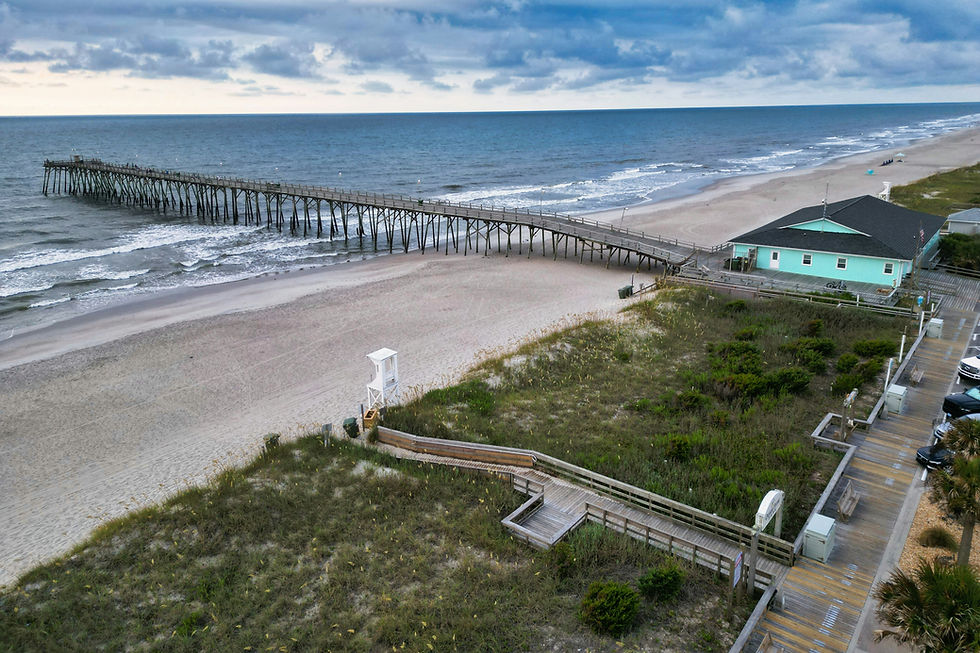
Kure Beach is the quieter southern end of Pleasure Island — a residential, family-calmer alternative to Carolina Beach's Boardwalk energy, sitting minutes from two of the Cape Fear coast's strongest family demand magnets. New Hanover County visitor spending reached $1.14 billion in 2024 (Wilmington and Beaches CVB), and Kure Beach's short-term rental market rewards hosts who sell attraction-anchored family weeks, not generic Pleasure Island beach copy. AirROI's trailing-12-month window (June 2025–May 2026, updated June 2, 2026) shows 495 active listings, a $468 average daily rate, $200 RevPAR, and roughly $46,813 in average annual revenue per listing — with revenue up 26.3% year-over-year against 27.2% supply growth. That growth story is real, and the supply curve is real too: nearly half the inventory sleeps eight or more guests, which means your listing is not competing against a boutique condo market — it is competing against a deep pool of multi-generational family houses that all claim beach proximity until a guest opens the photo gallery and cannot tell one property from the next.
Kure is the aquarium-and-history family niche on Pleasure Island — higher ADR than Carolina Beach's $357 average, with guests who chose quiet over boardwalk nightlife before opening your listing. Hosts who sell Fort Fisher rainy-day plans, Civil War history, pier mornings, and Southport ferry day trips hold rate; hosts who market "Carolina Beach but cheaper" compete on price in a 495-listing pool where half the inventory sleeps eight or more. The comparison that defines your marketing is not Kure versus Wrightsville or Kure versus Oak Island; it is Kure versus Carolina Beach on the same island, where Carolina averages $357 ADR and $38,010 revenue on 1,671 listings while Kure runs $468 ADR and $46,813 revenue on 495 listings. Carolina sells boardwalk energy; Kure sells quieter family beach with Fort Fisher anchors minutes away — and your title, photography, and guidebook are how you escape commodity pricing when a guest has already decided they want the aquarium corridor without the carnival density three miles north.
This is the marketing playbook for independent operators on Kure Beach in 2026 — what the demand actually looks like, the compliance facts that belong in your listing materials, the operator landscape you are working against, and the concrete moves that separate an attraction-anchored listing from the interchangeable Pleasure Island houses on the platform. Read it as an editorial strategy document for the south end of Pleasure Island, where aquarium-and-history anchor density, pier photography, rainy-day guidebook depth, and named-search content on your direct site are how an independent host competes against legacy Pleasure Island managers without out-listing them on inventory count.
The Kure Beach Market in Plain Numbers
Kure Beach occupies the southern tip of Pleasure Island in New Hanover County, connected to Carolina Beach to the north and Fort Fisher to the south. On AirROI's market-wide averages (June 2025–May 2026, updated June 2, 2026), Kure Beach carries 495 active short-term rental listings, 40.5% trailing-12-month occupancy, a $468 ADR, $200 RevPAR, and peak July performance near $11,604 monthly revenue per listing at 67.7% occupancy and $532 ADR. January trough averages run closer to $2,365 monthly revenue and 21.3% occupancy — a winter floor that rewards hosts who merchandise education and history in shoulder weeks, not hosts who treat November through February as dead calendar. When you cite occupancy anywhere in your listing materials or investor conversations, name the methodology every time: AirROI's 40.5% is trailing-twelve-month market-wide; July peak occupancy on the same provider runs 67.7%, and conflating those figures is how hosts misprice shoulder season or overpromise summer performance to guests comparing Kure to Carolina Beach on headline rate alone.
The property mix is house-led in a way Carolina Beach is not: 99.4% entire-home on AirROI, 64.4% houses versus Carolina Beach's 49.7% condo share, with 3-bedroom units the modal size (22.4%) and 50.9% of inventory accommodating eight or more guests. You are competing in a multi-generational family segment where oceanfront pier proximity, aquarium-and-history anchor density, pet-friendly positioning, and a credible quiet-family story matter more than sleeps-12 bunk density alone. The comparison that matters is Kure Beach versus Carolina Beach on the same island: Carolina Beach averages $357 ADR and $38,010 revenue on 1,671 listings with a 49.7% condo share, while Kure runs $468 ADR and $46,813 revenue on 495 listings with 64.4% houses. Kure sells premium calm with named attractions — not the lowest nightly rate on Pleasure Island — and your title, photography, and guidebook are how you escape commodity pricing in a market where revenue grew 26.3% year-over-year against 27.2% supply growth.
Provider methodologies will disagree; name the source every time you quote a figure and use AirROI as the primary spine for market-wide averages. Kure's premium ADR leadership on Pleasure Island reflects a drive-to guest from Raleigh, Charlotte, and the Triad who plans summer weeks in winter and scans shoulder-season aquarium dates in spring — not a last-minute bargain hunter scrolling Carolina Beach boardwalk listings. Your marketing should assume that planner and merchandise accordingly: NC Aquarium at Fort Fisher, Fort Fisher State Historic Site, Kure Beach Pier, and Southport-Fort Fisher ferry day trips are not tourism trivia — they are the anchor phrases that separate a positioned listing from the interchangeable houses on the platform.
Who Books Kure Beach and Why
The guest who books Kure is overwhelmingly domestic and drive-market: roughly 71 days average booking lead time on regional Pleasure Island data, with Charlotte and Raleigh as top origin metros per the 2021 NC Visitor Profile. Your marketing should assume Triangle and Triad families who want Pleasure Island's aquarium and Fort Fisher access without Carolina Beach's boardwalk commotion — plus a secondary history-and-education audience that books shoulder weeks and rainy-day-heavy summer blocks because the attractions smooth demand when beach weather does not cooperate. Peak season runs June through August with July as the revenue anchor; the booking lead window that matters is winter and early spring, when with roughly 71 days average lead time on regional Pleasure Island data, Triangle families planning school-release weeks lock calendars in January through March, not the week before arrival.
Listings optimized in August index for the next year's Q1 planning surge; listings still running generic copy in March fight for scraps in a 495-listing pool where Carolina Beach carries 1,671 listings three miles north. Price peak July weeks six to nine months ahead; oceanfront pier-walk homes on Kure book late-June and July 4th early. Underpricing July to "stay full" destroys ADR in a market already averaging $468 — and the guest who chose Kure over Carolina Beach already decided they want aquarium-and-history anchors without boardwalk carnival density.
Shoulder season rewards hosts who merchandise education and history, not deeper discounts alone: the aquarium draws families year-round as a rainy-day stabilizer; Fort Fisher historic-site trails convert September and October trips when swimming is secondary. Price shoulder weeks 15–20% below peak July and merchandise ferry-day Southport dining in the guidebook. Winter is thinner than Wilmington urban demand, but remote-work families can extend the calendar with monthly landing pages and 28+ night pricing — separate title keywords for winter stays versus peak July weeks so you do not train summer guests to expect winter rates or vice versa.
Tax, Regulatory, and Listing Compliance
North Carolina's Schroeder v. City of Wilmington decision (NC Court of Appeals, April 5, 2022) and N.C.G.S. 160D-1207(c) preempt municipal STR registration mandates, caps, and lotteries while preserving town authority over zoning, parking, noise, and nuisance enforcement. Kure Beach cannot run a Wilmington-style registration scheme — but hosts still must register for accommodations tax collection with New Hanover County and comply with HOA deed restrictions that can override permissive town zoning, especially in oceanfront condo regimes and deed-restricted subdivisions on the island's north end.
Guest-paid taxes run approximately 13% combined: 7% New Hanover sales tax plus 6% county room occupancy tax applied countywide including Kure Beach (New Hanover County Finance). Marketplace platforms remit on your behalf for most Airbnb and Vrbo bookings; direct bookings require self-remittance monthly, due by the 20th of the month after the reporting month. State plainly in host-facing materials that the property collects standard New Hanover occupancy tax and that guests should expect countywide parking, occupancy-per-bedroom, and noise compliance — not because regulatory trivia drives bookings, but because families booking a $4,000+ Kure week want a host who knows parking limits, pet policies, and rainy-day backup plans before they commit.
Fort Fisher anchors need guidebook specificity — separate aquarium and historic-site entrances, hours, and parking, plus ferry reservation guidance for Southport day trips. Families booking a $4,000+ Kure week want a host who knows parking limits, pet policies, and rainy-day backup plans, and vague "minutes to attractions" copy fails the filter guests use when they compare Kure to Carolina Beach explicitly on rainy-day options. Name the NC Aquarium at Fort Fisher (roughly five minutes south), Fort Fisher State Historic Site and State Recreation Area, the Kure Beach Pier, the Southport-Fort Fisher ferry as a half-day Brunswick trip, and Carolina Beach Boardwalk access roughly three miles north for guests who want one boardwalk night — with distances, not vague proximity language. AI travel assistants surface "quiet family beach near Fort Fisher Aquarium" and "Kure Beach vs Carolina Beach" together; your listing should own that connection in plain, accurate prose in the description, the welcome book, and any direct-booking pages you publish for repeat drive-market families.
The Property Management Competitive Landscape
Kure inventory sits under Pleasure Island specialists — Carolina Beach Realty, Bullard Realty, Bryant Real Estate, and Intracoastal Vacation Rentals. Corporate managers win on distribution; independent hosts win on aquarium-and-history story depth and named-search content corporate templates do not pursue. Your job is not to out-list Bryant on door count. It is to out-story the commodity three-bedroom house with no narrative beyond "steps to the beach" — Fort Fisher anchor density, pier photography, rainy-day guidebooks, and direct pages for families who chose Kure's calm south end over Carolina Beach boardwalk energy.
The realistic path is narrower and deeper: aquarium-and-pier photography, Fort Fisher rainy-day guidebook depth, pet-friendly positioning for guests explicitly avoiding Carolina Beach boardwalk energy, and content targeting "Kure Beach family rental near aquarium" and "quiet Pleasure Island beach rental" — queries corporate templates do not pursue. What corporate managers do not have is the willingness to invest in listing-level Fort Fisher narrative depth, accurate ferry and aquarium guidance, and family-layout photography at the depth that turns an one-time booking into a returning Triangle family pattern.
Independent hosts on Kure Beach win by being more obviously specific about pier walk proximity, aquarium drive time, pet policy, and rainy-day backup plans than the corporate manager property page that treats every Pleasure Island house as interchangeable beach inventory. More than half of Kure inventory sleeps eight or more on AirROI, so oceanfront units lead with pier-walk proximity while second-row units lead with aquarium drive time and quieter street identity.
Seven Marketing Moves That Separate a Kure Beach Listing
Lead with photography that sells the aquarium-and-history family niche — golden-hour frames from the oceanfront deck with the Kure Beach Pier in the background, kids staged with rain jackets and aquarium tickets on the kitchen counter, a family walking the Fort Fisher historic-site trail, pier sunrise without boardwalk carnival in frame, and a golf-cart or bike on a quiet Kure street — not generic wide-angle living rooms indistinguishable from Carolina Beach's condo feed. Guests choosing Kure over Carolina Beach are choosing calm and named attractions, not nightlife energy. Your first three frames should make that choice obvious before a guest reads a word of description copy, because platform search and AI trip-planners surface visual proof before prose on saturated Pleasure Island feeds where Carolina Beach carries 1,671 listings and Kure carries 495.
Build anchor density in the listing description and welcome book: name the NC Aquarium at Fort Fisher (roughly five minutes south), Fort Fisher State Historic Site and State Recreation Area, the Kure Beach Pier, the Southport-Fort Fisher ferry as a half-day Brunswick trip, and Carolina Beach Boardwalk access roughly three miles north — with distances, not vague "near attractions" language. More than half of Kure inventory sleeps eight or more on AirROI, so oceanfront units lead with pier-walk proximity while second-row units lead with aquarium drive time and quieter street identity. Title patterns like "Kure Beach NC | 3BR | Sleeps 8 | Walk to Pier | 5 Min to Aquarium" outperform "Beautiful Beach Getaway" because guests search with intent, not adjectives.
Rebuild shoulder-season tiers every August, add a rainy-day guidebook section with aquarium hours, ticket links, and Fort Fisher historic-site trail maps, capture email at check-in, and offer returning families first access to peak July weeks before you open the calendar on OTAs. Price shoulder weeks 15–20% below peak July nightly equivalent — not winter-discount levels — and merchandise ferry-day Southport dining and one-night Carolina Beach Boardwalk access for guests who want carnival energy without sleeping in it. On a $4,000 peak week, Airbnb's host-only fee model (~15.5% of booking subtotal per Houfy 2026 analysis) makes a 10% direct discount profitable for both sides — and repeat-Triangle-family lifetime value on Kure exceeds almost any paid-acquisition channel you could buy.
Own named-market search on your direct site for queries corporate managers do not pursue: "Kure Beach family rental near aquarium," "quiet Pleasure Island beach rental," "Fort Fisher Aquarium vacation rental," "Kure Beach vs Carolina Beach," and "Kure Beach pier walk rental" carry modest volume, high commercial intent, and thin competitive content. Independent hosts can build organic visibility and AI citations without outspending Carolina Beach Realty on platform reach — and the guests who find you through those phrases are already pre-qualified for the aquarium-and-history niche you are actually selling. Pair direct-site content with synced OTA calendars, port verified reviews, and a digital guidebook that doubles as local SEO: families forward rainy-day aquarium plans; AI assistants cite ferry and parking guidance when travelers ask how Kure differs from Carolina Beach.
Shoulder Season, Rainy-Day, and Winter Calendar Strategy
The NC Aquarium at Fort Fisher is Kure Beach's year-round demand stabilizer — families book shoulder weeks and rainy-day-heavy summer blocks because the aquarium smooths revenue when beach weather does not cooperate. Merchandise rainy-day backup explicitly in listing copy, not as a buried amenity line: aquarium hours, ticket links, parking guidance, and a ranked list of Fort Fisher historic-site trails belong in the digital guidebook before check-in, because guests comparing Kure to Carolina Beach filter on rainy-day options first.
September and October shoulder weeks reward hosts who merchandise education and history at 15–20% below peak July nightly equivalent — Fort Fisher historic-site trails, aquarium programming, and ferry-day Southport dining convert trips when swimming is secondary and January trough occupancy runs 21.3% on AirROI. Winter is thinner than Wilmington urban demand, but remote-work families and retired couples can extend the calendar with monthly landing pages, 28+ night pricing 40–55% below peak-weekly-equivalent, and title keywords like "Kure Beach monthly winter rental" that separate winter merchandising from peak July family weeks.
Rebuild shoulder tiers every August with refreshed photography showing fall pier light and aquarium-day lifestyle frames — not the same July hero shot guests have seen on every Pleasure Island listing. Hold summer minimum nights firm and resist training guests to expect deep off-season discounts that cannibalize your July $532 peak ADR. Rebuild shoulder-season tiers every August, add a rainy-day guidebook section with aquarium hours, ticket links, and Fort Fisher historic-site trail maps, capture email at check-in, and offer returning families first access to peak July weeks before you open the calendar on OTAs.
Pet-friendly positioning is a genuine Kure differentiator for guests explicitly avoiding Carolina Beach boardwalk energy — families traveling with dogs filter for quiet residential streets and pier-walk access without carnival noise, and a credibly pet-friendly listing with yard fencing, outdoor rinse, and honest beach-pet rules converts that intent better than a generic "pets allowed" toggle. Merchandise pet policy in the title when accurate: "Kure Beach | Quiet Pleasure Island | Pet Friendly | Near Fort Fisher" outperforms burying pet access in house rules guests never read before booking.
Direct Booking, Repeat Guests, and Named-Market Search
Kure Beach's drive-market family profile — roughly 71 days average booking lead time, Charlotte and Raleigh as top origin metros — makes repeat-guest capture the highest-ROI marketing investment an independent host can make. Run a clean direct calendar synced to Airbnb and Vrbo, port verified reviews, state New Hanover occupancy tax collection plainly, and offer returning Triangle families a 10% direct-booking incentive that still leaves you ahead of Airbnb's host-only fee model (~15.5% of booking subtotal per Houfy 2026 analysis).
Named-market search targets the guest who has already chosen Kure over Carolina Beach. Queries like "Kure Beach family rental near aquarium," "quiet Pleasure Island beach rental," "Kure Beach vs Carolina Beach," and "Fort Fisher Aquarium vacation rental" carry modest volume, high commercial intent, and thin competitive content corporate managers do not pursue. Build one editorial landing page per high-intent phrase, answer the Kure-versus-Carolina comparison with filterable facts in the first paragraph, and mirror those keywords in your listing title and description — consistency across surfaces builds the topical signal platform search and AI citation reward.
Position for intent, not rivalry, on direct-site content: Carolina Beach guests want boardwalk walkability and high-energy summer weekends. Kure guests want pier quiet, residential streets, and Fort Fisher anchors. Your copy should say "five minutes to NC Aquarium, three miles to Carolina Beach Boardwalk for guests who want one carnival night" — giving families both without claiming superiority.
Sync OTA calendars, port verified reviews, and build a digital guidebook that doubles as local SEO — families forward rainy-day aquarium plans to grandparents; AI assistants cite ferry and parking guidance when travelers ask how Kure differs from Carolina Beach. That operational specificity in the guidebook is a marketing asset legacy Pleasure Island managers skip on corporate property pages, and it is how an independent host out-positions Bryant Real Estate and Carolina Beach Realty on a single listing without out-distributing them on inventory count.
How Kure Beach Differs From Carolina Beach and Pleasure Island
Kure Beach and Carolina Beach share Pleasure Island and New Hanover County tax filing, but they operate as different short-term rental products. Carolina Beach is the boardwalk-and-condo high-turnover market — 1,671 listings, $357 ADR, 49.7% condos, and July occupancy near 68.4% on AirROI. Kure is the quieter, house-led, attraction-anchored south end — 495 listings, $468 ADR, 64.4% houses, and a guest who pays more for calm and Fort Fisher proximity. Position positively: this is the Pleasure Island address where families pay for aquarium-and-history access, pier mornings without carnival energy, and residential street quiet — not for Britt's Donuts walkability and boardwalk fireworks density.
Selling Kure as Carolina Beach with fewer restaurants or Wrightsville with lower ADR confuses the guest who already knows they want the Fort Fisher corridor without the boardwalk. Front-load listing description copy with filterable facts — bedroom count, sleeps count, pier walk proximity, aquarium drive time, pet policy, and ferry-day Southport option — and mirror those phrases on your direct site and Google Vacation Rentals feed if you run one. The strongest Kure pitch is not rivalry copy — it is "five minutes to NC Aquarium, three miles to Carolina Beach Boardwalk for guests who want one carnival night," giving families both without claiming superiority. AI assistants surface "Kure Beach vs Carolina Beach" constantly; answer the comparison with filterable facts in the title, the first three photos, and the guidebook itinerary that names Fort Fisher, the pier, and ferry logistics with actual distances.
Keep going on Crest & Cove: Carolina Beach against AirROI · Wrightsville Beach against AirROI · the Crest & Cove intro · local SEO keywords that actually book · the five elements of a converting hero · how to compare STR marketing agencies · Wilmington against AirROI · Asheville paddling spots worth the drive. This is the marketing playbook for independent operators on Kure Beach in 2026 — what the demand actually looks like, the compliance facts that belong in your listing materials, the operator landscape you are working against, and the concrete moves that separate an attraction-anchored listing from the interchangeable Pleasure Island houses on the platform.
Frequently Asked Questions
How far is the NC Aquarium at Fort Fisher from Kure Beach rentals?
Most Kure Beach addresses sit roughly five to ten minutes south by car from the NC Aquarium at Fort Fisher and the adjacent Fort Fisher State Historic Site — verify drive time from your specific access point and put it in the listing description, not a vague "minutes to aquarium" line. Families search this filter explicitly when comparing Kure to Carolina Beach. Include aquarium hours, ticket links, and a rainy-day backup plan in your digital guidebook.
What are the Airbnb and short-term rental rules in Kure Beach, NC?
North Carolina's Schroeder decision and N.C.G.S. 160D-1207(c) preempt municipal STR registration mandates and numeric caps; Kure Beach regulates through zoning, parking, occupancy, and noise enforcement rather than a Wilmington-style permit lottery. Hosts must collect and remit New Hanover County's 6% room occupancy tax (Airbnb and Vrbo remit on platform bookings; direct bookings require monthly self-remittance to county finance). HOA deed restrictions in condo and subdivision communities can override town permissiveness and are the most common compliance trap on Pleasure Island.
How should I title a Kure Beach listing to rank for aquarium and quiet-beach searches?
Lead with location, bedroom count, sleeps count, and your attraction differentiator — pier walk, aquarium proximity, pet-friendly, or oceanfront. Strong patterns include "Kure Beach NC | 3BR | Sleeps 8 | Walk to Pier | 5 Min to Aquarium" for family inventory and "Kure Beach | Quiet Pleasure Island | Pet Friendly | Near Fort Fisher" for guests explicitly avoiding Carolina Beach boardwalk energy. Weak patterns like "Beautiful Beach House" contain no filterable information and blend into the Pleasure Island supply pool.
What photography actually converts on Kure Beach — and what is wasted spend?
Wasted spend is generic coastal photography: stock sunset, identical living rooms, pool shots that could be any Pleasure Island house. Converting photography sells the niche — pier visible from the deck at golden hour, aquarium tickets staged on the counter, family on the Fort Fisher historic trail, quiet street with bikes, and east-facing sunrise from the oceanfront deck. Lead with calm-and-attractions identity, not appliance counts.
How do I market Kure Beach against Carolina Beach without sounding negative?
Position for intent, not rivalry. Carolina Beach guests want boardwalk walkability and high-energy summer weekends. Kure guests want pier quiet, residential streets, and Fort Fisher anchors. Your copy should say "five minutes to NC Aquarium, three miles to Carolina Beach Boardwalk for guests who want one carnival night" — giving families both without claiming superiority. AI assistants surface "Kure Beach vs Carolina Beach" constantly; answer the comparison with filterable facts.
Can an independent host compete with Bryant Real Estate and Carolina Beach Realty on Kure Beach?
You will not out-distribute legacy Pleasure Island managers on inventory count. You can out-position them on a single listing with aquarium-and-history narrative depth, accurate Fort Fisher and ferry guidance, family-layout photography, and named-search content corporate templates do not pursue — the exact queries AI assistants surface when travelers ask for the quiet family beach near the Fort Fisher Aquarium.
Who Books Kure Beach and Why?
Kure Beach is the quieter southern end of Pleasure Island — a residential, family-calmer alternative to Carolina Beach's Boardwalk energy, sitting minutes from two of the Cape Fear coast's strongest family demand magnets. The realistic path is narrower and deeper: aquarium-and-pier photography, Fort Fisher rainy-day guidebook depth, pet-friendly positioning for guests explicitly avoiding Carolina Beach boardwalk energy, and content targeting "Kure Beach family rental near aquarium" and "quiet Pleasure Island beach rental" — queries corporate templates do not pursue.
How should a host read this: The Property Management Competitive Landscape?
The Property Management Competitive Landscape. State plainly in host-facing materials that the property collects standard New Hanover occupancy tax and that guests should expect countywide parking, occupancy-per-bedroom, and noise compliance — not because regulatory trivia drives bookings, but because families booking a $4,000+ Kure week want a host who knows parking limits, pet policies, and rainy-day backup plans before they commit.
Related Reading
Keep reading on same-cluster Crest & Cove pages that stay on labeled local lines without costume-corridor copy.
DIY vs. Hire in Many, LA: Why Independent Hosts Still Run Most Listings
DIY or Hire in Depoe Bay: What the Numbers Say for STR hosts
DIY vs Hire in Seattle: Independents Still Write Most Listings
Financing a Springfield, MA Rental Without a Neighbor City Year
Financing a Grove, OK Rental: What a DSCR Underwriter Actually Wants
What It Actually Costs to Start a Grove OK STR: The One Published Fee
How to Underwrite an Akron, Ohio Rental With Its Own Numbers
What It Actually Costs to Register a Short-Term Rental in Akron
Work with Crest & Cove Creative
Write this town's year. Do not file another market's number as this stay.
Reach out at crestcove.co or (256) 998-7502.


Comments