
How to Market a Short-Term Rental in Wilmington NC the River City

Updated: Aug 28
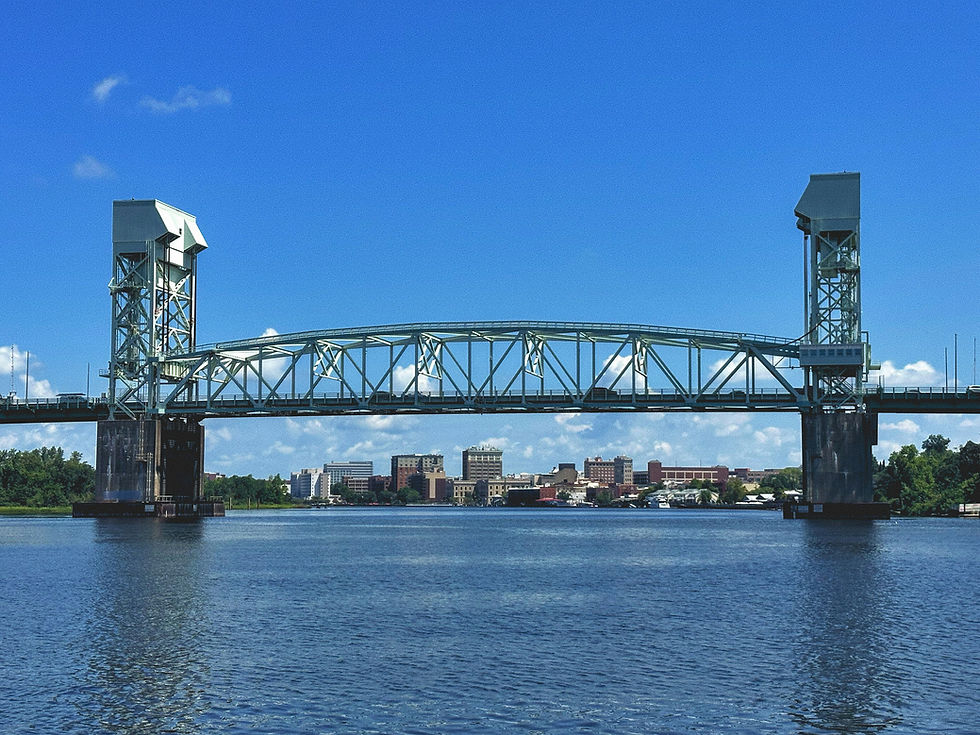
Wilmington, North Carolina, is not a beach market. It is something more economically interesting — a year-round event-and-institution market where the demand engine is not a single July-and-August summer peak followed by a winter trough, but a diversified, four-source, layered curve that dramatically smooths seasonality relative to comparable coastal North Carolina markets. The most-cited data point that captures this distinction: Wilmington's peak-to-trough occupancy ratio runs approximately three-and-one-tenth-to-one, while the Outer Banks comparable runs roughly eight-and-two-tenths-to-one. The Outer Banks operator runs hard for two months and parks the property eight; the Wilmington operator runs at sustained occupancy through nearly all twelve months with no single dead window. The marketing playbook is materially different because the market is.
The structural numbers that frame the Wilmington opportunity: approximately one thousand one hundred active vacation rental listings across the New Hanover County area, average daily rate running roughly one hundred sixty-seven to one hundred seventy-four dollars per night (well below the broader North Carolina state average of approximately two hundred sixty dollars), occupancy holding around fifty-nine percent on a roughly two-hundred-fifteen-night annual booking pace, and revenue distribution across the year that the platforms cannot easily explain because they aggregate beach-resort-style and city-event-style inventory into a single 'Wilmington' bucket. Verify the specific figures against current AirDNA or Key Data at the point of acting on this playbook — the market shifts and the headline figures vary by source — but the directional shape (lower ADR than the broader state average plus higher year-round occupancy stability) is the defining structural feature.
This guide is the marketing playbook tuned to the four-engine demand structure that actually defines the market. We walk through the demand engines (film industry, University of North Carolina Wilmington, the regional medical corridor anchored by Novant New Hanover Regional Medical Center, and the heavy weddings-and-river-cruises calendar), the feeder markets and drive-to pattern that shape acquisition (Triangle, Charlotte, Triad, all drive-market origins rather than fly-market origins), the named sub-markets a buyer searches (downtown Historic District, riverfront condo, Midtown and Mayfaire), the long-stay positioning that captures the high-margin 28-plus-night film-and-medical-and-UNCW segments, the merchandising patterns that win in each engine, and the post-Schroeder regulatory reality that distinguishes Wilmington from cities with stricter STR caps. We do not assert specific ordinance terms; the responsible action is verification at the point of decision, and we route to the dedicated regulation guide for specifics.
The Four Non-Beach Demand Engines That Smooth Wilmington's Calendar
Most coastal North Carolina vacation rental markets — Outer Banks, Topsail, Emerald Isle, Sunset Beach — run on a single beach-vacation demand engine that produces sharp summer peaks and deep winter troughs. Wilmington runs on four overlapping demand engines, and the diversification is the entire reason the peak-to-trough ratio looks the way it does. Understanding each engine and positioning your property to capture two or three of them is the foundational marketing move.
**Engine One: The film industry, anchored by EUE/Screen Gems Studios.** Wilmington has been one of the largest film and television production hubs outside Los Angeles and New York for decades, with EUE/Screen Gems Studios at the heart of the local production ecosystem. Productions in active development typically run for six to fifteen weeks and bring crews ranging from forty to two hundred fifty people who need extended-stay housing for the production cycle. The crew-housing booking is typically twenty-eight-plus nights at meaningful per-night rates, with monthly-discount expectations baked into the negotiation. Properties positioned for film crew capture are typically downtown or Midtown locations within fifteen to twenty minutes of the studio complex, with strong Wi-Fi, dedicated workspaces, mid-month turnover flexibility, and host tolerance for the work-from-anywhere creative-professional guest profile.
**Engine Two: University of North Carolina Wilmington (UNCW).** UNCW enrolls approximately eighteen thousand students and produces a sustained calendar of parent-and-family demand spikes across the academic year. Parents' weekends, graduation in May, athletic events (UNCW basketball home games, baseball tournaments, broader CAA athletic conference visits), summer orientation sessions, prospective-student campus visits, and various academic conferences and continuing-education events produce four- to five-day booking demand at premium rates throughout the calendar. Properties positioned for UNCW capture should reference the campus by name, explicitly address the parents'-weekend and graduation calendars, and provide capacity for the typical parents'-plus-student visit (four to six guests, multiple bedrooms, and comfortable common areas for family meals).
**Engine Three: The regional medical corridor, anchored by Novant New Hanover Regional Medical Center.** The medical corridor in southeastern North Carolina is anchored by Novant New Hanover Regional Medical Center and includes oncology, cardiology, and specialty care services that draw patient families from across the Carolinas and the broader Southeast. Travel nurses on thirteen-week assignments at Novant and the regional hospital system represent a meaningful long-stay segment; patient families staying for treatment cycles produce one- to four-week bookings on a more emotionally sensitive booking pattern. Properties positioned for medical-corridor capture should provide quiet locations, reliable Wi-Fi, simple-and-clean staging, and policies and operational flexibility appropriate to the medical-travel guest profile.
**Engine Four: The weddings and river-cruises calendar.** Wilmington is a strong wedding destination — the Cape Fear River, the historic-district architecture, the broader brick-and-cobblestone aesthetic, and multiple established wedding venues (Bellamy Mansion, the City Club, various boutique properties) produce a sustained wedding calendar through most of the year with peak months in April-May and September-October. Wedding-party weekend bookings are typically three-to-five-night premium-rate weekend stays for groups of six-to-twelve guests staying in larger downtown or near-downtown properties. The Cape Fear Riverboat operations (Cape Fear Riverboats, Henrietta III) and other river-tourism operations add a recurring visitor-segment booking layer to the weekend mix.
The marketing implication: every Wilmington property has the opportunity to position for two or three of these engines depending on its inventory characteristics. A downtown Historic District four-bedroom with character and walkability can credibly capture weddings, UNCW parents' weekends, film crew (for larger productions or extended-family-of-crew bookings), and medical-corridor segments simultaneously through differentiated listing-copy sections. The platform-default 'lovely downtown Wilmington home' positioning captures none of them well; the engine-specific positioning captures all of them better than competing inventory.
The Feeder Markets: Drive-To Origins, Not Fly-To
The Wilmington source-market geography is overwhelmingly drive-to from the broader Carolina population centers. The major feeders: the Triangle (Raleigh-Durham-Chapel Hill) sits approximately two hours northwest via Interstate 40 and US-70; Charlotte sits approximately three-and-a-half hours west via I-40 and I-95; the Piedmont Triad (Greensboro-Winston-Salem-High Point) sits approximately three hours west; the broader South Carolina coast and Charleston-area corridor produce secondary feeders along I-40 and US-17. Out-of-state demand from the broader mid-Atlantic and Northeast arrives by car along I-95 and the broader Eastern Seaboard corridor.
The drive-to dynamic shapes booking psychology in specific ways. Drive-to guests typically plan with longer lead times for destination-vacation trips (three to twelve weeks for summer vacation, longer for the parents' weekend and graduation calendars), and shorter lead times for opportunistic weekend escapes (two to six weeks for off-peak weekend bookings). The Charlotte and Triangle weekender booking the property for a downtown Wilmington and Riverwalk weekend is a more spontaneous booker than the Wisconsin family booking a beach week at Wrightsville. The listing-copy patterns that capture each segment differ; the drive-to specifics worth naming in the description include drive times from the Triangle, Charlotte, and the Triad, with route notes.
The Named Sub-Markets and Their Distinct Buyer Profiles
Wilmington's vacation rental market comprises three distinct sub-markets that buyers actively search for, each capturing different guest segments. The mapping:. We walk through the demand engines (film industry, University of North Carolina Wilmington, the regional medical corridor anchored by Novant New Hanover Regional Medical Center, and the heavy weddings-and-river-cruises calendar), the feeder markets and drive-to pattern that shape acquisition (Triangle, Charlotte, Triad, all drive-market origins rather than fly-market origins), the named sub-markets a buyer searches (downtown Historic District, riverfront condo, Midtown and Mayfaire), the long-stay positioning that captures the high-margin 28-plus-night film-and-medical-and-UNCW segments, the merchandising patterns that win in each engine, and the post-Schroeder regulatory reality that distinguishes Wilmington from cities with stricter STR caps.
**Downtown Historic District:** the brick-and-cobblestone, antebellum-and-Victorian-architecture neighborhood along the Cape Fear River with high walkability to the Riverwalk, downtown restaurants, the Cotton Exchange, Thalian Hall, the Bellamy Mansion, and the broader cultural commercial district. Historic District properties command meaningful rate premiums for character and walkability; the buyer profile skews toward heritage-and-culture-traveler, anniversary-and-romantic-getaway, downtown-event-attendee, and wedding-party weekend segments. Walkability is the central value proposition. Off-street parking is the highest-leverage single amenity in this sub-market because most Historic District properties have limited parking, and guests with multiple vehicles experience the parking shortage as a significant negative.
**Riverfront condo (Cape Fear River and Intracoastal Waterway):** newer condominium inventory along the Cape Fear River and the broader waterway, including Pier 33, the Brooklyn Arts District-adjacent waterfront, and the broader Intracoastal-adjacent inventory. The buyer profile skews toward couples-weekender, professional-travel, river-view-seeking, and medical-corridor extended-stay guests who value modern amenities and predictable Wi-Fi. River-view positioning is the central value proposition; the listing should lead with the water view and the walking-distance access to downtown amenities.
**Midtown and Mayfaire:** the broader residential and commercial corridor stretching from the central university area through Mayfaire (the upscale shopping-and-dining commercial district) and into the broader east-side neighborhoods. The buyer profile is more diversified — UNCW parents-and-family stays, film-crew long-stay bookings, medical-corridor extended-stays, and the broader regional weekender. Midtown properties typically capture the long-stay segments more easily than Historic District properties (more residential character, more parking, often more space per dollar), while Historic District properties capture the premium-weekend and event-anchored segments more easily. Both sub-markets work; the property's characteristics determine which segment to lead with.
Long-Stay Positioning: The 28-Plus-Night Margin Engine
The single highest-leverage operational positioning available to Wilmington hosts is the long-stay segment — twenty-eight-plus-night bookings from the film, medical, and UNCW academic-year segments that produce sustained high-occupancy revenue with materially lower per-booking turnover cost than nightly-stay inventory. Most Wilmington hosts default to nightly-stay positioning and miss the long-stay opportunity entirely; operators who explicitly market to the long-stay segment capture meaningful annual revenue at higher per-booking margins.
The long-stay segment merchandising checklist:. The single highest-leverage operational positioning available to Wilmington hosts is the long-stay segment — twenty-eight-plus-night bookings from the film, medical, and UNCW academic-year segments that produce sustained high-occupancy revenue with materially lower per-booking turnover cost than nightly-stay inventory. Properties that execute long-stay positioning correctly typically run 40 to 60 percent of their annual booking nights in the long-stay segment, with the balance filled by weekend and event bookings.
Configure monthly discounting (typically 15–30% below the nightly rate) in your Airbnb and Vrbo settings to qualify for the platforms' long-stay-search filters
Add a dedicated 'For Extended Stays' section to your listing description, naming the film-industry, medical-travel, and UNCW academic-year segments with specific benefits (workspace, fast Wi-Fi, kitchen for daily cooking, in-unit laundry, parking)
Verify and name your Wi-Fi speed in Mbps explicitly (download and upload) — the work-from-anywhere film-crew and medical-travel guest filters on this binary criterion; generic 'high-speed Wi-Fi' loses to specific numbers
Provide a dedicated workspace with a real desk and chair — not just a kitchen-table-as-improvised-workspace
List on Furnished Finder (the long-stay platform that medical-travel guests use heavily) in addition to Airbnb and Vrbo
Allow flexible mid-month check-in and check-out for the film-crew segment where production calendars do not align with calendar-month boundaries
Configure your cleaning and turnover operations for the lower-frequency long-stay pattern (deep clean between guests rather than rapid turnover)
Price the long-stay segment at meaningfully below the nightly-equivalent rate but above the bare-minimum monthly-discount floor — the segment is willing to pay for quality and is not the cheapest-option-only segment
Address pet policy explicitly with the long-stay segment in mind (travel nurses and film crew often travel with pets; pet-friendly long-stay properties command premium positioning)
Provide parking for the typical long-stay vehicle count (one or two vehicles minimum; some film-crew bookings need three-plus parking spots)
Properties that execute long-stay positioning correctly typically run 40 to 60 percent of their annual booking nights in the long-stay segment, with the balance filled by weekend and event bookings. The math frequently produces higher annual revenue than a nightly-stay-only operation despite the lower per-night rate, because the occupancy gain meaningfully exceeds the rate concession.
The Premium Downtown Hook: Historic District Walkability and the Riverwalk
For downtown Historic District properties specifically, the central value proposition is the walkability to the Cape Fear River and the downtown cultural and culinary district. The listing-copy patterns that capture this value:. **Downtown Historic District:** the brick-and-cobblestone, antebellum-and-Victorian-architecture neighborhood along the Cape Fear River with high walkability to the Riverwalk, downtown restaurants, the Cotton Exchange, Thalian Hall, the Bellamy Mansion, and the broader cultural commercial district.
Name the Cape Fear Riverwalk in the title and the first paragraph with walking distance ('two blocks from the Riverwalk,' 'five-minute walk to the Cape Fear River')
Reference specific named anchors: Riverwalk, USS North Carolina Battleship Memorial, Bellamy Mansion, the Cotton Exchange, Thalian Hall, Old Wilmington City Market, the broader downtown dining district
Name walking distances to specific restaurants and venues (Front Street, Princess Street, the broader Front-and-Princess restaurant corridor) — guests planning a downtown weekend search for walking distance to dining specifically
Emphasize the brick-and-cobblestone-and-Victorian character of the district through photography (golden-hour exterior, historic architectural details, the streetscape itself in supporting shots)
Address the off-street parking situation honestly and clearly — guests planning a downtown Wilmington stay are increasingly anxious about parking, and the property with verified off-street parking commands a premium that justifies prominent placement in the listing
Reference the broader cultural-event calendar: Wilmington Wine and Food Festival, the Cape Fear Wine and Beer Festival, the various Riverfront concerts and events, the Thalian Hall performance schedule
Off-street parking deserves emphasis because it is the highest-leverage single amenity in the downtown Historic District market and the most commonly undersold listing feature in the cluster. Many downtown properties do have off-street parking — driveways, private garages, designated tenant spots — but bury the amenity in the middle of the listing instead of leading with it. The Atlanta-or-Charlotte-or-Triangle family planning a downtown Wilmington weekend reads parking availability as a binary qualifying criterion; the listing that names off-street parking prominently captures the booking that the vague-on-parking competitor loses.
The Post-Schroeder Regulatory Reality
Wilmington's short-term rental regulatory environment is distinct from that of many other coastal cities in ways that meaningfully affect operating economics and hosts' compliance obligations. The key facts that every Wilmington marketing playbook must state correctly:. City of Wilmington (and the broader legal framework around North Carolina General Statute 160D-1207(c)) established that North Carolina cities cannot require short-term rental registration as a separate regulatory regime distinct from general zoning and permitting.
**Schroeder v. City of Wilmington (North Carolina Court of Appeals, 2022).** The North Carolina Court of Appeals' decision in Schroeder v. City of Wilmington (and the broader legal framework around North Carolina General Statute 160D-1207(c)) established that North Carolina cities cannot require short-term rental registration as a separate regulatory regime distinct from general zoning and permitting. The city of Wilmington cannot impose an STR-specific registration cap, lottery, or registration-fee-and-permit framework that targets short-term rentals as a distinct land-use category subject to separate licensing.
**Wilmington Ordinance #0509 (November 21, 2024) and the re-regulation through generally applicable zoning.** Wilmington responded to the Schroeder framework by re-regulating 'short-term lodging' (defined as stays up to twenty-nine nights) through generally applicable zoning and permitting provisions in Chapter 34 of the city code. The framework distinguishes 'homestays' (where the host is on-site during the rental) from 'whole-house rentals' (where the entire property is rented and the host is not on-site), and imposes parking, occupancy, and building-safety standards rather than registration caps or lotteries. The specific zoning districts where whole-house rentals are permitted, the parking-per-bedroom ratios, and any spacing or separation requirements between adjacent whole-house rentals should all be verified with the Wilmington Planning Department for your specific property address before acquiring or listing. We do not assert specific terms in this guide because the framework is evolving and verification at the point of decision is the responsible practice.
**The practical implication for hosts:** Wilmington operates as a 'permissive but zoning-constrained' market — short-term rentals are not prohibited or capped, but the operating model must comply with the applicable zoning district's whole-house-rental-versus-homestay framework and meet parking, occupancy, and building-safety standards. Verify the applicable zoning for your specific address with the Wilmington Planning Department; confirm whether your property is in a district where whole-house rental is permitted; confirm parking-per-bedroom and occupancy compliance; confirm building-safety compliance with applicable codes; and route to our dedicated Wilmington regulation guide for the verification framework.
**Tax structure:** North Carolina state and local lodging tax obligations apply to short-term rentals. The North Carolina state sales tax (currently 4.75% on accommodations under 90 days, plus applicable local sales tax components) plus the New Hanover County occupancy tax apply to most Wilmington short-term rentals. Verify current rates and platform-collection arrangements with the North Carolina Department of Revenue and the New Hanover County tax office before configuring your booking platform tax setup.
Title and Listing-Copy Patterns by Demand Engine
The title and listing-copy patterns that win in Wilmington pack the demand-engine signals into the available characters and capture the search-relevance that generic positioning leaves on the table. Examples by demand engine:. Generic 'near downtown' language loses to 'two blocks from the Riverwalk, five-minute walk to Front Street, ten minutes to UNCW, fifteen minutes to EUE/Screen Gems Studios.' Named-anchor density signals lake-literacy — or in this case, Wilmington-literacy — to both guests and search algorithms, and captures the AI-search citation that generic positioning leaves on the table.
**Weddings and downtown weekend segment:** 'Historic Downtown Wilmington 4BR | Walk to Riverwalk + Front Street | Sleeps 8 | Off-Street Parking.' 'Restored 1890s Victorian | 2 Min to Cape Fear River | Wedding Party Ready | Sleeps 10.'. The title and listing-copy patterns that win in Wilmington pack the demand-engine signals into the available characters and capture the search-relevance that generic positioning leaves on the table.
**UNCW parents' weekend / graduation segment:** 'UNCW Parents Weekend Rental | 5 Min to Campus | Sleeps 6 | Fast Wi-Fi.' 'Mayfaire 3BR | 8 Min to UNCW | Quiet Residential | Comfortable for Family.'. Properties positioned for UNCW capture should reference the campus by name, explicitly address the parents'-weekend and graduation calendars, and provide capacity for the typical parents'-plus-student visit (four to six guests, multiple bedrooms, and comfortable common areas for family meals).
**Film industry / extended stay segment:** 'Wilmington Long-Stay Rental | 28-Night Min | Workspace + Fast Fiber | 15 Min to Screen Gems.' 'Midtown Furnished Apartment | Film Crew Welcome | Flexible Mid-Month Turnover | Pet-Friendly.'. Configuring no monthly discount, no extended-stay section in the description, no workspace, no fast Wi-Fi specifics, no Furnished Finder listing — the four-engine extended-stay opportunity (film + medical + UNCW academic-year) is forgone in favor of nightly-only operation.
**Medical corridor / travel nurse segment:** 'Furnished Apt for Travel Nurses | 10 Min to Novant | Workspace + Quiet | 30+ Night Discount.' 'Quiet Wilmington Studio | Long-Stay Available | Medical Corridor Convenient.'. Travel nurses on thirteen-week assignments at Novant and the regional hospital system represent a meaningful long-stay segment; patient families staying for treatment cycles produce one- to four-week bookings on a more emotionally sensitive booking pattern.
**Riverfront condo / professional traveler segment:** 'Cape Fear Riverfront Condo | River View | Walk to Downtown | Fast Wi-Fi.' 'Wilmington Riverfront 2BR | Pier 33 Area | Quiet + Modern | Professional Stays Welcome.'. **Weddings and downtown weekend segment:** 'Historic Downtown Wilmington 4BR | Walk to Riverwalk + Front Street | Sleeps 8 | Off-Street Parking.' 'Restored 1890s Victorian | 2 Min to Cape Fear River | Wedding Party Ready | Sleeps 10.'.
Inside the listing description, name multiple anchors and serve multiple demand engines via dedicated sections — a Historic District four-bedroom can credibly include 'For UNCW Visitors,' 'For Downtown Weddings,' 'For Wilmington Film Productions,' and 'For Riverwalk Walking Vacations' sections that each speak to the specific guest segment without conflicting. The platform algorithm and the AI search systems extract whichever section matches the guest's query; the multi-section description captures more total search relevance than the single-segment description.
ADR Strategy: Below-State-Average Pricing with Sustained Occupancy
The Wilmington pricing strategy differs from the higher-ADR North Carolina coastal markets because the math runs on sustained occupancy across the long calendar rather than on a premium nightly rate during a short peak. The four-engine demand structure means hosts can maintain consistent year-round occupancy in the $167–$174-per-night range and generate annual revenue that competes well with higher-rate-but-lower-occupancy beach properties. Verify the specific current ADR and occupancy figures against AirDNA or Key Data before acting on this playbook; the directional framing is the structural point.
Tactical pricing discipline for Wilmington:. The structural numbers that frame the Wilmington opportunity: approximately one thousand one hundred active vacation rental listings across the New Hanover County area, average daily rate running roughly one hundred sixty-seven to one hundred seventy-four dollars per night (well below the broader North Carolina state average of approximately two hundred sixty dollars), occupancy holding around fifty-nine percent on a roughly two-hundred-fifteen-night annual booking pace, and revenue distribution across the year that the platforms cannot easily explain because they aggregate beach-resort-style and city-event-style inventory into a single 'Wilmington' bucket.
Configure dynamic pricing (PriceLabs, Wheelhouse, Beyond) with explicit event-week overrides for UNCW parents' weekends and graduation, wedding-season prime weekends (April-May and September-October), major film-production extended-stay windows when known, and downtown event weekends (Wilmington Wine and Food, Cape Fear Wine and Beer Festival, Azalea Festival in April)
Run a meaningful midweek-versus-weekend rate spread during shoulder periods (midweek at 65–75% of weekend) to capture the work-from-anywhere remote-worker segment and the broader Atlanta-corridor-but-Wilmington-style spontaneous weekender
Configure monthly discounting for long-stay-segment qualification (15–30% below nightly rate)
Configure aggressive last-minute discounting (15–25% below standard shoulder rate) inside 14 days for unsold nights — the four-engine demand structure means demand exists year-round; the discounting captures it rather than letting nights stay empty
Tighten minimum-stay rules during prime weekends (3–4 nights for major wedding weekends, UNCW graduation, downtown event weeks) and loosen on midweek nights to capture the short-stay weekender and the long-stay long-tail
Common Wilmington Marketing Mistakes That Cost Bookings
Predictable mistakes recur across underperforming Wilmington listings. First, a generic 'lovely downtown Wilmington home' positioning that fails to explicitly name any of the four demand engines. The property competes on broader 'Wilmington area' inventory and gives up the engine-specific premium that targeted positioning captures. The platform-default 'lovely downtown Wilmington home' positioning captures none of them well; the engine-specific positioning captures all of them better than competing inventory.
Second, treating Wilmington as a generic beach market and pricing flat-summer-high, dead-winter-low. The four-engine structure means Wilmington has meaningful year-round demand; flat seasonal pricing both under-prices the off-peak, event-driven weeks (UNCW graduation, downtown weddings in March or November, etc.) and over-prices the summer (which is real but not as dominant as on the Outer Banks or Topsail). The right pricing is event-driven dynamic pricing, not summer-peak-and-winter-trough.
Third, missing the long-stay segments. Configuring no monthly discount, no extended-stay section in the description, no workspace, no fast Wi-Fi specifics, no Furnished Finder listing — the four-engine extended-stay opportunity (film + medical + UNCW academic-year) is forgone in favor of nightly-only operation. This is the largest single revenue leak in the Wilmington market and the easiest to fix.
Fourth, vague or absent parking information for downtown Historic District properties. Downtown parking is a top-of-mind concern for the Atlanta-or-Charlotte-or-Triangle weekender; the listing that prominently mentions off-street parking captures bookings the vague-on-parking competitor loses. The Atlanta-or-Charlotte-or-Triangle family planning a downtown Wilmington weekend reads parking availability as a binary qualifying criterion; the listing that names off-street parking prominently captures the booking that the vague-on-parking competitor loses.
Fifth, failing to verify post-Schroeder zoning compliance before listing. Wilmington's regulatory framework is permissive-but-zoning-constrained; the host operating without zoning verification is exposed to enforcement risk that the verified-compliant host is not. See our dedicated Wilmington regulation guide for the verification framework. Verify the applicable zoning for your specific address with the Wilmington Planning Department; confirm whether your property is in a district where whole-house rental is permitted; confirm parking-per-bedroom and occupancy compliance; confirm building-safety compliance with applicable codes; and route to our dedicated Wilmington regulation guide for the verification framework.
Sixth, ignoring the named anchors. Generic 'near downtown' language loses to 'two blocks from the Riverwalk, five-minute walk to Front Street, ten minutes to UNCW, fifteen minutes to EUE/Screen Gems Studios.' Named-anchor density signals lake-literacy — or in this case, Wilmington-literacy — to both guests and search algorithms, and captures the AI-search citation that generic positioning leaves on the table.
Seventh, neglecting the wedding-party weekend segment for capacity-eligible properties. Wedding-party weekends produce premium-rate three-to-five-night bookings for groups of six-to-twelve guests at meaningful margins; the property, positioned for the segment, captures bookings that the generic family-vacation positioning misses. Wedding-party weekend bookings are typically three-to-five-night premium-rate weekend stays for groups of six-to-twelve guests staying in larger downtown or near-downtown properties.
Eighth, treating the four demand engines as competing rather than complementary. A Historic District four-bedroom property can credibly serve weddings, UNCW parents' weekends, film-crew extended stays, and medical-corridor extended stays simultaneously by addressing each segment in a dedicated description section. The multi-engine listing captures more total demand than the single-engine listing. Inside the listing description, name multiple anchors and serve multiple demand engines via dedicated sections — a Historic District four-bedroom can credibly include 'For UNCW Visitors,' 'For Downtown Weddings,' 'For Wilmington Film Productions,' and 'For Riverwalk Walking Vacations' sections that each speak to the specific guest segment without conflicting.
Keep going on Crest & Cove: Oak Island against AirROI · Carolina Beach against AirROI · Wrightsville Beach against AirROI · the Crest & Cove intro · local SEO keywords that actually book · the five elements of a converting hero · how to compare STR marketing agencies · North Carolina coast against AirROI pins.
Frequently Asked Questions
How does Wilmington's vacation rental market differ from the Outer Banks or other North Carolina coastal markets?
Wilmington's peak-to-trough occupancy ratio runs approximately 3.1× versus the Outer Banks' 8.2×, driven by the four non-beach demand engines (film industry, UNCW, regional medical corridor, weddings and river cruises) that produce year-round demand. Wilmington ADR ($167–$174) runs below the North Carolina state average (~$260), but the sustained 215-night annual booking pace produces competitive annual revenue. Wilmington is an event-and-institution market; the Outer Banks is a beach-vacation market. Different operating playbooks.
What is the post-Schroeder regulatory situation for Wilmington short-term rentals?
City of Wilmington (North Carolina Court of Appeals, 2022) and the broader NC GS 160D-1207(c) framework establish that NC cities cannot impose STR-specific registration as a separate regime. Wilmington Ordinance #0509 (November 21, 2024) re-regulates 'short-term lodging' (stays up to 29 nights) through generally applicable zoning and permitting in Chapter 34, distinguishing homestays (with a host on-site) from whole-house rentals, with parking, occupancy, and building-safety standards. Verify the specific applicable zoning district, parking-per-bedroom ratios, and any spacing/separation language for your address with the Wilmington Planning Department before listing. See our dedicated Wilmington regulation guide.
How do I capture the Wilmington film industry extended-stay segment?
Configure monthly discounting (15–30% below nightly rate) in your Airbnb and Vrbo settings; add a 'For Wilmington Film Productions' section to the listing description naming the proximity to EUE/Screen Gems Studios with drive time; provide a real workspace (desk, chair, monitor outlet); name Wi-Fi speed in Mbps explicitly; allow flexible mid-month check-in and check-out; list on Furnished Finder; and configure cleaning and turnover operations for the lower-frequency long-stay pattern. The film industry segment is one of the largest under-captured opportunities in the Wilmington market.
What is the highest-leverage single amenity for a downtown Wilmington Historic District property?
Downtown Wilmington parking is a top-of-mind concern for the Atlanta-or-Charlotte-or-Triangle weekender booking a Historic District stay; the property with verified off-street parking commands a premium that justifies prominent placement in the listing. Many Historic District properties have off-street parking (driveways, private garages, designated spots), but bury the amenity in the middle of the listing. Many downtown properties do have off-street parking — driveways, private garages, designated tenant spots — but bury the amenity in the middle of the listing instead of leading with it.
When are Wilmington's wedding peak seasons?
Wilmington's wedding peak runs April through May and September through October, with the spring window slightly stronger, driven by the Azalea Festival overlay and the broader regional springtime travel pattern. Saturday weekends in these months are booked at premium rates 6–12 months in advance for capacity-eligible downtown properties (6–12 guests in larger Historic District homes). Configure 3–4-night minimum stays for prime wedding weekends and add a 'For Downtown Weddings' section to your listing description for capacity-eligible inventory.
How do I market my Wilmington vacation rental to UNCW parents?
Track the UNCW academic calendar (parents' weekend, graduation in May, sports event home dates, summer orientation, prospective-student campus visits). Set premium rates and 3–4-night minimum stays for major event weekends 12 months in advance. Add a 'For UNCW Visitors' section naming campus drive time, recommended dining on Front Street and at Mayfaire, parking and tailgate logistics for athletics, and the property's family-readiness for the typical 4–6-guest UNCW family stay. Parents who book your property for freshman parents' weekend often return for sophomore, junior, senior, and graduation — a 4-year repeat pattern.
What is the typical drive time from the Triangle, Charlotte, and the Triad to Wilmington?
Triangle (Raleigh-Durham-Chapel Hill): approximately 2 hours via I-40 and US-70. Charlotte: approximately 3.5 hours via I-40 and I-95. Triad (Greensboro-Winston-Salem-High Point): approximately 3 hours via I-40 and US-421. Coastal South Carolina and Charleston-area corridor: secondary feeders along I-40 and US-17. The drive-to dynamic shapes booking psychology — drive-to guests plan with longer lead times for destination vacations and shorter lead times for opportunistic weekend escapes.
Is Wilmington a good market for vacation rental investment?
For properties positioned to capture two or more of the four demand engines (film, UNCW, medical, weddings), with strong downtown Historic District walkability or Midtown long-stay capacity, and with verified post-Schroeder zoning compliance, yes. The sustained year-round occupancy combined with the multi-engine demand structure produces competitive annual returns despite the below-state-average ADR. Properties positioned only as generic beach inventory underperform; properties positioned around the institution-and-event demand structure perform meaningfully better.
What is the New Hanover County occupancy tax for Wilmington short-term rentals?
Verify current rates with the New Hanover County tax office and the North Carolina Department of Revenue. NC state sales tax on accommodations under 90 days plus the New Hanover County occupancy tax apply; specific platform-collection arrangements vary by platform and over time. Most PMS platforms automatically add tax to the guest invoice; the host files returns with the NC Department of Revenue and the county tax office. Verify configuration before launching.
What is the highest-leverage single change I can make to my Wilmington listing?
(1) Add explicit long-stay positioning — configure monthly discounting, add a 'For Extended Stays' section in the description naming film/medical/UNCW segments, verify and name Wi-Fi speed in Mbps, list on Furnished Finder. (2) For downtown Historic District properties: lead with off-street parking in the title or first paragraph. Both changes typically meaningfully lift annual booking volume and revenue relative to the generic-positioning baseline.
Related Reading
Keep reading on same-cluster Crest & Cove pages that stay on labeled local lines without costume-corridor copy.
DIY vs. Hire in Many, LA: Why Independent Hosts Still Run Most Listings
DIY or Hire in Depoe Bay: What the Numbers Say for STR hosts
DIY vs Hire in Seattle: Independents Still Write Most Listings
Financing a Springfield, MA Rental Without a Neighbor City Year
Financing a Grove, OK Rental: What a DSCR Underwriter Actually Wants
What It Actually Costs to Start a Grove OK STR: The One Published Fee
How to Underwrite an Akron, Ohio Rental With Its Own Numbers
Work with Crest & Cove Creative
Write this town's year. Do not file another market's number as this stay.
Reach out at crestcove.co or (256) 998-7502.


Comments