
How to Market a Short-Term Rental in Whitefish Flathead

Updated: Aug 27

Most Whitefish-area short-term rental listings are written once and left alone. The photos go up in whatever season the owner happened to book the photographer, the description gets written around whichever amenity felt most impressive at the time, and the title stays static from January through December. That's a mistake in almost any market, but it's a bigger one here, because Whitefish and the surrounding Flathead Valley really run on two seasonal demand windows, not three , but those two windows stack three distinct guest types on top of each other. Glacier National Park sightseeing (roughly mid-June through mid-September) and Flathead Lake waterfront recreation (roughly June through September) are both summer demand, running at the same time of year; Whitefish Mountain Resort skiing (December through early April) is the separate winter window. A listing that only speaks to one of those three guest types , park, lake, or ski , is leaving the other two on the table.
This is a tactical playbook for operators who already have a live listing and want to convert more of the demand that's already searching for this corridor. It covers how to position for park-gateway summer traffic, how to be specific (not vague) about ski access in winter, how to price and photograph lakefront and dock features on Flathead Lake, and how to actually maintain distinct park-facing, lake-facing, and ski-facing versions of your listing , across two real seasonal transitions , without it becoming a part-time job.
Why Most Whitefish-Area Listings Underperform Their Location
Whitefish sits in an unusually good spot: it's a genuine four-season destination with three separate, high-intent booking motivations within roughly an hour's drive , skiing 15-20 minutes away, the nearest Flathead Lake shoreline about 35-40 minutes away, and Glacier National Park's west entrance 35-60 minutes away. But "good location" only converts into bookings if the listing tells guests, specifically, why this property solves their trip. Search platforms and AI-assisted trip planning tools reward specificity , exact distances, named landmarks, concrete amenities , over generic language like "close to everything" or "mountain getaway.".
The pattern we see most often in this market: an owner sets up their listing during whichever season they first started hosting, and it stays that way. A property listed in July talks about hiking and lake days and never mentions the mountain fifteen minutes up the road. A property listed in December leads with powder days and buries the fact that it sits roughly a 35-minute drive from a National Park entrance that draws over 3 million visitors a year, most of them in the warmer months. Either way, the listing is only doing half its job.
The fix isn't a bigger property or a lower price. It's treating the listing like three listings that happen to share one address , one for park-focused guests, one for ski-focused guests, and one for lake-focused guests , each with its own title, hero photo, and lead paragraph, all rotated deliberately across the calendar. Pair that with a stated drive time (not just a mileage number, since mileage doesn't tell a guest what their morning will look like) and, if it's true for your property, a mention of Whitefish's Amtrak depot on the Empire Builder line , not the only Montana stop near Glacier (Amtrak also serves West Glacier and East Glacier Park, both closer to the park itself), but.
Summer: Sell the Park, Not the Town
Glacier National Park's West Entrance sits roughly 25-30 miles from Whitefish , call it a 35-to-60-minute drive depending on the season and Going-to-the-Sun Road traffic. That's close enough to be a legitimate "stay outside the park, day-trip in" base, but it's a detail most listings never state outright. Instead they say things like "near Glacier" or "close to the mountains," language too vague to match how people actually search.
Name the park directly, and name it early , in the title if you can fit it, and in the first sentence of the summer description if you can't. "35 minutes from Whitefish, the Amtrak-served gateway to Glacier National Park's west entrance" does more work than "beautiful mountain setting" ever will, because it answers the guest's actual question: can I get to the park easily from here? Pair that with a stated drive time (not just a mileage number, since mileage doesn't tell a guest what their morning will look like) and, if it's true for your property, a mention of Whitefish's Amtrak depot on the Empire Builder line , not the only Montana stop near Glacier (Amtrak also serves West Glacier and East Glacier Park, both closer to the park itself), but the stop travelers who want lodging, dining, and a real town base typically use, often in place of flying into Kalispell.
Winter: Be Specific About Ski Access, Not Aspirational About It
Whitefish Mountain Resort sits about 6-7 miles from downtown Whitefish, a drive that typically runs 15-20 minutes depending on conditions and the exact route. That's the number to use , not "minutes from skiing," which could mean anything, but an actual stated drive time. Winter guests comparison-shop on exactly this detail, and a listing that states it plainly reads as more trustworthy than one that hedges.
If your property is genuinely ski-in/ski-out , meaning guests can walk out the door and onto the mountain, or take a short private-shuttle hop within the resort's Big Mountain Village , say so specifically, because true ski-in/ski-out inventory at Whitefish Mountain Resort is real but limited, and buyers actively filter for it. Don't apply the term loosely to a property that's simply "resort-area" or a 10-minute drive from the base; that's a different (and still valid) selling point, but it needs different language: "10 minutes from the base lodge" or "in the Big Mountain Village corridor," not "ski-in/ski-out.".
For properties in town rather than at the resort, the free S.N.O.W. Bus (Shuttle Network of Whitefish) is a genuine amenity worth naming. It runs complimentary routes between downtown Whitefish and the resort during operating seasons with stops throughout town, which means a guest staying downtown doesn't need a second vehicle or a rideshare budget to ski every day. "Free shuttle to Whitefish Mountain Resort, no car required" is a specific, bookable claim , far stronger than implying walkability that isn't there.
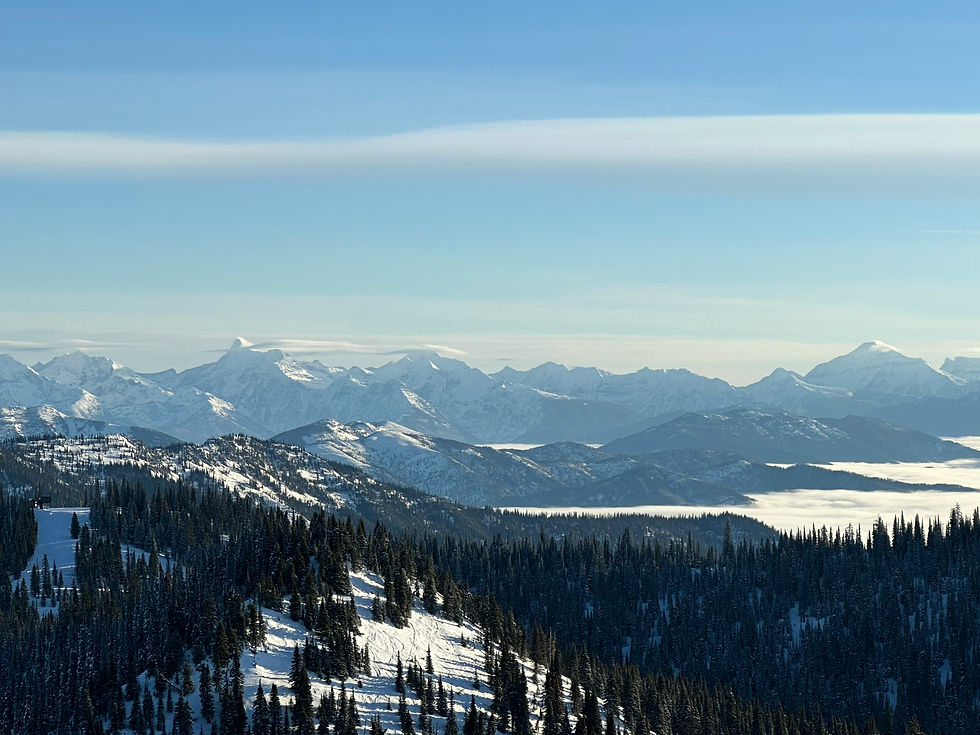
Winter photography should show snow-covered exteriors, any ski/gear storage or mudroom space (this is a real decision factor for skiing families), and interior warmth cues , a stocked fireplace, thick throws, a hot tub if you have one. Retitle the listing for the season if your platform allows it, leading with the resort distance or shuttle access rather than whatever led in July.
Flathead Lake: Waterfront Is a Different Market Than Whitefish
Here's a correction worth making plainly, because the planning brief for this piece treated "Whitefish" and "Flathead Lake" as one contiguous market, and they aren't quite that. Whitefish itself sits on Whitefish Lake, a separate, smaller body of water. Flathead Lake , the largest natural freshwater lake in the western United States at roughly 197 square miles , is a genuinely different market to the south, centered on towns like Somers, Lakeside, Bigfork, and Polson. The closest Flathead Lake shoreline (around Somers) runs about 35-40 minutes from Whitefish; Bigfork is closer to 45 minutes; Polson, at the lake's south end, runs closer to 80 minutes.
That's not a reason to avoid marketing both areas together , plenty of guests use Whitefish as a base and treat a Flathead Lake day trip the same way they'd treat a Glacier day trip, and plenty of Flathead Lake property owners benefit from Whitefish's name recognition. But it does mean a Flathead Lake listing shouldn't imply it's in Whitefish, or "minutes away," if the honest drive time is 30-45 minutes. Precision here builds trust with guests checking a map before they book; vagueness erodes it.
For lakefront and dock properties specifically, the premium amenities to lead with are the ones that are genuinely rare in this inventory: private dock access, direct lake frontage (versus lake-view or lake-adjacent), swim access from the property rather than a shared or public access point, and any boat mooring or launch capability. Flathead Lake's water clarity is a documented draw , the lake is known for visibility deep enough to see the bottom on calm days , and that's worth a line in the description, not just a photo. Photograph the dock at golden hour, the view from the water looking back at the house, and any boats or watercraft included with the stay. Lake guests are booking a water experience first and a house second; the listing should read that way.
One additional note for owners operating in this area: short-term rental permitting is handled at the city or county level and differs by jurisdiction. The City of Whitefish requires a Short-Term Rental Permit, business registration, a Fire Marshal inspection, and resort tax collection for properties inside city limits , rules that do not automatically apply to unincorporated Flathead County or Lake County properties around the broader lake. If you're marketing (or acquiring) a property outside Whitefish's city limits, verify the applicable county's current rules directly rather than assuming City of Whitefish requirements carry over.
Two Seasonal Swaps, Three Guest-Facing Angles
The operational challenge isn't knowing that park guests, lake guests, and ski guests want different things , most owners in this market could tell you that in one sentence. The challenge is executing three distinct guest-facing versions of one listing across only two real calendar transitions, without it eating a weekend every quarter. A workable cadence:.
Build the assets once, swap them on a schedule.Shoot (or commission) photography for all three guest angles if your property genuinely spans them , park-facing exteriors and daylight outdoor space, and lake-facing water and dock shots, both captured during the same summer shoot, plus ski-facing snow and warmth cues captured separately in winter. Keep three versions of your title, your first two sentences, and your amenities lead-in ahead of time, so the "swap" is a copy-paste job, not a rewrite.
Set calendar reminders for the transitions, not the seasons themselves.There are really only two hard calendar boundaries here: late spring, before the summer surge of both park and lake traffic ramps up, and early fall, before ski bookings open and snow photography needs to go live. Within the summer window itself, you can lean the listing toward park-facing or lake-facing copy depending on which guest type your current inquiries skew toward , that's a lighter-touch swap, not a full seasonal transition. Two scheduled swaps a year, plus an optional mid-summer emphasis shift, is a manageable task list. Constantly tweaking a single static listing is not.
Let keywords rotate with the copy.The park-facing version of your summer listing should work "Glacier National Park," "Whitefish Airbnb," and park-adjacent language into the title and early description. The lake-facing version of that same summer window should lead with "Flathead Lake," "dock access," and "lake frontage." A winter listing should work in "Whitefish Mountain Resort," ski-specific distance and shuttle language. Trying to cram all three into a single evergreen listing dilutes all of them; most search and AI-driven discovery tools reward a listing that reads as clearly matched to the guest's specific trip.
Most owners in this corridor are running the static version , one listing, written once, updated rarely. That's the opportunity: a property that visibly speaks to whichever guest type , park, lake, or ski , is actually booking will out-convert a generic one at the same price point, in the same location, every time. Within the summer window itself, you can lean the listing toward park-facing or lake-facing copy depending on which guest type your current inquiries skew toward , that's a lighter-touch swap, not a full seasonal transition.
the Crest & Cove intro·local SEO keywords that actually book·the five elements of a converting hero·how to compare STR marketing agencies·Asheville paddling spots worth the drive·Whitefish against AirROI $45,273·Montana gateways against AirROI pins·Destin against AirROI, not leftover year.
Related Reading
Keep reading in the Whitefish market spine and nearby towns in the same region — same-cluster pages hosts can use without costume-corridor copy.
DIY vs Hire Marketing for Should Whitefish Flathead Lake Hosts Manage
Whitefish Flathead Lake, MT STR Market Report for Independent Hosts
Is Whitefish Flathead a Good Short Term Rental Investment in 2026
Is an STR Marketing Agency Worth It for Whitefish Flathead Hosts
DIY vs Hire Marketing for Should Red Lodge Hosts Manage Their Own STR
DIY vs Hire Marketing for Should Livingston Hosts Manage Their Own
Frequently Asked Questions
How far is Whitefish, Montana from Glacier National Park's west entrance?
Roughly 25-30 miles, with a typical drive time of 35 minutes to just over an hour depending on the season and traffic on the approach roads. Listings should state a drive time, not just a mileage figure, since that's what guests are actually planning around when they book a stay outside the park and day-trip in.
How far is Whitefish Mountain Resort from downtown Whitefish?
About 6-7 miles, typically a 15-to-20-minute drive. The resort is also served by the free S.N.O.W. Bus (Shuttle Network of Whitefish) during operating seasons, which runs complimentary routes between downtown and the resort with stops throughout town — meaning a guest staying downtown doesn't need a second vehicle or a rideshare budget to ski every day.
Is Flathead Lake the same as Whitefish Lake?
No, and this is a common mix-up. Whitefish sits on Whitefish Lake. Flathead Lake is a separate, much larger lake to the south — roughly 197 square miles, the largest natural freshwater lake in the western United States — with its closest shoreline near Somers roughly 35-40 minutes from Whitefish, and towns like Bigfork and Polson farther out. Listings for either lake should be precise about which one and how far.
Are there true ski-in/ski-out rentals at Whitefish Mountain Resort?
Yes, a limited number of properties in and around Big Mountain Village offer genuine ski-in/ski-out access, and buyers actively filter for it. The term should be reserved for properties that actually qualify — a 10-minute drive from the base lodge is a strong, still-valid amenity but a different claim, and it should be worded as "10 minutes from the base lodge" or "in the Big Mountain Village corridor," not "ski-in/ski-out."
Do I need a different short-term rental permit for a Flathead Lake property than a Whitefish property?
Yes. The City of Whitefish requires a Short-Term Rental Permit, business registration, a Fire Marshal inspection, and resort tax collection for properties inside city limits. Properties around Flathead Lake are generally in unincorporated Flathead County or Lake County, which have separate rules that do not automatically carry over. Confirm current requirements with the specific county before marketing or operating.
Should I rewrite my whole listing every season, or just parts of it?
Just the parts that carry the seasonal sell: title, hero photo, first two sentences, and keyword-relevant amenities. The core details — bedroom count, house rules, base amenities — can stay constant. Two full seasonal swaps a year (summer and winter), plus an optional lighter-touch shift between park-facing and lake-facing copy within the summer window, is enough to keep the listing relevant without a full rewrite each time.
Why do most Whitefish-area listings underperform their actual location?
Because they're written once during whichever season the owner started hosting and never updated. A listing set up in July talks about hiking and lake days and never mentions the mountain 15 minutes up the road; one set up in December leads with powder days and buries a park entrance that draws over 3 million visitors a year, mostly in warmer months. Either way, the listing is only doing half its job.
What premium amenities matter most for a Flathead Lake dock or waterfront listing?
Lead with what's genuinely rare in this inventory: private dock access, direct lake frontage versus lake-view or lake-adjacent, swim access from the property rather than a shared or public access point, and boat mooring or launch capability. Flathead Lake's water clarity — visible to the bottom on calm days — is a documented draw worth a description line, not just a photo; lake guests are booking a water experience first and a house second.
Work with Crest & Cove Creative
A Whitefish listing written once in July and never updated still talks hiking and lake days in January, missing the ski-access guest entirely. This corridor supports three separate booking seasons, not one static pitch.
We help Whitefish-area hosts rebuild copy and photos around whichever season is actually live, naming real drive times to the park, the mountain, or the lake. Send us your live listing for a review.
Reach out at crestcove.co or (256) 998-7502.


Comments