
Is Whitefish Flathead a Good Short Term Rental Investment in 2026

Updated: Aug 28

Every mountain town in the West claims to be "recession-proof" and "undervalued." Whitefish, Montana actually has the numbers to back a version of that claim , but not the version most listing agents pitch. The real case for a Whitefish or Flathead Lake short-term rental isn't hype about a hot market. It's two structural facts (one about demand durability, one about supply scarcity), a regulatory environment that's getting more complicated by the year, and a math problem most owners never solve: buying the right property only gets you halfway to the return the location can actually produce.
This is a straight look at what's verifiable in mid-2026 , Glacier National Park visitation, Flathead Lake waterfront supply, current short-term rental (STR) rules in both the City of Whitefish and unincorporated Flathead County, and the property tax shift that's about to hit every second home and STR in the state. This was the genuine research gap, and it's the part every prospective buyer needs before making an offer , the rules differ meaningfully depending on whether the property sits inside Whitefish city limits or in unincorporated Flathead County.
Driver One: Glacier Demand Isn't a Trend, It's a Ceiling Problem
Glacier National Park closed out 2025 with an estimated 3,136,931 visitors , its third-busiest year on record, and the second consecutive year the park has topped 3 million visitors. That's only the fifth time in the park's 115-year history that's happened, and it followed 2024's second-busiest year ever. The 2025 dip (about 2.3% versus 2024) is largely attributed to a 43-day federal government shutdown that furloughed park staff and curtailed services for all of October , a disruption, not a demand signal.
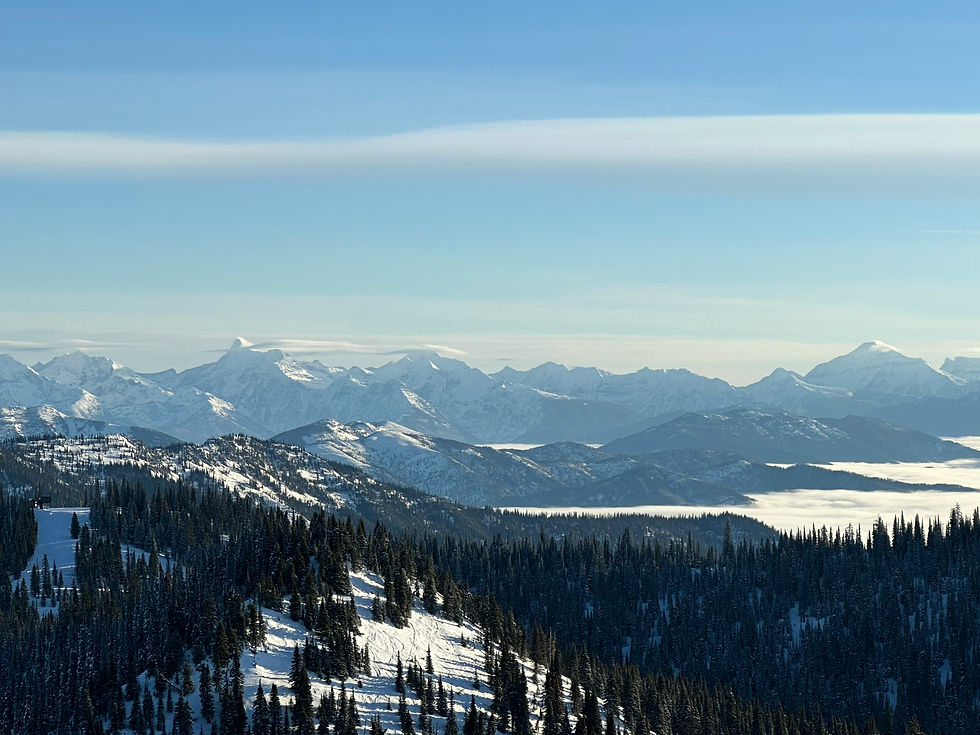
The practical read for STR investors: Glacier isn't a market that's peaking and about to cool off. It's a market bumping against a visitation ceiling that the park's own infrastructure , entrance stations, the Going-to-the-Sun Road vehicle reservation system, limited in-park lodging , effectively caps. When the park can't absorb more cars and beds inside its boundary, that demand pressure pushes outward to gateway towns. Whitefish, roughly 25 miles from the West Glacier entrance, is one of a handful of towns positioned to catch it.
This is the "durability" argument in the brief, and it holds up: Glacier's draw is tied to a fixed, federally protected natural asset, not a trend cycle. That's a meaningfully different risk profile than a market whose appeal rests on a single hot restaurant district or a startup-driven local economy. That combination is still a real advantage over single-season markets , a beach town with no winter draw, or a ski town with no summer pull , but it's two demand curves, not three, and owners should underwrite it that way rather than assuming three discrete revenue seasons.
Driver Two: Flathead Lake Waterfront Really Is Scarce
One clarification before the numbers, because the brief (and this post's title) blend two different bodies of water: Whitefish itself sits on its own, much smallerWhitefish Lake, the in-town lake ringed by City Beach and lakefront neighborhoods.Flathead Lakeis a separate lake roughly 40 miles (about 50 minutes by car) south of Whitefish, with its own shoreline towns , Somers, Lakeside, Bigfork, Polson , that are geographically and administratively distinct from Whitefish proper. Every scarcity and pricing figure below is about Flathead Lake, not Whitefish Lake, which has its own , and even more limited , supply. Buyers should confirm which lake a "Whitefish lakefront" listing is actually on before assuming Flathead Lake dynamics apply.
The scarcity claim in the brief checks out, and it's stronger than most "lakefront is limited" pitches because the constraint is structural, not just a function of current listing counts. Layer current market data on top of that scarcity and the picture holds: across Flathead County, active listings rose roughly 30-35% year-over-year into early 2026, giving buyers meaningfully more choice than the extremely tight 2021-2023 window , but that loosening has happened mostly in general-market inventory, not waterfront.
Flathead Lake , the largest natural freshwater lake west of the Mississippi in the Lower 48 , has a shoreline commonly cited at around 185 miles, though shoreline length is an inherently imprecise measure (it depends on how tightly a survey follows every bay and inlet) and other credible counts run lower, closer to 146-161 miles. What's consistent across sources, regardless of which total they start from, is the access ratio: only a small sliver of it , commonly cited as about 7.3 miles, or roughly 5% of shoreline , is developed for public access via boat launches, beaches, and day-use sites maintained by Montana Fish, Wildlife & Parks. The rest is private, and a meaningful share of it will never come to market: the southern half of the lake sits within the Flathead Indian Reservation, governed by the Confederated Salish and Kootenai Tribes, where recreational use of tribal waters requires a separate tribal recreation permit. That's not a technicality , it's a permanent structural limit on how much of the lake's shoreline can ever be assembled into conventional resort or investment inventory.
Layer current market data on top of that scarcity and the picture holds: across Flathead County, active listings rose roughly 30-35% year-over-year into early 2026, giving buyers meaningfully more choice than the extremely tight 2021-2023 window , but that loosening has happened mostly in general-market inventory, not waterfront. On Flathead Lake specifically, the 2025 median sale price was $1.787 million, homes sat on market a relatively patient 99 days, and sellers still captured 88.4% of original list price , soft compared to 2021's frenzy, but nowhere near a buyer's market discount. Countywide, the median single-family price moved from about $680,000 in 2024 to roughly $687,000 in 2025 , essentially flat , which means lakefront's premium over the general market isn't compressing; it's holding.
Does Whitefish Really Have a "Three-Season" Demand Stack?
The brief frames Glacier summer, Whitefish winter skiing, and Flathead Lake as three independent demand seasons stacking to beat single-season comparables. That's directionally right but needs a correction: it's more accurate to call this a two-engine market with a reinforced summer peak, not three cleanly separate seasons. So the honest version of the operational case is: Whitefish/Flathead has a strong, extended summer peak (Glacier hikers and Flathead Lake boaters reinforcing each other in the same months) plus a genuinely distinct, resilient winter season anchored by the ski resort.
Here's why. Glacier's visitor season and Flathead Lake's boating season run largely concurrent , both peak in the same June-through-September window, with July as the single strongest month for area short-term rentals. Winter is the genuinely separate, counter-cyclical season: Whitefish Mountain Resort logged approximately 457,000 skier visits in the 2025-26 season. That was down about 8% year-over-year due to a low-snow winter and softer Canadian visitation, but it was still the resort's fifth-busiest winter on record, on a mountain that averages over 300 inches of annual snowfall. Average overnight stays for ski visitors ran around six nights against roughly four ski days, meaning lodging revenue extends well past lift-ticket days.
So the honest version of the operational case is: Whitefish/Flathead has a strong, extended summer peak (Glacier hikers and Flathead Lake boaters reinforcing each other in the same months) plus a genuinely distinct, resilient winter season anchored by the ski resort. That combination is still a real advantage over single-season markets , a beach town with no winter draw, or a ski town with no summer pull , but it's two demand curves, not three, and owners should underwrite it that way rather than assuming three discrete revenue seasons.
What the Numbers Actually Say: ADR, Occupancy, and Supply
STR data providers disagree on Whitefish's exact numbers, which is normal , they pull from different listing samples and time windows , but the range is tight enough to be useful for underwriting:. *Note: Third-party STR data providers (AirROI, AirDNA, Rabbu) use different sampling methodologies and time windows, producing a meaningful range in reported ADR and occupancy. What's consistent across sources, regardless of which total they start from, is the access ratio: only a small sliver of it , commonly cited as about 7.3 miles, or roughly 5% of shoreline , is developed for public access via boat launches, beaches, and day-use sites maintained by Montana Fish, Wildlife & Parks.
AirROI(trailing twelve months through mid-2026): average daily rate around $483, average occupancy roughly 39%, with just over 1,050 listings (AirROI Whitefish as of 2026-07-31) tracked in the market. Revenue grew about 14% year-over-year in this window, outpacing the roughly 10% growth in listing supply , a sign demand is currently absorbing new inventory rather than getting diluted by it.
AirDNA: average daily rate around $563, average occupancy 52% across Airbnb and Vrbo listings.
Rabbu: average daily rate around $446, average occupancy 42%.
Blend those and a reasonable planning range for 2026 isroughly $445-$565 ADR and 39-52% occupancy, with the wide spread itself telling you something: performance is bifurcated by product quality, location, and management. A generic listing without a marketing strategy lands at the bottom of that range; a well-differentiated, professionally marketed property lands at the top. July is consistently the strongest month and April the softest , plan cash flow accordingly rather than assuming flat monthly revenue.
Flag for the record: none of these third-party estimates should be treated as precise. They're directional. Any serious underwriting for a specific property should be paired with a comparable-set pull for that property's exact micro-location (in-town Whitefish vs. lakefront vs, and ski-adjacent), because those sub-markets do not perform identically. One clarification before the numbers, because the brief (and this post's title) blend two different bodies of water: Whitefish itself sits on its own, much smaller Whitefish Lake , the in-town lake ringed by City Beach and lakefront neighborhoods.
The Regulatory Picture: The Part the Brief Didn't Have
This was the genuine research gap, and it's the part every prospective buyer needs before making an offer , the rules differ meaningfully depending on whether the property sits inside Whitefish city limits or in unincorporated Flathead County. This is a straight look at what's verifiable in mid-2026 , Glacier National Park visitation, Flathead Lake waterfront supply, current short-term rental (STR) rules in both the City of Whitefish and unincorporated Flathead County, and the property tax shift that's about to hit every second home and STR in the state.
Inside Whitefish City Limits
STRs are permitted only in five specific zoning districts:WB-3, WRR-1, WRR-2, WRB-1, and WRB-2. Outside those zones, short-term rental use isn't allowed regardless of what a listing agent implies. Operators must obtain an annual Short-Term Rental Permit and business registration (the application fee is $400/year), pass an annual fire marshal inspection, and hold a State of Montana public accommodation license for a tourist home. Resort tax , 3% on lodging, retail, bars, and restaurants , must be collected and remitted monthly.
There is currently no cap or moratorium on new STR permits within eligible zones. That said, the City's own 2025 Housing Needs Assessment specifically discusses permit caps as a tool other mountain resort communities have adopted to address workforce housing pressure, and names it as an option Whitefish could consider. That's not a current rule, but it's a live policy conversation worth watching , not a settled, permanent regulatory environment.
Outside City Limits, in Flathead County
The county's zoning is more fragmented. Some zones (RR, B-2, B-4, BM-1, BM-2, BR-2, BR-4, CVR, SC, NF) allow STRs as a permitted use outright. Others (AG, SAG, R, RA, RC, B-3, B-5, B-6, AL, LBL, LL, LS, RL, WV) require an administrative conditional use permit , a process that includes neighbor notification within 150 feet, a roughly two-week comment period, and staff review that typically wraps within a month and a half, though contested applications escalate to the Board of Adjustment. Properties in unzoned areas, and certain Upper Canyon locations governed by separate land-use rules (CALURS), don't require a county permit at all. This zone-by-zone variation means two properties a few miles apart on Flathead Lake can face completely different permitting paths , verify zoning before writing an offer, not after.
The 2026 Property Tax Shift
This is the most material regulatory change, and it's easy to miss if you're focused only on zoning. Montana's 2025 property tax reform (HB 231 and SB 542, signed by Governor Gianforte) fully phases in for 2026 tax bills.Correction to the brief:the primary-residence/long-term-rental side of this isn't a flat 0.76%-1.10% band , it's a four-step ladder. Homesteaded properties (primary residences and qualifying long-term rentals with 28+ day terms, occupied 7+ months a year) are taxed at 0.76% on value up to the statewide median residential value, 0.90% on the slice between 1x and 2x that median, 1.10% between 2x and 4x median, and , this is the part easy to miss , 1.90% on any value at or above roughly four times the statewide median. That top step is the *same* 1.90% rate STRs pay; it only kicks in for homesteaded properties once they're worth roughly 4x the state median. Second homes and short-term rentals, by contrast, are taxed at aflat 1.90% rate on full assessed value from dollar one, no tiering, no homestead break, no threshold to clear first. For a lakefront property assessed anywhere near the 2025 Flathead Lake median sale price of $1.787 million, that gap , flat 1.90% from the first dollar versus a homesteaded property that might sit in the 0.76%-1.10% bands for most of its value , is a real line item that belongs in the underwriting model, not an afterthought discovered at closing.
What It Costs to Get In
Countywide, Flathead real estate has cooled from the 2021-2023 frenzy , active listings are up 30-35% year-over-year, giving buyers more selection than they've had in several years, and the countywide median single-family price is roughly flat ($680K in 2024 to $687K in 2025). But that county-level stabilization masks a split market: general inventory has loosened while lakefront and other scarce-position assets have held their premium, evidenced by that $1.787 million lake median and consistently strong sale-to-list ratios. Translation: this is a better moment than 2021-2023 to find a property without a bidding war, but it is not a moment where scarce lakefront or Glacier-adjacent inventory is discounted.
The Missing Half: Owning the Right Asset Is Only Step One
Everything above , Glacier's visitation ceiling, the lake's structural scarcity, a two-season demand curve, and even a favorable-relative-to-2021 buying window , describes why Whitefish and Flathead Lake *can* support high short-term rental income. None of it guarantees that any individual listing captures that premium. Glacier's visitor season and Flathead Lake's boating season run largely concurrent , both peak in the same June-through-September window, with July as the single strongest month for area short-term rentals.
The ADR spread in this market , roughly $450 to $565 a night depending on the source , isn't random. It's the gap between a property that shows up as one of a thousand-plus generic listings and one with a direct-booking brand, a search-optimized presence, and content that actually targets the buyer searching "Glacier National Park cabin rental" or "Flathead Lake waterfront Airbnb" instead of relying entirely on OTA placement algorithms. Location sets the ceiling. Marketing execution determines how close a specific property gets to it , and increasingly, how much revenue an owner keeps outside of platform commission and race-to-the-bottom pricing.
the Crest & Cove intro·local SEO keywords that actually book·the five elements of a converting hero·how to compare STR marketing agencies·Asheville paddling spots worth the drive·Whitefish against AirROI $45,273·Montana gateways against AirROI pins·Destin against AirROI, not leftover year.
Related Reading
Keep reading in the Whitefish market spine and nearby towns in the same region , same-cluster pages hosts can use without costume-corridor copy.
DIY vs Hire Marketing for Should Whitefish Flathead Lake Hosts Manage
Whitefish Flathead Lake, MT STR Market Report for Independent Hosts
Is an STR Marketing Agency Worth It for Whitefish Flathead Hosts
DIY vs Hire Marketing for Should Red Lodge Hosts Manage Their Own STR
DIY vs Hire Marketing for Should Livingston Hosts Manage Their Own
Frequently Asked Questions
Is Whitefish, Montana a good short-term rental investment in 2026?
The fundamentals support it: Glacier National Park drew over 3 million visitors for the second straight year in 2025, Flathead Lake waterfront supply is structurally limited, and Whitefish Mountain Resort adds a genuine second winter season. But market-level ADR estimates range from roughly $450 to $565 a night depending on the data source, and that spread reflects execution — a professionally marketed, well-differentiated property performs very differently than a generic listing in the same zip code.
What are the short-term rental rules in Whitefish city limits?
STRs are permitted only in five zoning districts: WB-3, WRR-1, WRR-2, WRB-1, and WRB-2. Owners need an annual Short-Term Rental Permit and business registration ($400/year application fee), an annual fire marshal inspection, and a State of Montana public accommodation license for a tourist home, and must remit 3% resort tax monthly on lodging revenue. There's currently no cap on new permits within eligible zones, though the City's 2025 Housing Needs Assessment names a permit cap as an option worth watching.
Are short-term rentals allowed in unincorporated Flathead County?
Yes, but the rules vary by zoning district. Some zones allow STRs as a permitted use; others require an administrative conditional use permit involving neighbor notification and a public comment period. Some unzoned and Upper Canyon areas require no county permit at all. Zoning verification before purchase is essential — two nearby properties can face very different rules.
How is Flathead Lake waterfront supply actually limited?
Flathead Lake's shoreline is commonly cited at around 185 miles (estimates vary, from roughly 146 to 185 miles, depending on survey method), but only about 5% of it — roughly 7 miles — is developed for public access, and the entire southern half sits within the Flathead Indian Reservation, where recreational lake use requires a tribal permit. That combination puts a hard structural ceiling on how much shoreline can ever reach the private investment market. Flathead Lake is a separate body of water from Whitefish Lake, the smaller lake in town — they're roughly 40 miles apart.
What's changing with Montana property taxes for short-term rentals in 2026?
Under 2025 legislation (HB 231/SB 542), 2026 tax bills fully implement a flat 1.90% assessed-value tax rate for second homes and short-term rentals, charged from the first dollar of value with no tiering. Primary residences and qualifying long-term rentals get a stepped rate instead: 0.76% up to the statewide median value, rising through 0.90% and 1.10% at higher bands, and only reaching that same 1.90% top rate on the portion of value at or above roughly four times the statewide median. This is a real underwriting line item, especially for higher-assessed lakefront properties.
What's the average cost of Flathead Lake waterfront property?
The 2025 median sale price for Flathead Lake waterfront was $1.787 million, with homes averaging 99 days on market and selling around 88.4% of original list price — cooled compared to 2021's frenzy, but nowhere near a buyer's-market discount. Countywide, the general median single-family price held roughly flat, moving from about $680,000 in 2024 to $687,000 in 2025, meaning lakefront's premium over the general market isn't compressing.
Does Whitefish really have three separate high-demand seasons?
Not quite three distinct ones. Glacier's summer visitor season and Flathead Lake's boating season largely overlap in the same June-through-September window, reinforcing a single strong summer peak. Winter, anchored by Whitefish Mountain Resort's roughly 457,000 seasonal skier visits, is the genuinely separate second season. It's a strong two-engine market with a reinforced summer peak, not a literal three-season stack, and owners should underwrite it that way rather than assuming three discrete revenue seasons.
Is Glacier National Park's visitation growth likely to continue?
Glacier logged over 3 million visitors in both 2024 and 2025 — only the fifth and sixth times that's happened in the park's 115-year history — though 2025 dipped slightly due to a government shutdown that furloughed staff for October. The multi-year pattern of 3M+ visits suggests durable demand rather than a one-year spike, though park infrastructure like entrance capacity and the Going-to-the-Sun Road reservation system may cap how much further in-park visitation itself can grow, which is part of why gateway-town demand in Whitefish stays strong.
How much can a well-marketed Whitefish or Flathead Lake property earn compared to a generic listing?
Third-party providers put a reasonable 2026 planning range at roughly $445-$565 ADR and 39-52% occupancy, and that spread isn't random — it's largely the gap between a generic listing competing on price alone and a property with a direct-booking brand, search-optimized content, and photography that actually targets buyers searching for a Glacier cabin or a Flathead Lake waterfront rental. Location sets the ceiling on what a property can earn; marketing execution determines how close it actually gets.
Is now a good time to buy in the Whitefish/Flathead Lake market compared to 2021-2023?
Countywide, active listings are up roughly 30-35% year-over-year into early 2026, giving buyers more selection than the tight 2021-2023 window, and the countywide median single-family price has held roughly flat. But that loosening is concentrated in general inventory — lakefront and other scarce-position assets have held their premium, evidenced by the $1.787 million lake median and strong sale-to-list ratios. It's a better moment to buy without a bidding war, but scarce lakefront inventory isn't discounted.
About the Authors
Crest & Cove Creative is a short-term rental marketing agency founded by Thomas Garner and Jacob Mishalanie. We build direct-booking brands, listing optimization systems, and market-specific content strategies for independent STR operators nationwide, including emerging corridors like Whitefish and Flathead Lake, Montana. The real case for a Whitefish or Flathead Lake short-term rental isn't hype about a hot market.
Sources
Glacier National Park 2025 visitation (3,136,931 visitors, third-busiest year, second consecutive year over 3M):Flathead Beacon, Jan. 2026;NBC Montana
Whitefish Mountain Resort 2025-26 season (~457,000 skier visits, down 8% YoY, fifth-busiest winter):Flathead Beacon, May 2026;Daily Inter Lake, Apr. 2026
Whitefish STR zoning, permit, inspection, and fee requirements:City of Whitefish official STR page
Whitefish resort tax rate (3%):City of Whitefish Resort Tax page
Whitefish 2025 Housing Needs Assessment (permit-cap policy discussion): referenced via City of Whitefish document center search results
Flathead County STR zoning and conditional use permit process:Flathead County Planning & Zoning
Montana 2026 property tax reform, 1.90% flat rate for second homes/STRs (HB 231, SB 542):Montana Dept. of Revenue, 2026 property tax info;Montana Free Press, Dec. 2025;Parsons Behle Q&A
Flathead Lake shoreline length and public access limits (185 miles total, ~5% public access, tribal permit on southern half):Visit Montana;Montana Access Project
Flathead Lake and Flathead County real estate data (2025 lake median $1.787M, county listing growth, countywide median price):Flathead Lake Agent Market Update 2026;David Fetveit Flathead Lake Waterfront Market Report
Whitefish STR performance data (ADR, occupancy, active listings , cross-referenced across providers):AirROI;AirDNA Market Minder;Rabbu
*Note: Third-party STR data providers (AirROI, AirDNA, Rabbu) use different sampling methodologies and time windows, producing a meaningful range in reported ADR and occupancy. Figures above should be treated as directional planning ranges, not precise projections for any individual property. Buyers should independently verify current zoning, permit status, and resort/property tax obligations directly with the City of Whitefish and Flathead County before purchase, as local ordinances are subject to change.*.
Work with Crest & Cove Creative
Whitefish's real case rests on Glacier National Park visitation hitting a ceiling and tight Flathead Lake waterfront supply, not the generic recession-proof pitch most listing agents run on every mountain town in the West.
We write Whitefish and Flathead listings around the specific Glacier-driven demand ceiling and current City of Whitefish and county rules, not a copy-paste mountain-town script.
Reach out at crestcove.co or (256) 998-7502.

Comments