
Stop Marketing Your State College Rental Like a Generic Getaway

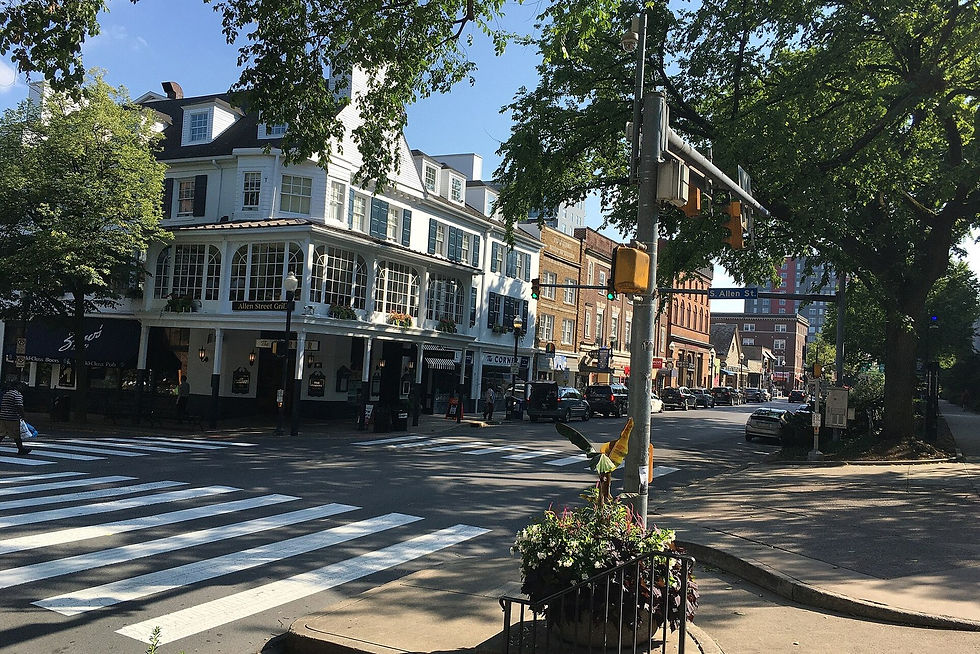
Pull up ten State College listings and a pattern shows up fast: half of them could be describing any three-bedroom house in central Pennsylvania. Cozy retreat. Close to everything. Great for groups. None of that tells a guest searching for a football weekend or a commencement trip anything they couldn't guess from the photos, and none of it explains why this house, on this street, is the right call for a specific Saturday on the Penn State calendar.
The fix is not a bigger budget. It's specificity — writing and photographing the listing as a State College product, not a generic Pennsylvania cabin, and not a borrowed version of Ferguson Township's identity next door. This post walks through what that actually looks like in the listing title, the first five photos, the amenity tags, and the calendar itself.
None of this requires professional photography or a paid consultant to start. It requires sitting down with the current listing, reading it the way a stranger typing "State College Airbnb football weekend" into a search bar would read it, and being honest about whether it actually answers that guest's question.
This is not legal advice; nothing here overrides the licensing and occupancy rules that govern whether a listing can legally accept a booking in the first place.
Merchandise what guests are actually typing
A guest searching for a State College stay is typing something specific: distance to Beaver Stadium, walkability to campus, proximity to College Avenue. A listing title that reads "Charming 3BR Home, Sleeps 8" answers none of that. A title built around what the guest is actually trying to solve — how close is this to the stadium, can we walk to campus, is College Avenue nightlife within reach — does the work a generic title never will.
The same logic applies to the listing description. Instead of opening with a paragraph about granite countertops, open with the thing that actually decides whether this house works for the trip a guest is planning: minutes from Beaver Stadium, walking distance to campus, or a short rideshare from College Avenue. Countertops belong further down, after the house has already answered the question that brought the guest to the search results.
This same specificity needs to survive into the amenity tags. A guest filtering for a football weekend cares about parking capacity, proximity to the stadium, and whether the house can comfortably host a pre-game gathering. Tags built around those realities do more work than a long, undifferentiated list of standard amenities that every competing listing also checks off.
Even the neighborhood description benefits from this treatment. Instead of a vague line about being "in a quiet residential area," name the actual walk: minutes to campus on foot, a short drive to the stadium lots, or an easy rideshare to College Avenue after the game. Guests planning around a fixed event on a fixed date want logistics they can picture, not a mood.
The first five photos carry the entire pitch
Most guests decide whether to click into a listing based on the first handful of thumbnail images. If those five photos are all interior shots of a living room that looks like a thousand other living rooms, the listing loses to a competitor whose first photo shows the walk to campus or a view that signals proximity to the action.
A strong opening sequence for a State College listing pairs the practical — the exterior, the driveway, parking capacity, since parking matters enormously on game days — with the aspirational: a shot that communicates campus energy or stadium proximity without needing a caption to explain it. Interior photos of the kitchen and primary bedroom belong in the sequence, but not as the entire pitch.
It's worth being honest here about what doesn't work: stock-feeling photography that could be any house in any college town, staged so generically that a guest scrolling past couldn't tell if it's in State College or three states away. The listings that convert best in this market are the ones whose photos could not be mistaken for somewhere else.
Seasonal refresh matters too. A photo set shot in the empty quiet of a spring afternoon tells a different story than one that hints at football-weekend energy, and a host who updates even a couple of images ahead of the fall season — signaling the property is dialed in for game day — tends to outperform one running the same static gallery year-round. This doesn't require a full reshoot; a couple of well-chosen seasonal images swapped into the front of the gallery can shift how the listing reads to a guest browsing in August versus one browsing in January.
Calendar strategy: protect the peaks, sell the shoulder
Home football Saturdays, student move-in, commencement, and Parents Weekend are the named demand drivers in this market, and each deserves its own pricing treatment rather than a flat seasonal rate applied across the board. Pull specific dates from Penn State's official athletic and academic calendars each year rather than assuming they repeat from a prior season's writeup — schedules shift, and pricing off stale dates either leaves money on the table or prices a house out of a weekend that was never actually a home game.
The trough is just as important to plan for as the peaks. January and February are the confirmed soft stretch in this market; dropping minimum-stay requirements during that specific window, rather than year-round, protects revenue on the weeks that are actually in demand while still giving a host a lever to pull when bookings are genuinely slow.
A listing that sells a specific midweek reason to book — a quiet work trip, a visit timed around a campus event, a stopover for someone touring Penn State — beats a generic percentage-off discount every time. Guests respond to a reason, not a markdown.
It also helps to think about pricing granularity rather than a single blanket rate for each named peak. A home football Saturday against a ranked opponent draws differently than one against a lower-profile matchup, and commencement weekend can draw more heavily than a routine Parents Weekend depending on the year. A host who treats every peak identically leaves upside on the strongest dates and risks pricing out demand on the more moderate ones.
Don't borrow Ferguson Township's identity
Ferguson Township sits in the same general labor shed as State College — close enough that hosts sometimes default to describing their property using whatever language performs well for a neighboring listing, or leaning on a Ferguson Township search term because it shows separate data in a spreadsheet somewhere. That's a mistake. Ferguson Township runs its own municipal ordinance, its own occupancy rules, and its own guest expectations; folding it into State College marketing muddies both.
The same discipline applies to the Poconos towns sometimes lumped into Pennsylvania short-term rental roundups. Stroud Township, Kidder Township, and Penn Forest, near Jim Thorpe, are an entirely different product — mountain cabins built around outdoor recreation, roughly two hours away. A State College listing that borrows visual language or copy from that market — rustic cabin framing, forest imagery — sends the wrong signal to a guest who is looking for a campus experience, not a wilderness retreat.
State College's identity is specific enough to stand on its own: Beaver Stadium, campus, College Avenue. Lean into that rather than reaching for a neighbor's or a Poconos market's established language.
There's a practical reason to keep this discipline beyond brand accuracy: a guest who books expecting one experience and arrives to find another leaves a review that hurts future bookings. A guest expecting genuine walkability to campus, based on marketing copy that borrowed language from a more central listing, is going to be disappointed by a twenty-minute drive. Accurate, specific marketing protects the listing's review history as much as it protects the brand.
Where the personas actually book from
This market's guest base breaks into a few recognizable groups: the football-weekend family or group of alumni returning for a home game, the commencement or Parents Weekend visitors — often multiple generations traveling together — and the summer academic-calendar leftover of camps, conferences, and campus visits outside the football season. Listing copy that speaks to one of those groups specifically, rather than a generic "perfect for any occasion" pitch, converts better because it reads as if the host actually understands who is searching.
A listing photo set and description built for the football-weekend group — parking capacity, proximity to the stadium, a gathering space — reads differently from one built for a commencement family who cares more about accessibility, quiet, and enough beds for grandparents. A host running one listing can still speak to multiple personas across different sections of the copy, but each section should be specific to the guest it's addressing rather than trying to say everything to everyone in one undifferentiated paragraph.
The summer academic-calendar traffic — camps, conferences, campus visits outside football season — deserves its own line of copy too, even though it's a smaller, quieter piece of the demand picture. That guest is usually not planning a tailgate; they want a comfortable, functional base for a shorter, more routine trip. A listing that only speaks in football-weekend language all summer can undersell itself to that quieter, still-valuable booking pool.
Put it together: a working checklist
None of this requires a full relisting overhaul to start. A host can rewrite the title and the opening lines of the description in one sitting, reorder the photo gallery to lead with the shots that actually communicate location and readiness, and update amenity tags to reflect parking and proximity rather than generic checkmarks. The calendar work — pulling current Penn State dates and setting differentiated pricing for named peaks versus the January–February trough — is the next step, and it's worth revisiting every year rather than setting once and leaving alone.
The common thread across all of it is specificity over polish. A guest booking a State College stay already knows why they're coming; the job of the listing is to prove, in the title, the first five photos, and the calendar, that the host understands that too.
What generic marketing actually costs a host
It's worth naming the actual cost of generic listing copy in this market, because it isn't just a vague sense of underperformance. A listing that reads like it could be anywhere loses the guest's attention before they've had a chance to consider the house itself, and in a market where Entire Home/Apt listings dominate the competitive set, that lost attention goes straight to a competitor whose copy did the specific work this one skipped. Supply in this market has grown quickly, which means the cost of blending in has gone up, not down, over the past year.
There's also a slower cost that shows up in review scores and repeat bookings. A generic listing tends to attract a wider, less-matched pool of guests, some of whom arrive with expectations the property was never really built to meet. A specific listing, by contrast, tends to attract guests who already know what they're booking, which shows up over time as more consistent reviews and a guest base that's easier to plan a season around.
Related Reading
More Stop Marketing Your State College Rental Like a Generic Getaway host reading on desks, calendars, and listing clarity.
State College's Football Weekends Distort the Year, and the Data
State College Short-Term Rental Rules: Confirm Your Desk First
DIY State College Marketing Usually Misses One Thing: Specificity
Stadium Attendance Isn't Occupancy: State College Tourism Data
The Complete Visitors Guide to State College, Written for Hosts
What It Costs to Legally Open a State College Short-Term Rental
Match the Driveway: State College's Three Rental Desks Compared
State College or Ferguson Township: Two Towns, Two Different Years
State College's Real Occupancy Calendar: Football, Not Festivals
Frequently Asked Questions
What should the title of a State College Airbnb listing say?
Lead with what a guest is actually searching for — distance to Beaver Stadium, walkability to campus, or proximity to College Avenue — rather than a generic descriptor like "cozy" or "charming." A title that answers the guest's real question outperforms one that could describe any house in any town.
How many photos should lead a State College listing?
The first five matter most, since that's what most guests see before deciding to click in. Pair a practical shot — exterior, driveway, parking, which matters enormously on football weekends — with at least one image that signals proximity to campus or stadium energy, rather than opening with generic interior shots alone.
Should I price every weekend the same in State College?
No. Home football Saturdays, move-in, commencement, and Parents Weekend should be priced as named peaks, pulled from the current Penn State athletic and academic calendar each year. The rest of the calendar, especially the January–February trough, needs its own separate pricing and minimum-stay strategy.
Can I use Ferguson Township in my State College listing marketing?
Be careful. Ferguson Township is a separate municipality with its own ordinance and guest expectations. It's a useful reference point for underwriting or comparison, not a source of marketing language to fold into a State College listing's identity.
Is State College the same market as the Poconos or Jim Thorpe?
No. Stroud Township, Kidder Township, and Penn Forest near Jim Thorpe are a mountain-cabin market roughly two hours away, built around outdoor recreation. Borrowing that visual or copy language for a State College listing sends the wrong signal to guests looking for a campus stay.
What amenities matter most for a State College listing?
Parking capacity and proximity to the stadium and campus tend to matter more here than in a typical vacation market, since so much demand is tied to specific game-day and event-day logistics. Amenity tags built around those realities outperform a generic, undifferentiated amenities list.
Who actually books a State College short-term rental?
Three recurring groups show up in this market: football-weekend families and alumni groups, commencement and Parents Weekend multigenerational visitors, and summer academic-calendar traffic like camps and campus visits. Listing copy speaking directly to one of these groups per section outperforms a one-size-fits-all pitch.
How far ahead do guests book a State College stay?
Guests in this market tend to book well in advance of a specific date they already know is significant, rather than spontaneously. That means peak pricing and calendar strategy should be set months before the season starts, not adjusted reactively as a weekend approaches.
Does discounting help fill slow weeks in State College?
A flat percentage-off discount rarely performs as well as a listing that gives guests a specific reason to book a quiet week — a work trip, a campus event, a stopover. Reserve minimum-stay flexibility for the confirmed January–February soft stretch rather than applying it broadly.
Do I need to confirm which municipality governs my State College property before marketing it?
Yes. This is not legal advice, but before investing in marketing, confirm whether the property falls under the Borough of State College, Ferguson Township, or College Township, since each runs a separate short-term rental ordinance that can affect how many nights a listing is even allowed to operate.
Work with Crest & Cove Creative
A listing that could be describing any house in central Pennsylvania loses to one that reads like it knows Beaver Stadium, campus, and a football Saturday. Name the failure mode the guest can check on the listing.
A marketing audit checks whether your title, photos, and calendar actually speak to who books a State College stay — not a generic template. Name the failure mode the guest can check on the listing. Send the live listing draft and the facts you can actually cite.
Reach out at crestcove.co or (256) 998-7502.


Comments