
State College or Ferguson Township: Two Towns, Two Different Years


A buyer or host weighing State College against Ferguson Township is often really asking a narrower, more specific question underneath the broader one: is one of these two towns just a cheaper or looser version of the other? The honest answer is no. They're adjacent, they share some of the same Penn State-driven demand, and they're close enough that a host could reasonably consider either — but they run under separate ordinances, attract somewhat different guest patterns, and report different revenue figures that shouldn't be blended together.
This post lays the two side by side on the specifics that actually matter for a decision: regulation, calendar, and guest fit — not a vague sense of which one is "better." Neither town wins outright; each fits a different property, a different guest, and a different compliance situation.
This is not legal advice; confirm current requirements directly with the applicable municipal office for each specific property before making a decision based on anything summarized in the sections below.
Different desks, different rules
The Borough of State College requires an annual Short-Term Rental License, established under Ordinance 2187 as amended and currently reflected in Ordinance 2242, plus a Centre Region Code Administration Rental Housing Permit. Published limits cap activity at 120 days per license year, require eight months of owner or tenant residency, cap STR use at nine bedrooms, and require proof of at least $100,000 in liability insurance.
Ferguson Township runs its own separate STR permit plus the CRCA rental permit, with a shorter six-month residency requirement and a reported one-time fee near $25, to be confirmed on the township's live schedule. The borough's 120-day cap gives more operating room than Ferguson Township's structure implies, though a host should confirm Ferguson Township's own specific night-cap provisions directly with the township rather than assume they mirror the borough's.
This regulatory difference is worth stating plainly: a buyer who assumes the two towns run "basically the same" rules, just because they're geographically adjacent, is making an assumption that doesn't hold up under actual comparison. The six-month versus eight-month residency gap alone changes what kind of buyer or owner realistically fits each town's compliance framework.
Different revenue pictures, presented separately
State College's own AirROI figures — a town-page pull reporting a typical year around $62,131, and a separate brief-gate figure around $48,132 annualized — describe the borough-area market specifically. Ferguson Township's separate AirROI leftover figure sits around $4,463 a month on a sample of 117 listings, its own number, tied to its own market.
None of these figures should be blended into a single "State College area" number. A buyer or host comparing the two towns should look at each figure on its own line, understanding that Ferguson Township's smaller sample size and different property mix mean it isn't simply a discounted version of State College's own figures.
It's also worth noting that Ferguson Township's roughly $4,463-a-month figure and State College's brief-gate figure of roughly $4,011 a month sit close enough in raw dollar terms that a careless reader might assume they're describing the same market, or that Ferguson Township is essentially equivalent. They aren't — different sample sizes, different property mixes, different underlying methodology, pulled at different times — and the proximity of the two numbers is coincidental, not confirmation that the two towns are functionally interchangeable for underwriting purposes.
Same football calendar, different guest experience
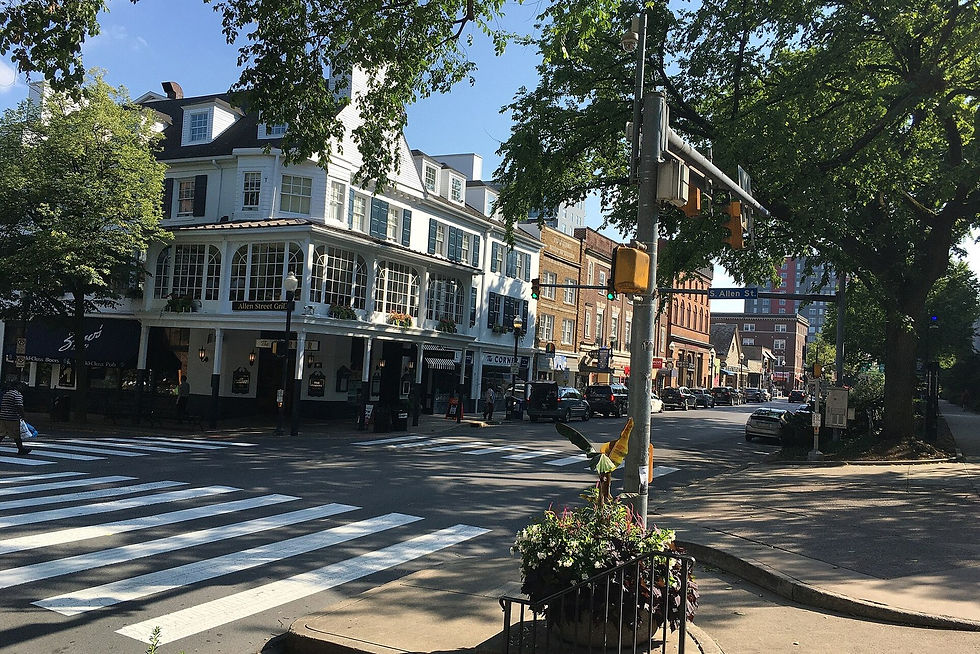
Both towns sit close enough to Beaver Stadium and the Penn State campus itself to draw genuine football-weekend demand, and both see some benefit from move-in, commencement, and Parents Weekend. But the guest experience differs: State College Borough properties tend to be closer to campus and College Avenue, offering the walkable, downtown-adjacent experience many football-weekend and commencement guests specifically search for. Ferguson Township, being less dense and more suburban, tends to offer larger lots and standalone housing, appealing to a guest who prioritizes space and a quieter setting over walkability.
Neither guest experience is objectively better — they're different products serving overlapping but distinct segments of the same overall demand pool. A host's marketing and pricing strategy should reflect which product their specific property actually offers, rather than positioning a Ferguson Township property as though it delivers the same downtown-adjacent experience as a borough listing.
The football-weekend family or alumni group, the commencement multigenerational visitor, and the quieter academic-calendar traveler — the three personas covered in more depth elsewhere in this cluster — all exist in both towns, but their relative mix likely shifts based on which product each town offers. A group prioritizing walkability to the stadium and College Avenue nightlife skews toward the borough; a family prioritizing quiet and space, less concerned with walking distance, may find Ferguson Township's product a genuinely better fit even at a similar nightly price point, once the actual trip is being planned rather than simply searched for online.
The wrong way to frame this comparison
Framing State College as a lesser version of Ferguson Township, or vice versa, misreads what each market actually offers. The honest framing is that a buyer or guest weighing both towns is choosing based on calendar fit, entry cost, and which desk's rules they're prepared to operate under — not picking a "winner" between two towns that happen to share a labor shed.
This distinction matters practically for marketing copy too. A listing shouldn't borrow language or positioning from the other town's identity — a State College listing shouldn't lean on Ferguson Township's quieter, more suburban appeal if it's actually a downtown-adjacent borough property, and a Ferguson Township listing shouldn't oversell walkability to campus it doesn't genuinely offer.
This same discipline applies equally to pricing decisions made purely by geographic proximity rather than by actual product fit. A host in Ferguson Township watching a borough listing command a premium rate for a specific football weekend shouldn't assume matching that rate is automatic just because the two properties are a short drive apart — the borough listing may be commanding that premium specifically because of walkability the Ferguson Township property doesn't offer, and pricing without accounting for that gap risks a listing that looks overpriced relative to what it actually delivers.
Making the actual decision
For a buyer genuinely choosing between the two, the practical framework is: confirm which municipal desk governs each specific property under consideration, compare the two towns' revenue figures on their own separate lines rather than blended, and weigh the guest experience each property genuinely offers — walkable and downtown-adjacent versus more spacious and suburban — against the buyer's own target guest and long-term marketing plan.
For a host already operating in one of the two towns, the useful takeaway is simpler: don't market your property as though it's the other town's product, and don't underwrite your revenue expectations using the other town's figures. Each market has its own honest story to tell, and telling it accurately serves a host better than borrowing a neighbor's.
This same discipline extends to a host who owns properties in both towns. Treating them as two separate business lines — separate compliance calendars, separate revenue tracking, separate marketing positioning — produces a clearer, more accurate picture of each property's actual performance than running them as though they're interchangeable variations of a single, unified State College-area operation with one shared strategy.
What each town costs to legally operate in
Cost comparisons between the two towns should be built around each municipality's own current fee schedule, not a rough guess at which one is cheaper overall. The Borough of State College's current license fee should be pulled from its live schedule, alongside the CRCA rental housing permit cost. Ferguson Township's reported one-time permit fee sits near $25, also alongside its own CRCA permit obligation — both figures worth confirming directly rather than assumed from a prior writeup.
Beyond the permit fee itself, the ongoing cost of operating under each desk's residency requirement is worth weighing too. The borough's eight-month owner or tenant residency requirement and Ferguson Township's six-month requirement both shape what kind of ownership structure — full-time resident host, seasonal resident, or another arrangement — actually fits the compliance framework, which is a real cost consideration beyond the permit fee itself, and one that's easy to underweight when comparing two towns primarily on their headline dollar figures.
A buyer's practical checklist for choosing between the two
A buyer seriously weighing both towns should work through a short, concrete list before making a decision: confirm the exact APN and governing desk for any specific property under consideration in either town, pull each town's own separate, current revenue data rather than relying on either figure as a stand-in for the other, walk or drive the specific property to honestly assess whether it delivers a downtown-adjacent or a more spacious suburban guest experience, and confirm current fees and residency requirements directly with the applicable municipal office.
None of these steps are difficult individually, but skipping any one of them tends to be exactly how a buyer ends up with a property whose actual rules, revenue potential, or guest fit don't match what they assumed going into the purchase. Working through the list in full, for each property seriously under consideration, is a modest time investment relative to the size of the decision.
This checklist is also worth revisiting after closing, not just before an offer. A host who bought based on one set of assumptions about jurisdiction or guest fit should confirm those assumptions held up once the property is actually operating, adjusting marketing and pricing strategy if the real guest mix or booking pattern turns out to differ meaningfully from what the pre-purchase research had originally suggested.
What this comparison doesn't cover
This post deliberately doesn't cover College Township, the third desk in this labor shed, since a direct two-town comparison works best kept tightly focused on just these two. College Township runs its own separate, tighter structure — a forty-five-night annual cap in fourteen-night-or-fewer increments — and is covered in more detail in this cluster's broader desk-comparison post for a buyer weighing all three options together side by side.
It also doesn't cover the Poconos towns sometimes referenced in broader Pennsylvania short-term rental content — Stroud Township, Kidder Township, Penn Forest, feeding the Jim Thorpe market roughly two hours east. Those towns run on an entirely different demand driver and have no place in a comparison built around Penn State's football and academic calendar.
Bellefonte and Huntingdon, occasionally referenced in this cluster's financing research as neighbor comps, are similarly out of scope for this specific two-town comparison — worth knowing about for broader context on the region, but not part of the State College versus Ferguson Township decision this post is built to help with.
The bottom line for a host weighing both
State College Borough and Ferguson Township are neighbors sharing a football calendar, not two versions of the same market. A host or buyer who treats them that way — averaging their figures, borrowing each other's copy, assuming one desk's rules apply to both — is working from a shortcut that costs accuracy exactly where accuracy matters most: legal compliance and honest revenue expectations.
Related Reading
More State College or Ferguson Township host reading on desks, calendars, and listing clarity.
State College's Football Weekends Distort the Year, and the Data
Stop Marketing Your State College Rental Like a Generic Getaway
State College Short-Term Rental Rules: Confirm Your Desk First
DIY State College Marketing Usually Misses One Thing: Specificity
Stadium Attendance Isn't Occupancy: State College Tourism Data
The Complete Visitors Guide to State College, Written for Hosts
What It Costs to Legally Open a State College Short-Term Rental
Match the Driveway: State College's Three Rental Desks Compared
State College's Real Occupancy Calendar: Football, Not Festivals
Frequently Asked Questions
Is Ferguson Township part of State College?
No. Ferguson Township is a separate, adjacent municipality with its own short-term rental ordinance, distinct from the Borough of State College, even though the two share a labor shed and some overlapping Penn State-driven demand.
Which is better for a short-term rental, State College Borough or Ferguson Township?
Neither is universally better — they're different products. The borough offers a more walkable, downtown-adjacent experience under a 120-day activity cap; Ferguson Township offers a more spacious, suburban setting under its own separate permit structure.
Can I use Ferguson Township's rental income figures to estimate a State College Borough property's performance?
No. Ferguson Township's AirROI figure — around $4,463 a month on a sample of 117 listings — reflects a separate market and shouldn't be blended with or substituted for the Borough of State College's own revenue figures.
Do State College and Ferguson Township have the same short-term rental rules?
No. The borough requires an annual license plus a CRCA permit, with a 120-day cap and eight-month residency requirement. Ferguson Township requires its own separate permit with a six-month residency requirement and a different fee structure.
Do State College and Ferguson Township attract the same guests?
Largely overlapping demand — football weekends, commencement, academic-calendar visits — but somewhat different guest experiences, with the borough favoring walkable, downtown-adjacent guests and Ferguson Township favoring guests prioritizing space and quiet.
Should I price my Ferguson Township rental the same as a State College Borough listing?
Not automatically. The two markets report different revenue figures and attract somewhat different guest expectations; pricing should reflect the specific property's actual location, product, and the applicable market data for its own town.
Is it cheaper to buy in Ferguson Township than in State College Borough?
No specific comparative entry-price data is confirmed in the available research for this cluster. Pull current, verified comparable sales data for both areas at the time of underwriting rather than assuming one is cheaper.
Can I market a Ferguson Township rental as walking distance to Penn State's campus?
Only if it's genuinely accurate for that specific property. Ferguson Township is generally less dense and further from downtown than many Borough of State College properties; verify actual walking distance rather than borrowing a downtown-adjacent claim that doesn't apply.
Which town has more short-term rental listings, State College Borough or Ferguson Township?
The Borough of State College's AirROI town-page extract references 192 active listings. Ferguson Township's referenced sample is smaller, at 117 listings — though both figures should be re-verified at the time they're actually needed.
Should I compare State College and Ferguson Township before buying a rental property?
Yes, if you're genuinely weighing both. Compare each town's specific municipal rules, revenue data, and guest experience on separate lines rather than assuming either is simply a variant of the other.
Work with Crest & Cove Creative
Treating Ferguson Township as a discount version of State College, or vice versa, misreads two markets that share a calendar but run under different rules and serve somewhat different guests. Name the failure mode the guest can check on the.
A market-comparison review lays out how a specific property in either town actually stacks up on rules, revenue, and guest fit before you commit to a positioning strategy. Name the failure mode the guest can check on the listing.
Reach out at crestcove.co or (256) 998-7502.


Comments