
Jemez Springs Nm Requirement Permits: Clerks, Not Occupancy Ranking

Updated: Aug 28
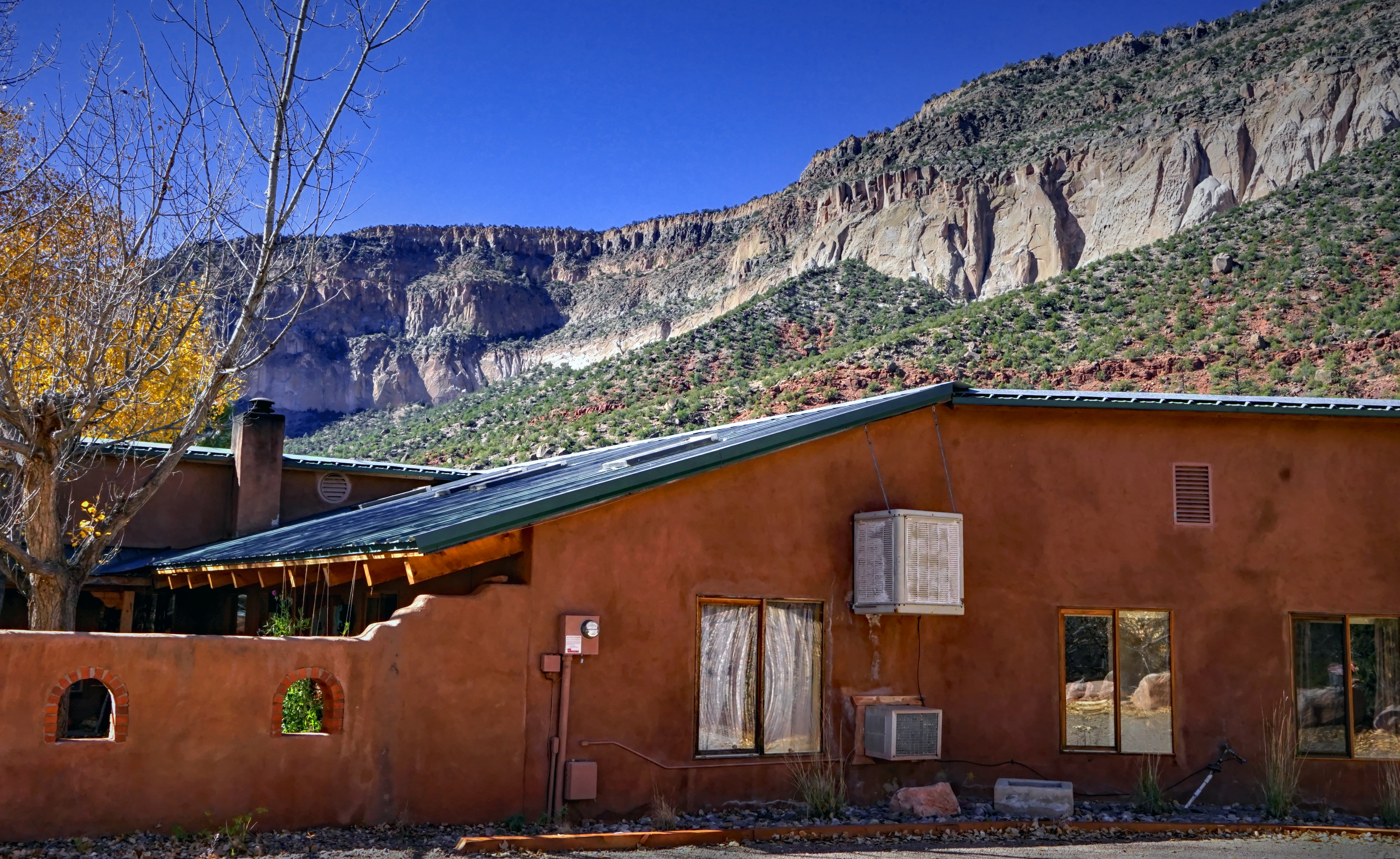
A prospective Jemez Springs host does not need a Santa Fe County cap lecture. They need to know which government owns the pin, what lodgers tax applies, and what to ask before they photograph the soak. Current public pages support a workable path: the Village of Jemez Springs has a Lodger’s Tax Ordinance — Chapter 105, Article I of the posted village code — imposing 5 percent of gross taxable rent and requiring a vendor license before anyone provides lodging. Sandoval County publishes a lodger and short-term-rental remittance path for operators in the unincorporated county. “STRs are generally permitted” is the starting sentence in the brief. It is not a substitute for the clerk.
This page quotes those pages and refuses to invent a village STR permit fee, a remaining-license count, or a zoning overlay we have not opened. Confirm jemezsprings-nm.gov and sandovalcountynm.gov the week you apply. A village of 198 already has lodgers on the books. A 2025 council note discussed lodgers-tax compliance among registered operators, which is evidence the tax is real, not evidence that every listing is legal.
Theinvestmentpost is why a counted listing base exists. This post is why that base still has to pay someone. Do not paste Rio Rancho’s 5 percent city lodgers rule onto NM-4. Do not paste Santa Fe County’s owner-occupied and non-owner-occupied packets onto Sandoval. Thecomparisonpost is about evidence, not about borrowing another county’s paper. Rio Rancho, also in Sandoval County, has its own 5 percent lodgers ordinance.
Village pin versus unincorporated pin
Jemez Springs is an incorporated village in Sandoval County. The village taxation code includes a Lodger’s Tax Ordinance: occupancy tax of 5 percent of gross taxable rent for lodging within the Village. That is the village cashier. Sandoval County’s economic-development pages describe a county lodgers tax that funds marketing for businesses in unincorporated areas and offer a remittance form for short-term rentals. The same business-resources page states that as of January 1, 2020, New Mexico statute requires lodgers-tax remittance and business registration for short-term rentals; the county rate is 5 percent on the total daily room rate; the annual business registration is $35. If your assessor parcel sits outside the village limit, you are likely on the county form. If it sits inside, start with the village.
Do not assume you pay both. Do not assume you pay neither. Email the village clerk and, if the pin is fuzzy, Sandoval County economic development, with the APN in the first sentence. Thestartuppost is the cash. This paragraph is the fork. Jemez Pueblo is a different government. Los Alamos County is a different government. A house advertised as “Jemez” that sits on pueblo or county land you have not identified is a compliance problem, not a marketing angle.
Walk the assessor map before you walk the soak. “Sandoval” on a listing headline is not a legal opinion. La Cueva, Ponderosa, and other unincorporated names on the county’s own municipality list are not the Village of Jemez Springs even when a listing uses a Jemez Springs mailing address. The village lodging page itself lists houses north of town at La Cueva and on Highway 126. Those pins can share a 87025 mailing address and still sit on the county cashier. The county physical address for payments is 1500 Idalia Road, Building D, in Bernalillo. The village office number on public materials is. Those are two buildings, about an hour apart, and they do not share a portal. If the seller cannot tell you which one they have been paying, treat the registration as unproven and start the email yourself.
What the village ordinance actually requires
The ordinance is cited as the Lodger’s Tax Ordinance, adopted as Ordinance No. 111 and compiled as Chapter 105, Article I. Confirm the current PDF on the village site. The file this draft used is the village’s posted taxation chapter, dated in the compilation as January 1, 2016. A compilation date is not a reason to invent a 2026 amendment, and it is not a reason to skip the recheck.
Section 105-4 imposes the 5 percent occupancy tax on gross taxable rent. Section 105-5 is the license. No vendor shall engage in the business of providing lodging in the village who has not first obtained a license. The application goes to the Village Clerk/Treasurer and must state the vendor’s name, a description of the facilities including the number of rooms and the usual schedule of rates, other facilities offered to guests, the identification number from the Taxation and Revenue Department, and the nature of any claimed exemption. The clerk reviews applications within ten days of receipt and grants the license if the applicant is doing business subject to the lodger’s tax. An applicant who disagrees has fifteen days to appeal in writing to the governing body.
Lodgers tax is not a planning permit by itself. Ask the village whether a separate business registration or a land-use approval is also required to advertise. If they say “tax and vendor license only,” get that in writing. If they say “come to the counter,” go. This page will not invent a walk-through we have not been handed. Council discussion of noncompliant lodgers is a reminder that registration exists and is enforced enough to appear on an agenda. It is not a remaining-permit count. There is no Ordinance 5497 table here.
The 30-day and three-room exemptions
Section 105-6 is the page most listing templates skip. The occupancy tax shall not apply if the vendee has been a permanent resident of the taxable premises for at least 30 consecutive days, or if the vendee enters into a written agreement for lodgings for at least 30 consecutive days. It shall not apply if rent is less than $2 per day. It shall not apply if the vendor does not offer at least three rooms within or attached to a taxable premises, or at least three other premises for lodging, or a combination of those. That is the posted text. Quote it. Do not paraphrase it into “one-bedroom houses are free.”.
A 30-night stay on an Airbnb calendar is not automatically the written agreement in (A)(2). Ask the clerk whether a signed 30-night booking qualifies, and get the answer in writing before you advertise “monthly, no tax.” Theremotepost is the product. This paragraph is why that product still has a clerk. An one- or two-bedroom house may sit inside (G). Confirm how the village applies “three rooms” to a whole-house rental. Do not assume the vendor license in §105-5 is skipped because the tax might be. License and tax are different sections. If the clerk wants the application anyway, file it.
Do not invent a hosted-versus-whole-house definition from Santa Cruz or Albuquerque and paste it onto this ordinance. If you will occupy, say so. If an ADU sits on the parcel, say so. Bedroom count belongs in the first email because (G) may matter. Thefinancingfile should attach the clerk’s reply. A lender who cannot see a clerk is underwriting a soak photo.
Sandoval County’s form is not the village
sandovalcountynm.gov publishes a lodger and short-term-rental tax page and a Lodger’s Tax Advisory Board page. Those pages are the county path. Use them for unincorporated parcels. Do not upload a village stay to the county portal because the URL said Sandoval. The county line is large. The village is 198 people. The county treasurer’s office is at 1500 Idalia Road, Building D, Atrium Level, Bernalillo, NM 87004. Mail goes to P.O. Box 40, Bernalillo NM 87004. The county phone on those pages is. The page we fetched said the Business Development and Tourism Department was temporarily not accepting lodgers-tax payments online. Confirm the week you file. Do not invent that the portal is always open.
Rio Rancho, also in Sandoval County, has its own 5 percent lodgers ordinance. That is a different city. Do not copy rrnm.gov instructions onto Jemez Springs. Santa Fe County’s STR license packets, monthly lodgers reporting, and community caps are a different county. Madrid sits on that paper, on NM-14, not on this canyon. Thecomparisonpost is the evidence standard, not a reason to borrow Santa Fe forms.
New Mexico Taxation and Revenue issues a CRS identification number for gross receipts. Budget that account. The village application itself asks for the TRD identification number. Confirm whether lodgers tax and GRT are remitted on the same return or separately for your location. Ask TRD and the local clerk. This page will not invent the combined percent.
Gross receipts, hold harmless, and the 25th
Village Chapter 105, Article II imposes a municipal hold-harmless gross receipts tax of one-eighth of one percent (0.125%) of the gross receipts reported under the state Gross Receipts and Compensating Tax Act. That is a village excise on top of whatever combined state and local GRT Taxation and Revenue publishes for the location. Confirm the current combined rate on TRD the week you price the night. Do not invent 7.425 percent from an aggregator, and do not assume a platform remits every piece because it remits somewhere else in New Mexico.
Section 105-7 says every vendor providing lodgings collects the occupancy tax on behalf of the village, charges it separately from rent, and is liable for the tax on rent paid at that place of business. Each licensed vendor makes a report by the 25th day of each month, on forms provided by the Clerk/Treasurer, of receipts for lodging in the preceding calendar month, and submits the proceeds. Section 105-8 says records of facilities and proceeds stay in the Josephine A. Shepard Municipal Building, open to village inspection during reasonable hours, and are retained for three years.
Section 105-10 is the penalty page. File without paying and you owe the tax plus 10 percent, not less than $100, plus interest at 1 percent per month. Refuse to file and the clerk may estimate from your books or from any information in the village’s possession and assess the same penalty. After written notice, unpaid amounts can go to court, with attorney costs on the vendor. Section 105-11 makes violations a misdemeanor. Budget to file on time. A village this small notices a missing 25th.
What to put in the first email
APN. Village or unincorporated. Whether you will occupy. Proposed bedroom count. Whether an ADU sits on the parcel. Ask: vendor license, lodgers registration, business license, land-use approval, current rate, remittance calendar, whether a 30-day written agreement is exempt, how the three-room clause applies to your house, and whether the seller’s registration transfers. Keep the reply.
The village clerk and Sandoval economic development are the named starting points on the public web. Use them. If the pin is inside the village, start at and the posted Chapter 105 PDF. If the pin is unincorporated, start at the county lodgers page and. Do not send the same email to both and hope one of them files it. Themarket reportwill not zone the lot. Zoning can still say no to a particular use — accessory unit, commercial overlay, floodplain. Ask planning, not Facebook.
If you are hosted versus whole-house, say so to the clerk. Do not invent a hosted definition from another state. If the stay might cross 30 days, put the written-agreement question in the same email. Theremotecalendar is not a tax opinion. Attach a floor plan or a simple room count so the clerk can apply §105-6(G) without guessing. If the seller claims a transferred license, ask for the last three monthly returns, not a verbal assurance. Section 105-8 says records are retained for three years at the Josephine A. Shepard Municipal Building. A missing 25th is a fact. A story about “the last owner handled it” is not.
Taxes the guest sees, and who enforces them
Village 5 percent lodgers on taxable rent, if you are in the village and if you are not inside an exemption the clerk has confirmed. County lodgers if you are not. GRT as New Mexico requires, including the village hold-harmless increment if TRD says it applies to your location. Platform collection may or may not cover the local piece. Ask. Do not assume Airbnb remits Jemez Springs village tax because it remits somewhere else in New Mexico. Santa Fe County’s own STR page notes that third-party platforms may remit a lump sum without a property-level breakdown. That is their county. What happens on this listing is worth confirming directly with Jemez Springs village.
A village this small enforces by neighbors and by the clerk, not by a 200-door compliance department. Nonpayment shows up. The council has already talked about lodgers who were behind. TheDIYpost is who types the return if you do not live on NM-4. Complaints about parking and noise are how a workable tax regime becomes a harder one. Write the listing like you live next door. You might.
House rules, parking, and quiet hours still matter in a canyon village where neighbors know every car. A counted research range of 24 to 41 listings implies operators have found a path. It does not imply the path is optional. Pay the tax you owe. File the license the clerk requires. Put the registration number in the listing if they require it.
What this page will not claim
We do not have a published remaining-license cap. We do not have a village fee schedule line we can quote without the current clerk page. We do not have a zoning map annotation for your lot. We will not say “no permit required” and we will not say “impossible.” We will say: two possible cashiers, a 5 percent village lodgers ordinance on the books, a vendor license with a ten-day clerk review, monthly reports by the 25th, a three-room exemption and a 30-day written-agreement exemption that you confirm rather than assume, a county remittance form and $35 registration for unincorporated stays, GRT at the state plus a posted 0.125 percent village hold-harmless increment, and an email you send before you list.
Send that email. Then photograph the canyon. Theinvestmentthesis assumes you can operate legally. This page is how you check. If the clerk will not license the use, stop. A beautiful soak photo is not a defense under §105-11. We will not say “no permit required” and we will not say “impossible.” We will say: two possible cashiers, a 5 percent village lodgers ordinance on the books, a vendor license with a ten-day clerk review, monthly reports by the 25th, a three-room exemption and a 30-day written-agreement exemption that you confirm rather than assume, a county remittance form and $35 registration for unincorporated stays, GRT at the state plus a posted 0.125 percent village hold-harmless increment, and an email you send.
A research range of 24 to 41 listings is not a remaining-permit table and is not proof that your lot is eligible. It is proof that some operators have found a path. Your path is the APN, the clerk, the license or the confirmed exemption, and the 25th. Everything else is a canyon listing you have not yet earned. If you needed an one-page “no rules in the mountains” answer, this village is the wrong file. If you can send the email and wait ten days, keep going.
Frequently Asked Questions
Do I need a permit to rent in Jemez Springs?
Inside the village, Chapter 105 requires a vendor license from the Clerk/Treasurer before you provide lodging, plus 5 percent lodgers tax unless an exemption applies. Unincorporated pins use Sandoval County’s lodgers form and $35 registration. Ask whether land-use approval is also required. Do not invent a ‘no permit’ rule. We will not say “no permit required” and we will not say “impossible.” We will say: two possible cashiers, a 5 percent village lodgers ordinance on the books, a vendor license with a ten-day clerk review, monthly reports by the 25th, a three-room exemption and a 30-day written-agreement exemption that you confirm rather than assume, a county remittance form and $35.
Is the village tax the same as the county tax?
The village ordinance taxes occupancy at 5 percent of gross taxable rent inside the village. Sandoval County remits lodgers tax for unincorporated areas at 5 percent of the daily room rate plus a $35 registration. Confirm which cashier owns the APN. The same business-resources page states that as of January 1, 2020, New Mexico statute requires lodgers-tax remittance and business registration for short-term rentals; the county rate is 5 percent on the total daily room rate; the annual business registration is $35.
Does Santa Fe County’s STR cap apply here?
Santa Fe County is a different government. Rio Rancho’s 5 percent lodgers rule is a different city in Sandoval County. Jemez Pueblo is a different government. Rio Rancho, also in Sandoval County, has its own 5 percent lodgers ordinance. Do not paste Rio Rancho’s 5 percent city lodgers rule onto NM-4. Do not paste Santa Fe County’s owner-occupied and non-owner-occupied packets onto Sandoval.
What is GRT?
New Mexico gross receipts tax, administered by Taxation and Revenue. The village code also posts a 0.125 percent municipal hold-harmless GRT. Confirm the combined rate on TRD. This page will not invent the percent. Village Chapter 105, Article II imposes a municipal hold-harmless gross receipts tax of one-eighth of one percent (0.125%) of the gross receipts reported under the state Gross Receipts and Compensating Tax Act.
Does a one-bedroom house skip lodgers tax?
Section 105-6(G) exempts a vendor who does not offer at least three rooms or at least three other premises. Quote that sentence to the clerk. Do not assume the vendor license in §105-5 is skipped because the tax might be. It shall not apply if the vendor does not offer at least three rooms within or attached to a taxable premises, or at least three other premises for lodging, or a combination of those.
Does a 30-night stay skip lodgers tax?
Section 105-6(A)(2) exempts a written agreement for lodgings for at least 30 consecutive days. A 30-night Airbnb calendar is not automatically that agreement. Ask the clerk and get the answer in writing. A 30-night stay on an Airbnb calendar is not automatically the written agreement in (A)(2). The occupancy tax shall not apply if the vendee has been a permanent resident of the taxable premises for at least 30 consecutive days, or if the vendee enters into a written agreement for lodgings for at least 30 consecutive days.
When do I file?
Section 105-7 says licensed village vendors report by the 25th of each month for the preceding month. Penalty for filing without paying is 10 percent of the tax, not less than $100, plus 1 percent interest per month. File without paying and you owe the tax plus 10 percent, not less than $100, plus interest at 1 percent per month.
Where do I send the first email?
Village clerk for a village APN (); Sandoval County economic development / lodgers form for unincorporated (). Put the APN, bedroom count, and 30-day question in the first sentence. Email the village clerk and, if the pin is fuzzy, Sandoval County economic development, with the APN in the first sentence. Sandoval County’s economic-development pages describe a county lodgers tax that funds marketing for businesses in unincorporated areas and offer a remittance form for short-term rentals.
Keep going on Crest & Cove:the Crest & Cove intro·local SEO keywords that actually book·the five elements of a converting hero·how to compare STR marketing agencies·Asheville paddling spots worth the drive·this cluster against named-town AirROI pins·Destin against AirROI, not leftover year·prior cluster against AirROI pins.
Related Reading
Keep reading in the Jemez Springs market spine and nearby towns in the same region: same-cluster pages hosts can use without costume-corridor copy.
Jemez Springs Nm Report: AirROI Pins, Not Leftover Occupancy
Jemez Springs Nm DIY Ceiling: AirROI Pins, Not Leftover Occupancy
DIY vs Hire Marketing for Should Durango Hosts Manage Their Own STR
DIY vs Hire Marketing for Should Prescott Hosts Manage Their Own STR
DIY vs Hire Marketing for Should Livingston Hosts Manage Their Own
How to Market a Short-Term Rental in Prescott for Independent Hosts
Work with Crest & Cove Creative
Peak occupancy is not the year. Named-town AirROI pins only.crestcove.coor(256) 998-7502.
Peak occupancy is not the year. Named-town AirROI pins only.crestcove.coor(256) 998-7502.
Peak occupancy is not the year. Named-town AirROI pins only.crestcove.coor(256) 998-7502.
Peak occupancy is not the year. Named-town AirROI pins only.crestcove.coor(256) 998-7502.
Village and county are two cashiers. Do not paste Sandoval’s form onto a village address without asking.
Crest & Cove Creative works with independent short-term rental hosts who want marketing built around how their specific property and market actually work — not a franchise playbook. See what we do atcrestcove.co, or call (256) 998-7502 to talk through your situation. Reach out at crestcove.co or (256) 998-7502.



Comments