
Santa Cruz California Report: AirROI Pins, Not Leftover Occupancy

Updated: Aug 28
This is a market report without a locked AirROI extract. We will not invent one. The number this market actually gives you is on Santa Cruz County’s own short-term rental page: a four-row cap table under Ordinance 5497, certified by the California Coastal Commission on April 16 and posted as effective throughout the unincorporated county. The cell that people keep rounding into a slogan , **270** , is the **outside designated areas** maximum for **non-hosted** rentals. It is not a countywide total, and it is not the City of Santa Cruz.
Read the table as four markets. DASDA (Davenport/Swanton) allows **3** non-hosted and **4** hosted. LODA (Live Oak / Harbor-area geography) allows **262** non-hosted and **18** hosted. SALSDA (Seacliff / Aptos / La Selva Beach as one shared pool) allows **147** non-hosted and **45** hosted. Outside those three, the unincorporated remainder is **270** non-hosted and **185** hosted. Email vacation.eplanreview@santacruzcountyca.gov for remaining permits. This page will not invent a fill count.
City of Santa Cruz is a fifth market with its own clerk: **250** hosted / owner-occupied permits, **no new non-hosted** permits, **14 percent** TOT on residential stays. A modest Vacasa footprint in the city proper , this cluster’s scan saw about **seven** listings , and no dedicated AvantStay Santa Cruz page is the competitive snapshot, not a forever census. Theregulationpost is the ordinance. TheBay Area hubis the wine-country contrast. This page is the data you can defend.
What we can say without a second aggregator is structural: hard area caps, one permit per person/entity/property, a day-trip demand engine on Highway 17, and a PM field that is thinner than Napa/Sonoma. What we cannot say is a blended Santa Cruz ADR, a $771 overnight guest as fact, or an annual revenue number. Buy a primary pull for the town you are buying.
The official cap table is the market fact
Treat the county table as the inventory ceiling, not as a demand curve. DASDA’s three non-hosted permits are a village-scale product on the north coast. LODA is the large unincorporated pool next to the city and the Highway 17 day-trip corridor. SALSDA is one number for three named communities , a permit filled in Seacliff counts against Aptos and La Selva Beach. Outside-area 270 is the rest of unincorporated county, including mountain and inland parcels that are not in a designated beach neighborhood. A buyer who averages those four rows into one “Santa Cruz County occupancy” is doing the thing this report exists to stop.
The table is a maximum, not a vacancy report. Block density at **20 percent** inside the three designated areas, and the rule against a new non-hosted permit adjacent to two existing non-hosted parcels, can close a street while the area cell still looks open on paper. The county waitlist ($145 a year, reviewed July 15 and January 15) exists because cells fill. Thesub-cappost is the geography. This section is why you cannot underwrite “Santa Cruz County inventory” as one stock.
One permit per person, entity, and property is the ownership fact that belongs in a market report. This market cannot legally be rolled into a 40-key local portfolio under one name. That is a structural difference from wine-country fields where a single operator can stack doors. It is also why “number of listings on Airbnb” is not the same as “number of owners.” Count both when you buy a pull. Theinvestmentpost is the verdict. Here it is just the mechanism.
What the numbers cannot say
We do not have independently corroborated AirDNA or AirROI cells for city Santa Cruz, Live Oak, Aptos, Davenport, or Felton in hand at this draft. A $771-a-night overnight-guest figure appeared in research notes with a verify flag. It is not a trailing twelve-month ADR, not a median, and not something you should send a lender. If a later primary extract exists, date it and name the geography. Do not paste it backward into this paragraph.
Public listing counts move. This cluster’s Vacasa city scan (~7) and the absence of a dedicated AvantStay page are useful as a qualitative saturation read against Napa and Sonoma. They are not a complete competitive census. Independent hosts, small local managers, hotels on Beach Street, and the Boardwalk’s own gravity all take nights. TheCambria and San Simeon reportis another California coast we refused to fake a spreadsheet for. Same rule here.
Occupancy is not one number. A July Saturday on Live Oak and a Tuesday in February in Felton do not share a night. Theshoulderandremoteposts are the calendar products. This report will not average them into a fake annual occupancy that makes a Davenport cottage look like a Beach Flats weekend. If you need a series, buy the series for the APN’s community, not for “Santa Cruz metro.” A city hosted house that the owner occupies six months a year also cannot be compared, night for night, with a county non-hosted cottage that is vacant between guests.
Demand is a day-trip engine plus a smaller overnight core
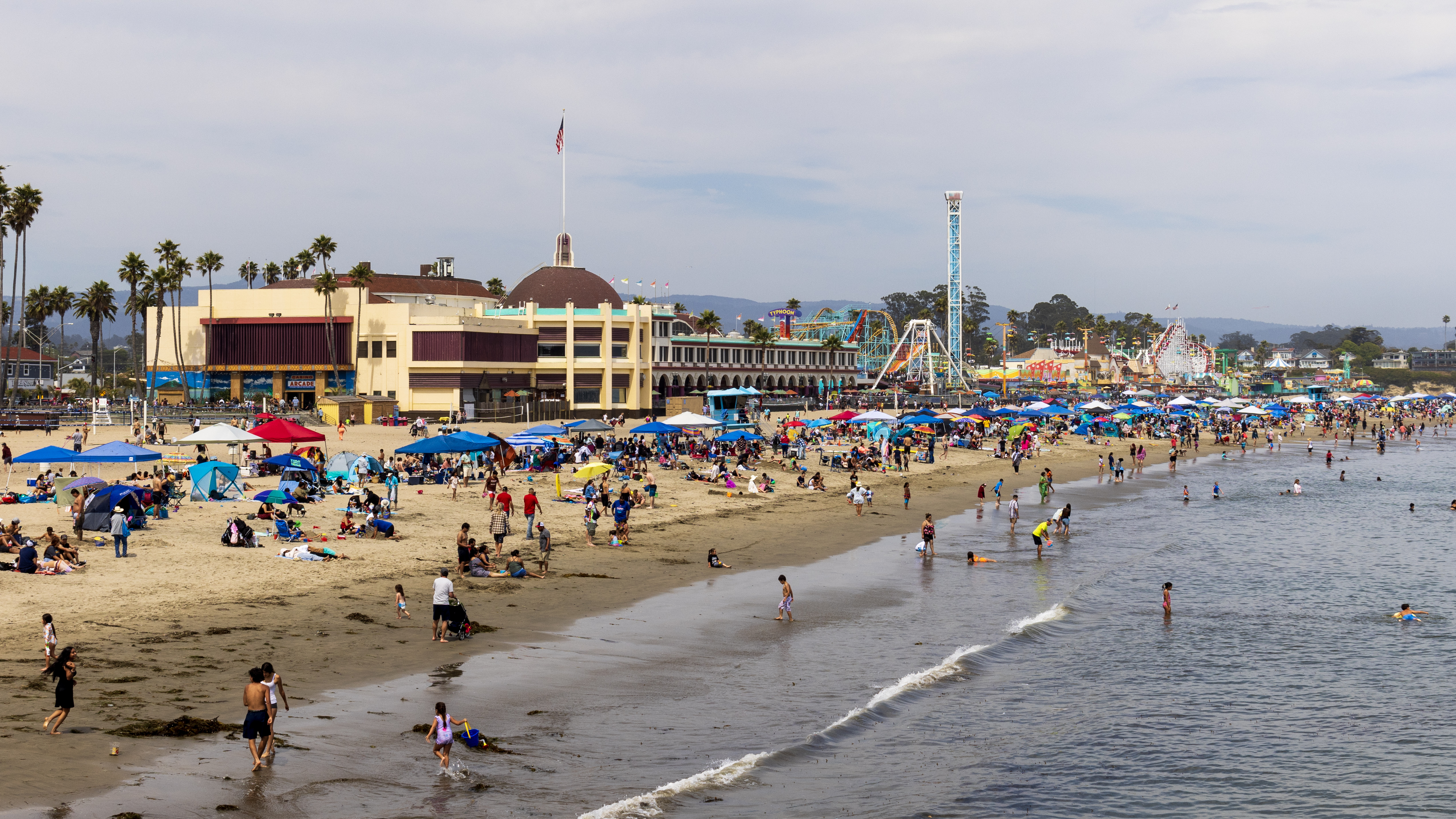
The Boardwalk, the wharf, Steamer Lane, and the reputation as the birthplace of mainland U.S. surfing pull same-day volume from the South Bay and the East Bay. Henry Cowell Redwoods State Park in Felton pulls a different same-day volume from people who wanted trees. Neither visit requires a booking. Highway 17 is typically about 40 to 45 minutes from San Jose in light traffic and can run 75 minutes or more on a summer weekend. That is why the day-tripper exists, and why themarketingpost has to sell the morning after.
Overnight demand is real and smaller than the parking-lot count implies. Weekend households who will not recross the summit, surf households who want first light at Pleasure Point or Steamer Lane, mountain households who want a dark night after Cowell, and winter remote workers who want a desk in the rain are four different nights. A report that treats them as one “visitor” will produce one listing that loses all four. TheDIYpost is the craft. This paragraph is the split.
Do not use city visitor-spend lines you have not pulled from a primary tourism bureau page. This draft does not have a locked 2025 or 2026 county visitor-spend figure to quote. If you need one for a deck, get it from the official source and date it. Inventing a “tourism economy” sentence is how market reports go soft. Structure plus a named drive time is enough to be useful. Boardwalk attendance and state-park vehicle counts, if you go get them from those agencies, are same-day indicators until you can show they convert to nights.
City versus county is two tax stacks and two caps
Unincorporated county: TOT through the Treasurer-Tax Collector, (831) 454-2510. Confirm the current rate; this page will not paste a guessed 11 percent as if it were on the ordinance table. Planning fees are posted: new non-hosted.90 (≤3 bedrooms) or.45 (4+); new hosted $660.95; waitlist $145. CruzAware appears on the renewal list. The Unified Permit Center is 701 Ocean Street, Room 400.
City of Santa Cruz: 14 percent TOT on residential STRs, 12 percent on commercial lodging, effective January 1, 2023 on the finance page. Countywide Tourism Marketing District nightly assessments also apply; the city lists new tiers as of July 1, 2025. Hosted cap 250, no new non-hosted, ADU parcels closed. John Jezek, (831) 420-5305. tot.cityofsantacruz.com. Do not blend the 14 percent onto Aptos.
Capitola and Scotts Valley are not this table. A parcel in those cities is a third conversation. The county map’s designated areas stop at the Capitola line on the west side of SALSDA. If the pin is wrong, the cap row is wrong, the tax is wrong, and the listing first sentence is wrong. Start with the assessor, then the clerk, then the comps. A listing agent who says “Santa Cruz area” has told you nothing you can underwrite. Thezonespost is the named polygons. This paragraph is why the tax invoice follows the pin, not the marketing title.
Competitive field: thinner brands, not empty shelves
Wine country, as theBay Area hubalready argued, is the more built-out national-brand field. Santa Cruz County’s one-permit rule plus area caps make a Vacasa- or AvantStay-style roll-up legally harder even if a brand wanted the doors. That is the structural read. The snapshot read is a small Vacasa city count and no dedicated AvantStay page in this research. Both can change. Neither is “zero professional lodging.”.
Beach Street hotels, vacation-rental independents, and the day-trip itself are the competition that matters for a Live Oak or city listing. A Felton house competes with other valley cabins and with the fact that many Cowell visitors go home. A Davenport house competes with emptiness and with Highway 1 weather, not with the Giant Dipper. Name the alternative the guest actually has. Do not write “no competition” in any of the four county rows or in the city.
Pricing power, if it exists, comes from the permit’s scarcity plus a listing that converts the overnight guest. Scarcity alone on a Boardwalk-clone page is just a scarce weak listing. Themarketingpost is required reading next to this report. A buyer who only reads the 262 LODA cell and ignores Highway 17 will overpay for a house that photographs like a parking problem. Independent density is not the same as independent quality. A street of thin listings can still race to the bottom on a Saturday in July.
How to use this report without blending the county
If you already own, identify the row: DASDA, LODA, SALSDA, outside, or city. Then identify the product: weekend coast, weekend mountain, or winter month. Then pull your own last 24 months before you change a thing. The table tells you whether the neighborhood can add more of you. It does not tell you whether you should cut the Friday night.
If you are buying, do not bid on “Santa Cruz” as a ticker. Bid on a parcel after the county or city has told you the permit path is open , or after you have priced the waitlist and the chance it never moves. DASDA is three non-hosted doors. That is not a market you enter casually. LODA is large and still spatially constrained. SALSDA is shared. Outside 270 includes a lot of county that is not a beach. City non-hosted is closed to new applicants.
What a primary pull should break out
If you buy data after reading this, do not buy “Santa Cruz County” as one cell. Ask for city versus unincorporated, then Live Oak versus Aptos/Seacliff versus Davenport versus the mountain communities, then weekday versus weekend, then June-August versus November-March. A blended county ADR will hide a three-permit village inside a 262-permit designated area and call it a market.
Ask for owner concentration. The ordinance says one permit per entity; the platforms may still show clusters that need explaining. Ask whether professionally managed listings are a brand or a local cleaner with a login. The Vacasa snapshot is a starting hypothesis, not the deliverable. And ask for a date. A 2023 extract is a different ordinance world than a post-5497 extract.
Until that pull exists, the citable facts are the table, the one-permit rule, the city 250 / no-new-non-hosted rule, the posted fees, the 14 percent city residential TOT, the Highway 17 drive as a typical range, and the day-trip identity. That is already enough to stop a bad purchase. It is not enough to underwrite a good one. Theinvestmentpost draws that line in one place. This report is the evidence pile behind it. Date any number you add later. An undated “Santa Cruz ADR” in a slide deck is how this market gets lied about.
A closing that is not a yield
Santa Cruz / Santa Cruz Mountains is a capped, fragmented, day-trip-heavy coast-and-redwood market next to the Bay Area. That sentence is true without a spreadsheet. The money, if there is money, is in a specific row of the table plus a listing that sells the night. The risk is buying the slogan “270 countywide,” sending a city TOT invoice to Aptos, or modeling wine-country brand competition that the ordinance will not allow you to become. A third risk is treating Vacasa’s small snapshot as a promise that no professional rooms will ever appear. Recheck the field the quarter you buy.
Confirm the parcel. Confirm the clerk. Confirm remaining permits. Then buy the pull. Then write the house. That is the whole report. Everything else in this cluster is how to operate once those four sentences are true. If you skip the clerk and start with the pull, you may buy a beautiful occupancy story on a parcel that cannot take the use. If you skip the listing and start with the cap, you may buy a scarce empty calendar. Do both, in that order, and keep the city and the county in separate columns. A last practical note: the waitlist PDF the county updates , the page linked a July 24, 2026 file when we pulled it , is a snapshot of names, not a remaining-permit widget. Use it as a clue, then still email the APN. Do not bid off a PDF date you have not reopened this week.
Frequently Asked Questions
Is the county really capped at 270 non-hosted permits?
No — 270 is only the maximum for non-hosted rentals outside the county's three designated areas, not a countywide total. The Davenport/Swanton Designated Area (DASDA) allows 3, the Live Oak Designated Area (LODA) allows 262, and the Seacliff/Aptos/La Selva Beach Designated Area (SALSDA) allows 147, each with its own separate ceiling. Identify which row your parcel falls under before assuming 270 is the relevant number, and email vacation.eplanreview@santacruzcountyca.gov to confirm remaining permits in that row.
Do you have a reliable ADR or annual revenue figure for Santa Cruz?
Not a blended one that's safe to underwrite from. A $771-a-night overnight-guest figure appeared in research notes but carries a verify flag and should not be treated as a confirmed trailing ADR. Because city and county sub-markets differ so much in permit type, season, and location, buy a primary data pull broken out by specific community and season before sending a lender a single countywide number.
How does Santa Cruz's short-term rental market compare with Napa or Sonoma?
It's qualitatively more fragmented. Santa Cruz's one-permit-per-owner rule plus hard area caps make the kind of corporate brand roll-up common in wine country structurally harder here. This cluster's own scan found only a modest Vacasa footprint in the city (roughly seven listings) and no dedicated AvantStay Santa Cruz page — a snapshot worth rechecking periodically, not a permanent census.
What tax rate applies to a Santa Cruz short-term rental?
City residential STRs pay a 14 percent transient occupancy tax (12 percent for commercial lodging). For unincorporated county properties, confirm the current rate with the Treasurer-Tax Collector at (831) 454-2510 rather than assuming the city rate applies. Countywide Tourism Marketing District nightly assessments also apply on top of TOT, with the city listing updated tiers effective July 1, 2025.
How long does the Highway 17 drive from San Jose actually take?
Typically about 40 to 45 minutes in light traffic, but it can stretch to 75 minutes or more on a summer weekend. Those are typical ranges rather than a guarantee, and the drive time itself is part of why Santa Cruz sees strong day-trip volume that can compete with overnight bookings.
Does the City of Santa Cruz follow the county's permit table?
No, the city runs its own separate system: a 250-permit hosted, owner-occupied cap, and it is not issuing new non-hosted permits. The named contact is planner John Jezek at (831) 420-5305. A city hosted permit is a different product from a county LODA or outside-area non-hosted permit, so buy data for the specific community and jurisdiction a parcel sits in rather than for a generic 'Santa Cruz metro.'
Does a modest Vacasa footprint mean there's no professional competition in Santa Cruz?
No. It means this research didn't find a wine-country-scale brand presence in the city proper, not that there are zero hotels or independent operators competing for the same guest. Recheck the competitive landscape before assuming an absence of professional management, and be cautious about modeling brand-scale competition that the county's permit structure is designed to limit.
What should a Santa Cruz data purchase break out before you rely on it?
City versus unincorporated county; Live Oak versus Aptos/Seacliff versus Davenport versus the mountain communities; weekday versus weekend; and summer versus the November-March off-season. A single blended county ADR hides real differences, like the three-permit Davenport/Swanton area sitting inside the same county table as the 262-permit Live Oak area.
Related Reading
Keep reading in the Santa Cruz market spine and nearby towns in the same region: same-cluster pages hosts can use without costume-corridor copy.
Bay Area Wine Country vs Santa Cruz Mountains STR Market Report
This Market Host Guide: What Guests Actually Ask for Independent Hosts
Santa Cruz County 270 Permits: Clerks, Not Occupancy Ranking
Santa Cruz County Investment: AirROI Pins, Not Leftover Year
Patagonia Town Desk vs. Santa Cruz County: Which Desk Actually Governs
Work with Crest & Cove Creative
Santa Cruz County actually runs five separate short-term rental markets under Ordinance 5497, four designated areas plus the city's own 250-permit cap, each with different numbers. A single Santa Cruz pitch cannot honestly cover all five.
Crest & Cove Creative writes listing copy that names the correct Santa Cruz zone and cap instead of a blended countywide pitch treating five different permit pools as one market. Send your address and we will confirm which zone applies.
Reach out at crestcove.co or (256) 998-7502.


Comments