
Kutztown Tourism Data: Festival History Is Not Your T12

Updated: Aug 27
The Eastern PA Homestead Festival on July 2 through 5, 2026, and the Kutztown Fair on August 3 through 8 are visitor traffic. A person walking 450 Wentz Street is not a person sleeping in your house. Crowd size is not occupancy, and this borough has no published occupancy series. This is not financial advice.
The festival has run since 1950, a long institutional history worth noting, but that longevity describes visitor tradition, not a trailing-twelve-month revenue figure for a specific short-term rental in Kutztown.
This guide separates festival visitor traffic from actual host-year data, keeps Allentown's $12,120 city figure and Reading's $11,474 figure on their own labeled lines, and shows what a host can honestly quote about tourism demand without borrowing a nearby city's revenue figure. This is not legal advice.
Festival History Is Visitor Traffic
Festival history and cave hours are visitor traffic, and they are not a Kutztown host year. The Eastern PA Homestead Festival and the Kutztown Fair draw real crowds to the borough, but a crowd figure describes foot traffic, not overnight bookings in any specific short-term rental.
The festival has run since 1950, giving Kutztown genuine multi-generational visitor tradition, but a host should not treat that institutional longevity as evidence of consistent occupancy, since this borough has no published occupancy series to confirm it either way.
It is not a reason to guess a 2026 nine-day Folk Festival as if the 1950 calendar returned unchanged. Festival dates, formats, and durations can shift over decades, and a host should confirm current-year festival dates directly rather than assuming historical patterns repeat exactly.
The practical takeaway: cite the festival's genuine 1950 founding and current dates as visitor-interest context, but never present festival attendance figures as a stand-in for actual occupancy or revenue data, since no such occupancy series exists for this borough.
Allentown $12,120 Is a City Desk
Allentown city, Lehigh County, prints a typical year of $12,120, ADR $159, occupancy 36.6 percent, RevPAR $57, on a sample of 130 listings - a genuinely separate city market from Kutztown borough itself.
Allentown city prints $12,120 on 130 listings, and that is a city desk, not this walk. A Kutztown host should never present Allentown's figures as descriptive of their own borough's short-term rental performance, regardless of regional proximity.
Reading city, the Berks county seat, prints $11,474, $141 ADR, 33.6 percent occupancy, $50 RevPAR, on a sample of 79 listings - another separate city figure that should stay on its own labeled line rather than blending with Kutztown or Allentown data.
The practical takeaway: keep Allentown's $12,120/130-listing figure and Reading's $11,474/79-listing figure clearly labeled and separate from any Kutztown-specific claim, since neither city figure describes who actually slept in a Kutztown rental.
Do Not Divide the Cave by a Fake Listing Count
A host tempted to estimate Kutztown-specific revenue by dividing a regional attraction's visitor count, such as a nearby cave's annual visitors, by an assumed or guessed listing count is manufacturing a number this data does not actually support.
Lancaster city prints $28,791, and neither figure, Lancaster's nor Allentown's nor Reading's, names who slept on your sofa. Borrowing any nearby city's revenue figure and dividing it by a guessed number of Kutztown listings produces a fabricated statistic, not real market data.
This borough has no published occupancy series, which means a host genuinely does not have a direct Kutztown-specific revenue benchmark available - an honest gap that should be acknowledged rather than papered over with a manufactured estimate.
The practical takeaway: resist the temptation to back into a Kutztown-specific number by dividing an attraction's visitor count or a nearby city's revenue figure by any assumed listing count, since no verified inputs support that kind of calculation.
July Crowds Do Not Fill January
A visit to the grounds is a person walking Wentz Street, not a person sleeping in your house. The Eastern PA Homestead Festival's July crowd and the August Kutztown Fair's crowd describe summer foot traffic, not a guarantee of summer occupancy in any specific rental.
Do not keep the fairgrounds into a listing as if it were your weekend occupancy already booked. A festival happening nearby does not automatically translate into a booked weekend for a specific host's property; that booking still has to happen through actual marketing and demand.
January sits apart from the summer festival calendar entirely, and a host should not assume July's festival crowds create any carryover demand into the winter months, since no data here connects festival attendance to off-season booking patterns.
The practical takeaway: treat festival-season foot traffic and off-season booking demand as two separate questions, and do not assume a strong festival month automatically implies strong bookings in that month or in unrelated months like January.
US-222 Drive Time Is a Demand Story
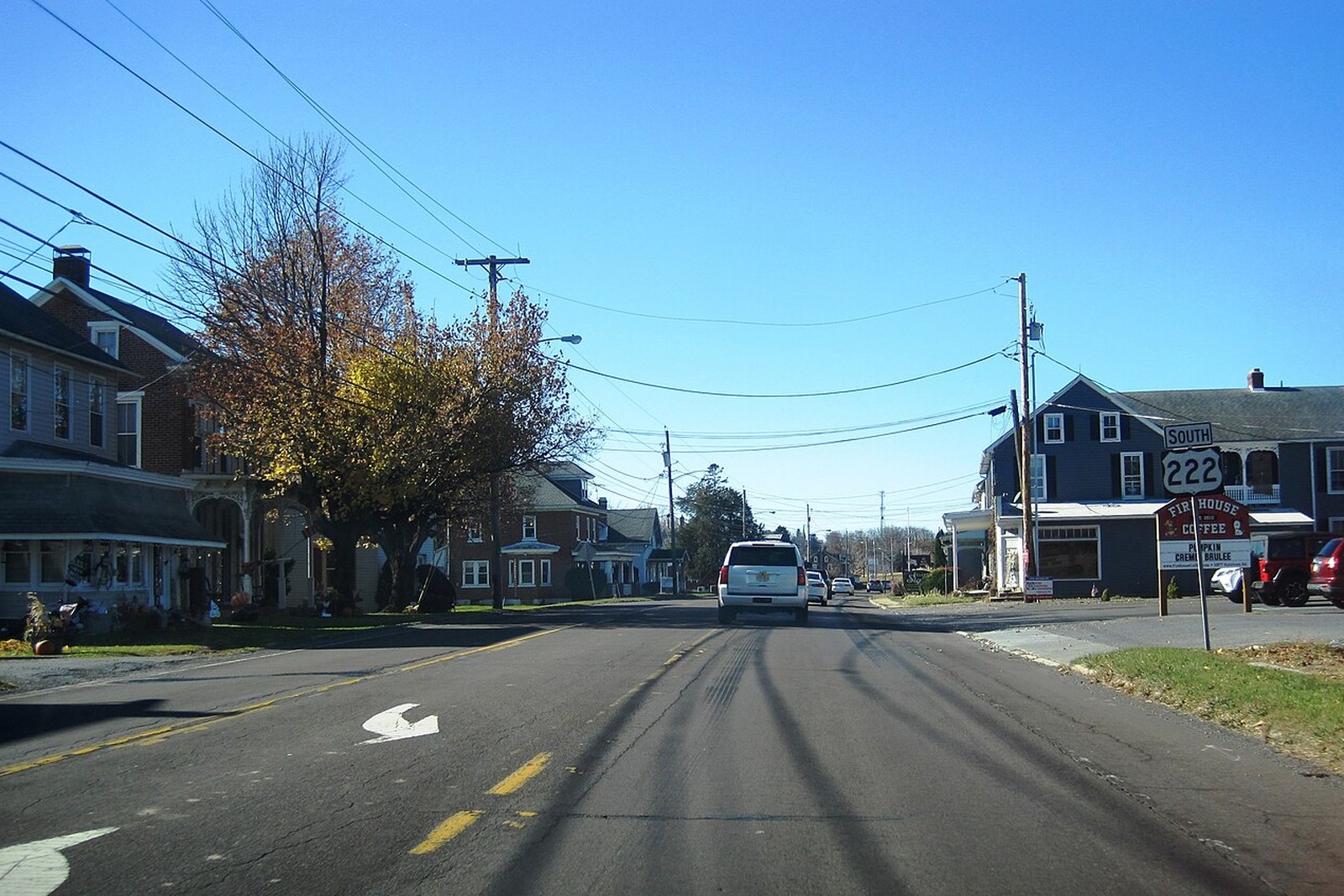
Drive time along US-222 connects Kutztown to Allentown, Reading, and the broader Lehigh Valley and Berks County region, giving the borough a real regional accessibility story worth mentioning honestly in marketing content.
This drive-time accessibility is a legitimate demand-generating factor, a guest willing to drive from Allentown or Reading for a festival weekend is a real potential booking, but it should be framed as regional accessibility context, not as evidence of Kutztown's own occupancy or revenue performance.
A host can honestly describe Kutztown's position relative to US-222 and the surrounding cities as part of the property's location story, without implying that Allentown's or Reading's own city-level revenue figures apply to a Kutztown listing.
The practical takeaway: use US-222 drive-time and regional accessibility as an honest location-story detail in listing copy, kept clearly separate from any revenue or occupancy claim about the property itself.
What a Host Can Quote Without Lying
A Kutztown host can honestly quote the borough's genuine festival history since 1950, the current Eastern PA Homestead Festival dates of July 2 through 5, 2026, and the Kutztown Fair dates of August 3 through 8, since these are verifiable, dated facts.
A host can also honestly quote Kutztown's population of 4,180 as a factual descriptor of the borough's size, without implying any specific occupancy or revenue conclusion from that population figure alone.
What a host cannot honestly quote is any Kutztown-specific ADR, occupancy, or revenue figure, since this borough has no published occupancy series - any such figure would have to be borrowed from Allentown, Reading, or another market and mislabeled as Kutztown's own.
The practical takeaway: build marketing content around genuinely verifiable Kutztown facts, festival dates, population, drive-time access, and avoid presenting any nearby city's revenue data as though it belongs to Kutztown itself.
County Hotel Tax Is Not Your T12
Population is 4,180, and Reading city prints $11,474 - two genuinely different kinds of figures that should not be confused with each other or with a trailing-twelve-month revenue report for an individual Kutztown listing.
A county-level hotel tax remittance total, if published, describes aggregate county tax collection, not an individual property's own trailing-twelve-month performance, and a host should not treat a county tax figure as a proxy for their own listing's specific T12 revenue.
This distinction matters because a host or buyer evaluating a Kutztown property for purchase needs the property's own actual booking history, not a county-wide or city-wide aggregate figure that obscures individual listing performance.
The practical takeaway: request the specific property's own trailing-twelve-month booking and revenue history when evaluating a Kutztown rental, rather than relying on a county hotel tax total or a nearby city's aggregate figure as a substitute.
How to Read Next Season's Fairgrounds Calendar
Keep 1950 and 2026 in the visitor column. A host reading next season's fairgrounds calendar should track festival dates as visitor-interest and marketing-timing information, not as a direct input into a revenue projection for their own property.
Confirming the Eastern PA Homestead Festival's and Kutztown Fair's current-year dates each season, rather than assuming they repeat identically to a prior year, helps a host time their own marketing pushes around genuine local demand windows.
This is not financial advice. A host should reconfirm all festival dates, population figures, and any cited nearby-city data directly before using them in a marketing plan or a pricing decision.
The practical takeaway: use each season's confirmed fairgrounds calendar to time marketing content and outreach, while keeping any actual pricing or revenue decision anchored to the property's own confirmed booking history, not to festival attendance or nearby-city figures.
Related Reading
More Kutztown, Pennsylvania reading already live on Crest & Cove.
Frequently Asked Questions
Does Kutztown have its own published short-term rental occupancy data?
No -- this borough has no published occupancy series. A host can honestly cite festival history, a population of 4,180, and drive-time access, but any specific Kutztown ADR, occupancy, or revenue figure would have to be borrowed from another market and wouldn't actually be accurate.
Can Allentown's $12,120 figure be used to estimate Kutztown rental revenue?
No -- Allentown city prints $12,120 on 130 listings, and that's a city desk, not this borough. Allentown, Lehigh County, is a genuinely separate market from Kutztown and should stay on its own clearly labeled line in any comparison a host makes.
Does a nearby cave's visitor count reveal Kutztown occupancy if divided by listings?
No -- dividing an attraction's visitor count by an assumed or guessed listing count manufactures a number the actual data doesn't support. This borough simply has no published occupancy series to back a calculation like that.
Do festival crowds in July and August guarantee bookings in those months?
Not automatically -- a visit to the festival grounds is a person walking Wentz Street, not a person sleeping in your house. Festival foot traffic is a real demand signal worth marketing around, but actual bookings still depend on a host's own marketing and pricing decisions.
How long has the Kutztown festival tradition actually run?
The festival has run since 1950, a genuine, long-standing visitor tradition worth citing honestly in marketing copy. It isn't a reason to assume a future Folk Festival calendar will match the 1950 original after decades of real change.
Should Reading's $11,474 figure ever be blended into a Kutztown pricing model?
No -- Reading city, the Berks County seat, prints $11,474, a $141 ADR, and 33.6 percent occupancy on 79 listings. That figure describes Reading specifically and shouldn't be blended into any Kutztown-specific pricing or revenue estimate.
What role does US-222 play in Kutztown's tourism story?
US-222 connects Kutztown to Allentown, Reading, and the broader region, giving the borough a real accessibility story worth mentioning honestly. It supports a demand narrative in listing copy but shouldn't be used to imply Kutztown shares those cities' own revenue figures.
Can a county hotel-tax total substitute for a specific listing's own T12 report?
No -- a county-level hotel tax figure describes aggregate collection, not one property's trailing-twelve-month performance. A host or buyer evaluating a Kutztown rental should request that specific property's own booking history rather than relying on a county-wide aggregate.
Work with Crest & Cove Creative
Festival history and cave hours are visitor traffic, and they are not a Kutztown host year. Allentown's $12,120 is a city desk, and this borough has no published occupancy series of its own.
We help Kutztown hosts separate genuine visitor-traffic facts from borrowed city figures in their marketing copy. Send us your listing and we will check every claimed number against what the data actually supports. Send the live listing draft and the facts you can actually cite.
Reach out at crestcove.co or (256) 998-7502.


Comments