
Lake and Waterfront STR Marketing: What Independent Hosts Should Actually Say

Updated: Aug 28
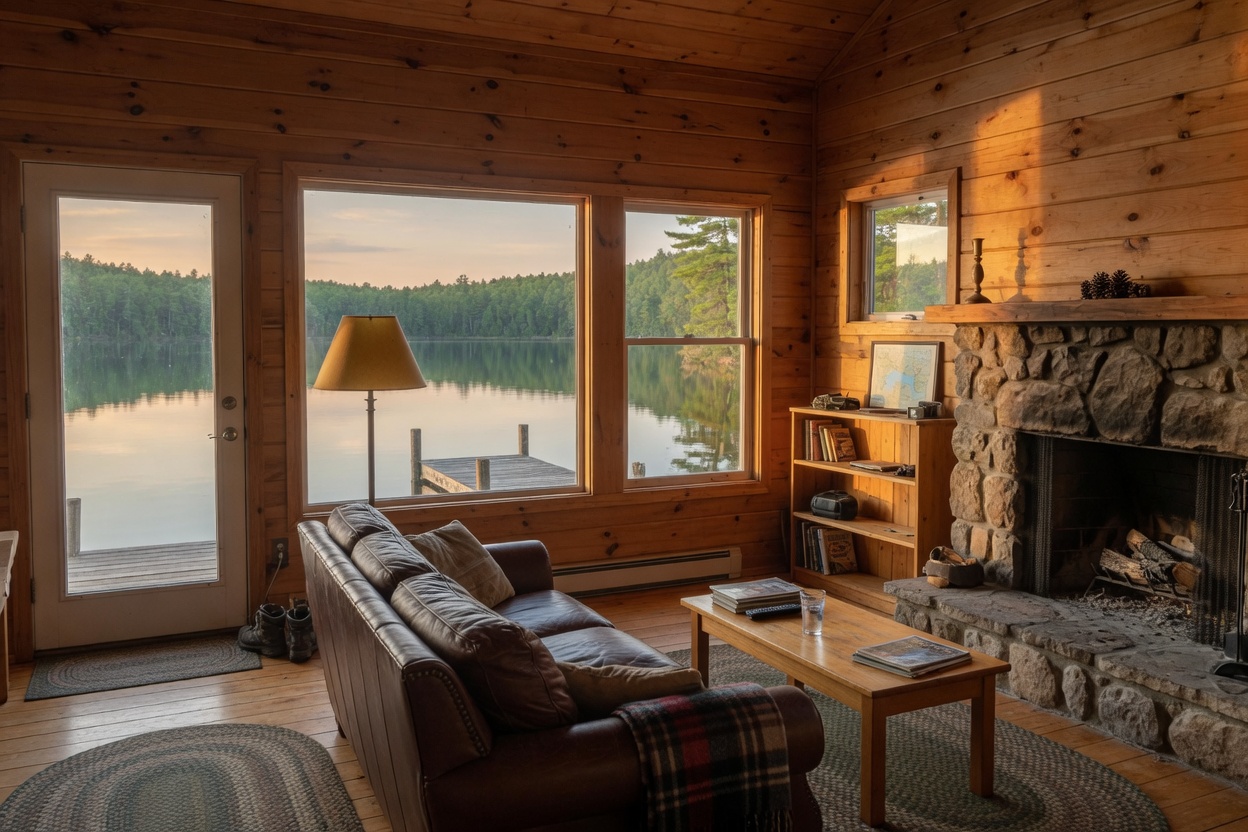
Lake and waterfront listings sell themselves in the search results, right up until a guest arrives and the house does not match the caption. "Waterfront" gets used loosely across the short-term rental market , for homes with a private dock, homes across the road from the water, and homes a ten-minute drive from the nearest boat ramp. Guests notice the gap immediately, and it shows up in reviews long before it shows up in a support ticket.
This guide is for independent hosts who own or manage a lake or waterfront property and want marketing copy that holds up once a guest is standing on the porch. It is not a legal opinion on liability language, and it does not promise a booking lift from any specific phrase , Keep the marketing that matches the property you actually have, and let accuracy do the selling.
Why "Waterfront" Claims Get Hosts in Trouble
"Waterfront" is one of the most disputed words in vacation rental marketing because it implies something specific: the property line touches the water, or at minimum guests can walk to it without crossing a road or another owner's lot. When a listing uses that word loosely , for a home with a distant lake view, or one that requires a shared easement to reach the shore , the mismatch becomes the first thing a guest mentions when they check in, and often the first thing they mention in a review.
The fix is not to avoid water in your marketing. It is to be specific about what kind of water access the property actually has. "Lake view," "lake access via a shared path," "private dock," and "waterfront with private shoreline" are four different claims, and guests searching for a lake trip can tell the difference. Naming the real category costs you nothing in search visibility and saves you the review that says the listing oversold itself.
What Guests Actually Want to Know About Water Access
Guests booking a lake trip are usually working from a short mental checklist: how far is the water, is it private or shared, can we bring a boat, is there a dock or just a shoreline, and is the water suitable for swimming. Most listing descriptions answer none of these directly , they lean on adjectives like "stunning" and "serene" instead of the concrete facts that actually help someone plan a trip.
Answer the checklist directly in the listing description and the about section. State the walking distance to the water in minutes, whether the access point is private or shared, whether a dock or boat slip is included, and whether the water body allows swimming or is primarily for boating and fishing. This is also the content Google and AI search tools tend to surface in snippets, because it answers a specific question rather than setting a mood.
If the property does not have direct water access at all , a common case for "near the lake" listings , say so plainly and lead with what it does offer, such as proximity to a public boat ramp or a short drive to the marina. Guests planning a boating trip will filter themselves out early rather than book and arrive disappointed, which protects your review average more than any clever phrasing would.
Writing an Honest Water-Access Line for Your Title and About Section
Your listing title and the first two sentences of your about section carry the most weight, because they are what guests read before deciding whether to open the full listing. A good water-access line names the access type and one concrete detail: "Private dock on Lake X, 3-bedroom cabin with covered porch" tells a guest more in eight words than "Gorgeous lakefront retreat" does in five.
Keep the claim consistent across every surface , the title, the about section, the house rules, and the photo captions. A listing that calls itself waterfront in the title but hedges to "lake access nearby" in the fine print reads as evasive, and guests who catch the inconsistency tend to assume the worse version is true. One accurate sentence, repeated consistently, builds more trust than several different versions of an optimistic claim.
House Rules That Matter More Near a Lake
Waterfront and lake-adjacent properties carry a few house-rule categories that inland listings can often skip. Dock and boat use is the biggest one: state clearly whether guests can tie up a personal boat, whether a boat is included, and any restrictions on jet skis or motorized watercraft. If there is no lifeguard or designated swim area, say so , guests should know they are swimming at their own judgment, not assume a managed beach.
Quiet hours matter more on the water than almost anywhere else, because sound travels across a lake and a late-night gathering on a dock can disturb neighbors a quarter mile away. Parking near boat ramps and marinas, trash pickup schedules that differ from inland routes, and any seasonal rules around water levels or algae advisories are all worth a line in the house rules rather than a surprise on arrival.
None of this needs to read like a legal document. A short, plainly worded house-rules section that covers water access, quiet hours, parking, and trash sets expectations before check-in and reduces the number of questions that land in your inbox mid-stay.
Photos: Let the Water Do the Selling, Accurately
The first photo in most booking platforms functions as the search thumbnail, and it is doing more marketing work than any sentence in your description. If your lead photo is a wide-angle shot of the lake taken from a spot guests cannot actually stand in during their stay, you are setting an expectation the property will not meet.
Photograph the water access the way a guest will experience it: the actual dock, the actual path down to the shoreline, the actual distance and terrain. If the view from the house is the real selling point and the water itself is a walk away, a photo taken from the porch or deck is more honest , and often more effective , than a photo taken from the water's edge that implies a proximity the listing doesn't have.
Seasonal Demand and Pricing Around Lake Markets
Lake and waterfront rentals tend to follow a more pronounced seasonal curve than urban or inland listings, with demand concentrated around late spring through early fall and a sharper drop-off once water temperatures cool. Shoulder-season guests , fishing trips, fall foliage visitors, off-season retreats , are often looking for a quieter stay and a lower rate, and marketing copy that leans entirely on "summer lake days" imagery can undersell the property the rest of the year.
Consider writing a short seasonal note into the listing or a saved message template: what the property offers outside peak summer, whether the dock or water access is available year-round, and what changes (heating, closed pool, reduced boat access) guests should expect. This does more to fill shoulder-season nights than a pricing adjustment alone, because it answers the question a guest is already asking before they book.
A Quick Audit: Does Your Listing Still Match the House?
Once a month, or after any change to the dock, shoreline, or water access, walk through your own listing as if you were a first-time guest. Compare the title, the first photo, the about section, and the house rules against the property as it exists today , not as it existed when you first wrote the listing.
Does the title's water-access claim match what a guest can actually walk to?
Is the first photo something a guest could stand in front of during their stay?
Do the house rules cover dock/boat use, quiet hours, parking, and trash?
Have any recent reviews mentioned a gap between the listing and the property?
If a review has already flagged a mismatch, treat it as the most reliable audit you'll get , fix the specific line that caused the confusion rather than rewriting the whole listing. Small, targeted corrections keep the listing accurate without resetting the copy guests and repeat bookers already recognize.
Common Mistakes That Cost Lake Hosts Bookings
The most common mistake is using "waterfront" for a property with shared or distant access, which sets up the exact disappointment this guide is meant to prevent. A close second is inconsistency , different water-access claims in the title, the description, and the house rules , which reads as carelessness even when it is just outdated copy that never got updated.
A third mistake is over-relying on mood language ("tranquil," "breathtaking," "a slice of paradise") instead of the specific facts guests are searching for. Adjectives don't answer "can I bring a boat" or "how far is the water," and a listing that never answers those questions loses bookings to one that does, even if the property itself is comparable. The last common mistake is treating the listing description as a one-time task instead of something to revisit whenever the dock, water level, or amenities change.
Frequently Asked Questions
Is it okay to call a property "waterfront" if it's a short walk from the lake?
Only if guests can reach the water without crossing a road or another owner's property, and even then it helps to note the walk distance plainly. If access is shared or the water is genuinely a drive away, use "lake access" or "near the lake" instead -- the more specific term attracts the right guest and avoids the review that flags the gap.
What should go in the house rules for a lake or waterfront rental?
Cover dock and boat use, whether a boat is included, restrictions on motorized watercraft, quiet hours, parking near the water, trash pickup, and whether there's a designated or supervised swim area. These are the categories that generate the most mid-stay questions when they're left out.
Do I need to disclose water safety information if I have a dock?
This isn't legal advice, but it's worth stating plainly whether there's a lifeguard or supervised area (most private docks have neither), and confirming with your insurer and local regulations what disclosures or safety equipment are expected. Confirm that with the desk that actually covers this parcel before promising a specific use in your marketing copy.
How should I photograph water access without misleading guests?
Shoot the access point guests will actually use -- the real dock, the real path to the shoreline -- rather than a wide shot taken from a spot they can't reach. If the view is the real feature and the water is a walk away, a porch or deck photo is more honest than one that implies close proximity.
Does calling a listing "lake view" help search visibility even without private water access?
It can help guests find the listing, but only if it's accurate. Overpromising access tends to generate reviews that mention the mismatch, and negative reviews affect ranking and booking conversion more than the phrase itself helps -- keep any seasonal or peak-month claims as separate, accurate line items rather than folding them into the same overstated pitch.
How should I think about pricing across lake seasons?
Lake demand is typically strongest from late spring through early fall, with a sharper drop-off in the off-season than many inland markets see. A short note about what the property offers outside peak summer -- reduced water access, closed amenities, a quieter setting -- tends to do more for shoulder-season bookings than price cuts alone.
What's the fastest way to check if my listing still matches the house?
Once a month, or after any change to the dock or shoreline, compare your title, first photo, about section, and house rules against the property as it exists today. Recent guest reviews are usually the most reliable signal that something has drifted out of sync -- a platform badge or minimum-stay setting is a filter, not proof the listing still matches reality.
Will rewriting my listing copy alone increase bookings?
Accurate copy reduces friction and protects your review average, but it isn't a substitute for response time, pricing, and photo quality. Think of marketing copy as removing the reasons a qualified guest hesitates, not as a way to manufacture demand that isn't there.
Related Reading
Keep reading on same-cluster Crest & Cove pages that stay on labeled local lines without costume-corridor copy.
Mccall, ID STR Market Report 2026: What Hosts Should Underwrite
DIY vs. Hire in Many, LA: Why Independent Hosts Still Run Most Listings
DIY or Hire in Depoe Bay: What the Numbers Say for STR hosts
DIY vs Hire in Seattle: Independents Still Write Most Listings
Financing a Springfield, MA Rental Without a Neighbor City Year
Financing a Grove, OK Rental: What a DSCR Underwriter Actually Wants
What It Actually Costs to Start a Grove OK STR: The One Published Fee
How to Underwrite an Akron, Ohio Rental With Its Own Numbers
Work with Crest & Cove Creative
Lake and waterfront listings get labeled 'waterfront' whether there's a private dock, a road between house and shore, or a ten-minute drive to the water. Guests catch the gap fast, and it shows up in reviews, not repeat bookings.
We help lake and waterfront hosts write copy that matches dock access, water distance, and lake rules exactly. The caption and the porch view should agree the day a guest arrives.
Reach out at crestcove.co or (256) 998-7502.


Comments