
Marketing a Dock or Water Amenity Without Overpromising

Updated: Aug 26
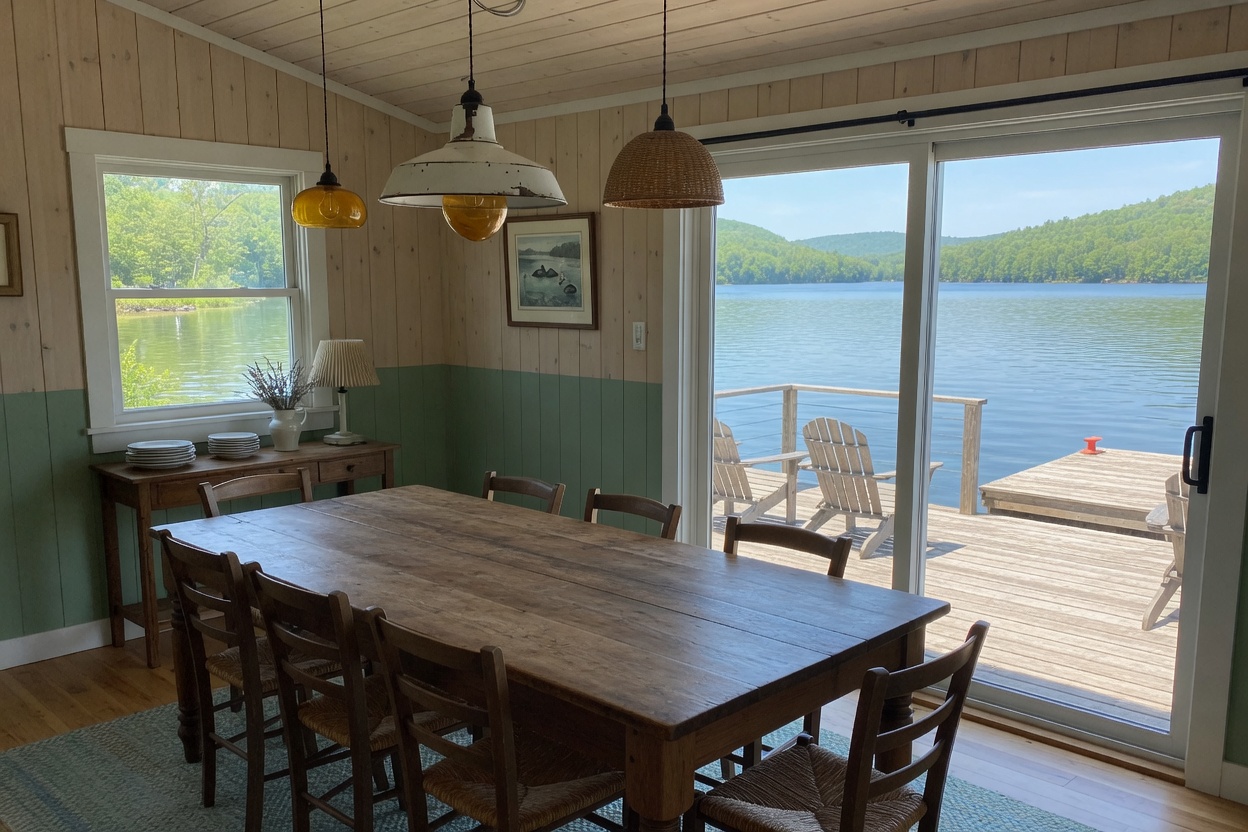
A water amenity, a private dock, a boat slip, deeded lake access, sells a listing faster than almost any other feature a host can offer, and it also generates a specific category of guest confusion and risk that a pool or a hot tub doesn't quite match. Water levels change. Access windows shift with season. A dock photographed at high summer water can look nothing like the same dock in October, and a guest who booked based on the photo has a legitimate complaint if what they find doesn't match it.
This page is about marketing that amenity honestly, specific enough to convert a genuinely interested guest, accurate enough that arrival doesn't produce a disappointed or unsafe surprise. It won't guess water-level data, depth figures, or liability language for any specific property, since those facts vary house to house and need to come from the host's own real conditions and their insurance provider, not a general guide.
The throughline across every section here is the same: state the real condition, including the ones that vary by season, rather than the single best-case version of what the water amenity looks like on its best day of the year. This is not legal advice.
Why Water Amenities Are High-Trust, High-Risk Marketing Territory
A water amenity carries more marketing weight than most features because it's frequently the deciding factor in a booking decision, a family choosing between two otherwise similar houses often picks the one with lake access without much more consideration. That outsized influence on the booking decision is exactly why the marketing needs to be accurate: the guest is trusting this specific claim more than almost any other on the page.
It also carries more risk than most features, because water access intersects with real safety considerations, depth, current, supervision, that a pool fence or a hot tub cover doesn't carry in quite the same way. A misleading claim about a water amenity isn't just a disappointing surprise, it can be a genuine safety gap if a guest arrives expecting conditions that aren't what's actually there.
Holding both of these facts at once, high booking influence and high risk if inaccurate, is the right frame for every decision in this page. The temptation to oversell is real because it works in the short term; the cost of overselling here is higher than for almost any other amenity category.
What 'Dock Access' Actually Needs to Specify
The phrase 'dock access' alone tells a guest almost nothing useful and invites them to fill in the gap with whatever they're hoping for. Specify whether the dock is private and exclusive to the listing or shared with neighboring properties, whether it's a fixed structure or a floating one that moves with water level, and whether boats can actually tie up there or it's a swim and sit dock only.
State whether the dock is currently usable, since docks can be damaged, under repair, or seasonally removed, and a listing that hasn't been updated to reflect current dock status is one of the more common sources of an angry arrival-day message. Check and confirm current dock condition before each booking season, not just once when the listing was first written.
If there are any restrictions, no swimming off the dock, no fishing, quiet hours affecting dock use in the evening, state them clearly in the same section as the amenity description, not buried separately in house rules where a guest scanning for the water feature is unlikely to see them before booking.
Boat and Watercraft: Liability Language Belongs in the Listing, Not Just the Waiver
If a boat, kayak, canoe, or other watercraft is included with the stay, the listing description should state clearly what's included, what condition it's in, and what a guest needs to know before using it, not just leave that information for a waiver a guest signs on arrival. A guest deciding whether to book needs this information before committing, not after.
This page won't draft specific liability or waiver language, since that needs to be reviewed by a qualified attorney familiar with the host's insurance coverage and jurisdiction, and generic liability language copied from another listing may not actually protect the host the way it appears to. What belongs in the marketing copy is a plain, honest description of what's provided and its condition; what belongs in a proper waiver is the legal protection, and the two shouldn't be confused for each other.
Any age, experience, or licensing requirements for using included watercraft, if applicable, should be stated in the listing before booking, not discovered by a guest who arrives having planned a boat trip around a restriction they didn't know existed.
Photos That Show Real Water Conditions, Not Brochure Water
A photo taken on the single best day of the year, perfectly clear water, ideal water level, no algae, sets an expectation that may not match what a guest sees on an average booking, and the gap between that photo and reality is a common source of arrival-day disappointment even when nothing was technically dishonest about the photo itself.
Consider including a range of photos across different times of year or water conditions if the amenity varies meaningfully by season, rather than relying exclusively on the single best shot. A guest booking in a lower-water month benefits from seeing what that actually looks like before arrival, not discovering it as a surprise.
If water conditions vary predictably by season, state that variation directly in the description near the photos, so a guest booking outside peak water season understands what to expect without having to infer it from a caption or a date buried in the photo's metadata.
Seasonal Honesty: Water Level, Algae, and Access Windows
Water amenities are genuinely seasonal in ways many hosts underplay in their marketing, since a lake or river's water level, clarity, and general condition can shift meaningfully across a booking calendar, and a listing that only describes peak-season conditions misleads every guest booking outside that window.
State the realistic seasonal range plainly: when the amenity is at its best, when access might be limited or the experience meaningfully different, and any predictable issues like seasonal algae blooms or lower water exposing more shoreline than photos suggest. This isn't a discouragement from booking outside peak season, it's the information a guest needs to set accurate expectations.
Update this seasonal guidance based on your own observed patterns over time rather than a one-time description written when the listing was first created. Water conditions can shift year to year, and a description that was accurate three years ago may no longer reflect current typical conditions.
Safety Amenity Marketing: Life Vests, Depth, Supervision
If life vests are provided, state how many, in what sizes, and whether they meet current condition standards, rather than a vague 'life vests available' that leaves a guest with young children uncertain whether appropriately sized options actually exist. This is exactly the kind of specific, checkable fact that resolves real uncertainty rather than papering over it.
Depth information, where a host has it and where it's safe and accurate to share, helps a guest with children or inexperienced swimmers make an informed decision before booking rather than discovering unexpected depth conditions on arrival. Where depth varies or isn't precisely known, say that honestly rather than guessing at a number.
State clearly that supervision is the guest's responsibility, and any specific guidance the host has about the water amenity's particular risks, current, sudden depth changes, wildlife, in the listing itself. This is both a genuine safety service to the guest and a reasonable expectation-setting step for the host, though it does not substitute for proper insurance coverage and, where relevant, professional liability guidance.
Where Insurance and Access Facts Intersect With Marketing Copy
A host's insurance policy may have specific requirements or exclusions related to water amenities, particularly boats or watercraft, that should inform what's actually offered and how it's described, not just what sounds appealing in the listing. Marketing copy that promises something the insurance policy doesn't actually support is a real liability gap disguised as a selling point.
This page won't state specific insurance requirements, since those vary by carrier, policy, and jurisdiction, and a host should confirm current coverage directly with their insurance provider before marketing any water amenity, especially one involving a boat or watercraft, rather than assuming standard homeowner or short-term rental coverage automatically extends to cover it.
Where local regulations govern dock use, watercraft, or waterfront access, confirm those separately with the relevant local authority; this page is not legal advice and does not summarize any specific jurisdiction's water-access rules.
Building the Water-Amenity FAQ Guests Actually Need
A dedicated FAQ section addressing the specific, practical questions a guest has before booking a water-amenity listing resolves more pre-booking uncertainty than folding this information into a general amenities list. Is the dock private or shared, is a boat included and in what condition, what does water level typically look like this time of year, are life vests provided and in what sizes.
Each answer should be specific and honest rather than reassuring in a generic way, since a guest reading this FAQ is often weighing a real safety and expectation question, not just browsing casually. A vague, feel-good answer here does less to convert a hesitant guest than a specific, honest one does.
Revisit this FAQ each season as conditions change, treating it as living content tied to the actual current state of the water amenity rather than a one-time write-up. A FAQ that accurately reflects this year's conditions is a genuine trust asset; one that's gone stale is a liability the same way an outdated dock-status line is.
Related Reading
More independent-host reading on honest listing copy, distribution, and when hiring help is worth it.
Frequently Asked Questions
What's the most common mistake hosts make marketing a dock or lake access?
Using a single best-case, peak-season photo and description as if it represents year-round conditions, when water level, clarity, and dock usability can vary meaningfully by season. A guest booking outside that peak window arrives to a real gap between the marketing and reality, which is avoidable by describing the realistic seasonal range up front.
Should I state the dock's exact condition even if it needs repair?
Yes. If a dock is currently damaged, under repair, or seasonally unusable, state that clearly rather than leaving an outdated description in place. A guest who books expecting a usable dock and finds it out of service has a legitimate complaint, and it's far easier to prevent with an accurate listing than to resolve after a disappointed arrival.
Do I need to include liability waiver language in my listing description?
No, and you shouldn't try to draft actual liability protection language into marketing copy. The listing description should honestly state what's provided and its condition; a proper liability waiver, reviewed by a qualified attorney and aligned with your insurance coverage, is a separate document a guest should sign, not something to substitute with listing text.
How specific should I be about water depth near the dock?
As specific and accurate as you can be without guessing, since this is genuinely useful safety information for a guest with children or inexperienced swimmers. Where depth varies or isn't precisely known, say so honestly rather than stating a number you're not confident in, since an inaccurate depth claim is worse than an honest 'varies seasonally, ask if you have specific concerns.'
Does my insurance automatically cover a boat or watercraft I include with the listing?
Not necessarily, and this varies by carrier, policy, and jurisdiction, so it isn't something a general guide can confirm for your situation. Check directly with your insurance provider before marketing any included watercraft, since a gap between what's advertised and what's actually covered is a real liability risk, not just a marketing inconsistency.
How often should I update seasonal water-condition information on my listing?
At minimum, once per season, checking current dock status, typical water level, and any known seasonal issues like algae before that season's bookings begin. Water conditions can shift year to year, so treat this as recurring maintenance rather than a description written once when the listing was created and left unchanged.
Should I include photos of the water amenity during less flattering conditions?
It's worth considering if conditions vary meaningfully by season, since a guest booking during a lower-water or less scenic period benefits from an accurate preview rather than a surprise. This doesn't mean leading with the worst photo, it means not relying exclusively on the single best day of the year to represent the amenity.
Are there local rules about dock or boat use I need to know about?
Likely, depending on your specific waterway and jurisdiction, but this page doesn't summarize any specific local regulation and isn't legal advice. Confirm current rules directly with the relevant local authority, and treat any regulatory detail you learn as separate from, and worth stating alongside, the marketing description of the amenity itself.
Is it worth having a dedicated FAQ section just for the water amenity?
Generally yes, if the water amenity is a significant part of the listing's appeal, since a guest weighing this specific feature often has real, practical questions, private versus shared dock, boat condition, life vest availability, that a general amenities list doesn't answer in enough depth to resolve genuine uncertainty.
Is this page giving legal or insurance advice about water amenities?
No. This page addresses marketing accuracy and guest communication; it is not legal or insurance advice. Liability language, insurance coverage requirements, and local water-access regulations all vary and should be confirmed directly with a qualified attorney, your insurance provider, and the relevant local authority respectively.
Work with Crest & Cove Creative
A dock photographed at peak summer water sells a booking in seconds, and a guest who arrives to a lower, algae-touched shoreline in October has a legitimate complaint the photo never warned them about. Name the failure mode the guest.
Crest & Cove Creative helps independent hosts market water amenities honestly, with seasonal accuracy and specific access facts instead of a single best-case photo. We'll help you build listing copy and FAQ content that converts without overpromising what the water actually looks like every month of the year.
Reach out at crestcove.co or (256) 998-7502.


Comments