
A 28-Night McKenzie Bridge Cabin for Portland and Bend Remote Workers

Updated: Aug 25
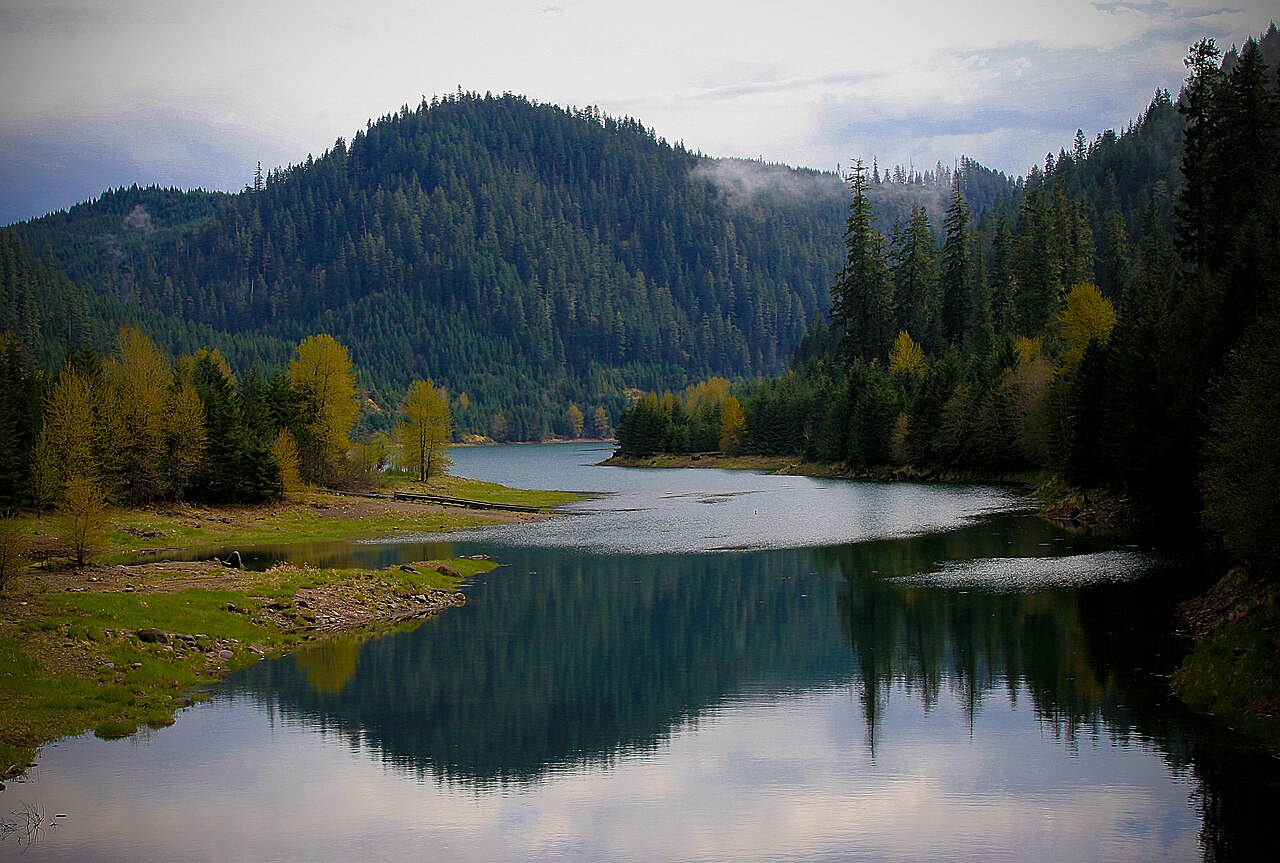
Average stay across the whole McKenzie Bridge market is 2.7 nights - a market built primarily on weekend leisure trips, not extended remote work. That fact matters here specifically because it means a 28-night listing product is a deliberate choice layered on top of the market's normal rhythm, not a claim that everyone already books by the month. Roughly 16 percent of listings in this market already run a 30-plus-night minimum, which tells you the long-stay lane exists and works, but it is a distinct product a host has to build and price correctly, not a default the market slides into on its own.
The guest booking that 28-night stay is not a laptop-in-a-hammock stock photo. Market signals point specifically to Portland and Bend as the origin cities for this remote-work guest - people making a deliberate choice to spend a month somewhere quiet with river access, not tourists extending a weekend on a whim. That guest is optimizing for a working desk, reliable internet, and a stable grocery rhythm, not a rotating cast of weekend visitors or a novelty 'work from a cabin' marketing angle.
This is not legal advice. It is a pricing and positioning read: market ADR is $274, with peak-season ADR running near $287 and low-season ADR near $256, against an annual revenue figure of $31,397 and 35.4 percent occupancy. None of those numbers should get replaced by a fire-sale monthly rate or inflated with an unverified productivity story.
16 Percent Already Run 30-Plus
Sixteen percent of listings in this market already operate with a 30-plus-night minimum, which is meaningful proof that the long-stay lane is a viable, functioning product in this market - not a speculative idea a single host is testing alone. That share is high enough to indicate real demand exists, but low enough to confirm this remains a deliberate niche product rather than the market default.
A host building a 28-night offering should treat this figure as validation to price and market the stay seriously, with its own dedicated page and pricing tier - not as evidence that every guest is secretly looking for a month-long stay and the weekend rate should simply be stretched to cover it.
The Guest Is Portland and Bend, Not a Vineyard Laptop Ad
The realistic remote-worker guest for a McKenzie Bridge cabin is coming from Portland or Bend, making a planned, deliberate trip to spend a month in a quieter setting with river access. This is meaningfully different from a generic 'digital nomad' marketing image built around vineyard laptop photography or an influencer-style remote-work fantasy that has nothing to do with the actual origin cities or actual guest motivations here.
Copy aimed at this guest should speak to what a Portland or Bend resident is actually seeking in a month-long escape - quiet, functional workspace, and proximity to the river - rather than reaching for generic remote-work imagery that could describe any cabin anywhere. Specificity about who is actually booking beats a borrowed aesthetic every time.
Prove the Desk and the Upload
A guest committing to 28 nights for work needs concrete proof that the property can support that work before they book, not a vague mention of 'high-speed internet' in the amenities list. Photograph the actual desk setup, show the actual internet speed if it has been tested, and be specific about where in the cabin someone would realistically sit for eight hours a day.
This is the single highest-leverage credibility signal for a remote-work listing. A guest weighing a month-long commitment against a shorter, cheaper alternative elsewhere is going to scrutinize workspace details far more closely than a weekend guest ever would, because a bad workspace does not just ruin a weekend - it ruins a month.
28 Nights Is Not August ADR
A 28-night stay needs to be priced as its own tier, distinct from the market's $274 ADR, peak-season $287 ADR, or low-season $256 ADR figures used for nightly bookings. Pricing a month-long stay by simply multiplying a nightly rate by 28 ignores the fact that long-stay guests are a different product with different cost structures - lower cleaning frequency, lower turnover cost, and a different risk profile than a revolving door of weekend guests.
At the same time, a 28-night rate should not collapse into a fire-sale discount that erases the value of the reduced turnover cost simply because the stay is long. Price it against the actual median month of $2,875 and the market's 35.4 percent occupancy reality, treating the long-stay tier as its own honestly calculated product.
Quiet River in January Is the Product
For a remote-work guest, the off-peak months are not a liability to apologize for - they are frequently the actual product being sold. A quiet river setting with fewer weekend visitors, less noise, and a slower pace is exactly what a guest planning to work for a month is looking for, and low-season ADR near $256 should be framed as an honest, appropriately priced version of that quieter experience rather than a discounted leftover of the peak-season rate.
Marketing copy that leans into the quiet-season appeal directly - rather than apologizing for it or trying to disguise it as a summer-adjacent experience - speaks more credibly to the actual remote-work guest than copy borrowed from a peak-season weekend listing.
House Rules That Survive a Month
House rules written for a two-night weekend stay often do not hold up over 28 nights. Quiet-hours language, guest-count assumptions, and even basic cleaning-schedule expectations need to be reconsidered for a guest who is effectively living in the space for a month rather than passing through for a weekend. The property's ratings average of 4.9 and Superhost share of 68.0 percent in this market suggest hosts here generally maintain high standards - a long-stay guest will expect that same standard sustained across the full month, not just the first few days.
The minimum-stay setting itself is a filter, not a substitute for clear rules. A 30-plus-night minimum tells a shopper the listing is configured for long stays; it does not by itself communicate what a guest should expect week to week, and that expectation-setting still needs to happen explicitly in the listing description and house rules.
How This Sits Next to the Weekend Listing
A property offering both weekend stays and a 28-night remote-work tier is effectively running two products from one address, and the listing needs to make that distinction clear rather than blending both into a single generic description. A weekend guest and a month-long remote worker have almost entirely different priorities - one wants a fun, photogenic getaway; the other wants a stable, functional home base - and trying to write copy that serves both equally often ends up serving neither well.
If pricing and availability calendars are configured differently for the two products, the listing description and photos should reflect that same split, ideally with dedicated sections or even a distinct page for the long-stay offering rather than a single paragraph appended to the weekend description.
What Not to Promise
Do not promise a remote-work productivity outcome the property cannot verify - no guessed statistic about guest satisfaction, no unverified claim about internet speed beyond what has actually been tested, and no implied guarantee that a month in the cabin will boost someone's output. The annual revenue figure of $31,397 already reflects a market lock that averages in the off-peak months; ignoring January in an owner's revenue model, or in guest-facing marketing about the availability of long stays, is how both owner models and guest expectations break.
The honest version of this listing proves what it can prove - the desk, the internet, the quiet, the rate - and lets those specifics do the work instead of a broader promise about remote-work life the property was never in a position to guarantee.
Related Reading
More Mc Kenzie Bridge, Blue River, and Lane County, Oregon reading already live on Crest & Cove.
50 Listings and a Thin Year: Mc Kenzie Bridge Short-Term Rental Report 2026
Mc Kenzie Bridge STR Rules: Lane County TLT, ADUs, and No Fake License
How to Market a Mc Kenzie River Cabin: Hot Springs and Trail, Not a Ski Town
DIY vs Hire in Mc Kenzie Bridge: Local Voice Against Wallis and Evolve
Wallis, Evolve, and Mc Kenzie River Property Manage: Is an Agency Worth It?
Is Mc Kenzie Bridge a Good Short-Term Rental Investment in 2026? $2,875 Is the Watch Line
Mc Kenzie Bridge Shoulder Season: August River Is Not January
Who Books a Mc Kenzie Bridge Rental: Hot Springs Weekend and the Trail Overnight
Lane County Tourism Spending and Mc Kenzie Hosts: What the Visitor Dollar Measures
The Complete Visitor's Guide to Mc Kenzie Bridge, Blue River, and the Mc Kenzie River
What It Actually Costs to Start an Airbnb in Mc Kenzie Bridge, OR
Financing a Mc Kenzie River Cabin: DSCR on $2,875 and 35.4% Occupancy
Frequently Asked Questions
What percentage of the McKenzie Bridge market already offers 30-plus-night stays?
Sixteen percent of listings in this market already run a 30-plus-night minimum, which is strong evidence the long-stay lane is a viable, functioning product in this market rather than a speculative idea. That share is meaningful validation for a host considering a dedicated 28-night offering, though it is still a deliberate niche product layered on top of the market's normal 2.7-night average stay, not the default booking pattern.
Who is the realistic guest for a 28-night McKenzie Bridge remote-work stay?
The realistic guest is coming from Portland or Bend, making a planned decision to spend a month somewhere quiet with river access for work. This is a specific, deliberate trip motivated by wanting a stable working environment, not a generic digital-nomad fantasy borrowed from vineyard laptop photography. Listing copy that speaks directly to what a Portland or Bend resident wants from a month-long escape connects better than generic remote-work imagery.
How should a 28-night stay be priced compared to nightly bookings?
A 28-night stay should be priced as its own tier against the market's $2,875 median month and 35.4 percent occupancy, not simply multiplied from the nightly ADR of $274. Long-stay guests represent lower turnover cost and a different risk profile than revolving weekend guests, but the rate should also avoid collapsing into a fire-sale discount that erases the value of that reduced turnover cost.
What should a listing prove to a guest considering a month-long work stay?
The listing should show the actual desk setup and any tested internet speed, since a guest committing to 28 nights for work scrutinizes workspace details far more than a weekend guest would. A bad workspace does not just ruin a weekend for this guest, it ruins an entire month, making concrete proof of a functional work setup the single highest-leverage credibility signal on the listing.
How should low-season pricing be framed for a remote-work listing?
Low-season ADR near $256 should be framed as an honestly priced version of a genuinely quieter, less crowded experience - the product a remote-work guest is actually seeking - rather than apologized for as a discounted leftover of peak-season rates. Fewer weekend visitors and a slower pace during off-peak months are exactly what this guest wants, so marketing copy should lean into that appeal directly.
Do house rules for weekend guests work for a 28-night remote-work stay?
Not automatically. Quiet-hours language and cleaning-schedule expectations written for a two-night stay often need reconsideration for a guest effectively living in the space for a month. With this market's ratings averaging 4.9 and Superhost share at 68.0 percent, a long-stay guest expects that standard sustained across the full month, and the minimum-stay setting alone does not communicate week-to-week expectations - that still needs explicit house rules.
Should a property with both weekend and long-stay bookings use one listing description?
Generally no. A weekend guest and a month-long remote worker have largely different priorities - one wants a photogenic getaway, the other wants a stable functional base - and blending both into one generic description often serves neither well. If pricing and availability are configured separately for each product, the listing photos and copy should reflect that same split, ideally with a dedicated section or page for the long-stay offering.
What should a McKenzie Bridge remote-work listing avoid promising?
Avoid any guessed productivity statistic, unverified internet-speed claim, or implied guarantee that a stay will boost a guest's work output. The market's annual revenue figure of $31,397 already reflects an average that includes off-peak months, and ignoring that reality in owner revenue models or guest-facing marketing about long-stay availability is how both expectations and financial models break down.
Work with Crest & Cove Creative
A 28-night McKenzie Bridge stay is not a leftover weekend rate stretched thin. Price it as its own product against a $2,875 median month, not August ADR.
We help independent hosts build dedicated long-stay listing pages for remote-work guests instead of stretching a weekend description to cover a month. Send your current listing and calendar and we will map a 28-night pricing tier that actually reflects your market's real numbers.
Reach out at crestcove.co or (256) 998-7502.


Comments