
Mount Shasta STR Market Report 2026: 177 Listings, $32,254

Updated: Aug 27
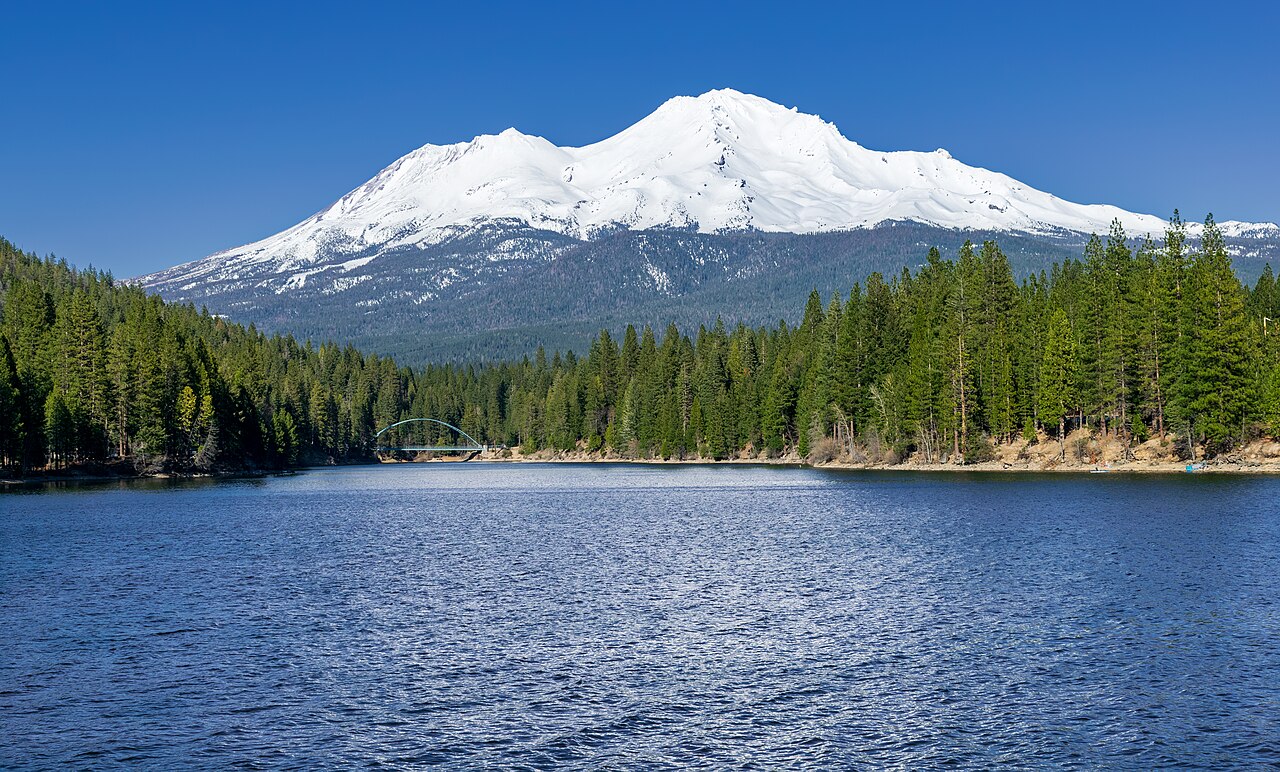
Mount Shasta City, California sits along the I-5 corridor in Siskiyou County beneath its namesake volcano, and its AirROI extract publishes a typical year of $32,254 across 177 active listings, with a median month of $2,793, ADR near $259, occupancy near 42.7 percent, and RevPAR near $107.
This market is genuinely distinct from its I-5 neighbors: Dunsmuir, a separate town along the same corridor, publishes its own extract showing $19,417 across 159 listings, with ADR near $203, occupancy near 30.8 percent, and a $1,702 median month - figures that belong to Dunsmuir specifically and should never be blended into Mount Shasta's own numbers.
This is not legal advice. It's a practical market report for a Mount Shasta host, buyer, or lender: what this 177-listing sample actually shows, which months carry the year, and why Dunsmuir and McCloud each deserve their own separate line rather than one blended I-5-corridor average.
The Published Year: $32,254 Across 177 Listings
Mount Shasta City's AirROI sample publishes a typical year of $32,254 across 177 active listings, with ADR near $259 and occupancy near 42.7 percent - the core figures a host, buyer, or lender should treat as this specific city's underwriting floor.
RevPAR works out to roughly $107 on this sample, a useful blended-rate figure for comparing this market against a neighboring one, so long as both figures come from comparably sized, comparably vintage samples.
A 177-listing sample is a meaningful size for this kind of mountain-town market, giving the $32,254 figure more statistical weight than a smaller sample would carry, though individual property performance can still vary meaningfully around that median.
The practical rule: any revenue conversation about a Mount Shasta City short-term rental should start from this $32,254 typical year, rather than from a broader Siskiyou County figure or a guessed blend with Dunsmuir or McCloud.
$32,254 Is a Watch Year, and Dunsmuir and McCloud Are Separate Markets
A $32,254 year is real money in a 177-listing mountain market, but it remains a watch figure describing this specific sample, not a clearance or a guarantee for any individual property in the market.
Dunsmuir, a separate I-5 corridor town near Mount Shasta City, publishes its own extract at $19,417 across 159 listings with ADR near $203 and occupancy near 30.8 percent - a genuinely weaker performance profile that should never be blended into Mount Shasta City's own $32,254 figure.
McCloud, another nearby town, is a separate market entirely, and any marketing copy or underwriting file that cites 'Mount Shasta area' performance without specifying which of these three towns' extracts is being used should be treated with real skepticism.
The discipline here is simple: confirm which specific town a parcel sits in, then use that town's own confirmed figures - never a rounder, blended I-5-corridor average that exists in none of the three towns' actual extracts.
August, June, and September Are the Peak Three
Mount Shasta City's demand concentrates around August, June, and September - the core summer and early-fall mountain recreation season - which should anchor any host's pricing and marketing calendar for this specific market.
A host should build pricing strategy explicitly around this peak-three pattern, rather than assuming a flat, evenly distributed occupancy rate across all twelve months matches how this market actually books.
Shoulder months carry real but reduced demand, and a host's marketing copy should be honest about which season a guest is actually booking into rather than implying peak-season conditions year-round.
Understanding this specific seasonal rhythm - rather than a generic 'mountain town' assumption - is what separates an accurate pricing calendar from one built on guesswork.
Occupancy at 42.7 Percent Is a Mountain Weekend, Not a 70 Percent Resort
Occupancy of 42.7 percent reflects a genuine mountain-town weekend-and-getaway market, not a high-occupancy resort destination running at 70 percent or higher - a distinction that matters for realistic revenue projections.
A buyer or host who models this market's cash flow assuming resort-level occupancy is setting up an unrealistic pro forma; the honest baseline is the confirmed 42.7 percent figure from this specific 177-listing sample.
This occupancy level, combined with the $259 ADR, describes a market that earns solid revenue on the nights it books while leaving real gaps on the nights it does not - a pattern any Mount Shasta host should plan cash flow around.
Framing this market accurately - as a genuine but moderate-occupancy mountain destination - produces better underwriting decisions than either an overly pessimistic or overly optimistic read of the same numbers.
Product Mix: 30.5 Percent Already Set 30-Plus
Roughly 30.5 percent of this market's listings are already configured around 30-plus night minimum stays, indicating a real extended-stay and remote-work segment alongside the traditional short weekend mountain getaway.
This product mix - a majority still built around shorter stays, but a genuine third already extended-stay - suggests this is a weekend-and-monthly market with a thinner traditional midterm band, rather than a pure impulse-booking market or a full lodge-corridor destination.
A host deciding between a traditional short-stay configuration and a 30-plus night structure should look at this existing product mix as evidence that both models have a place in this market, rather than assuming one approach dominates entirely.
This figure should factor into a host's own configuration decision, since it describes what portion of the existing competitive set is already targeting each type of guest.
Sandra's 25 Homes Are Her Book, Not Your Year
A named local operator, Sandra, appears in this market's extract managing a portfolio of 25 homes - a real, established professional management presence in Mount Shasta City, but a portfolio figure, not a per-unit benchmark.
A host should not divide Sandra's portfolio-wide performance by 25 and assume that resulting figure describes what any single property, including their own, will earn in this market.
This figure is useful context confirming that professional management is an established service tier in this market, alongside the self-managed hosts making up the balance of the 177-listing sample.
Any revenue conversation should stay anchored to the market-wide $32,254 typical year rather than to any single operator's portfolio-wide total, regardless of how impressive that operator's overall numbers look.
AirROI Low Is Not the City Permit
An AirROI vendor label like 'Low' or 'High' on a specific listing describes that listing's relative performance tier within the extract - it is not a determination about the property's city permit status, C-1 or C-2 zoning classification, or legal operating status.
A buyer or host should never treat a strong or weak AirROI performance label as evidence about whether Mount Shasta City's short-term rental permit rules are open, closed, or currently unenforced for a specific parcel.
Confirming actual permit and zoning status requires a direct conversation with the relevant Mount Shasta City office, not an inference from a vendor's performance-tier label on a live listing.
This distinction matters because conflating a performance label with a compliance status is a common and avoidable underwriting mistake in mountain-town short-term rental markets.
What This Market Is Not
Mount Shasta City's $32,254 typical year is not a blended I-5 corridor figure - it does not include Dunsmuir's $19,417 or McCloud's separate performance, and citing it as a general 'Mount Shasta area' number misrepresents the specific city's own confirmed figures.
It is not a California statewide visitor-spending total, and it is not a single operator's portfolio-wide performance divided down to look like a per-unit figure.
It is not a 70 percent-occupancy resort market, and pricing or underwriting decisions built on that assumption will consistently overestimate realistic performance for this specific 177-listing sample.
Treated honestly, as a 177-listing mountain-town competitive set with a genuine seasonal rhythm and a real extended-stay segment, this market's $32,254 typical year is a solid, defensible baseline for a host or buyer to underwrite from.
Building an Honest Pro Forma for This Market
A realistic Mount Shasta City pro forma should start with the $32,254 typical year and $2,793 median month, then subtract cleaning costs, platform fees, utilities, insurance, and any applicable local tax remittance before treating the remainder as owner cash flow.
Given the 42.7 percent occupancy figure, a buyer should model a real gap in booked nights across the calendar rather than assuming near-continuous occupancy, particularly outside the August-June-September peak window.
A conservative case and an optimistic case should both live in the same underwriting file, so a buyer or lender reviewing the deal can see the realistic range rather than a single flattering projection.
None of these figures replace a direct conversation with a local Mount Shasta property manager or accountant familiar with this specific market's cost structure before finalizing any purchase decision.
What a Buyer Should Confirm Before Closing
Before treating any of these figures as reliable for a specific parcel, a buyer should confirm the property's exact zoning classification and current permit status directly with Mount Shasta City, since a strong AirROI performance label says nothing about legal operating status.
A buyer should also confirm whether the specific parcel sits inside Mount Shasta City limits at all, or whether it is actually in unincorporated Siskiyou County, Dunsmuir, or McCloud - each of which carries its own separate rules and its own separate performance figures.
Requesting the listing-level detail behind the $32,254 median, rather than relying solely on the headline figure, gives a buyer a clearer picture of how much individual-property variance exists within this 177-listing sample.
A buyer who completes this confirmation work before closing is in a far stronger position than one who assumes the market's average figures apply automatically to any specific address in the area.
This same discipline applies to financing: a DSCR file citing a blended I-5 corridor figure instead of Mount Shasta City's own $32,254 typical year would misstate the deal to a lender, and could create real problems if the loan is later reviewed or sold.
None of this analysis substitutes for direct confirmation with the City of Mount Shasta planning department, a local closing attorney, or a CPA familiar with Siskiyou County short-term rental rules, and this is not legal or financial advice.
A methodical buyer who treats the $32,254 figure as a market-wide baseline, not a per-unit guarantee, and who checks permit status, C-1/C-2 zoning, and Siskiyou County paperwork before signing anything, is far better positioned than one who skips that work and simply trusts a listing photo.
Related Reading
More Mount Shasta and Siskiyou County reading already live on Crest & Cove.
Mount Shasta STR Rules: City Permit, 12% TOT, and Three Clerks
How to Market a Mount Shasta Stay: Volcano, Lake, and a Legal House
14.7% PM and a $2,793 Month: Is an Agency Worth It in Mount Shasta?
Is Mount Shasta a Good STR Investment in 2026? Zoning Is the Thesis
Who Books Mount Shasta: Climbers, Anglers, Spiritual Guests, I-5 Nights
California Tourism Spending and Mount Shasta Hosts: What $158.9 Billion Measures
What It Actually Costs to Start a Legal Rental in Mount Shasta, CA
Financing a Mount Shasta House: DSCR on $2,793 and a March File
Frequently Asked Questions
What is Mount Shasta City's actual typical short-term rental year?
The AirROI sample publishes a typical year of $32,254 across 177 active listings, with a median month of $2,793, ADR near $259, and occupancy near 42.7 percent. This is the underwriting floor for any Mount Shasta City revenue conversation, not a broader Siskiyou County or I-5 corridor figure.
Why can't Dunsmuir's numbers be blended into Mount Shasta City's figures?
Dunsmuir publishes its own separate extract at $19,417 across 159 listings with ADR near $203 and occupancy near 30.8 percent - a genuinely weaker profile than Mount Shasta City's $32,254. The two towns sit along the same I-5 corridor but represent different competitive sets, and blending them misrepresents both markets' actual performance to a buyer or lender.
What are Mount Shasta's peak booking months?
August, June, and September carry this market's demand, tied to summer and early-fall mountain recreation season around the volcano and the surrounding forest land. A host's pricing calendar should be built explicitly around this peak-three pattern rather than assuming flat, evenly distributed occupancy across all twelve months of the year.
Does 42.7 percent occupancy mean this is a weak market?
No - it means this is a genuine mountain-town weekend-and-getaway market rather than a high-occupancy resort destination running at 70 percent or higher. Combined with the $259 ADR, this occupancy level describes a market that earns solid revenue on booked nights while leaving real gaps on others, which is a normal and workable pattern for this type of destination.
What does the 30.5 percent 30-plus figure mean for a host deciding on stay length?
It means roughly a third of this market's existing listings are already configured around 30-plus night minimum stays, indicating a real extended-stay and remote-work segment alongside traditional short getaways. This is useful evidence that both stay-length models have a real place in this specific market's current mix.
Does a named operator's large portfolio change what one property should expect to earn?
No - a local operator managing 25 homes, as one named operator does in this market, represents a portfolio-wide total, not a per-unit benchmark. A host should anchor expectations to the market-wide $32,254 typical year rather than to any single operator's aggregated portfolio performance across many properties.
Does an AirROI 'Low' or 'High' label on a listing indicate its legal permit status?
No - these labels describe a listing's relative performance tier within the extract, not its city permit status or zoning classification. A buyer or host should confirm actual permit and C-1/C-2 zoning status directly with Mount Shasta City rather than inferring compliance from a vendor performance label alone.
What is the biggest mistake buyers make when evaluating a Mount Shasta area purchase?
Treating 'Mount Shasta area' as one blended market that includes Dunsmuir and McCloud, rather than confirming which of the three distinct town-level extracts actually applies to a specific parcel. Each town's own confirmed figures - not a rounder regional average - should anchor any underwriting file.
Work with Crest & Cove Creative
A buyer packet citing Mount Shasta's $32,254 year while quietly blending in Dunsmuir's weaker numbers is telling half the story. Each I-5 corridor town deserves its own labeled line.
We help Mount Shasta hosts and buyers underwrite from this city's own confirmed 177-listing figures, not a blended I-5 corridor average. Send your listing or packet and we will flag every borrowed or missing data point.
Reach out at crestcove.co or (256) 998-7502.


Comments