
Marketing a 30-Night Ocean Grove Stay to Remote Workers

Updated: Aug 25
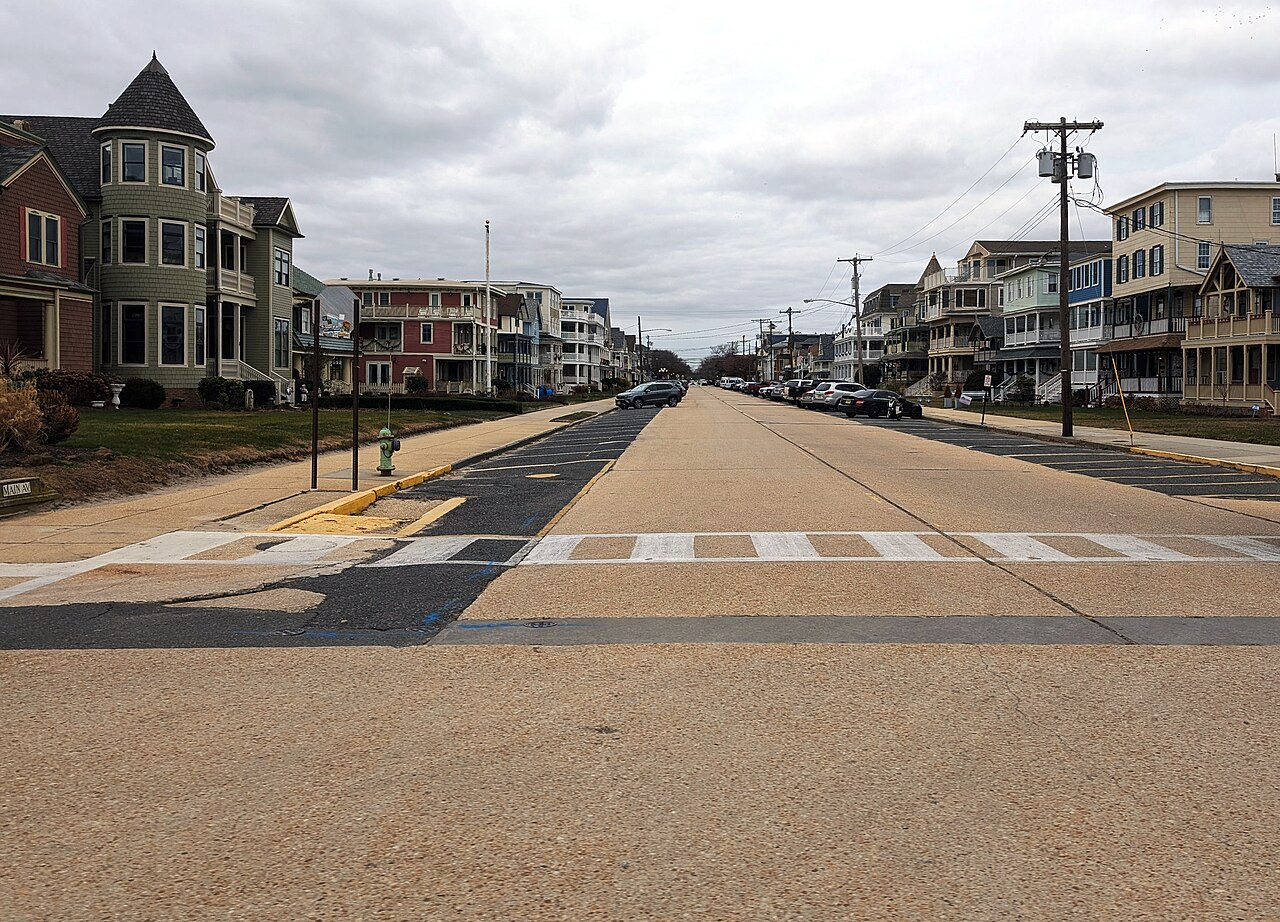
Ocean Grove, New Jersey - a Victorian-era Methodist camp town on the Jersey Shore - has a real shot at remote-worker demand from New York and Philadelphia, both close enough for an easy drive and both full of workers who no longer need to be in an office five days a week. The question this page answers narrowly is what a host can honestly say about that opportunity, using the town's own published numbers rather than a generic "live anywhere" pitch.
The most important distinction in the whole dataset is this: 37 percent of the Neptune-area sample already carries a 30-night-plus minimum-stay setting on the listing itself. That is a host's choice about how to configure a calendar - it is not evidence that those nights are actually booked through a New Jersey winter. This page keeps those two facts on separate lines throughout. This is not legal advice.
Thirty-Seven Percent Is a Listing Setting, Not a Booked Winter
The 37 percent figure describes how many listings in the Neptune-area sample have set a 30-night-plus minimum stay as a configuration choice - a supply-side fact about what hosts are offering, not a demand-side fact about how many of those long stays are actually filled. Conflating the two produces a marketing claim no host can back up: that a third of the market is booked solid through winter, when the honest claim is that a third of the market has simply made the option available.
For a host considering this format, the 37 percent figure is useful evidence that the long-stay product already has real traction here - enough hosts have tested it that it isn't a novelty. It is not, on its own, proof that testing it will fill your specific calendar; that outcome depends on your own pricing, your own listing's remote-work readiness, and your own marketing to the right origin cities.
New York and Philadelphia Are the Origin Cities That Matter Here
Ocean Grove sits within a reasonable drive of both New York City and Philadelphia, which makes it a realistic option for a remote worker who wants shore access without a full relocation - someone testing a month away from a city apartment, or a couple splitting a longer stretch of remote work between the shore and their usual base. Marketing copy aimed at this guest should name both cities directly rather than a vague "easy access to major metros" line that could describe half the Jersey Shore.
A host writing to this specific guest is not competing with a weekend beach-rental crowd looking for a Friday-to-Sunday trip. The remote-worker guest is evaluating a month-long commitment against their actual rent, their actual commute-free schedule, and their actual need for a functional workspace - a different decision process that calls for different listing language than a standard summer weekend ad.
A Desk, Reliable Wifi, and a Quiet Victorian Street Are the Real Product
For a 30-night remote-worker stay, the amenities that matter most are not the ones a weekend beach listing leads with. A working desk, confirmed reliable wifi speed, and a genuinely quiet street matter more to this guest than an ocean view or a beach-gear closet, because they are evaluating whether they can actually work from the space for a month, not just relax in it for a weekend.
Ocean Grove's Victorian-town character - quiet residential streets, a walkable downtown, a slower pace than the boardwalk towns immediately north and south of it - is a genuine selling point for this guest, and it should be described plainly: the actual street, the actual walk to coffee and groceries, the actual noise level at night. That's a more useful pitch to a remote worker than borrowed language from a party-town neighbor's marketing.
Neptune's Winter Check-In Window Is a Real Constraint to Publish
The Neptune-area winter check-in window runs from October 1 through May 22, a specific, dated operational detail that should appear in the listing itself for any host targeting a remote-worker stay during the off-season months. A guest planning a 30-night winter stay needs to know this window applies before they build a moving date around it, not discover it mid-booking.
Publishing this window plainly - rather than leaving a guest to infer it from a vague "seasonal restrictions may apply" note - reduces the number of failed inquiries a host has to field from guests whose planned dates fall outside it. It is a concrete, sourced constraint, and it belongs in the listing's actual calendar settings and description, not buried in house rules a guest reads after booking.
Leave the Unverified Off-Peak Discount Out of the Listing
A commonly repeated claim in this market is that off-peak or winter rates run 30 to 40 percent below peak - but that range is not verified in the published dataset behind this report, and a host should not publish it as if it were a confirmed market fact. Whatever discount a specific host chooses to offer for a 30-night winter stay is that host's own pricing decision, not a market-wide statistic to cite.
The verified figures a host can cite instead: ADR of $422, occupancy of 34.7 percent, RevPAR of $162, a median month of $2,864 - itself flagged as a watch line rather than a settled figure - and an annual total of $31,664, also a watch year. Use those, sourced and labeled as the trailing-year Neptune-area sample, and set any seasonal rate adjustment based on your own booking pace rather than a percentage nobody actually measured.
Asbury Park's Nightlife Is a Walk Away, Not This Listing's Identity
Asbury Park sits just north of Ocean Grove and carries a nightlife and boardwalk-entertainment identity that a remote-worker listing in quiet, dry-town Ocean Grove should not borrow. A guest can walk to Asbury Park's restaurants and music venues easily enough, and that proximity is worth mentioning honestly as a nearby option - but marketing an Ocean Grove listing as if it carries Asbury's nightlife itself sets up a guest expecting a livelier home base than the Victorian camp-town streets actually offer.
The same discipline applies to Spring Lake, further south, whose weekly rate of $858 describes a different, higher-end beach-town product and should not be quoted as if it applies to an Ocean Grove listing. Each of these three towns - Asbury Park, Ocean Grove, Spring Lake - has its own character and its own numbers; borrowing one to describe another misleads the exact remote-worker guest this page is trying to reach honestly.
What a 30-Night House Still Owes the Local Clerk
A 30-night stay does not automatically exempt a host from the town's short-term rental registration, occupancy tax, or licensing requirements - those obligations depend on the specific local rules governing the property, not on the length of stay alone. A host new to the long-stay format should treat that confirmation as a prerequisite, not an afterthought handled after the first extended booking is already on the calendar.
Treating a long stay as a way to sidestep short-term rental rules entirely is a common assumption that does not hold up universally - some jurisdictions apply different thresholds for exactly this reason, and Ocean Grove or Neptune Township hosts should verify their own specific obligations rather than assuming a 30-night booking is automatically outside any local short-term rental framework.
Who This Stay Is Not For
This is not a pitch for a weekend beach-vacation guest, a bachelorette or bachelor party group, or anyone looking for Asbury Park's nightlife as their primary draw - those guests are better served by a different listing, in a different part of the shore, marketed honestly for what they actually want. A 30-night Ocean Grove remote-worker listing competing for that weekend-party demand instead is fighting the wrong guest with the wrong product.
The right guest is someone genuinely testing extended remote work near the shore, drawn from New York or Philadelphia, who values a working desk, real wifi, and a quiet street over a boardwalk view. Writing specifically to that guest, and declining to chase the weekend-party guest with the same listing, is what actually differentiates a long-stay Ocean Grove product from the rest of the Jersey Shore's short-stay listing stock.
Setting a 30-Night Rate Without Guessing at Demand
A monthly rate for a 30-night Ocean Grove stay should be built from the verified ADR of $422 and occupancy of 34.7 percent, discounted for the length-of-stay commitment a host is genuinely willing to offer, rather than picked arbitrarily or matched to whatever a competing listing happens to be charging. The math should be transparent enough that a host can explain it to a prospective guest who asks how the monthly rate compares to booking thirty separate nightly stays.
Cleaning-fee structure matters more for a 30-night stay than a weekend one. The published median of $150 and average of $244 describe a standard turnover; a host offering a mid-stay clean for an extended remote-worker booking should price that separately and disclose it upfront, rather than folding an assumed cost into the nightly rate and hoping it balances out.
What a Buyer Underwriting This Format Should Confirm
A buyer evaluating a Neptune-area property specifically for its 30-night remote-worker potential should confirm that the $31,664 annual figure and $2,864 median month are explicitly flagged as watch lines in the source data, not settled numbers, and should build a conservative underwriting case rather than treating them as guaranteed baselines. Confirming the local registration and occupancy-tax requirements for extended stays, per the property's specific jurisdiction, belongs in the same diligence pass - not a separate step handled after closing.
A buyer should also weigh whether the property's actual desk, wifi, and quiet-street qualities - the features this specific guest segment values most - are genuinely present, rather than assuming any Ocean Grove address is equally well-suited to the remote-worker format simply because the town-wide 37 percent figure suggests the format works here generally.
Related Reading
More Ocean Grove, Neptune Township, and Spring Lake reading already live on Crest & Cove.
257 Listings and a $31,664 Year: Ocean Grove STR Report 2026
How to Market an Ocean Grove Stay: Camp Meeting, Not Generic Shore
Is Ocean Grove a Good STR Investment in 2026? Lease, CI, Watch Year
Who Books Ocean Grove and Spring Lake: Auditorium, Week, Family
Monmouth County Tourism and Ocean Grove Hosts: $3.2B Is Not $31,664
What It Actually Costs to Start a Legal Rental in Ocean Grove, NJ
Financing an Ocean Grove House: DSCR on $2,864 and a January File
Frequently Asked Questions
What does the 37 percent long-stay figure in the Neptune-area sample actually mean?
It means 37 percent of listings in that sample have set a 30-night-plus minimum stay as a configuration on their listing - a supply-side fact about what's available, not a demand-side fact about how many of those nights are actually booked. A host should not market this figure as proof that a third of the market has a booked winter; it only shows the format is already common here.
What are the verified performance numbers for a Neptune-area short-term rental?
The trailing-year figures are ADR of $422, occupancy of 34.7 percent, RevPAR of $162, a median month of $2,864, and an annual figure of $31,664 - the last two explicitly flagged in the source data as watch lines rather than fully settled figures. Use these sourced numbers rather than an unverified off-peak discount percentage when describing the market.
Is the claimed 30-40 percent winter discount a real market statistic?
No. That range is not verified in the published dataset behind this market's figures, and it should not be presented as a confirmed fact. Any winter or off-peak discount a specific host chooses to offer is that host's own pricing decision, not a market-wide statistic to cite in marketing copy.
What matters most to a remote worker considering a 30-night Ocean Grove stay?
A working desk, confirmed reliable wifi, and a genuinely quiet street matter more to this guest than an ocean view or beach gear, because they're evaluating whether they can actually work from the space for a month. Marketing copy for this guest should lead with those functional details rather than the amenities a weekend beach listing typically leads with.
What is Neptune's winter check-in window, and why does it matter?
The winter check-in window runs October 1 through May 22, a specific operational constraint that should be published plainly in the listing and calendar settings for any host targeting off-season remote-worker stays. Publishing it upfront prevents failed inquiries from guests whose planned move-in date falls outside that window.
Should an Ocean Grove listing mention Asbury Park's nightlife?
It can mention the walk to Asbury Park honestly as a nearby option, but it should not market itself as if it carries Asbury's nightlife identity. Ocean Grove is a quieter, historically dry Victorian camp town, and a remote-worker guest choosing it is often specifically choosing that quiet over Asbury's livelier boardwalk scene next door.
Can an Ocean Grove listing use Spring Lake's $858 weekly rate as a benchmark?
No. Spring Lake's $858 weekly figure describes a different, higher-end beach-town product and market, and applying it to an Ocean Grove listing overstates what a comparable Ocean Grove stay actually commands. Keep each shore town's own published rate on its own line rather than borrowing a neighboring town's number.
Does a 30-night minimum stay exempt a host from short-term rental registration or tax rules?
Not automatically. Registration, occupancy tax, and licensing obligations depend on the specific local rules governing the property, not simply on the length of stay. This is not legal advice - confirm with the applicable local clerk whether a 30-night booking changes your specific registration or tax-collection responsibilities before advertising the format.
Who is the wrong guest for a 30-night Ocean Grove remote-worker listing?
A weekend beach-vacation guest, a bachelorette or bachelor party group, or anyone primarily drawn by Asbury Park's nightlife is a poor fit for this format and this town. Marketing a long-stay Ocean Grove listing to that guest instead of the actual remote-worker audience wastes inquiries on a mismatch that won't convert or won't fit the town's quieter character.
What cleaning-fee figures apply to an Ocean Grove short-term rental?
The Neptune-area sample reports a median cleaning fee of $150 and an average of $244, with a separate summer structure of $500 per structure plus $250 for an extra unit. A host should set cleaning fees against these published figures rather than guessing, and should note that a 30-night stay typically warrants a different cleaning-fee structure than a standard weekend turnover.
Work with Crest & Cove Creative
37 percent of Ocean Grove's Neptune-area sample already offers a 30-night minimum, but that's a setting hosts chose, not proof of a booked winter. The two facts get blurred together constantly, and this page keeps them apart.
We write remote-worker listing copy around Ocean Grove's actual verified numbers, not an assumed winter discount or a borrowed Asbury Park nightlife pitch. Send us your listing and we will tell you which claims are sourced and which ones need a rewrite.
Reach out at crestcove.co or (256) 998-7502.


Comments