
Salt Lake City Tourism Data: Downtown Foot Traffic Isn't Occupancy
- Thomas Garner

- 2 days ago
- 11 min read
Updated: 17 hours ago

Salt Lake City's tourism draw and its STR revenue are two different data sets, and a host who blends the two ends up either overpromising a booking calendar or underpricing a listing that's actually earning steady demand. Downtown's walkability, Sugar House's neighborhood character, the city's convention and business travel base — all of that drives real visitor and traveler interest. None of it is the same thing as the market's 46.5 percent STR occupancy figure.
This page exists to keep those two data sets straight: what draws a visitor or a business traveler to Salt Lake City, and what actually turns into an overnight STR booking. AirROI's trailing twelve months puts the typical Salt Lake City listing at about $22,593 across 1,800 active rentals — that's the host-facing number. The neighborhood and city appeal below is the demand story a listing description should tell, but it isn't a substitute for the market's own occupancy and revenue data.
Treat tourism and travel-appeal content as a reason a guest picks a specific Salt Lake City listing over a dozen competing downtown options, not as a stand-in for market data a buyer or lender should be citing in a serious analysis.
This distinction shows up constantly in how Salt Lake City listings get written and pitched. A description heavy on lifestyle language and light on any actual performance number reads as unfinished marketing, not confident marketing — the strongest listings do both jobs, telling the guest a real story and giving the buyer or lender a real number, in the right places.
The sections below walk through each of Salt Lake City's actual demand drivers in turn — downtown, Sugar House, the convention and business-travel base — and where the market's real host-facing data fits alongside each one rather than instead of it. This is not legal advice.
Downtown Is Real Demand, Not a Trailing Twelve Months
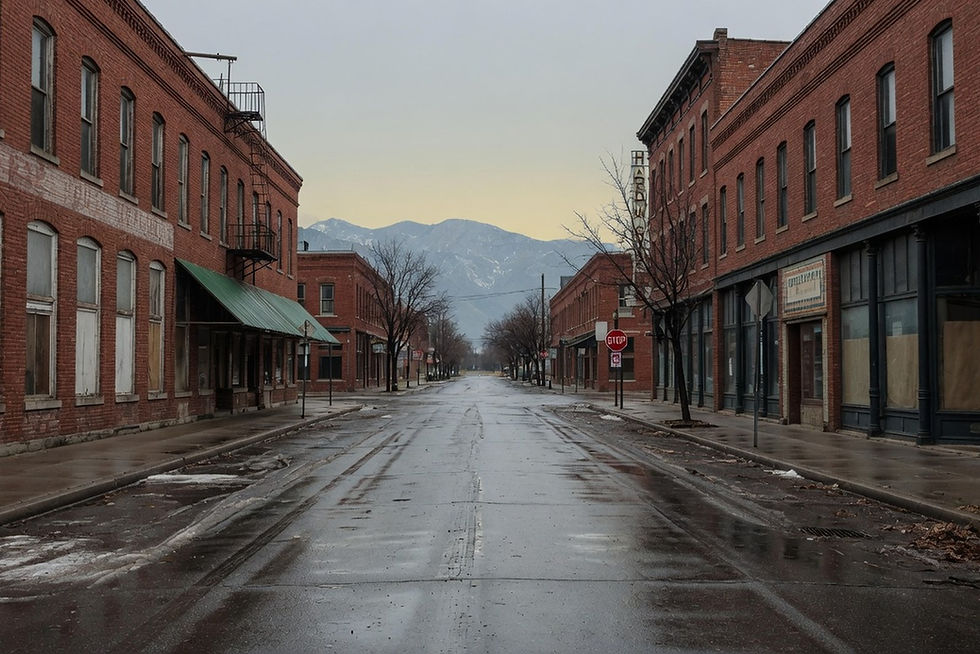
Downtown Salt Lake City is genuinely walkable, with restaurants, a real urban core, and easy access to the kind of city night a guest is specifically booking when they choose this market over a mountain town. That's real demand-side value, and a listing description that names the specific block or district, rather than a vague 'urban energy' phrase, does real work in a guest's booking decision.
What downtown's foot traffic doesn't do is generate an occupancy number. Visible activity on a Friday night says nothing directly about whether a specific STR listing three blocks away is booked that same weekend. Occupancy comes from the market's actual booking data, not from how busy a neighborhood looks.
A host photographing downtown for listing photos should think carefully about what the image is actually doing: it's answering 'why would I want to stay here,' not 'how often does this house book.' Both questions matter, but they're answered by different kinds of evidence entirely, from different sources.
Sugar House Draws a Specific Guest, Not a Universal One
Sugar House's neighborhood character — a slower, more residential feel than downtown's core — pulls a particular kind of guest: someone wanting a real neighborhood experience rather than a hotel-district stay. Naming Sugar House specifically in a listing description helps that guest self-select into the right property, which tends to produce better reviews than a generic citywide pitch.
This is a guest-targeting tool, not a market-sizing tool. Sugar House's own visitor character doesn't map onto Salt Lake City's 46.5 percent occupancy figure any more directly than downtown's foot traffic does — different signals, answering different questions for a host.
A listing that names the specific coffee shop, park, or street a guest can walk to in Sugar House does more targeting work than a paragraph of generic 'charming neighborhood' language. Specific, concrete detail converts better than a vague adjective, nearly every time.
Convention and Business Travel Shape the Real Calendar
Salt Lake City's genuinely counterintuitive seasonal shape — March, May, and February strong, July slow — likely reflects a convention and business-travel base more than a typical leisure-tourism summer peak. That's tourism-adjacent context worth understanding, but it explains the market's revenue pattern rather than replacing it.
A host who understands why March outperforms July can write more accurate listing copy for each season — professional, efficient framing for a March business traveler; an honest, non-inflated pitch for a genuinely quieter July. Both descriptions should still be backed by the market's real $22,593 typical-revenue figure when the conversation turns to numbers.
This is also useful context for a buyer trying to understand why a Salt Lake City listing's calendar looks the way it does. A soft July isn't a red flag specific to one property — it's a market-wide pattern tied to the city's underlying demand base, worth understanding before judging any single listing's performance in isolation.
Do Not Borrow Park City's Ski-Season Story
Park City has its own tourism identity entirely — a ski-town market with its own seasonal calendar and its own visitor base, separate from downtown Salt Lake City's urban, business-travel-driven appeal. A host who borrows Park City's ski-season framing to pad out a Salt Lake City listing description is describing a trip the guest isn't actually booking.
Keep tourism and travel content market-specific the same way the revenue data stays market-specific. Salt Lake City's own calendar and its own downtown-and-Sugar-House appeal are the story that should drive the listing description — not a borrowed mountain-town narrative from a market twenty minutes and a very different seasonal pattern away.
This isn't just an accuracy issue. A guest who books a downtown Salt Lake City listing expecting a ski-adjacent experience shows up genuinely disappointed when they discover the closest lift is a real drive away — a mismatch that shows up directly in reviews, not just in a technical labeling error.
South Salt Lake Runs Its Own Story Too
South Salt Lake is a separate city with its own character and its own guest base, distinct from Salt Lake City proper. A host operating in one shouldn't borrow the other's neighborhood appeal or tourism framing — a Sugar House pitch doesn't belong on a South Salt Lake listing, and the reverse is equally true.
This matters for accuracy as much as for marketing polish. A guest who books expecting one neighborhood's character and discovers a different one shows up disappointed, regardless of how good the underlying property actually is.
A host or agency marketing properties in both cities should keep separate templates for each, rather than a single boilerplate 'Wasatch charm' description applied uniformly. The two cities earn separate marketing treatment the same way they run separate business-licensing processes and separate AirROI extracts.
How a Host Should Actually Use Tourism and Travel Content
Tourism and travel-appeal content earns its place at the top of a listing description and in photo captions — it's the hook that gets a guest to click. It has no place in a revenue projection, a lender conversation, or a buyer packet, where the actual AirROI extract numbers are what carry weight.
A well-written listing does both jobs without confusing them: it opens with downtown's walk or Sugar House's character to sell the place, and it backs that up, elsewhere in the host's own materials, with the real $22,593 typical-revenue figure and the real 46.5 percent occupancy number when a serious question about performance comes up.
Hosts building their own internal pricing or planning documents should keep the same separation. A revenue projection built around tourism assumptions rather than the market's actual booking data will misprice the strong months and undersell the weak ones — the AirROI extract is the source of truth for pricing, not a general sense of how the city looks on a given weekend.
Superhost Share and Guest Origin Round Out the Real Picture
Beyond the neighborhoods, two more host-facing numbers help fill in the actual competitive picture: Superhost share in this sample runs 64.8 percent, and most guests come from Salt Lake City itself, with New York second. Neither number comes from a tourism source — both come from the same AirROI extract behind the $22,593 figure.
A new host weighing whether to enter Salt Lake City's market should read these alongside the tourism story, not instead of it. A city with genuine urban appeal and a competitive existing listing pool, evidenced by that 64.8 percent Superhost share, rewards a host who invests in both the guest experience and the listing's actual presentation from day one, rather than coasting on the city's general reputation alone.
The origin data also matters for how tourism content gets framed carefully. A local guest looking for a staycation reads different appeal cues than a New York guest planning a longer visit, and a listing description that speaks to both covers more of the actual guest base than one narrow pitch built for only one traveler type.
A University, a Hospital, or a Conference Venue Beats a Generic Pitch
Downtown and Sugar House benefit from naming what's actually nearby — a specific university, hospital, or convention venue — rather than a vague claim about being 'centrally located.' A business traveler, a visiting parent, or a conference attendee each wants a different kind of proof, and specificity gives all three a faster answer than a generic adjective.
This is where tourism and travel content earns its keep most directly. A listing that names the actual walk to a specific destination converts a browsing guest into a booking faster than one that makes the guest do the work of figuring out whether the location actually fits their trip and their schedule.
A short line about parking availability or public transit access near a specific venue does more for a business traveler's confidence than another paragraph of general downtown enthusiasm. Practical, verifiable detail wins over atmosphere for this specific guest type, even while atmosphere still matters for earning the initial click.
What a Buyer Should Take From Salt Lake City's Tourism Story
A buyer reading a Salt Lake City listing description full of downtown energy and neighborhood charm should ask a separate, more direct question: what does this specific listing actually earn? Travel appeal explains why guests choose the city; it doesn't replace the occupancy, ADR, and year-over-year figures that explain whether the investment performs.
The two questions are related but distinct. A metro market with genuine urban appeal and a growing supply base, like Salt Lake City's 15.8 percent year-over-year supply growth against a minus 4.1 percent revenue trend, is telling a buyer something worth sitting with — real demand exists, but a more crowded field means a listing needs sharper execution to convert that appeal into actual bookings.
A sharp buyer treats tourism and travel-appeal content as one data point among several, weighted appropriately and carefully. It's worth more than nothing — genuine urban and neighborhood appeal does support long-term demand — but it's worth less than an actual trailing-twelve-months extract, and a packet that leads with lifestyle language instead of hard numbers is usually compensating for a weaker underlying case.
The healthiest way to read a Salt Lake City opportunity is to hold both pictures at once: a real, walkable, business-friendly metro city with genuine year-round appeal, and a rapidly growing supply base still working through a softer revenue year. Neither picture cancels the other out, and a buyer who only sees one side is missing half the story.
Related Reading
More PLACE, STATE reading already live on Crest & Cove.
Frequently Asked Questions
Does downtown Salt Lake City's foot traffic tell me anything about STR occupancy?
Not directly. Downtown's walkability and restaurant scene draw real visitor and business-traveler interest, but that foot traffic isn't tracked the same way as STR bookings and shouldn't be cited as an occupancy figure. The market's actual occupancy is 46.5 percent per AirROI's trailing twelve months across 1,800 listings. Use downtown's appeal in listing copy to sell the place; use the occupancy figure to answer a financial question.
Should I mention Sugar House specifically in my Salt Lake City listing?
Yes, if the property is genuinely there, because it helps a specific kind of guest — someone wanting a residential neighborhood feel rather than a downtown hotel-district stay — self-select into the right listing. That tends to produce better-matched bookings and better reviews than a generic citywide pitch. But Sugar House's own character doesn't map onto Salt Lake City's occupancy or revenue figures, which come from a separate AirROI extract.
Why is Salt Lake City's peak season in spring rather than summer?
The market's strongest months, March, May, and February, likely reflect a convention and business-travel base rather than a typical leisure-tourism summer peak. July, the slowest month, doesn't follow the pattern a beach-town or lake-town host might expect. That's useful context for understanding the revenue pattern, but the actual seasonal shape still comes from the market's own booking data, not a general tourism assumption.
Can I use Park City's ski-season story for a Salt Lake City listing?
No. Park City has its own tourism identity and seasonal calendar, entirely separate from downtown Salt Lake City's urban, business-travel-driven appeal. Borrowing Park City's ski-season framing for a Salt Lake City listing describes a trip the guest isn't actually booking. Keep tourism content specific to Salt Lake City's own downtown and neighborhood character, the same way the revenue data stays separate from Park City's.
What did a typical Salt Lake City STR earn last year?
AirROI's trailing twelve months puts the typical Salt Lake City listing at about $22,593 across 1,800 active rentals, with a $177 average nightly rate and 46.5 percent occupancy. That's the number that belongs in a buyer packet or revenue conversation — tourism content about downtown or Sugar House supports the marketing story but isn't a substitute for this figure.
Is South Salt Lake's neighborhood character the same as Salt Lake City's?
No. South Salt Lake is a separate city with its own character and guest base, distinct from Salt Lake City proper. A Sugar House pitch doesn't belong on a South Salt Lake listing, and the reverse is equally true. A guest who books expecting one neighborhood's character and discovers a different one shows up disappointed, regardless of how good the underlying property actually is.
How should a listing description balance tourism content with hard numbers?
Open with the specific, real appeal — downtown's walk, Sugar House's character, proximity to a specific business district — to sell the place to a browsing guest, since that's what earns the click and the booking. Keep the actual performance numbers, the $22,593 typical revenue and 46.5 percent occupancy, in a separate context for buyers, lenders, or anyone asking a financial question.
Does a strong tourism reputation guarantee strong STR occupancy in Salt Lake City?
Not automatically. Salt Lake City's genuine urban and business-travel appeal supports real demand, but the market's 46.5 percent occupancy against 15.8 percent year-over-year supply growth suggests that appeal hasn't fully converted into filled calendar nights across a rapidly growing field of listings. Use the market's own seasonal and occupancy data, not a general sense of the city's reputation, when pricing a specific listing.
Is convention and business travel a marketable amenity for STR guests?
Yes, as a scene-setting and targeting detail — naming proximity to a specific convention center or business district helps a professional traveler quickly evaluate fit. But convention traffic doesn't generate a revenue number on its own. Describe it specifically, and then back the listing up with Salt Lake City's actual $22,593 typical revenue and 1,800-listing sample size when the conversation turns to performance.
What should a buyer packet include from this tourism-versus-occupancy distinction?
A buyer packet should cite the real appeal as demand context — downtown's walkability, Sugar House's character, the convention and business-travel base — while keeping the hard numbers separate and clearly labeled: $22,593 across 1,800 listings, 46.5 percent occupancy, and the March-May-February season. Presenting both together, but never blended into one claim, gives a buyer the full, honest picture.
Work with Crest & Cove Creative
A Salt Lake City listing that leans on downtown energy but skips the actual $22,593 revenue figure is selling a mood, not a market. Pair the story with the numbers.
Send us your Salt Lake City listing and we'll build copy that pairs the city's real neighborhoods with its real revenue data, not a blended guess. Reach out at crestcove.co/audit or (256) 998-7502. Keep the tourism line labeled.
Reach out at crestcove.co or (256) 998-7502.


Comments