
Build a Video Cadence Your Cleanings Won't Wreck for STR hosts

Updated: Aug 27
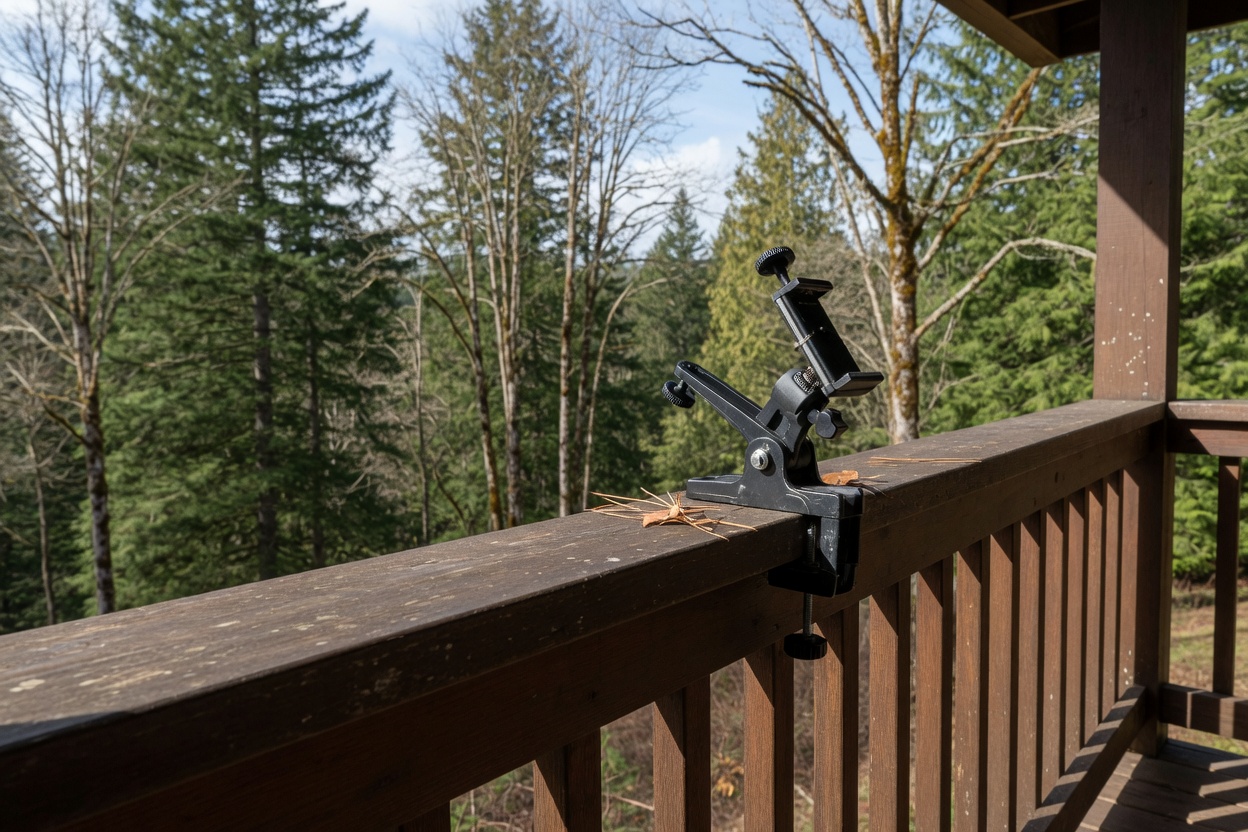
Short-form video gets pitched to hosts as a growth hack: post daily, chase trending audio, watch the views climb. What actually happens for most independent hosts who try that plan is a burst of enthusiasm in week one, a missed post in week two because a same-day turnover ate the afternoon, and a dead account by week four. The plan wasn't wrong because video doesn't work — it was wrong because it was never staffable by one person running a real property in the first place.
This post is about building a video system instead of chasing a video trend: a shot list that matches what the listing photos already show, a posting rhythm you can actually keep once cleanings and guest messages are accounted for, and a discipline about only filming what's genuinely usable right now. It doesn't promise a reach or engagement lift from any of this — there's no verified number for that here, and claiming one would undercut the whole point of matching content to reality instead of hype.
The system below is deliberately unambitious in scope, because the ambitious version is the one that fails. A smaller, sustainable system that actually runs beats an impressive plan that exists only in the first two weeks of enthusiasm. This is not legal advice.
Video's job is to match the listing, not upstage it
The single most useful frame for short-form video as a host is this: the video's job is to show what the listing photos already show, just in motion. It's not a separate creative project with its own license to reinterpret the property. If your still photos are honest about the driveway, the kitchen, and the outdoor space, the video needs to walk the same ground, not find a more flattering angle that quietly contradicts what a guest already saw in the gallery.
This matters because guests who watch a video before booking are forming an even more vivid mental picture than the one built from stills — motion and sound carry more information, and that information sticks harder. If the video shows a golden-hour shot of the deck that conveniently avoids the neighboring property's fence line six feet away, that gap between video and reality is going to surface at check-in, not before.
Treat every clip as an extension of the listing's factual claims, not a separate marketing project with looser standards. If a room, a view, or a feature wouldn't make it into the honest still-photo gallery, it doesn't belong in the video either.
The shot list that actually earns repeat use
A reusable shot list beats a one-off viral concept every time, because the whole point of a system is that you can run it again next month without reinventing the plan from scratch. A workable baseline: arrival (what the guest actually sees pulling up), kitchen, the main sleep space, and one clip of the outdoor space with any relevant rule shown or captioned — a fire pit with its actual restrictions, a pool with its actual hours.
This short list does more work than it looks like it does. It covers the exact questions guests ask most before booking — what does arrival look like, is the kitchen usable for a real stay, what's the bedroom actually like, what can I do outside — without requiring a new creative concept every time you film. Once you've shot it well once, you have a template to repeat whenever the property changes enough to warrant an update.
Resist the urge to expand this into a longer list chasing more variety. A tight, repeatable four-shot system you actually execute consistently beats an ambitious twelve-shot plan that becomes too much friction to ever finish, which is exactly how most host video efforts quietly die.
Say the quiet part on screen, not just in the caption
If a feature shown in a video is seasonal, off-limits part of the year, or requires an extra fee, that has to be communicated in a way a viewer actually catches — on screen, in a caption they'll read, or both — not buried in a listing paragraph three clicks away from the video itself. Short-form video moves fast; if the disclaimer only lives somewhere the viewer never gets to, it might as well not exist.
This is especially important for anything that reads as more available or more included than it actually is. A pool clip filmed in July that gets reused as evergreen content in December needs a caption noting the seasonal closure, or it's actively misleading anyone who watches it off-season and books expecting to use it.
The habit worth building here is treating every clip's caption as part of the factual record, the same way you'd treat a listing description. If the caption wouldn't hold up as an accurate standalone sentence about the property, rewrite it before posting, not after a guest asks about it.
Pick a cadence that survives your actual week
The daily-posting advice that circulates in general social media guidance assumes a creator whose full job is content. Most independent hosts are running turnovers, answering guest messages, and doing this on the side of another job or alongside managing more than one property — daily viral output is not a realistic target, and building a plan around it just guarantees the plan collapses the first busy week.
A better approach is picking a cadence deliberately slower than what feels ambitious, and testing whether you can actually hold it for a month before committing further. Weekly is sustainable for a lot of hosts. Every other week is sustainable for more. The right cadence is whatever survives contact with a real cleaning schedule and a real inbox, not whatever a growth account online said was optimal.
A consistent, modest posting rhythm you keep for six months does more for a listing's presence than an ambitious daily plan that produces two weeks of content and then goes dark, because the dead account with no posts in three months reads worse to a prospective guest than a smaller, steadily updated one.
Update the shot list when the property changes, not on a schedule
A shot list isn't a one-time asset — it goes stale the moment the property changes in a way the video doesn't reflect. A renovated kitchen, a new fire pit, a hot tub that got removed — any of these need a refreshed clip before the old one keeps circulating and setting an expectation that's no longer accurate.
The trigger for updating shouldn't be a calendar reminder set arbitrarily every few months — it should be tied directly to any physical change to the property. If you renovate, film before the old clips go stale, not after a guest mentions the mismatch in a review. This keeps the video library honest without requiring you to remember an unrelated schedule.
It's also worth periodically scrolling back through your own posted clips and asking whether each one still matches the current property. Old content doesn't announce that it's outdated — it just sits there looking current until someone checks.
Trending audio can undercut your own house rules
One specific trap worth naming directly: using trending party-adjacent audio or editing style on a clip for a property where your own house rules forbid the kind of gathering that audio implies. A clip edited with high-energy party music, even if the footage itself is innocuous, sets a tone that can attract exactly the booking inquiry you don't want and directly contradicts a no-parties house rule sitting in the same listing.
This is an easy mistake to make because trending audio is trending precisely because it's effective at grabbing attention, and it's tempting to use whatever's working right now regardless of whether the tone fits the actual property. Check the tone against your house rules before publishing, not just the footage content.
If your listing is genuinely built for larger groups or events and your house rules reflect that, this isn't a concern — the tone matching the reality is the whole point. The problem only arises when the video promises an experience the house rules explicitly forbid.
Bad weather doesn't mean skip the update
A common excuse for letting a shot list go stale is waiting for perfect conditions — clear skies, ideal light, everyone home to help film. That standard is fine for an occasional polish pass, but it shouldn't gate a correction clip that fixes an actual accuracy problem, like an outdated room or a removed amenity still showing in the current video library.
A slightly overcast, hand-held correction clip that fixes a stale amenity claim is more useful than a beautifully lit clip that never gets made because the schedule for perfect conditions never lines up. Guests care whether the video matches reality far more than they care about production polish, and an accurate rough clip beats a polished inaccurate one every time.
Keep a mental separation between two different kinds of filming: scheduled, higher-production content for the regular cadence, and quick accuracy-correction filming that happens whenever something changes, regardless of light or weather. Treat the second category as urgent and low-bar for quality — it exists to keep the record honest, not to impress.
If your stills are already honest, video is optional, not mandatory
It's worth saying plainly: if your still-photo listing is already accurate and inquiries have calmed down around the questions guests used to ask, video isn't a requirement you're falling behind on. It's an optional layer that can help a listing stand out, but it's not rescuing anything that isn't already broken, and skipping it isn't a marketing failure.
This matters because the pressure to "be on video" is loud and constant in general marketing advice, and it can push hosts toward committing real time to a channel that isn't actually the highest-leverage use of that time. If your listing's foundational accuracy is the real gap, fixing that beats a well-executed video plan sitting on top of an unclear listing every time.
Treat video as something you add once the fundamentals are solid and you have bandwidth to run a system, not a replacement for fixing a listing that still surprises guests at arrival.
Who actually films it: you, a co-host, or a guest?
Independent hosts don't all have the same access to their own property on a regular basis, and that affects what a realistic filming plan looks like. A host who lives nearby and cleans the property themselves has natural opportunities to film during a normal turnover. A host managing remotely through a co-host or cleaning crew needs to build filming into someone else's routine explicitly, which usually means a simple written shot-list handoff rather than assuming it'll happen organically.
If filming falls to a co-host or cleaner, keep the ask small and specific — the same four-shot baseline covered earlier, not an open-ended "grab some content while you're there." A specific, short list is something a non-marketing person can actually execute consistently; a vague creative request usually produces nothing or produces something off-brand.
Whoever ends up behind the camera, the accuracy standard doesn't change. A co-host's rushed phone footage of an honest kitchen is more valuable than a professionally shot clip of a staged version of the property that doesn't match daily reality.
The 30/90-day video check
Thirty days into a video cadence, look at whether each posted clip still maps to something true about the current listing — no stale rooms, no unlabeled seasonal features, no tone that contradicts the house rules. If a clip fails that check, fix or pull it rather than letting it sit.
At ninety days, be honest about whether the cadence is actually sustainable or whether it's been slipping — missed weeks, rushed clips, captions that got sloppier as the initial motivation wore off. If it's not holding up, scale the cadence down to something you can actually keep rather than abandoning it entirely; a slower system you run consistently beats an ambitious one you've quietly stopped.
Drop any part of the video effort that never actually changed a listing rewrite priority or never got checked against reality — a viral clip stack that racked up views while the driveway access problem underneath went unaddressed isn't a win, no matter what the view count says.
Related Reading
More independent-host reading on honest listing copy, distribution, owned follow-up, and when hiring help is worth it.
Frequently Asked Questions
Do I need to post short-form video every day to see results?
No, and trying to is usually how a video effort collapses within a few weeks. Pick a cadence — often weekly or every other week for a host also running turnovers and an inbox — that survives a genuinely busy week, and hold it consistently rather than chasing a daily plan built for someone whose full job is content creation.
What should be on my basic video shot list?
A workable baseline is arrival, kitchen, the main sleep space, and one outdoor clip with any relevant rule shown or captioned. That short list covers the questions guests actually ask before booking and gives you a repeatable template instead of a new creative concept every time you film, which is what actually makes the system sustainable long term.
Can I show a pool or amenity that's seasonal or has restrictions?
Yes, but the restriction has to be communicated somewhere a viewer will actually see it — on screen or in a caption they'll read — not buried in a separate listing page. A pool clip reused as evergreen content in the off-season needs a caption noting the seasonal closure or it becomes misleading to anyone watching outside the season it was filmed in.
Is trending audio a good idea for a listing video?
Only if the tone matches your actual house rules. High-energy party-style audio on a property with a strict no-parties policy sets an expectation the listing directly contradicts, which can attract exactly the wrong kind of booking inquiry and creates friction between what the video promised and what the house rules actually allow when guests arrive.
How often should I update my video content?
Whenever the property physically changes — a renovation, a removed or added amenity — not on an arbitrary calendar schedule. Film the update before the old clip goes stale, and periodically scroll back through your own posted videos to check they still match the current property, since old content doesn't announce that it's outdated on its own.
Will short-form video increase my bookings?
This framework doesn't promise a specific reach or booking lift, because that depends on execution and market factors this post can't verify. What's consistent is that a video that contradicts the listing creates guest confusion, regardless of how many views it gets, so accuracy matters more than reach for the outcomes that actually matter to your bookings.
Do I need video if my listing photos are already working well?
No. If your still photos are accurate and guest questions about basic facts have already quieted down, video is an optional layer, not a requirement. Skipping it isn't a marketing failure if the fundamentals are already solid, and your limited time may genuinely be better spent elsewhere on the business. Spend that time on whatever channel is actually underperforming instead.
What's the biggest mistake hosts make with listing video?
Filming costume moments — soft-focus, flattering shots that don't reflect what a guest will actually experience — instead of operable rooms as they exist. A sunset clip that hides a steep staircase or a tight driveway creates the same support burden as an inaccurate photo, just in a more vivid, harder-to-dismiss format for the guest who booked.
Should I pause guest messages to film or edit content?
No. Filming and editing shouldn't come at the cost of inbox response time. If a content day is genuinely demanding, plan coverage for guest messages separately rather than letting replies slip while you're focused on production, since a guest messaging that day has no way of knowing it's a content day for you. Guests don't wait for your production schedule to have a question answered.
How do I know if my video cadence is actually working?
Check at 30 and 90 days whether every posted clip still matches the current listing and whether the cadence itself has been holding up without slipping. A modest, consistently kept schedule beats an ambitious one that quietly stopped after a few weeks — a stale or abandoned account reads worse to a prospective guest than a smaller active one.
Work with Crest & Cove Creative
Hosts chase a daily-viral posting plan that collapses by week two, while a driveway access issue or a seasonal amenity goes unlabeled in the clips that are still up. A staffable cadence beats a hype plan every time.
Crest & Cove Creative can help you build a shot list and posting cadence that actually survives your turnover schedule, not a growth-account fantasy. Reach out at crestcove.co or call (256) 998-7502 to map out a video system sized to your real week.
Reach out at crestcove.co or (256) 998-7502.


Comments