
STR Airbnb Listing Optimization: Title, Description, Amenity Tags, and the Text Elements That Drive Bookings
- Thomas Garner

- Jun 24
- 9 min read
Updated: 6 days ago
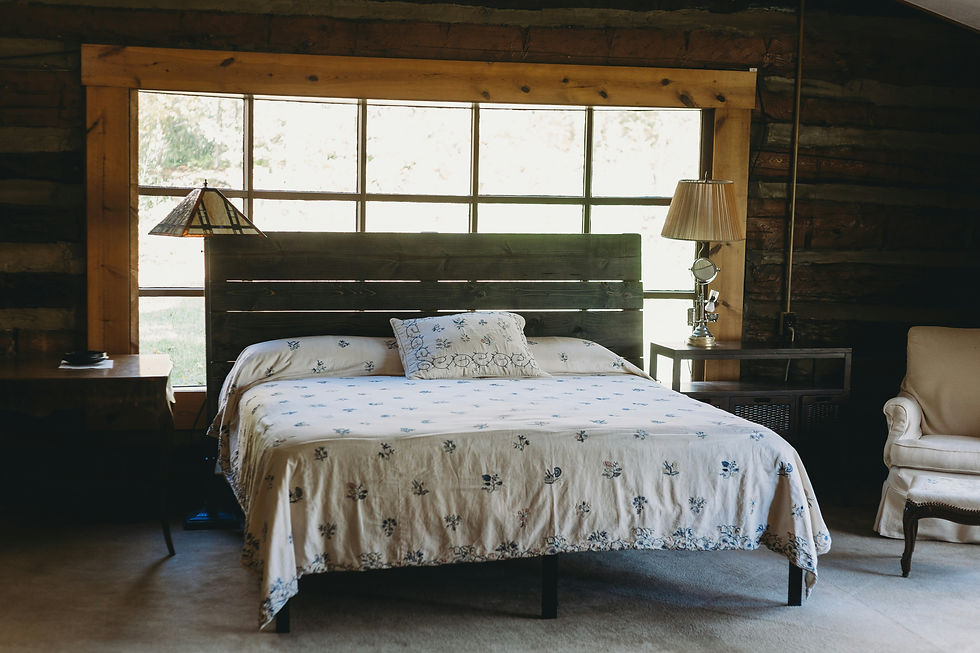
The North Georgia mountain cabin STR listing that has professional photographs but a title that reads 'Cozy Mountain Cabin' and a description that begins 'Welcome to our beautiful cabin in the mountains!' has solved one of the two primary conversion problems while leaving the other unsolved. The professional photograph earns the click that opens the listing; the title, description, and amenity tags determine whether the listing that opens converts to a booking inquiry or a back-button press. The listing text elements — the title that the Airbnb search algorithm indexes and that the guest reads in the search result, the description that the guest reads during the consideration phase when they are comparing three or four properties, and the amenity tags that the Airbnb algorithm uses to match the listing to the guest's filtered search criteria — are the text communication system that the host controls entirely and that most North Georgia mountain cabin listings have left in their default or underdeveloped state.
This guide covers the Airbnb listing optimization elements beyond photography for North Georgia mountain cabin STR operators: the listing title format that combines keyword coverage with emotional appeal within the 50-character limit; the description structure that serves both the algorithm's keyword indexing and the guest's reading experience; the amenity tagging strategy that ensures the listing appears in the filtered search results that the algorithm uses to match listings to guest-specified requirements; the house rules language that screens the right guests and deters the wrong guests without using language that makes the listing feel unwelcoming; the pricing and fee transparency that Airbnb's algorithm rewards and that the guest expects before they submit the booking request; and the listing refresh cadence that signals to the Airbnb algorithm that the listing is actively managed.
Title Optimization: 50 Characters That Do the Heavy Lifting
The Airbnb listing title is limited to 50 characters — a constraint that requires the host to communicate the property's most compelling and most searchable characteristics in a space that is approximately the length of a tweet. The title that reads 'Cozy Mountain Cabin' has used 18 characters to communicate nothing specific, essentially, 'cozy' is the adjective that every host uses regardless of whether their cabin is cozy, and 'mountain cabin' describes every property in the North Georgia mountain STR market. The title that reads 'Hot Tub + Mountain View | 4BR Blue Ridge Cabin' has used 46 characters to communicate four specific, bookable characteristics: the hot tub amenity that the guest who filtered for hot tub will now find this listing; the mountain view that the guest who is choosing between city-view and mountain-view properties will specifically want; the bedroom count that helps guests quickly screen for capacity; and the geographic location that establishes market context.
The title format that performs best in the Airbnb search environment: a lead amenity (the property's most distinctive single feature, typically the hot tub, the pool, the waterfall access, or the specific view), a separator (the pipe character '|' is the standard listing title separator), and the property description (bedroom count, location, and property type). The lead amenity should be the feature that the property's target guest is most likely to filter for or to prioritize in the search consideration — a hot tub is a higher-value lead amenity in the North Georgia mountain market than 'cozy' because hot tubs are a filter criterion that a significant portion of mountain cabin searchers apply, while 'cozy' is not a searchable criterion. The 50-character limit should be treated as a constraint that requires ruthless prioritization — the word 'beautiful' uses 9 characters that communicate no searchable information and should be replaced with a specific feature or location detail that the algorithm can index and the guest can evaluate.
Description Structure: The Algorithm and the Human Reader
The Airbnb listing description serves two simultaneous purposes: the algorithm's keyword indexing (the terms that Airbnb's search algorithm reads to determine what searches this listing should appear in) and the guest's reading experience during the consideration phase (the text that a real human reads to determine whether this property matches their trip's specific needs). The first paragraph of the description should serve both purposes simultaneously: it should contain the primary keywords that describe the property's type, location, and key amenities (mountain cabin, Blue Ridge, North Georgia, hot tub, mountain view, sleeps 8, pet friendly — the specific terms that the host knows their target guest types into the search bar) while also being written in language that a human reads without feeling like they are reading a keyword-stuffed spam page.
The description section structure that works for North Georgia mountain cabin listings: the first paragraph (the summary that serves algorithm and human simultaneously, approximately 150-200 words) followed by a The Space section (the room-by-room description that gives the booking guest the specific sleeping configuration, square footage, and layout information they need to confirm the property meets their group's physical requirements), followed by a Guest Access section (what the guest has exclusive access to versus what is shared), followed by a The Neighborhood section (the local area description that positions the host as the local knowledge authority — the specific restaurants, trails, and activities within 30 minutes of the property), and followed by a Getting Around section (the drive times to specific destinations, the nearest full-service grocery, and the road conditions that the guest's vehicle type needs to be aware of). The listing that provides all of this information is the listing that answers the guest's questions before they ask them — reducing the inquiry messages that precede the booking and removing the friction that delays the booking decision.
Amenity Tagging: The Filter Match That Determines Visibility
The Airbnb amenity tagging system — the checklist of amenities that the host confirms the property has, which the algorithm uses to include or exclude the listing from guest-filtered search results — is the most underused optimization tool for North Georgia mountain cabin STR listings. The host who has not tagged every amenity the property actually has is invisible to guests who filter by those amenities. The mountain cabin with a wood-burning fireplace that has not been tagged 'fireplace' in the amenity checklist does not appear in search results when the guest filters for a property with a fireplace — the most popular single filter in the North Georgia mountain cabin market during the fall and winter seasons. The property has a fully equipped kitchen, but has not tagged the specific kitchen equipment (dishwasher, coffee maker, full-size oven and stove, toaster, blender), making it invisible to the guest who has specific kitchen equipment requirements for the group meals they are planning.
The amenity tag audit: a systematic review of every amenity on the Airbnb host's amenity checklist compared to every item actually present in the property, with the goal of ensuring complete coverage. The amenity categories most commonly under-tagged in North Georgia mountain cabin listings: outdoor amenities (fire pit, outdoor dining area, patio/balcony, outdoor shower, outdoor furniture, hot tub — most hosts tag the hot tub but not the fire pit or the outdoor furniture that guests specifically filter for), parking amenities (EV charger if present — an increasingly common filter criterion as the Atlanta EV adoption rate rises, carport or covered parking, driveway length for large vehicles), and workspace amenities (dedicated desk, fast WiFi with a specific speed claim — 'WiFi at 100+ Mbps' is more credible and more searchable than 'WiFi' alone). The host who completes this audit and adds every missing amenity tag the property actually has will typically add 5-15 missing amenity tags, each representing the filter criteria of a guest segment previously invisible to the listing.
House Rules Language and Guest Screening
The house rules section of the Airbnb listing serves a dual purpose: establishing the guest's behavioral expectations and screening out guest profiles that would violate those expectations before the booking is completed. The house rules language that accomplishes both purposes without making the listing feel unwelcoming: the rule that is framed as a positive community standard ('we ask that guests observe quiet hours after 10 pm out of respect for the neighbors who share the forest') screens the noise-sensitive situation without the adversarial tone of 'absolutely no loud music or parties after 10 pm.' The no-party and no-event rule that Airbnb now requires all hosts to include ('no parties or events of any kind — this is a private residence and a quiet retreat') is best framed as the experience the property offers ('the cabin is designed for intimate gatherings and quiet enjoyment of the mountain environment — not event hosting or group parties') rather than as a prohibition.
The guest screening information that the house rules should communicate clearly: the maximum occupancy (Airbnb allows booking based on guest count, and the guest count confirmation before booking is the host's best tool for preventing the 8-guest listing from hosting a 16-person party); the pet policy if pets are allowed (allowed with advance approval only, $50-75 pet fee, 2-pet maximum, no pets on furniture — the specific policy that prevents the guest who brings three large dogs without asking and leaves fur on every surface); and the parking maximum (if the driveway can accommodate 3 vehicles and the listing sleeps 10, the parking maximum note prevents the guest who drives 5 separate vehicles to a mountain property with limited turnaround space).
Listing Refresh Signals and Algorithm Maintenance
The Airbnb algorithm rewards active listing management — the host who updates the listing regularly signals to the algorithm that the listing is being actively maintained, which correlates with better guest experiences and is rewarded with slightly higher search placement. The listing update actions that produce algorithm refresh signals: adding or updating photographs (the addition of even one new photograph refreshes the listing's modification timestamp, which the algorithm registers as recent activity); updating the description with seasonal language ('this fall, the cabin's deck offers a front-row seat to the North Georgia foliage season — the maples on the ridge peak in the first week of October' is a description update that also serves the fall-season booker's search); and adjusting the minimum stay settings to match the seasonal booking pattern (reducing the minimum stay from 3 nights to 2 nights for the winter shoulder season when 2-night bookings fill the calendar that the 3-night minimum would leave empty).
The calendar opening and closing practice that signals availability and relevance to the algorithm: keeping the calendar open at least 12 months in advance (not closing the calendar beyond 3-6 months, which signals to the algorithm that the listing is not accepting future bookings and reduces its search placement for forward-looking date searches); and using Airbnb's pricing calendar to set specific rates for the high-demand dates 6-12 months in advance (which the algorithm interprets as active management and which captures early-booking guests who plan their mountain cabin trips 6+ months ahead). The host who reviews and refreshes their listing quarterly — new seasonal photographs, updated description language, an amenity tag audit, and a pricing calendar review — maintains the active listing signal that keeps the algorithm's treatment of the listing aligned with its true quality and availability.
Ready to reposition? Start with our free visibility audit — a complete read on where your listing wins and where it leaves money on the table.
Work with Crest & Cove Creative
Ready to put this strategy to work in Southeast?
Crest & Cove Creative partners with a select group of independent hosts in the Southeast each quarter — focused on listing quality, organic search visibility, and direct booking growth. If your property isn't reaching the guests it should be, that's exactly the kind of problem we solve. Reach out directly at crestcove.co — we'll take an honest look at where your listing stands and tell you plainly whether we can help.
Frequently Asked Questions
About the Authors
Crest & Cove Creative is a Southeast-focused short-term rental marketing agency founded by Thomas Garner and Jacob Mishalanie. We build direct-booking brands, listing optimization systems, and market-specific content strategies for independent STR operators across the Gulf Coast, Appalachian Mountains, Coastal Georgia, and Southeast lake country.
Related Reading
Explore more Southeast short-term rental insights and host guides:
What Crystal Coast Guests Actually Search For (and How to Get Your Bogue Banks Rental Found)
Photographing Your Crystal Coast Rental: The Shots That Sell Bogue Banks Beach Houses
Emerald Isle vs. Outer Banks: Where the Smart Crystal Coast Investment Is in 2026
The State of Coastal North Carolina Short-Term Rentals & Hospitality: A 2026 Operator's Field Report
How to Choose a Vacation Rental Photographer on the Cape Fear Coast & Brunswick Islands
What Cape Fear Guests Actually Search: Matching Your Listing to Beach-Trip Intent
Coastal NC Listing Photography: Selling the Sound, the Surf, and the Sunset
Is Southport, NC a Smart STR Investment? The Film-Town, Festival-Town Case
How to Choose a Vacation Rental Photographer in the Golden Isles & Savannah
STR Photography That Sells the Golden Isles: Marsh, Oaks & Coastal Light
Tybee Island STR Ordinance 2026: Where the Rules Stand (and What Hosts Should Do)
Savannah STVR Rules Explained: The 20% Ward Cap, Rentalscape & the Waitlist
Is Cape San Blas a Good Short-Term Rental Investment? The Forgotten Coast Numbers
Sources
Airbnb — listing title optimization guidelines, description structure documentation, and amenity tag checklist
VRBO — listing optimization documentation and title/description best practices
Phocuswright — STR listing text optimization and booking conversion research
Skift — STR listing optimization research and amenity tag impact on search visibility
VRMA — STR listing optimization best practices and text element guidelines
Crest & Cove Creative — North Georgia STR listing optimization research and amenity tagging audit methodology
STR industry operator survey data — title format impact on click-through rate, amenity tag audit booking visibility improvement, and listing refresh frequency correlation with search ranking


Comments