
The Four Phases of Buying an STR Right, In Order for STR hosts

Updated: Aug 27
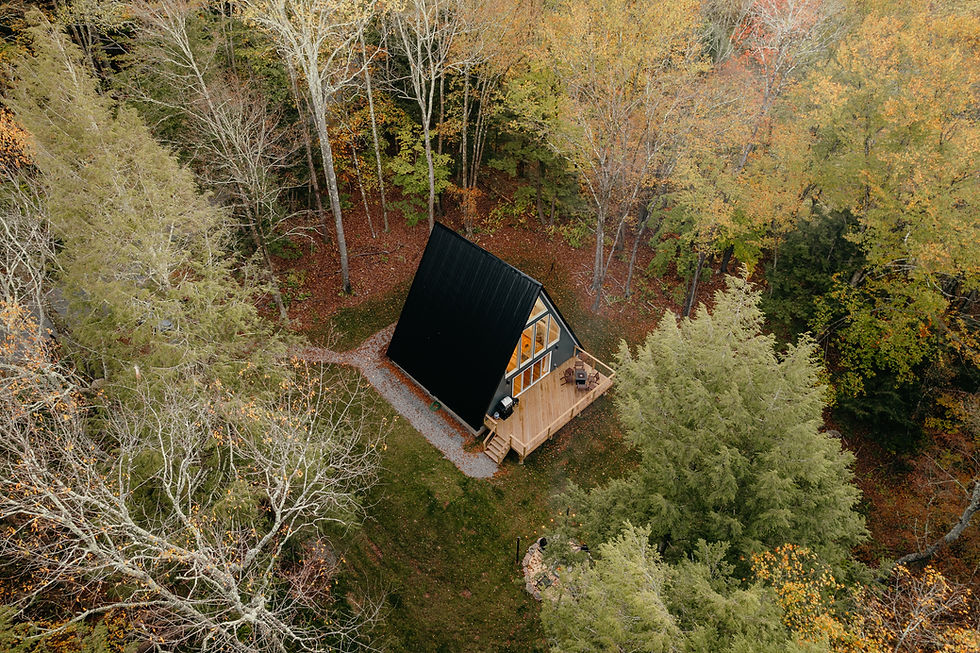
The most expensive mistake in STR investing isn't overpaying, and it isn't underestimating a renovation budget. It's buying the wrong property — one in a market with insufficient demand, or one with structural limitations that prevent competitive operation, or one sitting under a regulatory restriction that prohibits short-term rental use outright. None of those three mistakes can be fixed with better photography, better pricing, or better operations after closing. They can only be fixed by selling at a loss and starting over.
The property selection process is where STR investment outcomes actually get decided, and the investors who treat it with real rigor consistently outperform the ones who buy on emotion or incomplete analysis. This guide walks through the four sequential phases that filter a wide universe of available properties down to a small set of genuinely attractive investments: market analysis, property evaluation, revenue modeling, and due diligence. Each phase depends on the one before it — evaluating a property before confirming its market is sound, or modeling revenue before evaluating the specific property, produces a number that isn't actually measuring anything real. This is not legal advice.
Phase 1: Confirm the market before you look at a single property
A favorable STR market has three characteristics that all have to hold at once: sufficient demand, manageable supply, and a regulatory environment that actually permits STR operation. Demand comes from attractions, events, natural amenities, and proximity to population centers. Supply is measured by the number of active STR listings relative to that demand. The regulatory environment covers zoning, permitting, and tax requirements — and any one of the three being wrong undermines the other two regardless of how good they look individually.
Analytics platforms like AirDNA or Mashvisor are the standard tools for evaluating candidate markets, and five metrics matter most: average daily rate for your target bedroom count, occupancy rate, revenue per available room (ADR multiplied by occupancy — arguably the single most useful summary metric), supply growth (rapid growth in a stable-demand market signals rising competition, not opportunity), and seasonality distribution, since markets with revenue spread more evenly across the year are generally the more investable ones.
Compare three to five candidate markets on these metrics before narrowing to one or two targets, and don't evaluate individual properties in a market you haven't analyzed at the market level first. A beautiful cabin in a weak market is a worse investment than an average cabin in a strong one — market fundamentals are the floor under whatever revenue is possible, and no amount of operational excellence closes a gap created by genuinely insufficient demand.
Phase 2: Evaluate the property against criteria that actually predict performance
Within a confirmed target market, candidate properties get evaluated against three categories of criteria: location attributes, property attributes, and financial attributes. Location attributes — proximity to demand drivers like attractions, downtown areas, water features, and trails, plus road access quality, view quality, and neighborhood character — predict performance more reliably than almost anything else on this list. Properties closer to the actual reason visitors come to the market consistently outperform those farther away, even when the farther property is objectively nicer.
On property attributes: bedroom count in the two-to-four range is the sweet spot for most mountain markets, serving couples, families, and small groups while keeping acquisition costs manageable. Outdoor living space — decks, porches, hot tub areas, fire pit space — is close to non-negotiable for mountain properties; a property without meaningful outdoor space carries a permanent competitive disadvantage against comparable listings that have it. View quality can meaningfully aid conversion, and it's the one attribute that can't be added after purchase, which makes it worth weighting heavily during evaluation rather than assuming it can be compensated for later. Parking adequate to the property's actual guest capacity matters more than it sounds — difficult driveways or limited parking generate negative reviews and quietly exclude guests with larger vehicles before they ever book. On condition: cosmetic-update needs are an opportunity to add value; structural needs — roof, foundation, plumbing, electrical — are money pits that erode the economics of an otherwise sound deal.
On financial attributes: target a gross revenue multiple of roughly 8 to 15x projected annual revenue for sustainable economics — a property priced at $350,000 should be projecting somewhere around $23,000 to $44,000 in gross annual revenue to clear that multiple. Renovation budget needs its own honest estimate covering furniture, decor, amenity additions, and any necessary repairs, not a rounded-up guess. And total operating costs — insurance, property taxes, utilities, cleaning, maintenance, supplies, platform fees, and management if applicable — typically run 35 to 50 percent of gross revenue for a self-managed property, which is the number that determines what's actually left over after the top-line revenue projection looks good on paper.
Phase 3: Model revenue conservatively, not hopefully
Revenue modeling translates market data and property attributes into an actual projected annual figure, and the discipline that separates investors who succeed from investors who get blindsided is modeling three scenarios — conservative, moderate, and optimistic — and making the purchase decision based on whether the conservative scenario is viable. If a property only works under optimistic assumptions, that's a speculative bet, not a strategic investment, no matter how the pitch deck frames it.
The conservative model uses ADR at the 25th percentile for comparable properties in the market, an occupancy rate 5 percentage points below the market average, and operating expenses at 45 to 50 percent of gross revenue. That combination produces a realistic worst-case net operating income for a competently operated property — not a doomsday scenario, just a sober one. If that conservative NOI covers the mortgage payment and still generates a positive cash-on-cash return, the investment has an actual margin of safety. If it doesn't cover the mortgage, the deal is dependent on above-average performance just to avoid negative cash flow, which is a fragile position to be underwriting from.
For the moderate projection, build a revenue comparable set: 5 to 10 listings in the market similar to the candidate property in bedroom count, amenity set, and quality tier, with their annual revenue estimated through AirDNA or platform data. The median of that comparable set becomes the moderate projection, adjusted upward for superior location, views, or amenities and downward for anything inferior. This comparable-driven approach grounds the projection in what similar properties are actually earning right now, rather than in a theoretical model built from market averages that may not reflect the specific property's competitive position.
Phase 4: Verify every assumption before capital moves
Due diligence is the phase that confirms or refutes everything the first three phases assumed, and STR-specific due diligence goes beyond a standard real estate checklist in ways that matter. Regulatory verification comes first: confirm in writing that STR operation is permitted in the property's specific zoning district, that the necessary permits are actually obtainable, and that no pending regulatory changes threaten STR viability in that jurisdiction. HOA and deed restriction review is next — read the complete CC&Rs and deed language for rental restrictions directly, rather than relying on a listing agent's summary of them. Insurance availability needs its own verification step: get an actual STR insurance quote before closing to confirm both that coverage is available and what it costs, since some markets and property types are harder to insure than the acquisition math assumes.
Utility and infrastructure verification covers ground that's easy to skip and expensive to discover after closing: confirm internet speed availability (a minimum around 50 Mbps for competitive STR operation), water source (municipal versus well), wastewater system (sewer versus septic, where septic systems can carry occupancy limitations that cap the property's usable capacity), electrical capacity sufficient for a hot tub, HVAC, and full guest load, and market service coverage. Access assessment means physically driving the property's access road in both directions, noting steep grades, unpaved sections, blind curves, and winter weather vulnerability — and walking the property to confirm the actual view matches the listing photos, with no adjacent development or visual obstruction that wasn't apparent in those photos.
Competitor analysis means visiting 3 to 5 competing STR listings in person where possible, or analyzing them in real detail online, to understand their quality, pricing, review scores, and occupancy patterns — in other words, understanding exactly what you'll be competing against, not just what the market average implies. And contractor and service-provider availability needs confirming before closing, not after: a reliable cleaning team, a handyman or general contractor, and an HVAC service provider all need to actually exist and be reachable in that specific area. A property without access to a dependable cleaning service can't operate as an STR regardless of how strong its other attributes are — this is the kind of due-diligence item that's easy to assume will sort itself out and genuinely doesn't always.
None of these seven due-diligence items is optional because none of them can be verified retroactively once capital has moved. A buyer who discovers a septic occupancy limitation, a dead market zone, or a nonexistent local cleaning bench after closing is discovering it with the property already owned and the financing already in place — the leverage to walk away or renegotiate exists only before that point. This is why due diligence has to be a genuine phase with its own time allocation in a purchase timeline, not a rushed checklist squeezed into the final days of a closing period because the earlier three phases took longer than expected.
How the phases interact when a deal is genuinely marginal
Most real STR deals aren't clean passes or clean failures across all four phases — they're marginal in one or two places, and the question is whether a weakness in one phase can be offset by strength in another. A property with a slightly high gross revenue multiple, sitting at 15x rather than the preferred 8-12x range, might still be worth pursuing if the market analysis phase showed unusually strong seasonality distribution and low supply growth relative to demand. A property with a merely adequate location might clear the bar if the financial attributes are unusually favorable and the renovation budget is realistic rather than optimistic.
What doesn't get offset, regardless of how strong the other phases look: a regulatory restriction that actually prohibits STR use, a due-diligence finding that access is genuinely unsafe in winter, or a conservative revenue model that doesn't cover the mortgage. Those are disqualifying findings, not weaknesses to be balanced against strengths elsewhere in the analysis — the difference between a marginal deal worth negotiating on price and a deal that should be walked away from is whether the weak point is a matter of degree or a matter of kind.
Why the sequence itself is the protection
Each of these four phases exists to catch a different category of mistake, and running them out of order defeats the purpose of having them at all. An investor who evaluates a specific property before confirming the market removes the market-level check that would have flagged insufficient demand or an unfavorable regulatory environment — they end up falling in love with a specific cabin and reverse-engineering justification for the market it happens to sit in. An investor who models revenue before finishing property evaluation is modeling against incomplete information about the property's actual competitive position, which produces a number that looks precise but isn't grounded in anything real. And an investor who skips due diligence because the first three phases looked clean is skipping the one phase whose entire job is verifying that the first three phases were actually right.
The discipline required here isn't complicated, but it's the kind of discipline that's easy to abandon under time pressure — a competing offer, a seller pushing for a fast close, a market that feels like it's moving away from you. Every one of those pressures pushes toward skipping a phase or shortcutting it, and every one of those shortcuts is exactly where the expensive mistakes in STR investing actually happen. The four-phase sequence isn't bureaucracy standing between an investor and a good deal; it's the mechanism that tells the difference between a good deal and an expensive mistake that looked like one until the numbers came in.
There's a specific version of this failure worth naming directly, because it's common enough to have a shape: an investor sees a listing photo of a stunning mountain view, falls for the property emotionally before running any of the four phases, and then works backward — finding a market analytics platform, cherry-picking the metrics that support the purchase, and treating due diligence as a formality to complete rather than a genuine check that could still kill the deal. The sequence only protects an investor when it's run in the order that lets an earlier phase actually veto a later one. Run backward, from property to market instead of market to property, it becomes a justification exercise instead of a filter — the same four checklists, producing the opposite result.
Related Reading
More independent-host reading on listing copy, calendars, and operable decisions guests can trust.
Frequently Asked Questions
What's the most expensive mistake in STR investing?
Buying the wrong property — one in a market with insufficient demand, one with structural limitations that prevent competitive operation, or one under a regulatory restriction that prohibits short-term rental use. These can't be fixed with better operations or pricing after closing; the only fix is selling, often at a loss.
What are the four phases of STR property selection, in order?
Market analysis to identify viable markets, property evaluation to identify candidate properties within those markets, revenue modeling to project financial performance, and due diligence to verify assumptions before committing capital. Each phase depends on the one before it. Skipping a phase, or doing them out of order, is how buyers end up modeling revenue for a property in a market that couldn't actually support it, or falling in love with a specific property before confirming the underlying market and regulatory environment can support the investment at all.
What metrics matter most when analyzing a candidate STR market?
Average daily rate for the target bedroom count, occupancy rate, revenue per available room (ADR times occupancy), supply growth, and seasonality distribution. Rapid supply growth against stable demand signals rising competition rather than opportunity. Pulling these figures for the specific bedroom count under consideration matters more than looking at market-wide averages, since a market's headline ADR can mask very different economics between a two-bedroom cabin and a six-bedroom lodge competing in the same town.
What bedroom count performs best for most mountain STR markets?
Two to four bedrooms is generally the sweet spot — it serves couples, families, and small groups while keeping acquisition costs manageable, compared to larger properties that cost more to acquire and narrow the addressable guest pool. Larger properties can still perform well in the right market, but they carry a smaller pool of groups actually large enough to need the space, which makes a two-to-four-bedroom property the safer default for a first STR acquisition in most mountain markets.
What gross revenue multiple should a buyer target on an STR acquisition?
Roughly 8 to 15x projected annual gross revenue for sustainable economics. A property priced at $350,000 should be projecting somewhere around $23,000 to $44,000 in gross annual revenue to fall within that range. A property priced well outside that multiple, either because the purchase price is too high for the revenue it can realistically generate or because the projected revenue looks inflated relative to comparable properties, is a signal to revisit the underlying assumptions before moving forward with an offer.
What operating cost percentage should a buyer assume for a self-managed STR?
Typically 35 to 50 percent of gross revenue, covering insurance, property taxes, utilities, cleaning, maintenance, supplies, and platform fees. This is the figure that determines what's actually left over after a promising top-line revenue projection. A buyer who skips this step and evaluates a deal on gross revenue alone can end up with a property that looks profitable on paper but barely breaks even once every real operating cost is actually accounted for.
What inputs go into a conservative revenue model?
ADR at the 25th percentile for comparable properties, an occupancy rate 5 percentage points below the market average, and operating expenses at 45 to 50 percent of gross revenue. If the resulting conservative NOI still covers the mortgage with a positive cash-on-cash return, the deal has a real margin of safety.
How should an investor build a revenue comparable set?
Identify 5 to 10 listings in the target market similar in bedroom count, amenity set, and quality tier, and estimate their annual revenue using AirDNA or platform data. The median becomes the moderate revenue projection, adjusted up or down for the candidate property's specific location, views, and amenities.
What internet speed is considered minimum for competitive STR operation?
Around 50 Mbps, verified during due diligence alongside water source (municipal versus well), wastewater system (sewer versus septic, which can carry occupancy limitations), electrical capacity for hot tubs and HVAC, and cell service coverage. Verifying these systems directly, rather than relying on a listing description or a seller's assurance, is what separates real due diligence from an assumption that everything works as advertised.
Why does STR due diligence need to include a physical drive of the access road?
To assess steep grades, unpaved sections, blind curves, and winter weather vulnerability firsthand — access quality affects both guest experience and year-round operability in ways that aren't always visible in listing photos or online descriptions. A road that looks fine in a summer listing photo can become impassable after a winter storm, which directly affects both guest safety and a property's ability to generate revenue during exactly the months when demand for a mountain getaway is often highest.
Why should a buyer confirm cleaning and contractor availability before closing?
A property without access to a reliable cleaning service can't operate as an STR regardless of its other attributes. Confirming that a cleaning team, a handyman or contractor, and an HVAC provider actually exist and are reachable in that specific area is a due-diligence step easy to assume will sort itself out and one that doesn't always.
What happens when an investor skips the market-analysis phase and evaluates a property first?
They lose the market-level check that would have flagged insufficient demand or an unfavorable regulatory environment, and tend to fall in love with a specific property before confirming the market underneath it can actually support the investment. That emotional attachment to a specific property makes it harder to walk away later, even after due diligence surfaces a problem, which is exactly why the sequence itself, market first and property second, functions as real protection rather than a bureaucratic formality.
Work with Crest & Cove Creative
The property that ruins an STR investment rarely looks like a bad deal at the closing table. It looks like a beautiful cabin in a market nobody checked first.
Whether you're underwriting your first STR purchase or your fifth, Crest & Cove Creative helps hosts turn a sound acquisition into a listing that actually converts. Reach out at crestcove.co or (256) 998-7502. Send the live listing draft and the facts you can actually cite.
Reach out at crestcove.co or (256) 998-7502.


Comments