
Market Seaside, FL With Local Detail Guests Recognize

Updated: Aug 30

Seaside is not a vacation rental market. It is a feeling — a pastel-painted, white-picket-fence, bikes-leaning-against-porches feeling that has been selling itself since Robert Davis and Andrés Duany drew the first master plan on 80 acres of Walton County sand in 1981. This is the town where New Urbanism was born, where "The Truman Show" was filmed, where the Airstream food trucks line County Road 30A and the amphitheater hosts concerts under string lights on summer evenings. Seaside is the reason the 30A corridor exists as a vacation brand. Every pastel town that came after — Rosemary Beach, WaterColor, Alys Beach — is, architecturally and commercially, a response to what Seaside proved: that a walkable, human-scaled beach community could command rates that sprawling condo towers and strip-mall beach towns could not.
If you own a vacation rental in Seaside — a cottage on Tupelo Street, a carriage house behind one of the original homes, an unit overlooking Central Square — your marketing challenge is unlike anything else on the Emerald Coast. You are not competing on amenities, square footage, or rate. You are competing on how well your listing captures the postcard. The guest who books Seaside is not comparison-shopping nightly rates against Destin condos. They are buying a week inside a specific vision of what a beach vacation should look like: walking to the amphitheater in bare feet, buying ice cream at Modica Market, biking to the beach pavilion without touching a car key, and telling their friends they stayed in the town from "The Truman Show." This guide covers the cultural specifics, data, regulatory requirements, and marketing strategies that help Seaside operators sell the emotional purchase that defines this micro-market.
The Seaside Micro-Market: A Different Kind of Inventory
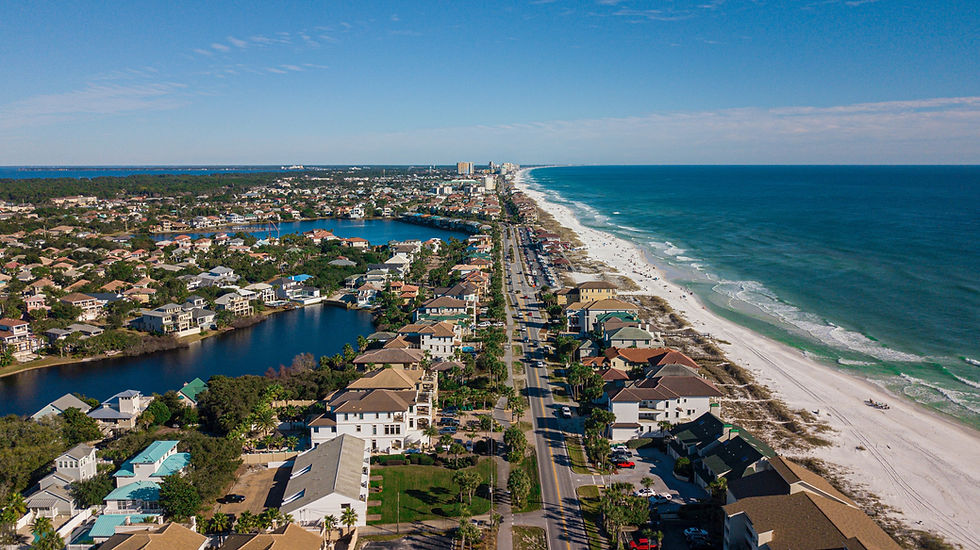
Seaside's rental pool is small by design. The town occupies approximately 80 acres, with roughly 300 homes and cottages, a fraction of the 3,200 to 7,600 active STR listings across the broader Santa Rosa Beach/30A market tracked by data platforms. There is no condo tower inventory. There are no large-scale resort complexes. The housing stock is architecturally governed — pastel colors, porches facing the street, cottage-scale massing, white picket fences — and every structure contributes to the streetscape that makes Seaside photographable from any angle. The rental units that do exist are predominantly original cottages, carriage houses (accessory units behind the main homes), and a small number of purpose-built vacation units managed through Seaside's own rental program and select independent managers.
The broader 30A corridor data provides the market context. AirROI Seaside typical year is $66,324 at $854 ADR and 32% ·. Corridor leftover $542–$699 is not the Seaside year, depending on the data source, with the Walton County VRRP reporting an average of $542 across all registered units. Seaside-specific listings sit at the top of this range — Gulf-front cottages and Central Square-adjacent properties routinely Peak nights can print $700–$1,000. AirROI Seaside typical year is $66,324 at 32% — peak ADR is not the year, placing them among the highest-ADR vacation rentals on the entire Emerald Coast. Annual revenue for top-tier 30A homes projects at $119,000 or more, and Seaside's best-positioned cottages meet or exceed that benchmark. AirROI Seaside typical occupancy is 32% — leftover 55–68% corridor occupancy is not the year on the official Walton County Key Data basis. The average booking lead time across the 30A corridor is 67 days, but Seaside's peak-season weeks book significantly earlier — six months or more is normal for July and early August, with loyal repeat guests locking in the same week year after year.
The supply-demand dynamics in Seaside operate fundamentally differently from those in the open-entry markets next door. Walton County processed 8,600 applications and added 2,600 new STR properties in FY2025 alone — but almost none of that new supply enters the Seaside inventory because the town is built out. There are no vacant lots. There is no room for the spec-built beach houses that are adding inventory in Inlet Beach and the eastern corridor. This supply constraint is Seaside's most powerful market position: while per-unit performance is softening across the broader 30A corridor — occupancy down 12% and RevPAR down 19% in Spring 2024 versus 2023 — Seaside's fixed supply absorbs demand pressure rather than diluting it across new listings. The result is a micro-market where rates hold firm even when the macro-market softens, and where the marketing challenge is to capture a fair share of demand from a stable inventory base rather than to stand out in a growing sea of competition.
The property mix tells the story of what kind of market this is. The broader 30A corridor is 69.3% houses, with 52.8% four-plus-bedroom properties and 66.8% sleeping eight or more guests. Seaside skews smaller — the original cottages are predominantly two-to-four-bedroom homes on compact lots, designed for walkability rather than the large-group capacity that defines the corridor's bigger beach houses. Professional management runs at 65.6% across the corridor, with Seaside's managed-rental program handling a significant share of the town's inventory. The Superhost rate is 49.4% corridor-wide, with an average guest rating of 4.79. Channel distribution across 30A shows 80% of listings on both Airbnb and Vrbo, but Seaside operators often maintain direct-booking relationships with repeat guests who return annually and bypass platforms entirely.
What Makes Seaside Listings Convert: The Architecture Is the Amenity
In every other STR market on the Emerald Coast, the property amenity stack — pool, Gulf view, bedroom count, kitchen renovation — drives conversion. In Seaside, the town itself is the amenity stack. Your listing's proximity to Central Square, the amphitheater, the beach pavilions, and the Airstream food trucks matters more than whether you have granite countertops or a soaking tub.Central Square and the Amphitheaterare Seaside's living room. The square hosts the weekly farmers' market, seasonal concerts, community events, and the kind of unscripted gathering that makes guests feel like residents rather than tourists. The amphitheater's summer concert series is a reliable evening draw — guests walk from their cottage in bare feet, spread a blanket, and listen to music while their kids chase fireflies. If your property is within walking distance of Central Square, that proximity is your headline feature. Not "close to shops" — name the square, name the amphitheater, describe the walk. A listing that says "3-minute walk to the amphitheater, hear the concerts from your porch" is doing conversion work that "convenient location" cannot touch.
The Airstream food trucksalong 30A at Seaside's eastern edge are among the most photographed features along the entire corridor — a line of polished-aluminum trailers serving everything from grilled cheese to craft tacos. They are a visual signature that guests associate specifically with Seaside, not with 30A broadly. If your listing is near the Airstreams, include them in your photo gallery. If they are a walkable destination from your property, include the walking distance.Modica Market— Seaside's Italian-inspired specialty grocery — serves as the town's de facto general store, coffee shop, and wine bar. It is where guests start their morning and end their evening, and a mention in your listing or digital guidebook signals insider knowledge that generic 30A listings lack.
The beach pavilionsare Seaside's most distinctive architectural feature and its most underused marketing asset. Each pavilion — Coleman, Tupelo, Savannah, Odessa, and others — marks a specific beach access point with an unique architectural design, from wooden towers to widow's-walk lookouts. They function as named landmarks that guests use to orient their beach days: "Meet us at the Tupelo pavilion" is how Seaside families talk, not "meet us at the beach." If your cottage is closest to a specific pavilion, name it in your listing. Make it your property's beach-access landmark.The Seaside Chapelis a non-denominational venue that hosts weddings and events, creating a consistent driver of demand for small-group and wedding-party bookings. If your property can accommodate a wedding party or rehearsal dinner, target that segment explicitly with content on chapel proximity and group accommodation logistics.
The Truman Show Heritage: A Citable Hook That Still Converts
Peter Weir's 1998 film "The Truman Show," starring Jim Carrey, was filmed almost entirely in Seaside. The town's pastel cottages, white picket fences, and impossibly perfect streetscapes served as the fictional town of Seahaven — a place so idealized it was literally designed as a television set. Nearly three decades later, the film remains a reliable cultural reference point and a booking motivator for a specific guest segment: the traveler who wants to walk the streets they saw on screen, photograph the same pastel facades, and stay in a cottage that could have been Truman Burbank's neighbor's house.
This is not a gimmick — it is a legitimate marketing angle that costs nothing to deploy and resonates with a surprisingly broad audience. Mention the Truman Show connection in your listing description. Include a walking tour suggestion in your digital guidebook that identifies recognizable filming locations — the post office, the Central Square that served as Seahaven's town center, and the streetscape that established the film's visual identity. Post Instagram content that frames your property or the streetscape in the film's visual language — that slightly-too-perfect, saturated-color aesthetic that made Seaside famous before the term "Instagrammable" existed. The Truman Show heritage gives your listing a cultural story that no data platform can replicate and no competing market can claim. It also serves a practical marketing purpose: when potential guests search "Truman Show filming location" or "Truman Show town vacation rental," there are very few listings optimized to capture that intent. A Seaside operator who builds even modest SEO content around the Truman Show connection is positioning for a high-intent search niche with almost no competition.
Seasonality and Booking Behavior
The 30A corridor's seasonal pattern applies to Seaside with one critical modification: the booking window is longer, and the repeat-guest dynamic is stronger than anywhere else on the corridor. The broader market shows a 3.8-to-1 peak-to-trough revenue swing with July as the absolute peak — approximately $13,728 in average monthly revenue, 65.2% occupancy, and $670 ADR across the Santa Rosa Beach market. Seaside's peak-season rates significantly exceed these averages, with premium cottages commanding $700 to $1,000-plus per night.Peak season (June through July)books early — loyal families often secure their preferred week six months or more in advance, and the best Seaside cottages are fully committed for July before most 30A properties begin receiving summer inquiries.Spring break (March through April)creates a secondary peak, with March ranking as the corridor's third-highest revenue month.Shoulder season (May and August through October)is when marketing effort creates the widest performance gap. The 30A Songwriters Festival in January (the 17th year in 2026, held across 30-plus venues including Seaside locations) is the corridor's most important winter demand driver. Digital Graffiti at Alys Beach (May 15-16, 2026) draws a design-and-art audience that aligns perfectly with Seaside's architectural identity.Low season (November through January)drops to approximately $3,587 per month with 20.7% occupancy and $481 ADR across the corridor, though Seaside's rate floor holds higher than the market average.
The repeat-guest dynamic deserves its own strategic treatment. Only 13% of Walton County visitors are first-time visitors, and 34% have visited 10 or more times. In Seaside, the repeat rate is anecdotally even higher — families who book the same cottage for the same week year after year represent the backbone of the rental calendar. These guests do not discover your listing through the Airbnb search. They rebook through direct communication with you or your property manager, often before the listing opens to the public. This creates a two-tier calendar: the peak weeks that fill from repeat bookings before they ever hit the OTA platforms, and the shoulder and off-peak weeks where active marketing matters. A Seaside operator who relies entirely on repeat guests for peak season and entirely on platform exposure for shoulder season is leaving money on both tiers — peak guests should be migrated to direct booking to capture the platform commission, and shoulder season needs targeted content and advertising to fill weeks that repeat guests do not claim.
Your marketing strategy must serve two distinct audiences simultaneously: the repeat guest who needs a simple rebooking path and a relationship-driven communication cadence, and the new guest who needs to be sold on the Seaside experience through listing copy, photography, and content that captures what makes this town different from every other beach destination. The first audience responds to personal emails, early-access booking windows, and the sense that they have a relationship with the cottage and its owner. The second audience responds to the visual and cultural specifics — the architecture, the pavilions, the Truman Show connection, the Airstream food trucks — that make Seaside listings scroll-stopping in a sea of generic beach-house options.
Demand Drivers and the Seaside Guest Profile
Walton County attracted 4.7 million visitors in 2024, generating $4.1 billion in direct spending and $4.9 billion in total economic impact. The feeder market geography for the Seaside guest skews affluent and Southeast-concentrated. Summer 2024 origin by state: Texas 16%, Georgia 14%, Tennessee 13%, Alabama 9%, Louisiana 7%, Mississippi 7%. By DMA: Atlanta 12%, Nashville 8%, Dallas-Fort Worth 7%, Birmingham 4%. Seventy-five percent of visitors drive to Walton County.
The Seaside-specific guest profile is a refinement of the broader corridor visitor: median household income of $144,400 (corridor-wide, with Seaside guests likely tracking higher), median age 53, average travel party of 5.3 people, and 61% traveling with at least one person under 20. The multigenerational family dynamic is especially pronounced in Seaside — grandparents, parents, and children sharing a cottage or booking adjacent units for a week represent a significant share of the peak-season calendar. These are not transactional bookings. They are traditions, and the operator who understands that distinction — who sends a welcome-back note referencing last year's stay, who remembers that the family keeps the same cottage every July — builds loyalty that no platform algorithm can replicate.
The emotional booking behavior that dominates Seaside differs from the rational comparison-shopping that characterizes Destin or Panama City Beach. A Seaside guest is not comparing your cottage's rate to a Destin condo's rate — they are comparing the feeling of staying in Seaside to the feeling of not staying in Seaside. Your marketing should mirror this emotional decision-making: lead with the experience (porches, bikes, amphitheater, bare feet, sunsets at the pavilion), then support it with logistics (bedroom count, parking, beach gear availability). The language matters: "Your cottage is a 3-minute walk from the amphitheater — grab a blanket, the concert starts at 7" converts better than "Located near entertainment venues." Seaside guests are buying a narrative, and your listing copy should read like the opening paragraph of a vacation story they want to live, not a spec sheet they need to evaluate.
The affluence and loyalty of this guest base have direct implications for your channel strategy. Platform commissions on a $900-per-night week-long booking represent $400 to $600 in revenue leakage — per booking. With 34% of corridor visitors returning 10 or more times and Seaside's repeat rate running even higher, a direct-booking capability is not optional. It is the single highest-ROI marketing investment a Seaside operator can make. A professional direct-booking website with imported reviews, real-time availability, and secure payment processing captures guests who already know they want Seaside and just need a trustworthy way to book your specific cottage without paying Airbnb's fee. Build an email list from your first guest and segment it by booking season and property preference. A Seaside operator with a 200-person email list of past guests has a higher-converting marketing asset than most 30A operators have across their entire OTA funnel.
Your social media strategy should lean heavily into the visual identity that makes Seaside scroll-stopping. Instagram and Facebook content should feature the architectural details — pastel facades at golden hour, bikes parked against white picket fences, the view down a brick-paved street toward the Gulf — rather than generic beach-and-sunset imagery that could be anywhere on the coast. Use location tags specifically for Seaside, Central Square, and the individual pavilion names. Geo-targeted ads aimed at Atlanta (12% of corridor visitors), Nashville (8%), and the Texas metros (DFW 7%, Houston 4%) should use creative that immediately signals "Seaside" — the architecture, the Airstreams, the amphitheater — not generic beach imagery. The 67-day average booking window on the corridor means your March advertising captures June and July planners, though Seaside's longer lead time means starting even earlier delivers results.
Amenities and Photography: Selling the Postcard
In Seaside, the standard amenity hierarchy is inverted. A private pool matters less than a front porch that faces the street. A king bed in every room matters less than a photo of your cottage's pastel facade with bikes parked against the picket fence. The guest paying $800-plus per night for a Seaside cottage is buying the visual — the Instagram-ready, architecturally curated, porches-and-towers look that defines the town's identity.
Photographyis your single most important marketing investment. Lead with exterior shots — your cottage's facade, the streetscape, the porch with rocking chairs, the gate, the tower or widow's walk if your home has one. Interior photos matter, but the exterior is what makes a guest stop scrolling. Photograph at golden hour when the pastel colors warm. Include lifestyle shots — bikes on the porch, a book on the rocking chair, the view down the street toward Central Square. Every Seaside listing should look like a postcard because that is literally what the guest is buying.
Bikesare not an amenity in Seaside — they are the primary mode of transportation. Cars are a liability in a town designed for walkability, with limited parking and narrow streets. If your property includes bikes, make them a headline feature. If it does not, include a bike-rental recommendation in your digital guidebook. The Timpoochee Trail, the 24-mile multi-use path connecting the entire 30A corridor, passes through Seaside and gives guests access to neighboring WaterColor, Grayton Beach, and Seagrove without a car.Beach gear— chairs, umbrellas, and a beach cart — eliminates the most common friction point for guests unfamiliar with 30A's beach-access logistics.The walk-to-everything positioningshould be specific: "4-minute walk to Central Square, 6 minutes to the Tupelo pavilion, 2 minutes to the Airstream food trucks." Distances, not adjectives.
The Regulatory Layer: Walton County Applies
Seaside falls within Walton County's Short-Term Vacation Rental Ordinance, approved January 24, 2023, with updated fees effective February 1, 2025. Every property rented for periods of less than 30 days requires annual registration through the county's MuniRevs portal. Prerequisites include separate registrations with the Florida Department of Revenue and the Florida DBPR for a vacation-rental license, a Walton County TDT account, and a South Walton Fire District safety inspection. Individual registration costs $300 per year, community registration costs $227 per year, and operating without registration carries a $500-per-day penalty. Renewals align with the Florida DBPR cycle, due before June 1 annually. There is no cap on STR registrations — Walton County has not implemented a moratorium. The total lodging tax burden in South Walton is approximately 12%: 6% Florida state sales tax, 1% county surtax, and 5% South Walton Tourist Development Tax.
Parking is a genuine constraint in Seasidethat your listing must address honestly. The town was designed for pedestrians and bikes, not SUVs. Many cottages have limited on-site parking — one space or none — and overflow parking requires navigating Seaside's small lots or the 30A shoulder during peak season, which is notoriously difficult in July when the town is at capacity. If your property has a dedicated parking space, state it clearly — one confirmed parking space is a genuine amenity in Seaside. If it does not, explain the parking reality before the guest arrives, and frame walkability and bike culture as the designed alternative that makes a car unnecessary once they arrive. Under-communicating parking constraints is one of the most common sources of negative reviews in Seaside, and it is entirely preventable with honest listing copy. Consider including arrival instructions that suggest guests unload luggage at the cottage, then park in a designated lot and walk or bike for the remainder of their stay — reframing the parking constraint as part of the Seaside lifestyle rather than an inconvenience.
Visiting Seaside: What Your Guests Need to Know
Seaside is located on County Road 30A in unincorporated Walton County, Florida, approximately 30 minutes east of the Destin-Fort Walton Beach Airport (VPS) and 30 minutes west of Northwest Florida Beaches International Airport (ECP) in Panama City. VPS offers direct flights from Dallas, Nashville, and Atlanta. Driving distances from the primary feeder markets: Atlanta approximately 5.5 hours, Nashville 7 hours, Birmingham 4.5 hours, Dallas 10 hours. Seventy-five percent of Walton County visitors drive, and the arrival experience matters — US-98 carries heavy traffic during peak season, and the turn onto 30A from US-98 can back up significantly on summer weekends.
Once in Seaside, a car becomes unnecessary and often counterproductive. The town is designed for walking and biking — Central Square, the beach pavilions, the Airstream food trucks, Modica Market, and all restaurants and shops are within walking distance of any cottage in town. The Timpoochee Trail connects Seaside to neighboring WaterColor (a short ride east, with access to Western Lake and the WaterColor boathouse), Grayton Beach (west, with access to Grayton Beach State Park's approximately 2,000 acres of trails and undeveloped beachfront), and Seagrove (east, a residential neighborhood between Seaside and WaterColor). Day trips from Seaside by car include Rosemary Beach (15 minutes east), Alys Beach (20 minutes east), and Destin's HarborWalk Village and charter fishing (30 minutes west). The beaches feature sugar-white quartz sand and emerald-green water — sand that stays cool underfoot even in peak-summer heat. The coastal dune lakes near Seaside — particularly Western Lake at Grayton Beach State Park — offer paddleboarding, kayaking, and nature experiences that provide a genuinely differentiated alternative to a standard beach day.
Comparable Markets: Seaside in Context
Metric |
Seaside (est.) |
30A Corridor |
Destin |
Miramar Beach |
ADR |
$700–$1,000+ |
$542–$699 |
$305–$470 |
$338–$450 |
Inventory Scale |
~300 homes |
3,200–7,600 |
7,000–7,700 |
4,800–9,300 |
Booking Lead Time |
6+ months (peak) |
67 days |
66 days |
74 days |
Repeat Guest Rate |
Very high |
34% (10+ visits) |
Moderate |
Moderate |
Seaside occupies a fundamentally different competitive position than its neighbors. The inventory is tiny, the ADR is the highest on the coast, the repeat-guest loyalty is the strongest, and the booking window is the longest. Marketing a Seaside listing is less about competing for attention in a crowded market and more about capturing the emotional premium that the town's brand commands and converting it into direct bookings that bypass platform commissions.
Content Prescriptions by Operator Type
Original Cottage Owner:Your home's architectural heritage IS the product. Document the architect, the year built, and the design details. Photography should celebrate the facade, the porch, and the streetscape context.
Carriage House Operator:Position the smaller scale as an advantage — intimate, affordable for Seaside, walkable to everything. Target couples and small families.
Central Square-Adjacent Operator:Your proximity to the amphitheater, food trucks, and Modica Market is your headline differentiator. Name the walking distances. Include event calendars in your guidebook.
Pavilion-Adjacent Operator:Name your nearest beach pavilion and make it your property's beach-access landmark. Include pavilion photos. Create content about what makes each pavilion architecturally distinct.
Wedding/Group-Booking Operator:Target the Seaside Chapel wedding market explicitly. Create content on group accommodation logistics, rehearsal dinner venues, and multi-cottage booking coordination.
Repeat-Guest-Heavy Operator:Build a direct-booking system with a rebooking workflow. Send annual "your week is opening" emails three to six months before peak season. The rebooking email is your highest-converting marketing asset.
Shoulder-Season Specialist:Target Songwriters Festival (January), Digital Graffiti (May), and fall-shoulder with content that positions Seaside's off-peak experience — quieter streets, same architecture, walkable dining year-round.
Keep going on Crest & Cove:Destin against AirROI, not leftover year·Miramar Beach against AirROI·the Crest & Cove intro·local SEO keywords that actually book·the five elements of a converting hero·how to compare STR marketing agencies·Asheville paddling spots worth the drive·OTA fees without leftover occupancy lifts. Your marketing strategy must serve two distinct audiences simultaneously: the repeat guest who needs a simple rebooking path and a relationship-driven communication cadence, and the new guest who needs to be sold on the Seaside experience through listing copy, photography, and content that captures what makes this town different from every other beach destination.
Keep going on Crest & Cove:Destin against AirROI, not leftover year·Miramar Beach against AirROI·the Crest & Cove intro·local SEO keywords that actually book·the five elements of a converting hero·how to compare STR marketing agencies·Asheville paddling spots worth the drive·OTA fees without leftover occupancy lifts. They are buying a week inside a specific vision of what a beach vacation should look like: walking to the amphitheater in bare feet, buying ice cream at Modica Market, biking to the beach pavilion without touching a car key, and telling their friends they stayed in the town from "The Truman Show." This guide covers the cultural specifics, data, regulatory requirements, and marketing strategies that help Seaside operators sell the emotional purchase that defines this.
Frequently Asked Questions
Who designed Seaside, and when?
Robert Davis and Andrés Duany drew the first master plan on 80 acres of Walton County sand in 1981 — the town where New Urbanism was born. It is a feeling — a pastel-painted, white-picket-fence, bikes-leaning-against-porches feeling that has been selling itself since Robert Davis and Andrés Duany drew the first master plan on 80 acres of Walton County sand in 1981.
How large is Seaside's rental inventory?
Small by design — the town occupies approximately 80 acres with roughly 300 homes and cottages, a fraction of the 3,200 to 7,600 active STR listings across the broader Santa Rosa Beach/30A market. The town occupies approximately 80 acres, with roughly 300 homes and cottages, a fraction of the 3,200 to 7,600 active STR listings across the broader Santa Rosa Beach/30A market tracked by data platforms.
What kind of experience is a Seaside guest actually buying?
Not a comparison-shopped nightly rate against Destin condos, but a week inside a specific vision of a beach vacation — walking to the amphitheater barefoot, buying ice cream at Modica Market, biking to the beach without a car. They are buying a week inside a specific vision of what a beach vacation should look like: walking to the amphitheater in bare feet, buying ice cream at Modica Market, biking to the beach pavilion without touching a car key, and telling their friends they stayed in the town from "The Truman Show." This guide covers the cultural specifics, data, regulatory requirements, and marketing strategies that help Seaside operators sell the emotional.
What ADR range do Seaside-specific listings command?
They sit at the top of the broader Santa Rosa Beach market's $542 to $699 range, with Gulf-front cottages and Central Square-adjacent properties commanding premium rates. Seaside-specific listings sit at the top of this range — Gulf-front cottages and Central Square-adjacent properties routinely Peak nights can print $700–$1,000. Seaside's peak-season rates significantly exceed these averages, with premium cottages commanding $700 to $1,000-plus per night.Peak season (June through July)books early — loyal families often secure their preferred week six months or more in advance, and the best Seaside cottages are fully committed for July before most 30A properties begin receiving summer inquiries.Spring break (March through April)creates a secondary peak, with March.
What type of housing stock exists in Seaside?
Predominantly original cottages, carriage houses (accessory units behind the main homes), and a small number of purpose-built vacation units — no condo towers or large-scale resort complexes. The rental units that do exist are predominantly original cottages, carriage houses (accessory units behind the main homes), and a small number of purpose-built vacation units managed through Seaside's own rental program and select independent managers.
What Makes Seaside Listings Convert: The Architecture Is the Amenity?
Seaside is not a vacation rental market. They are buying a week inside a specific vision of what a beach vacation should look like: walking to the amphitheater in bare feet, buying ice cream at Modica Market, biking to the beach pavilion without touching a car key, and telling their friends they stayed in the town from "The Truman Show." This guide covers the cultural specifics, data, regulatory requirements, and marketing strategies that help Seaside operators sell the emotional purchase that defines this micro-market.
Does a 30-night setting fill the slow month?
A 30-night minimum is a platform filter. Typical stay on these extracts is still a short trip. The filter is not a filled slow month and it is not a remote-work product you did not photograph. Seaside's peak-season rates significantly exceed these averages, with premium cottages commanding $700 to $1,000-plus per night.Peak season (June through July)books early — loyal families often secure their preferred week six months or more in advance, and the best Seaside cottages are fully committed for July before most 30A properties begin receiving summer inquiries.Spring break (March through April)creates a secondary peak, with March ranking as the corridor's third-highest revenue month.Shoulder season (May and August through.
Do short-term rental licenses transfer with the deed?
Seaside falls within Walton County's Short-Term Vacation Rental Ordinance, approved January 24, 2023, with updated fees effective February 1, 2025. Prerequisites include separate registrations with the Florida Department of Revenue and the Florida DBPR for a vacation-rental license, a Walton County TDT account, and a South Walton Fire District safety inspection.
Related Reading
Keep reading on same-cluster Crest & Cove pages that stay on labeled local lines without costume-corridor copy.
DIY vs. Hire in Many, LA: Why Independent Hosts Still Run Most Listings
DIY or Hire in Depoe Bay: What the Numbers Say for STR hosts
DIY vs Hire in Seattle: Independents Still Write Most Listings
Financing a Springfield, MA Rental Without a Neighbor City Year
Financing a Grove, OK Rental: What a DSCR Underwriter Actually Wants
What It Actually Costs to Start a Grove OK STR: The One Published Fee
How to Underwrite an Akron, Ohio Rental With Its Own Numbers
What It Actually Costs to Register a Short-Term Rental in Akron
Work with Crest & Cove Creative
Write this town's year. Do not file another market's number as this stay.
Reach out at crestcove.co or (256) 998-7502.


Comments