
Traverse City Leelanau STR Market Report for Independent Hosts

Updated: Aug 28
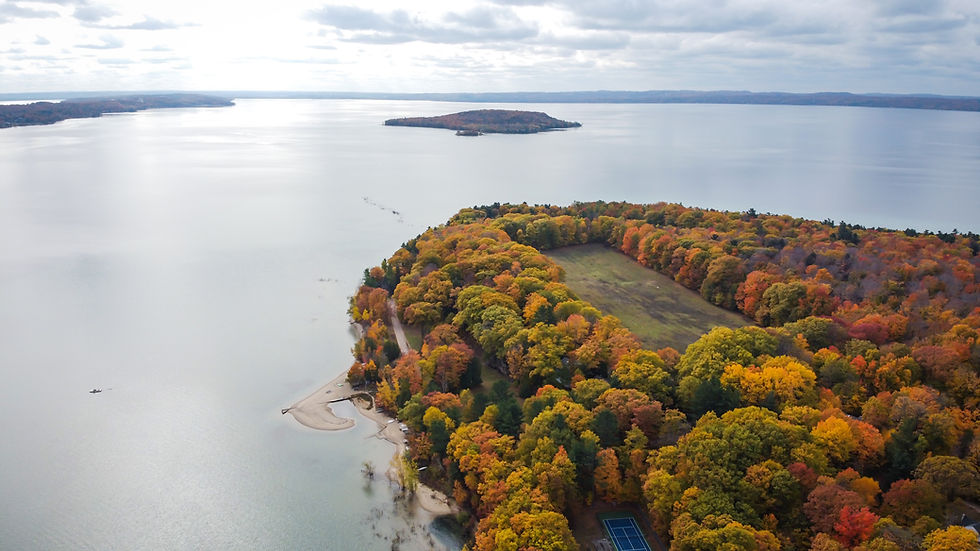
Traverse City and the Leelanau Peninsula make up the largest short-term rental market in Northern Michigan, and also its most fragmented. A host in a Grand Traverse Bay condo, a host in a wine-village farmhouse fifteen minutes up M-22, and a host near Sleeping Bear Dunes National Lakeshore are technically competing in the same regional market report, but they're selling three different trips to three different buyers. Understanding why matters more here than in almost any other Midwest destination, because the township-by-township regulatory map is just as fractured as the demand itself.
This report lays out what current data actually shows for occupancy, average daily rate, and annual revenue across the Traverse City-Leelanau corridor, why waterfront and wine-village listings command different premiums, who the buyer actually is, and which local rules determine whether a given address can legally operate as a short-term rental at all. This report was produced by the Crest & Cove Creative research and content team, which builds data-driven market reports and SEO content for short-term rental hosts and investors across the United States.
The Traverse City Short-Term Rental Market, By the Numbers
Third-party analytics platforms don't fully agree on Traverse City's exact figures, which is itself an useful signal about how volatile this market has become. AirROI's 2026 data set puts average annual revenue per active listing at roughly , with occupancy in the low-40% range, average daily rate near $318-$320, and RevPAR around $147-$149. AirDNA's independent read shows a notably higher blended ADR near $419 and monthly revenue around at roughly named-town occupancy pins as of 2026-07-31, while Rabbu's own numbers run lower still , full-year average revenue in the range, occupancy in the roughly 30-42% range depending on the month sampled, and ADR closer to $221. Treat the exact numbers as directional rather than gospel , the honest takeaway is that a well-run Traverse City-area listing is producing somewhere in the annual revenue range, with meaningful spread depending on location, bedroom count, and how tightly the calendar is managed around peak weeks.
Supply has grown fast. Recent counts put active listings across the broader Traverse City market at roughly 761, with year-over-year supply growth above 30%. What's notable is that revenue and nightly rates have continued trending upward even as inventory expanded , a sign that demand for this specific bay-and-wine-country combination is still outrunning new supply rather than being diluted by it, at least for now. That's a different story than markets where a supply surge has flattened rates outright.
Property size drives rate more than almost any other single variable. Studio and one-bedroom units in the Traverse City data average around $104 a night, while six-plus-bedroom homes , the kind that host extended family groups or wedding parties , can command close to $981 a night. Investors sizing up this market should think in terms of which bracket they're actually buying into, because "Traverse City ADR" as a single number obscures a five-to-tenfold spread between the low and high end.
Two Demand Engines, Not One
Most coverage of "Up North Michigan" short-term rentals treats the region as a single beach-and-boating market. That undersells what's actually happening in Traverse City and Leelanau specifically. This corridor runs on two distinct draws that happen to sit next to each other geographically but pull different travelers. This report lays out what current data actually shows for occupancy, average daily rate, and annual revenue across the Traverse City-Leelanau corridor, why waterfront and wine-village listings command different premiums, who the buyer actually is, and which local rules determine whether a given address can legally operate as a short-term rental at all.
The first is Grand Traverse Bay itself , the East and West Arms, the marinas, the beaches, and the boating culture that has made Traverse City a summer anchor for generations of Midwest families. A Grand Traverse Bay short-term rental within walking distance of downtown or directly on the water is booking against the same logic as any premium lakefront market: proximity to swimmable water, sunset views, and walkability to restaurants and the National Cherry Festival scene.
The second is the Leelanau Peninsula wine trail, a genuinely different product. Leelanau Peninsula vacation rental demand increasingly comes from couples and small groups doing multi-day wine-trail circuits rather than families doing a beach week. The Leelanau Peninsula Wine Trail counts roughly two dozen member wineries , estimates from local tourism sources range from the low 20s to upper 20s depending on how the list is compiled , strung along M-22 and M-204 through Suttons Bay, Northport, and the rolling farmland toward Omena. That concentration of tasting rooms, several with their own restaurants and event spaces, has turned Leelanau County into a genuine wine-country destination in its own right, not just an extension of Traverse City's beach trade.
Layered on top of both is Sleeping Bear Dunes National Lakeshore, which pulls well over 1.5 million visitors a year , NPS reported roughly 1.67 million visits in 2024, keeping it among the more heavily visited units in the National Park System. The Dunes function as the anchor that justifies a full week's stay rather than a weekend, and their pull extends south into Benzie County and north through Leelanau's western shoreline towns like Glen Arbor and Empire.
Waterfront vs. Wine-Village: Two Real Premium Tiers
Because this market runs on two engines, it also runs on two distinct premium tiers rather than one simple "on-water vs. off-water" split. The guests booking $300-$400+ ADR waterfront homes and boutique wine-country farmhouses are the same demographic that fuels the region's real estate market generally: dual-income professional households from Chicago's North Shore and Detroit's northern suburbs who treat Traverse City as their recurring summer and fall destination rather than an one-time bucket-list trip.
Waterfront and near-waterfront listings around Grand Traverse Bay , think Old Mission Peninsula's shoreline, the East Bay corridor, and Elmwood Township's stretch near West Bay , command the market's highest nightly rates, driven by direct water access, boat dockage, and sunset exposure. These properties book heaviest in the peak June-through-August window and lean on large groups willing to pay for the view and the beach.
Wine-village listings in and around Suttons Bay, Northport, and the rural stretches between wineries command a different but still real premium: walkability to tasting rooms, proximity to farm-to-table restaurants, and a curated, design-forward aesthetic that appeals to a couples-and-small-group traveler willing to pay up for atmosphere over square footage. These listings don't need direct water access to hit strong ADRs , they need to be positioned inside the wine-trail loop.
Investors should treat these as two separate acquisition strategies with two separate buyer personas, not as a single "Leelanau premium" line item. A waterfront cottage and a converted farmhouse near a tasting room can post similar annual revenue while serving completely different guests on completely different booking calendars. Wine-village listings in and around Suttons Bay, Northport, and the rural stretches between wineries command a different but still real premium: walkability to tasting rooms, proximity to farm-to-table restaurants, and a curated, design-forward aesthetic that appeals to a couples-and-small-group traveler willing to pay up for atmosphere over square footage.
Who's Actually Booking: The Chicago and Detroit Feeder Market
Traverse City and Leelanau pull overwhelmingly from two metro feeder markets: Chicago and Detroit. Both cities sit within a comfortable drive , roughly five hours from Chicago, under four from Detroit , and Cherry Capital Airport (TVC) adds direct flights from Chicago, Detroit, Minneapolis, and other hubs that put the region within a short flight for guests who'd rather not drive.
This is a drive-and-fly affluent base, not a budget leisure market. The guests booking $300-$400+ ADR waterfront homes and boutique wine-country farmhouses are the same demographic that fuels the region's real estate market generally: dual-income professional households from Chicago's North Shore and Detroit's northern suburbs who treat Traverse City as their recurring summer and fall destination rather than an one-time bucket-list trip. That repeat-visitor behavior is part of why the market has proven resilient even as supply has grown , a meaningful share of demand isn't first-time discovery, it's returning guests with a preferred town, a preferred winery, or a preferred stretch of shoreline.
A Compressed but Lengthening Season
Traverse City remains a summer-anchored market. Seasonality data shows the swing clearly: average monthly occupancy across the broader market has run as low as roughly 9% in March and as high as roughly 78% in July, a spread few other Midwest markets show this starkly. Winters here are genuinely quiet outside of the small ski and event-driven pockets.
What differentiates this cluster from a pure beach-and-boating market, though, is how much the wine trail and the region's fall color extend the shoulder season. September and October bring harvest events, wine-trail weekends, and leaf-peeping traffic that a purely lake-dependent market like a Great Lakes beach town further south simply doesn't get. The National Cherry Festival anchors early July, but the Leelanau wine trail gives hosts a legitimate second and third demand wave running from Labor Day through late October that a beach-only property can't access nearly as well. Hosts positioned inside or near the wine-trail loop should be building their fall pricing and marketing around that reality rather than treating September as simple off-season decline.
The Regulatory Patchwork: Township by Township
This is the part of the Traverse City and Leelanau market that trips up out-of-area investors most often, because "Grand Traverse County rules" and "Leelanau County rules" don't actually exist as single, consistent policies. Regulation here is set almost entirely at the township and city level, and the differences between adjacent jurisdictions are stark. Investors sizing up this market should think in terms of which bracket they're actually buying into, because "Traverse City ADR" as a single number obscures a five-to-tenfold spread between the low and high end.
Traverse City itself requires a Vacation Home Rental license , a $200 initial fee plus $200 annual renewal , and confines most whole-home rentals to designated commercial, mixed-use, and hotel-resort zoning districts rather than allowing them citywide. There's no blanket citywide numeric cap, but zoning effectively limits where a compliant whole-home rental can sit. Treat the exact numbers as directional rather than gospel , the honest takeaway is that a well-run Traverse City-area listing is producing somewhere in the annual revenue range, with meaningful spread depending on location, bedroom count, and how tightly the calendar is managed around peak weeks.
Peninsula Township, which covers Old Mission Peninsula, prohibits short-term rentals outright in non-commercial residential zones , a policy the township describes as decades old , and has recently adopted a formal civil-fine enforcement schedule, plus sent notice to local Realtor groups asking them to stop helping clients work around the ban. This is one of the strictest stances anywhere in the cluster and rules out an entire waterfront peninsula for prospective STR buyers.
Elmwood Township, just west of the city, takes the opposite approach: it permits short-term rentals across all zoning districts but caps total licenses at roughly 93 units, a figure landing near 4% of the township's housing stock, following extended public debate before adoption. Waterfront and near-waterfront listings around Grand Traverse Bay , think Old Mission Peninsula's shoreline, the East Bay corridor, and Elmwood Township's stretch near West Bay , command the market's highest nightly rates, driven by direct water access, boat dockage, and sunset exposure.
In Leelanau County, Leelanau Township (covering Northport and the peninsula's northern tip) has operated a permit system since January 2021, capping issued permits at 150 per calendar year and tying maximum occupancy to bedroom count under local health-department rules. Other Leelanau townships , Suttons Bay, Cleveland, and others , each maintain their own separate ordinances or, in some cases, have yet to formally address short-term rentals at all, which means the rules genuinely change block by block as you move through wine country.
Adding a further layer of uncertainty, Michigan legislators introduced bills in late 2025 that would let local governments impose a voter-approved excise tax of up to 3% on short-term stays, with Traverse City's mayor among the public supporters; as of mid-2026 no such tax had been enacted locally. Separate statewide preemption proposals that would standardize short-term rental treatment across Michigan townships have also circulated in recent legislative sessions without passing. The practical implication for investors: verify the specific township ordinance for any address under consideration before assuming Grand Traverse or Leelanau County treatment applies uniformly, and expect the rulebook to keep shifting over the next few years rather than settling into place.
AirDNA's independent read shows a notably higher blended ADR near $419 and monthly revenue around at roughly named-town occupancy pins as of 2026-07-31, while Rabbu's own numbers run lower still , full-year average revenue in the range, occupancy in the roughly 30-42% range depending on the month sampled, and ADR closer to $221.
Related Reading
Keep reading on same-cluster Crest & Cove pages that stay on labeled local lines without costume-corridor copy.
How to Market STR Traverse City Leelanau for Independent Hosts
DIY vs Hire Marketing for Traverse City Leelanau STR Marketing
Traverse City Remote Work Rental Guide for Independent Hosts
Traverse City Leelanau STR Investment 2026 for Independent Hosts
Traverse City Leelanau Marketing Agency Worth It for Independent Hosts
DIY vs. Hire in Many, LA: Why Independent Hosts Still Run Most Listings
DIY or Hire in Depoe Bay: Why Independent Hosts Still Win the Copy
DIY vs Hire in Seattle: Independents Still Write Most Listings
Financing a Springfield, MA Rental Without a Neighbor City Year
What It Actually Costs to Start a Many, LA Short-Term Rental in 2026
Frequently Asked Questions
What's the average annual revenue for a Traverse City short-term rental?
AirROI's 2026 data set for the Traverse City market shows average daily rate near $318-$320 and RevPAR around $147-$149, with occupancy in the low-40% range. There isn't a single reliable annual-revenue-per-listing figure to cite here, and the range is wide regardless: bedroom count, water proximity, and management quality all swing results hard, with the six-plus-bedroom segment posting nightly rates several times higher than studio and one-bedroom units.
Is Traverse City a good market for Airbnb investment?
It's one of the stronger fragmented Midwest markets, with a large, diversified demand base pulling from both Grand Traverse Bay boating travelers and Leelanau wine-trail visitors. That said, supply has grown more than 30% year over year in recent data, and township-level rules vary enormously, so a Traverse City Airbnb investment decision has to be paired with a specific-address regulatory check, not just a market-level revenue estimate.
Can I operate a short-term rental in Peninsula Township on Old Mission Peninsula?
Peninsula Township, which covers Old Mission Peninsula, prohibits short-term rentals of under 30 days in non-commercially zoned residential property outright, treats it as a zoning violation, and has adopted a formal civil-fine schedule to enforce that decades-old ban, including notice sent to local Realtor groups. This is one of the strictest jurisdictions in the entire cluster and should be ruled out early in any property search there.
What are the short-term rental rules in Elmwood Township?
Elmwood Township, just west of the city, takes the opposite approach: it permits short-term rentals across all zoning districts but caps total licenses at roughly 93 units, a figure landing near 4% of the township's housing stock, following extended public debate before adoption. Once the cap is filled, new applicants are typically waitlisted, so confirming current license availability before purchase is essential.
How does Leelanau Township regulate vacation rentals?
Leelanau Township, covering Northport and the peninsula's northern tip, has required a permit since January 1, 2021, renewed annually, with a program-wide cap of 150 permits per calendar year. Maximum occupancy is tied to bedroom count under local health-department rules, so a specific property's allowed guest count depends on that review, not just its listed bedroom total.
Are waterfront listings always worth more than wine-country listings in this market?
Not necessarily , they're different products serving different guests rather than one being strictly better. Grand Traverse Bay waterfront listings tend to post the highest peak-summer nightly rates on the strength of direct water access, while well-positioned wine-village listings near the Leelanau wine trail can post comparable annual revenue through strong shoulder-season demand and a smaller but consistently high-paying couples-and-small-group audience.
When is peak season in Traverse City and Leelanau, and how long does it last?
The core peak runs roughly June through August, with July historically the strongest month by a wide margin in occupancy data , the broader market has run as low as roughly 9% occupancy in March and as high as roughly 78% in July. Unlike a pure beach market, the Leelanau wine trail and the region's fall color season extend meaningful demand into September and October, giving well-positioned hosts a real shoulder season most single-draw Midwest markets don't get.
How many wineries are on the Leelanau Peninsula Wine Trail?
The Leelanau Peninsula Wine Trail counts roughly two dozen member wineries, with estimates from local tourism sources ranging from the low 20s to upper 20s depending on how the list is compiled and when it was last updated. The wineries string along M-22 and M-204 through Suttons Bay, Northport, and the rolling farmland toward Omena.
About the Authors
This report was produced by the Crest & Cove Creative research and content team, which builds data-driven market reports and SEO content for short-term rental hosts and investors across the United States. Our team combines third-party analytics platforms, primary municipal and county ordinance research, and hands-on short-term rental marketing experience to help owners make positioning and acquisition decisions grounded in current, verifiable data rather than generic regional assumptions.
Sources
AirROI , Traverse City, Michigan Airbnb Data 2026: Occupancy, Revenue & STR Market Report
Rabbu , Traverse City, MI Airbnb Market Data, Statistics, and Occupancy Rates
The Ticker , Land Of 9,000 Airbnbs: Northern Michigan's Short-Term Rental Market, By The Numbers
Leelanau Township, Michigan , official short-term rental ordinance information page
Old Mission Gazette , Peninsula Township short-term rental enforcement announcement
National Park Service, Sleeping Bear Dunes National Lakeshore , Park Statistics
Glen Arbor Chamber of Commerce , Leelanau Peninsula Named in the Top 3 Best Wine Regions
Work with Crest & Cove Creative
Traverse City Leelanau STR marketing in Traverse City Leelanau fails when a costume coastal packet replaces what this driveway can keep overnight. Guests deserve the stay the gallery and house rules can actually hold.
We help independent hosts keep Traverse City Leelanau stay lines in Traverse City Leelanau honest against the overnight they can deliver, with a line this driveway cannot keep left on labeled lines. Decide what you can rewrite yourself this week, then hire only the gap that remains. Send the live Traverse City Leelanau listing if the about block still could sit on the wrong town.
Reach out at crestcove.co or (256) 998-7502.



Comments