
Virginia City, NV STR Market Report 2026: The Structural Facts

Updated: Aug 28
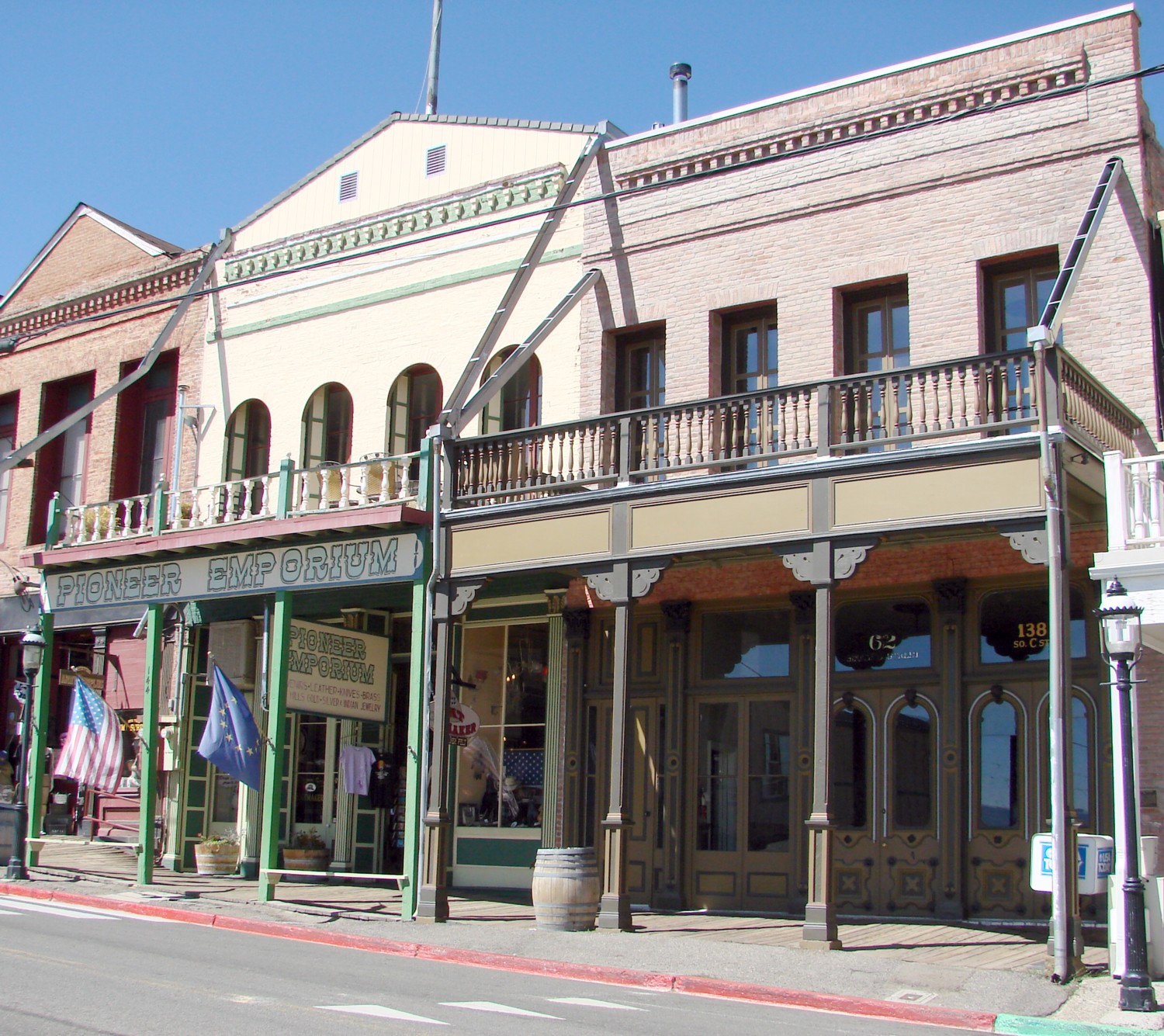
This is a market report without a locked listing count, occupancy series, or average daily rate, and it will not guess one to fill that gap. What can be named without a fresh paid scrape is structural: 787 residents in the 2020 census for the Virginia City census-designated place; Storey County's own resident page putting the broader county at about 4,123 people; a National Historic Landmark District designated in 1961 and added to the National Register in 1966; a drive often described as about 35 minutes from Reno via NV-341 and I-580, roughly 24 miles by road; a transient lodging tax already on the books as Storey County Code 3.60; and a county commission that, as of January 20 and February 3, 2026, was actively researching and moving toward a vacation-home-rental ordinance, including a possible age minimum on renters.
This cluster's own research never confirmed exactly how many Airbnb or VRBO listings actually operate in Virginia City. That's a genuine data gap for a town this small, not an oversight papered over with a borrowed midpoint from a different mountain-town cluster. Commercial dashboards, if you pull them the week you read this, may disagree with each other on listing count, occupancy, and nightly rate. Date whatever extract you buy, and don't treat this report's silence on those numbers as proof the market is empty. It may simply be under-documented on the platforms that feed the dashboards hosts already trust.
What follows is the pile of facts this cluster's research can actually defend: the demand anchor, the climate, the lodging tax, the regulatory posture, and the honest limits of what a report built without a fresh commercial data pull can and cannot tell a buyer or a lender. This is not legal advice.
What 787 People and a Landmark District Can Mean
A census-designated place of 787 people with a National Historic Landmark street is already a tourism town, even when the resident count reads like a hamlet. Storey County's official site states the county welcomes more than 1.6 million visitors each year. A separate county resident-information page says Virginia City itself hosts over one million visitors annually. Those two official sources disagree on both geography and the specific number. Cite whichever page you actually used, and don't manufacture a midpoint between them. Neither figure should be turned into a rent roll or a room-night calculation; visitor counts and short-term rental occupancy are two different data sets entirely.
The demand anchor itself is real and specific: the Comstock Lode mining history, C Street, the Fourth Ward School Museum, Piper's Opera House, the Virginia and Truckee Railroad, and a genuinely quiet Landmark street once the day-trippers leave. None of that is a guaranteed yield on its own. Property-manager competition, based on this cluster's research pass, reads as low, but treat that as a snapshot to recheck on the platforms the week you actually decide, not a permanent moat.
The Listing Count This Report Will Not guess
A listing-count range this report does not have is a warning to a buyer, not a census to rely on. If your own extract lands at twelve active short-term listings or at forty, date the file and carry that date into every memo you send. If it lands at four, the thesis shifts from a competitive field to a genuinely sparse listing stock market. Visit Virginia City's own lodging list, published at visitvirginiacitynv.com, names specific inns and houses a buyer can review without paying for a scrape. That's shape, real evidence that lodging isn't theoretical on C Street and the side streets feeding it, but it is still not AirDNA, AirROI, or any commercial short-term rental dashboard. Use the tourism commission's page as a competitor list, not as a substitute for a dated, paid extract.
The low professionally managed share cited above is a qualitative research read from this cluster's own pass, not a published percentage from any platform's white paper. Search for Vacasa and the other national brands directly on the booking platforms the week you cite this figure. A town of 787 people can still have one local operator running several listings from a single set of logins, and a Saturday phone that already answers for three separate doors. Named inns on the tourism commission's list are direct lodging competition regardless of how they're managed, and thin independent competition is still real competition a new listing has to account for.
Elevation and Distance: Structural Facts That Shape Demand
Elevation here is structural, not decorative detail. Various sources put it near 6,100 feet, with Wikipedia citing 6,106 feet and Visit Virginia City's own weather page citing about 6,150 feet. The town sits roughly 24 miles southeast of Reno by road, on NV-341, with typical drive-time language putting the trip at about 35 minutes via NV-341 and I-580. Treat that as typical language, not a guaranteed door-to-door promise on a Hillclimb weekend or a January ice day, when the actual drive time can run considerably longer.
That elevation is also why this market's climate reads nothing like a Nevada desert town. NOAA station USC00268761, using 1991-2020 normals, puts the July mean daily high at 83.8°F, with a July mean overnight low around 61.5°F and a full July mean of 72.6°F. August's mean daily high sits at 82.4°F, June's at 74.3°F, and January's mean high is 40.9°F. Official tourism weather copy already describes Virginia City's summers as mild at this elevation, which directly contradicts any listing copy built around an escape-the-desert pitch. A property here should be marketed on its actual mountain-town summer, not a generic Nevada heat narrative borrowed from a lower-elevation market.
What This Report Will Not Publish
This report will not publish a three-month occupancy table, and it will not present any single AirROI listing count as this cluster's own confirmed number. It will not state an average annual revenue figure for a Virginia City short-term rental door. It will not borrow an average daily rate pulled from a different cluster's research and present it as Virginia City's own. It will not guess a mid-40s-percent summer occupancy figure lifted from a desert-market brief that doesn't match this town's actual NOAA climate normals. And it will not treat a statewide or regional visitor-spending figure as if it described Virginia City's own income.
Travel Nevada's statewide visitor-spending figure of $58.5 billion for 2024 stays exactly that, statewide, and Reno-Sparks metro-area spending is not Virginia City income either. Neither number belongs in a debt-service underwriting file for a Comstock property. A market report that borrows a big, impressive-sounding statewide dollar figure and lets a reader infer it applies locally is not doing the reader a favor; it's setting up a projection that a lender will eventually catch and reject.
AB363 Does Not Apply Here, and Storey's Own Draft Rules Do
Nevada's AB363 and NRS 244.35351 apply to a county with a population of 700,000 or more, and to cities of 25,000 or more residents inside that county, thresholds that describe Clark County and its larger cities, not Storey County. Storey is nowhere near crossing that population threshold, and treating AB363 as a relevant regulatory clock for a Virginia City property is teaching the wrong statute for the wrong geography entirely.
Storey County's own draft vacation-home-rental rules are the actual local input to track. January 20, 2026 Board of County Commissioners minutes directed staff to research a possible ordinance limiting certain short-term vacation rentals to renters 25 or older, or some other age threshold, and continued that item to a February 3 hearing. February 3 news coverage reported the board was moving forward with a vacation-home-rental ordinance, with 25-and-over renter language discussed. No adopted ordinance text was locked down during this cluster's research pass, and this remains a live, moving process. Recheck storeycounty.org directly before you buy, list, or advertise, since a report written today is a snapshot that a later board vote can supersede.
Two Facts That Are Not a Yield: The Lodging Tax and the Climate
Code 3.60 already requires monthly transient lodging tax remittance, including months with zero revenue to report. Visit Virginia City publishes a Transient Lodging Tax Return that cites this code and confirms monthly filing is mandatory even at zero. Confirm the current rate with the Clerk and Treasurer's office, currently Jim Hindle, at the courthouse, 26 South B Street. This report will not guess a specific percentage rate. Do not paste Clark County's roughly 13 percent lodging tax rate onto a Storey County property; the two counties set different rates, and Nevada's statewide lodging tax components may stack on top of the county-level piece. Confirm the full combined picture on tax.nv.gov and directly with the treasurer's office the week you actually file.
The NOAA climate normals cited above are the second structural fact that is not a yield. Summer boardwalks and winter ice on Geiger Grade can both genuinely be real without a monthly occupancy series to rank one season against the other, and this report will not manufacture that ranking. Don't close the June-through-September window because a valley or desert-market template assumes summer is a trough; Virginia City's actual elevation and NOAA data argue against that assumption directly.
Three Guest Products Inside One Undocumented Range
The demand this town can plausibly serve breaks into recognizable guest types even without a locked occupancy series: the history buff staying next to C Street, the after-dark Landmark guest who wants the boardwalk once the tour buses leave, and the Reno day-tripper who wasn't originally planning to stay overnight until a listing changed their mind on the drive back. A market report that averages those three guest types into one generic listing voice produces a single first photograph that fails to convert any of them well. A 30-night remote-work stay is a plausible fourth product only if the house has a genuinely usable workspace, a connection speed worth publishing, and clear confirmation from the treasurer's office on whether that stay length still falls under Code 3.60.
There is no large resort product competing here, and there's no arena-scale event lodging market either. The real competition is other independent operators and the named inns on the tourism commission's lodging list; treat those rooms as genuine lodging competition, and don't underwrite their occupancy as if it were your own. A two-night weekend built around the roughly 35-minute, 24-mile Reno drive market is the default product until your own booking history says otherwise. Dated events like the Virginia City Hillclimb and Street Vibrations Spring create real short-term parking and lodging pressure when their dates are live, but they're not a standing listing stock of homes waiting for event traffic; they're dated, two-night opportunities to recheck directly on visitvirginiacitynv.com each year.
How to Use This Report
If you already own a property here, first confirm exactly which published geography it sits in, Virginia City CDP, Gold Hill, or elsewhere within Storey County, since the county contains genuinely distinct places with distinct identities. Then choose which of the three guest products above the listing is actually built to serve, rather than trying to serve all three at once. Pull your own trailing booking history if you have it; if you're buying, purchase a dated extract specific to this CDP rather than importing a range from a different Nevada mountain-town cluster, then confirm the property's status directly with the clerk's office before underwriting the house as anything more than the house itself.
If you buy a paid extract, make sure the geography field explicitly says Virginia City or a defensible Storey County Comstock geography, not Reno, and not a blended Washoe County figure that folds in Virginia City Highlands. Ask specifically whether inns, bed-and-breakfast rooms, and hotel-style listing stock sit inside the scraped data set or outside it, and compare whatever count you receive against the tourism commission's own lodging page the same week. If the paid scrape shows eight short-term doors and the tourism commission's page names more inns than that alone, the two data sets describe different listing stock classes, caption that difference rather than quietly averaging them together.
A Closing That Is Not a Yield
Virginia City is a 787-person census-designated place with a genuine Landmark street, a visitor-count claim that disagrees with itself across two official Storey County sources, a lodging tax that already exists under Code 3.60, a vacation-home-rental ordinance in active development as of January and February 2026, a low professionally managed share as of this cluster's research snapshot, a July NOAA mean daily high of 83.8°F at roughly 6,100 feet, and no locked average daily rate. Every one of those sentences is true without needing a spreadsheet behind it.
The money here, if there is money, belongs to the one host who tells the truth about the night after the tour buses leave and about the actual mountain-town climate at this elevation. The real risk is buying into a borrowed monthly occupancy rumor, a desert-market seasonality chart, a Clark County tax rate, or a statewide visitor-spending figure dressed up as local underwriting evidence. Confirm the published geography on the county assessor's map, confirm the lodging tax status at the courthouse on 26 South B Street, buy a dated extract if a lender genuinely needs trailing nights, and then evaluate the house as the actual product you can operate on a Saturday, not as a spreadsheet projection.
What a Dated Extract Actually Needs to Contain
If you do end up buying a commercial data pull for this town, insist on specifics rather than accepting a clean-looking summary table on faith. The geography field has to say Virginia City or a Storey County Comstock geography you can independently defend on the county assessor's map, not Reno, not a Washoe County blend that folds in Virginia City Highlands, and not a generic "Nevada mountains" label that could describe a dozen different towns. Ask the vendor for the active listing count, bedroom mix, occupancy, average daily rate, and a monthly series you can actually date to the week the file was cut, not a static annual summary with no visible extraction date.
Also ask directly whether inns, bed-and-breakfast rooms, and other hotel-style listing stock sit inside the scraped data set or outside it, since that distinction changes what the numbers actually represent. Bring the extract back to the correspondence with the clerk's office before underwriting a single night of projected revenue from it. A high average daily rate on a property the county won't actually license as short-term lodging isn't a market opportunity, it's a liability. A low occupancy figure on a listing that's still marketing itself with generic "Nevada getaway" language isn't evidence of weak demand at this town's genuinely mild 83.8°F July climate; it's evidence of a listing that hasn't been fixed yet.
The Clerk's Office Is Part of This Market
A draft vacation-home-rental ordinance in active development is itself a market event, not a footnote. Age-of-renter research on the county commission's January 20, 2026 record is a market event. A business license appearing on a future Board of County Commissioners consent agenda is a market event. Historic-district review, if Community Development requires it for a specific property, is a market event too. None of these show up as a clean, scrapeable permit-count table the way a larger county's short-term rental portal might present one.
Ask Community Development's office, Joe Starns served as acting director as of the January 20, 2026 staff reports, whether a specific property's intended use counts as lodging, a home occupation, or something that has to wait for the vacation-home-rental ordinance to finalize before it's clearly defined. Ask the Clerk and Treasurer's office which remittance process Code 3.60 actually uses before you file your first return. The tourism commission's own leadership, separately, handles promotion and lodging-tax administration through what may be an entirely different office than the one handling land use, so name the correct desk for the correct question rather than assuming one office covers everything.
Related Reading
Keep reading in the Virginia City market spine and nearby towns in the same region: same-cluster pages hosts can use without costume-corridor copy.
Virginia City Nv DIY Ceiling: AirROI Towns, Not Leftover Occupancy
This Market Host Guide: What Guests Actually Ask for Independent Hosts
Virginia City Nv Investment: AirROI Towns, Not Leftover Year
Virginia City Nv Requirement Permits: Clerks, Not Occupancy Ranking
Virginia City Nv Marketing: AirROI Towns, Not Leftover Occupancy
How to Market a Short-Term Rental in Prescott for Independent Hosts
DIY vs Hire Marketing for Should Prescott Hosts Manage Their Own STR
Frequently Asked Questions
What occupancy and ADR figures can I actually underwrite from this report?
None with real confidence. This cluster's research never confirmed a locked listing count, occupancy rate, or average daily rate specific to Virginia City, and commercial dashboards can disagree meaningfully with each other on those exact numbers. Buy a dated extract specific to this town before sending a projected nightly rate to a lender, and don't import a range from a Reno or broader Washoe County data pull, since those describe substantially different markets with different dynamics.
How many short-term rental listings actually operate in Virginia City?
There's no locked, confirmed scrape count. Visit Virginia City's lodging page names specific inns and houses, which shows the general shape of local lodging supply, but it isn't a census of short-term rental listing stock specifically. Date whatever paid extract you eventually buy, and don't import a listing-count range from a different mountain-town cluster's research just because the towns share some superficial characteristics, like elevation or a historic downtown.
Is there an official Virginia City visitor-spending figure?
No official town-level spending dollar figure turned up in this research pass. Storey County's official copy cites more than 1.6 million visitors a year countywide; a separate county resident-information page says Virginia City itself hosts over one million. Travel Nevada's statewide $58.5 billion tourism figure for 2024 is a state-level number, not a Virginia City-specific one, and it shouldn't be scaled down or cited as if it described this town's local economy.
Is summer actually a slow season for Virginia City tourism?
There's no locked monthly occupancy series to answer that question with confidence either way. What is confirmed is the climate: NOAA station USC00268761 puts July's mean daily high at 83.8°F at roughly 6,100 feet elevation, with overnight lows around 61.5°F, and official tourism copy describes the summers as mild. Don't import a desert-town summer trough narrative onto a mountain climate that the actual NOAA data doesn't support.
Which lodging tax applies in Virginia City, and who confirms the current rate?
Storey County Code 3.60 requires monthly transient lodging tax remittance, including zero-revenue months. Confirm the current rate directly with the Clerk and Treasurer's office at the courthouse, 26 South B Street, and separately check statewide lodging tax components at tax.nv.gov, since they may stack on top of the county-level rate. Don't apply Clark County's roughly 13 percent rate table to a Storey County property; the two counties set genuinely different rates.
Does Nevada's AB363 short-term rental law apply to Virginia City?
Not directly. AB363 and NRS 244.35351 apply to a county with a population of 700,000 or more and to cities of 25,000 or more residents inside that county, thresholds that Storey County and Virginia City don't come close to meeting. Storey County is separately drafting its own vacation-home-rental rules, which as of this research pass were reported as an active work in progress, not adopted ordinance text, so recheck storeycounty.org directly before relying on any snapshot.
Is there a dominant corporate property manager in this market?
This cluster's research read professionally managed share as low, but that's a qualitative read from a limited research pass, not a published percentage sourced from any platform's own data. Named inns on the tourism commission's lodging list are direct lodging competitors regardless of who manages them. Don't treat a specific market-share percentage as confirmed when this research doesn't actually support one, and recheck the platforms directly the week you make a decision.
What should I actually send a lender if I'm trying to finance a Virginia City purchase?
A dated market extract specific to this town if you're able to purchase one, correspondence with the county clerk's office confirming the parcel and its Code 3.60 lodging tax status, and honest photography of the actual house rather than a pitch built entirely around the town's historic-landmark story. Statewide tourism figures and guessed occupancy math don't belong in that packet, and a lender who catches either will likely ask what else in the underwriting file is similarly unsupported.
Work with Crest & Cove Creative
This town's data stops short of a locked occupancy yield. The listing still needs to be built on the structural facts that are actually confirmed, not a borrowed range from a different cluster.
Crest & Cove builds Virginia City listings around the clerk-verified facts this report locks down, not an guessed yield or copy borrowed from a different mountain market. Reach out at crestcove.co or (256) 998-7502 before your next dated extract runs stale.
Reach out at crestcove.co or (256) 998-7502.


Comments