
What It Actually Costs to Start a Legal Yachats STR

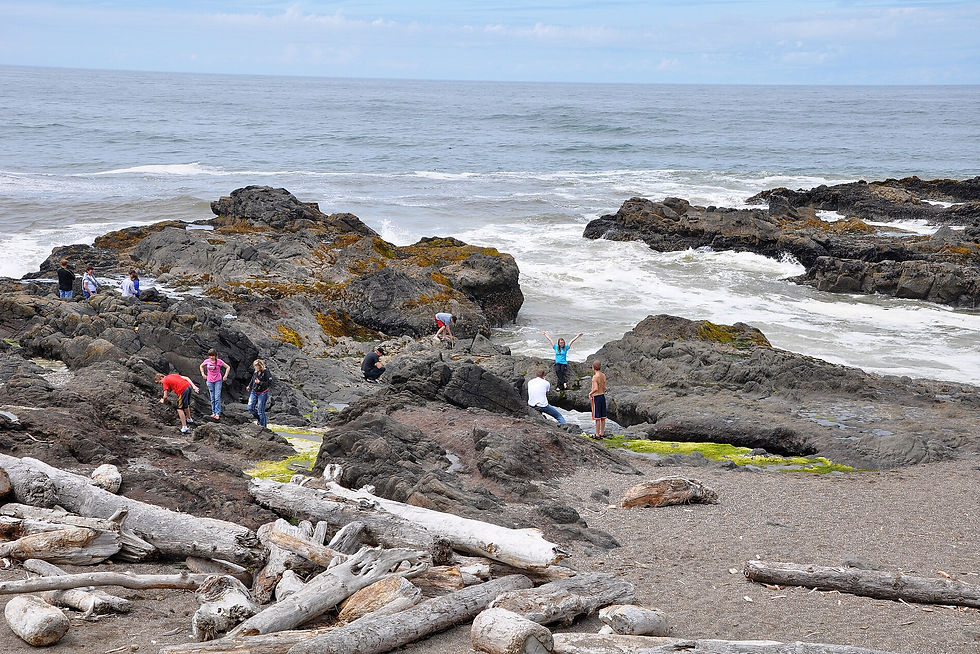
The question "what does it actually cost to start a legal short-term rental in Yachats" has a more precise answer than most towns offer, because the City of Yachats publishes its fee schedule directly rather than leaving hosts to piece it together from scattered sources. That is genuinely useful, and this post walks through exactly what the city's Vacation Rentals page lists, without inflating it with guessed costs or reusing another town's fee stack.
This is a narrower post than a full financial plan. It covers the specific, city-posted permit-and-license cost stack for operating legally inside Yachats city limits. It does not cover insurance premiums, furnishing budgets, or purchase-price financing — those are either outside this post's scope, covered elsewhere in this cluster, or simply not something this desk invents numbers for without a verified source.
Every fee listed here should be reconfirmed directly with the city before being used in a real budget. Municipal fee schedules change, and this post reflects what the city's own page showed at the time of this research. This is not legal advice.
The waitlist and application fee: $25
Getting onto the City of Yachats's vacation-rental license waitlist starts with a nonrefundable $25 processing fee, as posted on the city's Vacation Rentals page. This is the entry cost simply to be considered for a license under the citywide cap — it does not guarantee a license will become available on any particular timeline, since the city's own reporting describes an active waitlist tied to a hard cap of 125 total citywide licenses.
Because this fee is nonrefundable, it makes sense to confirm a property's basic eligibility — jurisdiction (inside city limits, not unincorporated county), and general suitability for the license type sought — before submitting it, rather than treating the application as a low-stakes first step to figure things out along the way. This cluster's rules post covers the jurisdiction question in more depth.
Inspection fees: $100 initial, $50 for additional visits, $50 for renewals
The city's posted fee schedule lists a $100 fee for the initial property inspection required as part of the licensing process, with an additional $50 charged for any subsequent inspection visits beyond the first — relevant if a property does not pass on the first inspection and requires a follow-up visit after corrections. Subsequent-year inspections, required for annual license renewal, are listed at $50 each.
A host budgeting for this should build in some contingency for the possibility of a second inspection visit rather than assuming the property will pass on the first attempt. A property that needs minor corrections before passing — a missing smoke detector, an unclear egress path — adds that additional $50 to the total startup cost, on top of the delay in timeline while corrections are made.
Scheduling the initial inspection with enough lead time before a planned launch date also matters. A host aiming to start hosting by a specific peak-season date should build in buffer for a possible re-inspection cycle rather than scheduling the first inspection right up against the intended launch — a delay here costs lost booking revenue in addition to the $50 fee itself.
Annual license fees: $200 to $350, scaled by bedroom count
The city's posted annual license fee scales by bedroom count: $200 for properties with two bedrooms or fewer, $250 for three bedrooms, $300 for four bedrooms, and $350 for five-plus bedrooms — with the five-plus tier specifically noted as grandfathered only, meaning it applies to existing licensed properties at that size rather than being available for a new application at five-plus bedrooms.
This is an annual, recurring cost, not a one-time fee — a host should budget for it every year the license remains active, alongside the $50 annual renewal inspection fee, bringing the total recurring annual cost to somewhere in the $250 to $400 range depending on bedroom count, before accounting for the lodging tax covered separately below.
The 9 percent lodging tax: a revenue-scaled cost, not a flat fee
Separate from the license fee structure, reporting describes the city collecting a 9 percent transient lodging tax on short-term rental stays. Unlike the license and inspection fees, which are fixed regardless of how much revenue a property generates, this cost scales directly with booking revenue — a slow month generates a smaller tax remittance, a strong month generates a larger one.
This is not a cost to budget as a flat annual line item the way the license fee is. It is a percentage that should be factored into a property's actual pricing and revenue-planning model, alongside whatever platform fees a host is already accounting for. This post does not walk through the mechanics of remittance filing or frequency — that is a compliance detail to confirm directly with the city's finance office, not something to infer from a blog post. This is not legal advice.
What this post deliberately does not include
This cost stack intentionally excludes insurance premiums. Short-term rental insurance costs vary significantly based on property value, coverage type, and carrier, and this desk does not guess a specific premium figure without a verified current quote — a host should get that number directly from an insurance provider rather than from a generic industry estimate presented here as fact.
It also excludes furnishing and setup costs, since those vary enormously based on a host's existing property condition and design choices, and reusing a generic "typical furnishing budget" figure from another town's cost-of-entry post would not be an honest representation of what a specific Yachats property actually needs. And it does not address financing or purchase-price costs at all — that is a separate topic covered, at the host-education level only, in this cluster's financing post.
The reason for this narrower scope is straightforward: guessing numbers in categories where this desk does not have a verified, current source produces a cost stack that looks complete but is actually unreliable in exactly the places a host most needs accuracy. A shorter, verified cost stack is more useful than a longer, partly-guessed one.
For the categories this post excludes, the practical next step is straightforward: get an actual insurance quote from a carrier familiar with short-term rental coverage in coastal Oregon, and build a furnishing budget based on the specific property's current condition rather than a generic average. Both of those numbers will vary enough property to property that a single figure in this post would mislead more hosts than it would help.
Plugging in a host's own trailing twelve
For a host already operating, or evaluating an existing Yachats property with trailing revenue history, the more useful exercise is plugging that property's own actual numbers into these same categories rather than relying on a market-wide aggregator average for revenue while using the city's fixed fee schedule for costs. The fixed costs — license, inspection, waitlist fee — are the same regardless of a specific property's revenue performance. The scaled cost — the 9 percent lodging tax — should be calculated against that property's own actual or projected revenue, not a market average that may not reflect the specific property's performance.
This matters especially in a market sitting right at this desk's $45,000 revenue threshold this year. A host underwriting startup costs against an optimistic, market-average revenue figure risks understating the real cost-to-revenue ratio if their specific property underperforms that average — which is a real possibility in a market with meaningful spread between its own data sources, as covered in this cluster's market report.
A conservative approach runs the lodging-tax line against the lower of the available revenue estimates rather than the higher one, so the resulting cost-to-revenue picture holds up even if the property's actual performance lands on the softer end of what the data shows. That habit — underwriting against the more conservative figure rather than the most optimistic one — is worth applying across every cost category in this post, not just the tax line.
Sequencing: what to confirm before spending anything
Given the citywide 125-license cap and active waitlist, the most financially responsible sequence for a prospective Yachats host is to confirm current waitlist status and realistic timeline with the city directly before spending on furnishing, marketing setup, or anything beyond the initial application itself. Spending significantly on a property's marketing readiness before confirming a license is even obtainable within a reasonable timeframe risks tying up capital in a property that cannot legally operate as a short-term rental on the timeline originally planned.
This is not legal advice, and the specific sequencing decision for any individual property should be made in consultation with the city's licensing office directly, alongside a real estate professional and, where relevant, legal counsel familiar with Oregon coastal municipal code.
A simple year-one cost worksheet
Putting the confirmed figures together into a rough year-one framework: a $25 waitlist application fee, a $100 initial inspection (plus a possible $50 if a second visit is needed), and a first-year license fee between $200 and $350 depending on bedroom count. That totals somewhere between roughly $475 and $675 for a straightforward first-year approval with no complications, before the 9 percent lodging tax on actual revenue and before anything not covered in this post — insurance, furnishing, platform fees, cleaning.
This worksheet is intentionally narrow. It answers one specific question — what does the city's own licensing process cost — clearly and with sourced figures, rather than trying to answer the much broader "what does it cost to start an STR in Yachats" question with guessed numbers padded in around a genuinely reliable core. A host building a complete budget should treat this section as one confirmed input among several, not the whole picture.
It's worth restating that this range covers only the licensing side of getting started. A realistic total startup budget for a Yachats short-term rental will run well beyond this figure once insurance, furnishing, and any property improvements needed to pass inspection are added — this worksheet is a floor, not a ceiling.
Year two and beyond: the recurring cost floor
Once a license is active, the recurring annual cost floor — separate from lodging tax, which scales with revenue — is the $50 renewal inspection plus the annual license fee itself, landing between $250 and $400 a year depending on bedroom count. This is a relatively modest fixed cost compared to most other operating expenses a host will carry, such as cleaning, platform fees, and maintenance, but it is a cost that recurs every year the license stays active and should be planned for as a permanent line item, not a one-time startup expense that disappears after year one.
A host who lets a renewal lapse — by missing the inspection window or the fee deadline — risks losing an active license in a market with a hard citywide cap and a waitlist behind it. Treating this renewal as a calendared, non-negotiable annual task protects a license that, given the cap, could be genuinely difficult to reobtain once lost.
Related Reading
More What It Actually Costs to Start a Legal Yachats STR host reading on desks, calendars, and listing clarity.
Frequently Asked Questions
What is the total cost to apply for a Yachats vacation rental license?
As posted on the city's Vacation Rentals page at the time of this research: a $25 nonrefundable processing fee to join the waitlist, plus a $100 initial inspection fee once the application moves forward. These figures should be reconfirmed directly with the city before budgeting, as municipal fees change.
Does the Yachats license fee vary by property size?
Yes. The annual license fee scales by bedroom count: $200 for two bedrooms or fewer, $250 for three, $300 for four, and $350 for five-plus (grandfathered properties only, not available for new applications at that size).
Is the Yachats vacation rental license a one-time fee or an annual cost?
It's an annual, recurring fee, not a one-time payment. Budget for the license fee plus a $50 annual renewal inspection fee every year the license remains active.
What happens if my property fails its first Yachats vacation rental inspection?
An additional $50 fee applies for any inspection visit beyond the first. Building in contingency time and budget for a possible second visit is reasonable if a property needs corrections before passing.
How much is Yachats's transient lodging tax?
Reporting describes a 9 percent rate, collected on booking revenue rather than as a flat fee. This should be factored into pricing and revenue planning rather than budgeted as a fixed annual cost, since it scales with actual bookings.
Does this cost breakdown include insurance for a Yachats short-term rental?
No. Insurance premiums vary too much by property value, coverage type, and carrier to responsibly estimate without a current quote. Get a specific figure directly from an insurance provider rather than relying on a generic industry estimate.
Does this cost breakdown include furnishing or setup costs?
No. Furnishing costs vary enormously based on a property's existing condition and a host's design choices, and this desk does not reuse a generic figure from another town's cost post as if it applied universally to Yachats properties.
Should I spend on marketing and furnishing before confirming my Yachats license status?
Given the citywide 125-license cap and active waitlist, confirming realistic license timing with the city first is the more financially responsible sequence, before committing significant capital to marketing or furnishing a property that may not be able to legally operate as planned right away.
What's the difference between the license fee and the lodging tax?
The license fee (and its associated inspection fees) is a fixed annual cost regardless of how much revenue the property generates. The 9 percent lodging tax scales directly with actual booking revenue — more bookings, more tax owed; fewer bookings, less owed.
Where can I confirm the current, official Yachats vacation rental fee schedule?
The City of Yachats's own Vacation Rentals page at yachatsoregon.org is the authoritative current source. This post reflects what that page showed at the time of research, and figures should be reconfirmed directly before finalizing any budget. This is not legal or financial advice.
Work with Crest & Cove Creative
Budgeting from a guessed or borrowed fee schedule instead of Yachats's own posted costs can leave a new host short when the actual invoice arrives. Name the failure mode the guest can check on the listing.
A free marketing audit helps you plan your Yachats listing launch around real numbers, not guesswork. Request yours to get started. Send the live listing draft and the facts you can actually cite.
Reach out at crestcove.co or (256) 998-7502.


Comments