
Who Books a Bayfield Rental: Minneapolis Guests, August Peak

Updated: Aug 27
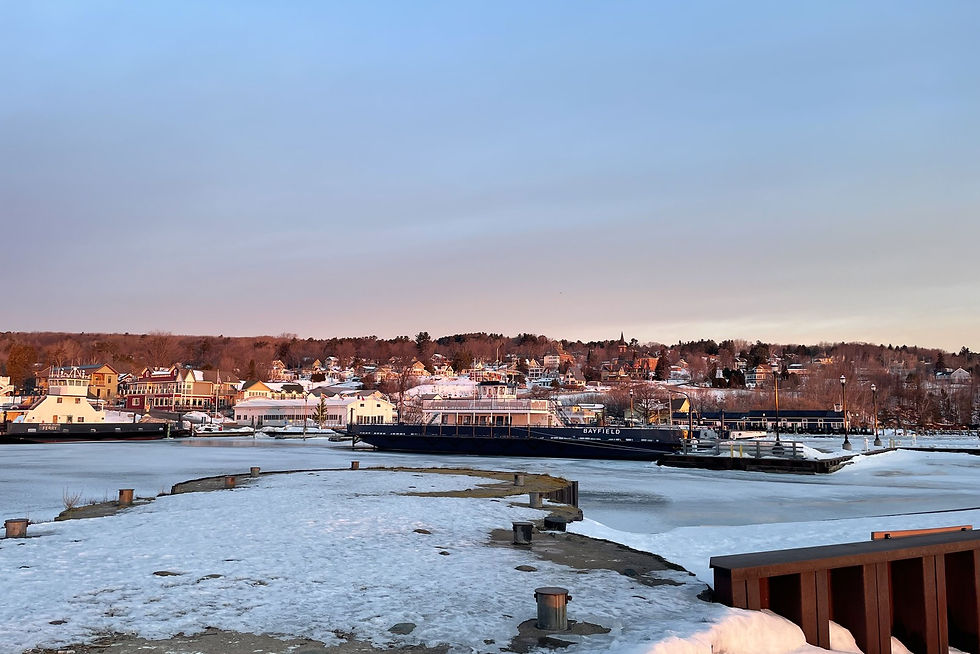
Bayfield sits on the mainland shore of Lake Superior, and the guest who searches for it specifically is not looking for the ferry-access island town of La Pointe on Madeline Island, even though the two share a harbor view and a common origin city. The City of Bayfield is also a distinct municipality from the surrounding Town of Bayfield, a distinction that matters for permitting even when it doesn't matter to a guest choosing where to book.
The City of Bayfield published a typical year of $24,688 across 135 listings, with an average daily rate of $270 and 36.8 percent occupancy. The peak-three months are August, July, and September, in that order, with March as the softest month. Stay length averages 2.9 nights on an 89-day lead time, and the top guest origin is Minneapolis, with Madison a clear second. La Pointe, across the ferry channel, published its own separate year of $18,625 on 38 listings with a different peak-three and a different hole month.
This post also covers Bayfield's short-term rental permit and zoning requirements. This is not legal advice; confirm current fees, deadlines, and zoning rules directly with Bayfield City Desk before listing or renewing a property.
August Leads the Peak-Three
August is the top month on the City of Bayfield's published year, ahead of both July and September, and the $270 ADR and 36.8 percent occupancy figures already reflect August carrying the largest share of annual revenue. A host pricing August like a generic Wisconsin summer month, without recognizing it as this specific harbor's strongest month, is underpricing the calendar's biggest earner.
La Pointe also peaks in August, which is a genuine coincidence worth naming rather than treating as evidence the two towns share a single calendar. La Pointe's own peak-three runs August, July, and June, different from Bayfield's August, July, September order, meaning a guest booking August here is not a stand-in for an island guest; they're booking this specific mainland harbor on its own terms.
Photograph August the way it actually looks from the specific driveway: late-summer light on the harbor, the ferry dock if that's genuinely within walking distance, and the actual house being rented. A 2.9-night stay booked 89 days out doesn't leave a guest much room to discover the photos oversold the walk to the water.
September Earns Its Place on the Peak-Three
September sits third on Bayfield's own peak-three, which makes it a genuine money month on this town's calendar, not a discount-worthy shoulder season easing toward winter. A host pricing September at a markdown because a nearby peninsula market treats fall as soft is pricing against this town's own extract, not with it.
La Pointe's peak-three skips September entirely in favor of June, which underscores that the two towns' calendars genuinely diverge past their shared August peak. A September guest who typed Bayfield specifically is not a leftover from a different island calendar; they're booking this mainland harbor's own third-strongest month.
Early-fall dock light looks different from late-summer light, and the gallery should reflect that difference honestly for guests comparing a September booking against an August one. The Apple Festival, held October 2 through 4 in 2026, falls after this peak-three window entirely; it's a real weekend of visitor demand, but it belongs after the money months, not folded into them.
Minneapolis Leads Origin, Madison Is a Real Second
Minneapolis is the top guest origin for City of Bayfield listings, and Madison is a clear second, which tells a host who is making the drive north, not what they're booking once they arrive. A Minneapolis-origin guest making this trip has chosen a specific mainland harbor town over closer lake options, and the copy should read like a genuine northern getaway rather than an extension of the Twin Cities.
La Pointe's own top origin is also Minneapolis, a coincidence that reflects the regional draw of the whole Chequamegon Bay area rather than any overlap between the two towns' actual products. A Minneapolis guest booking Bayfield and a Minneapolis guest booking La Pointe are choosing two different experiences, mainland harbor versus ferry-access island, even though they started the search from the same metro area.
Madison guests follow the same seasonal calendar as Minneapolis guests once they arrive: August as peak, September on the peak-three, March as the hole. Origin explains who's searching; it doesn't rewrite when they should book or what they should pay.
La Pointe and Madeline Island Are a Separate, Ferry-Access Town
La Pointe published its own year of $18,625 on 38 listings, with a 3.5-night average stay and January, not March, as its softest month. Reaching La Pointe requires a ferry crossing from the Bayfield mainland, a genuinely different guest experience from booking a mainland harbor house within walking distance of downtown Bayfield.
Entire-home listings make up 97.4 percent of the La Pointe sample, a notably higher share than Bayfield's own 57.0 percent, reflecting the island's more residential, less hotel-and-boutique-heavy housing stock. A guest choosing between the two towns is often choosing between a mainland harbor room and an island house, not two versions of the same product.
A Bayfield listing should never borrow La Pointe's $18,625 figure, and a La Pointe listing should never borrow Bayfield's $24,688. The ferry crossing is worth mentioning as a day-trip option for guests staying on either side, but it is not a reason to blend the two published years or the two guest profiles into one file.
City of Bayfield and Town of Bayfield: Confirm the Jurisdiction First
The City of Bayfield and the surrounding Town of Bayfield are two distinct municipal jurisdictions, and a host should confirm which one a specific parcel falls under before publishing permit or zoning claims. This is not legal advice; call the relevant office directly rather than assuming based on a mailing address, since the two jurisdictions can have different permitting processes even for properties that feel close together on a map.
For properties within the City of Bayfield, City Desk at 34 South Broad Street, reachable at (715) 779-5712, handles short-term rental permitting. The published permit fee is $750, with permits expiring June 30 each year, meaning a host needs to track the renewal date actively rather than assuming a permit carries over automatically. County Health, reachable at (715) 373-6109, is a separate desk worth confirming requirements with as well.
Residential zoning in the R-1 and R-2 districts within the City of Bayfield typically carries a seven-day minimum stay requirement, and a local room tax of 8 percent applies to short-term stays. Occupant caps generally follow Wisconsin's ATCP 72 lodging rules. All of these figures can change, and this post is not a substitute for confirming current requirements directly with City Desk before setting a listing's minimum-night policy or advertising availability.
One-Bedroom Is the Common House Size, Not the Only One
One-bedroom listings make up 54.8 percent of the City of Bayfield market, the single most common configuration, with capacity for two guests being the most common capacity setting at 32.6 percent. Hotel and boutique-style listings hold a substantial 42.2 percent share here, notably higher than the 19.3 percent that are houses, which points toward a market genuinely built around smaller, couple-oriented stays rather than large group houses.
That mix is different enough from La Pointe's 97.4 percent entire-home share that a listing borrowing island-style marketing, large-house, group-oriented copy, for a Bayfield one-bedroom would misrepresent the actual unit. A couple booking a Bayfield one-bedroom for a 2.9-night harbor stay has different expectations than a family booking a multi-bedroom La Pointe house for a longer island stay.
Professionally managed listings hold roughly 48.9 percent of the Bayfield market, split among several management companies rather than concentrated under one dominant operator, which means an independent host competing here is up against a genuinely fragmented professional-management presence rather than one runaway competitor.
A fragmented management landscape also means no single operator's photography or pricing style dominates search results, which leaves genuine room for an independent host to differentiate on specific, honest detail: the actual harbor view, the actual walk time downtown, the actual bed count. That kind of specificity tends to outcompete a template listing even when the template belongs to a larger management company with more listings overall.
Photograph the Harbor the Driveway Actually Reaches
The gallery should show whatever the specific driveway can actually reach on foot: the ferry dock if it's genuinely walkable, the downtown harbor, or the specific house and room being rented. A La Pointe beach photo or a Door County bluff shot, both of which get borrowed into Bayfield listings more often than hosts might expect, misrepresent a mainland harbor stay that has neither.
Match the season to the booking: August light for August guests, early-fall dock light for September guests, and honest interior photos of the house in March if a listing is genuinely trying to sell the hole month. A 2.9-night stay doesn't give a guest much time to discover a seasonal mismatch between the photos and the actual arrival experience.
Match capacity in the photos too. If the listing is a one-bedroom, show one bedroom; a gallery that implies a larger house than what's actually being rented creates the same kind of arrival-day mismatch as a wrong-season or wrong-town photo does.
Minimum-Night Settings on this market
Thirty-plus nights is actually the single most common minimum-night setting across City of Bayfield listings, at 44.4 percent, ahead of a two-night minimum at 31.1 percent. That's a wider split than the town's 2.9-night average stay might suggest on its own: a meaningful share of listings are positioned for extended or workation-style bookings even though the typical guest who actually books is arriving for a short harbor visit, not a month-long stay.
A host running a short-stay one-bedroom shouldn't read that 44.4 percent thirty-plus share as evidence extended stays are the dominant demand here; it's a booking-rule choice a large share of listings have made, not proof of how many nights are actually being filled that way. The 2.9-night average and the 89-day lead time describe how the typical guest actually books, regardless of what minimum a competing listing has set.
For a host deciding which minimum to set, the honest read is that both short-stay and extended-stay positioning coexist on this parcel without one clearly dominating occupancy outcomes. Setting a two-night minimum keeps a listing eligible for the shorter, more common August and September harbor bookings that make up the bulk of what guests who typed Bayfield are actually searching for.
A one-bedroom listing built for a Minneapolis-origin couple's short harbor visit gains little from adopting a thirty-plus night minimum just because a large share of the neighboring supply has set one. Match the minimum to the actual guest the house is built for, and let the 2.9-night average, not the competing supply's booking rules, guide that decision.
Lead time reinforces the same point. At 89 days, a typical Bayfield guest is planning well ahead of arrival, which gives a host real room to adjust a short-stay listing's calendar and pricing before the peak August and September weekends fill, rather than reacting to last-minute demand the extended-stay segment doesn't generate in the same way.
Who the Bayfield Listing Actually Fits
The guest this City of Bayfield parcel fits is a Minneapolis-origin traveler, with Madison as a real second-origin possibility, booking roughly 89 days ahead for a short harbor stay just under three nights, most often in a one-bedroom or a room built for two. They're arriving in August, July, or September, and they're not looking for a ferry crossing to La Pointe or a substitute in the surrounding township.
March remains the softest month here, and the published year moved roughly 5.5 percent lower on a recent watch-year comparison, which is worth factoring honestly into pricing rather than assuming flat demand. The Apple Festival weekend in early October is real visitor demand worth mentioning, but it sits after the peak-three and shouldn't be marketed as part of it.
Keep La Pointe's $18,625 on its own line, confirm City of Bayfield versus Town of Bayfield jurisdiction before publishing any permit claim, and keep this town's own $24,688 as the only figure this specific listing quotes. A guest who typed Bayfield into a search bar is easy to serve well once the copy stops trying to double as an island listing too.
Every figure in this post traces back to the same mainland harbor market: City of Bayfield specifically, not the township, not the island across the ferry channel. A host who keeps that line straight in the listing description, the photo captions, and the permit paperwork on file will spend less time untangling a mismatch after a guest, a neighbor, or a code-enforcement officer notices.
A Minneapolis-origin guest comparing a Bayfield harbor listing against a La Pointe island listing is comparing two genuinely different trips, not two versions of the same one. The host who names that difference clearly, in the copy, the photos, and the permit status, is the one that guest books with confidence.
Related Reading
More Bayfield, Wisconsin reading already live on Crest & Cove.
Frequently Asked Questions
Who actually books a City of Bayfield rental?
Most guests originate from Minneapolis, with Madison as a strong second origin, arriving in August, July, or September for a short harbor stay just under three nights on roughly an 89-day lead time. They're typically booking a one-bedroom or a room built for two, and they chose this mainland harbor town over a ferry crossing to La Pointe.
Is August really the strongest month to price aggressively?
Yes. August leads the peak-three ahead of both July and September, and the $270 ADR and 36.8 percent occupancy figures already reflect August carrying the largest share of the year. La Pointe also peaks in August, but its own peak-three otherwise diverges from Bayfield's, so don't borrow island pricing habits for this mainland market.
Should September be priced as a slower shoulder month?
No, not on Bayfield's own calendar. September sits third on the peak-three here, earning its place as a real money month rather than trailing off as fall approaches. La Pointe's peak-three skips September for June instead, so this town's September strength is its own, not borrowed from a neighbor.
Is La Pointe the same market as Bayfield?
No. La Pointe published its own year of $18,625 on 38 listings, requires a ferry crossing to reach, and runs a different peak-three (August, July, June) and a different soft month (January instead of March). Its housing stock is also more heavily entire-home, at 97.4 percent, than Bayfield's own 57.0 percent.
What's the difference between City of Bayfield and Town of Bayfield?
They're two separate municipal jurisdictions. This is not legal advice; confirm which one a specific parcel falls under directly with the relevant office before publishing permit or zoning details, since permitting processes can differ even for nearby addresses.
What does short-term rental permitting cost in the City of Bayfield?
The published permit fee is $750, with permits expiring June 30 each year, through City Hall at 34 South Broad Street, (715) 779-5712. This is not legal advice, and fees or renewal dates can change; confirm current requirements directly with City Hall before listing or renewing.
Is there a minimum-stay rule in Bayfield?
Residential zoning in the R-1 and R-2 districts typically carries a seven-day minimum stay requirement, and this is not legal advice, so confirm current zoning rules for a specific parcel with City Hall directly. A local room tax of 8 percent also applies to short-term stays here.
What size unit should I expect to compete with in Bayfield?
One-bedroom is the most common configuration, at 54.8 percent of listings, with capacity for two guests as the most common capacity setting. Hotel and boutique-style listings make up 42.2 percent of the market, notably more than the 19.3 percent that are houses, pointing toward a couple-oriented market rather than a large-group one.
Should I mention the Apple Festival in my Bayfield listing?
You can, but frame it accurately: the 2026 festival runs October 2 through 4, after the August-July-September peak-three, so it's a real weekend of visitor demand rather than part of the money months. Confirm hours and downtown walkability before promising festival access as part of a stay.
How should I handle occupancy caps for a Bayfield rental?
Wisconsin's ATCP 72 lodging rules are the general framework most occupant caps trace back to, but the exact number for a given unit still depends on its bedroom count and layout. This is not legal advice, so confirm the specific cap that applies to a given unit directly with City Hall or County Health at (715) 373-6109 rather than assuming from general guidance.
Work with Crest & Cove Creative
A Minneapolis guest who typed Bayfield did not mean a ferry ride to La Pointe, and they did not mean the surrounding township's permit desk. Serve the mainland harbor they actually searched for.
We help independent Bayfield hosts keep their listing copy tied to the correct harbor and the correct permit desk, from the published year down to which jurisdiction actually issued the permit. Send us the live listing if the numbers or the zoning claims might be borrowing from a neighboring town.
Reach out at crestcove.co or (256) 998-7502.


Comments