
Who Books a Charlevoix Rental: Grand Rapids Guests, August Peak

Updated: Aug 26

A guest who searches Charlevoix has already ruled out the rest of northern Michigan. They typed a specific city on a specific isthmus between two lakes, and the listing that answers them has to match that parcel, not a regional blend of harbor towns that share a highway.
City of Charlevoix listings published $28,644 on a typical year across 200 active listings, with an average daily rate of $380 and 29.8 percent occupancy. The peak-three months are August, July, and June, in that order, and March is the hole. Stay length runs 3.9 nights on a lead time of 87 days. Every one of those figures belongs to the city parcel specifically. Charlevoix Township, a separate municipality that happens to share the name, published $25,035 on 28 listings with a different peak order. Petoskey, a later market up the shoreline, published $29,658. This post keeps all three lines separate and never averages them into one Charlevoix year.
The listing copy that wins here is the one that can say which parcel line it sits on before it says anything else. This is not legal advice on zoning classification; confirm which jurisdiction a specific address falls under with the city or township clerk before advertising it either way.
August Is the Peak Month, Not a Festival Headline
August leads the City of Charlevoix year outright. It is first on the peak-three list, ahead of July and June, and the published occupancy and revenue figures already count it that way before any festival gets mentioned. A host who prices August like a generic Up North summer month is leaving the actual number on the table: $380 ADR and 29.8 percent occupancy are already built around August carrying the year, not around a single weekend inside it.
The Venetian Festival sits inside that August peak as visitor demand, not as a separate occupancy event. Guests who come to town for the parade and the fireworks are part of the same August booking pattern the published year already reflects, not a bonus month layered on top of it. A listing that treats the festival as its own selling point, apart from the ADR the season already earns, is describing a landscape feature rather than a fact about the calendar.
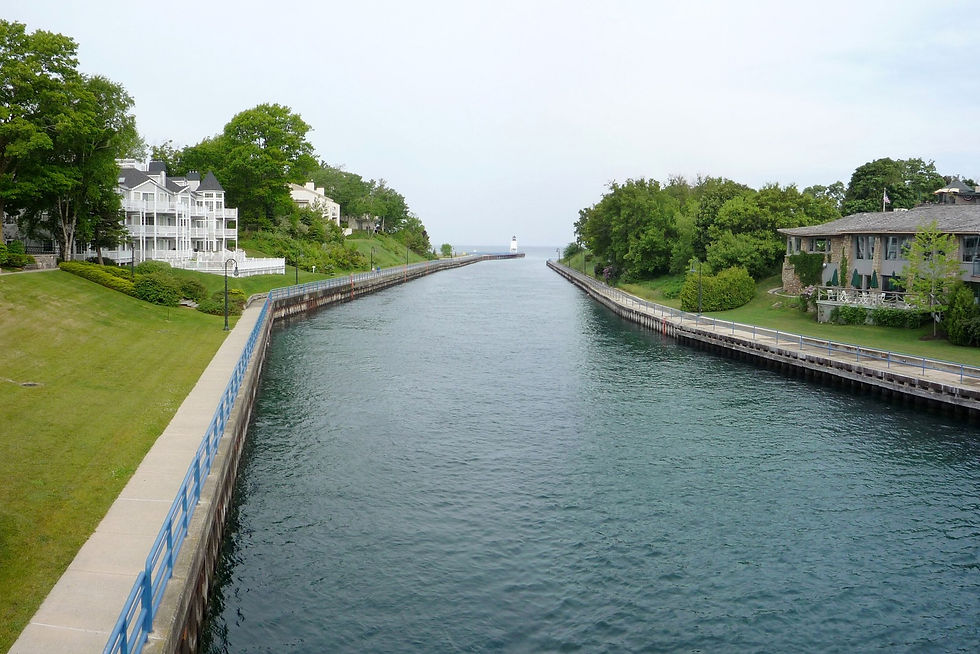
Photograph the water the way it actually looks in August: late light, boats moored on Round Lake, the channel busy in the early evening. A guest who booked a 3.9-night stay with an 87-day lead time already committed to this month specifically. Give them the season they paid for, not a stock shot that could belong to any lake town on the peninsula.
June Is a Money Month, Not a Warm-Up
June sits third on the city's peak-three list, and that placement is the point: it is not a shoulder month easing into summer, it is one of the three months the published year is actually built on. A host who prices June at a discount because July and August feel more like "real summer" is pricing against the extract, not with it.
Charlevoix Township's own peak-three runs August, July, and April, not June. That difference matters because it means a June booking on the city parcel is not a leftover from a neighboring calendar; it is this city's own money month, earned on its own listings. Confuse the two and a host ends up either underpricing June here or importing an April pricing habit that belongs to a different jurisdiction entirely.
Early-June light on the two lakes looks different from August light, and the gallery should say so. A guest who typed Charlevoix in June wants the same city the August guest wants, just earlier in the season, with the same channel view and the same downtown walk. Serve that guest the accurate month, not a placeholder photoset shot in July and relabeled.
Grand Rapids Leads the Origin List, Ann Arbor Is Second
The published guest origin for City of Charlevoix listings is Grand Rapids first, Ann Arbor second. That tells a host who is searching, not what they are buying. A Grand Rapids-origin guest is not shopping for a metro getaway with a harbor backdrop; they are making a deliberate multi-hour drive north for this isthmus specifically, and the listing copy should read like a destination, not like an extension of the departure city.
Ann Arbor's presence as the second-largest origin means the copy needs to work for two different drive times without collapsing into generic "Up North" language that could describe either trip. Neither city is the product. ADR $380, occupancy 29.8 percent, and the $28,644 published year describe 200 listings on the City of Charlevoix parcel, full stop, regardless of which university town the booking guest drove from.
Charlevoix Township's own origin scrape also shows Ann Arbor in the lead position, which is a coincidence worth naming rather than hiding. It does not mean the township and the city are the same product; it means both parcels draw from an overlapping set of downstate travelers who make similar decisions about which lake town to book. Keep the origin conversation separate from the occupancy conversation, because origin explains who searched, not what they got.
The Parcel Line: City Desk or Township Clerk
Charlevoix Township is a distinct municipality from the City of Charlevoix, and the two published years do not belong on the same tile. Township listings earned $25,035 on 28 listings against a stay length of 3.8 nights and a professionally managed share of 10.7 percent, with a peak-three of August, July, and April and low occupancy in February. None of those figures describe the city parcel. A listing that borrows the township's lower published year to seem more conservative, or borrows the city's higher one to seem more impressive, is quoting the wrong desk either way.
The practical fix is simple: confirm which parcel a specific address sits on before publishing a single stat. City of Charlevoix can be reached for zoning questions, and the township clerk's line is the one to call for anything on township land. This is not legal advice about how a specific parcel is zoned; a host should confirm classification directly with whichever office holds the record for that address, not from a blog post.
Once the parcel is confirmed, the rest of the copy follows from it. A city-parcel listing quotes $28,644, 200 listings, and August-July-June. A township-parcel listing quotes $25,035, 28 listings, and August-July-April. Neither number set travels to the other office's line, no matter how close the two addresses sit to each other on a map.
Petoskey Is a Later, Separate Market
Petoskey sits further up the shoreline and published $29,658 on its own set of listings, a number that shows up often enough in casual comparisons that it deserves its own paragraph here. Charlevoix is not Petoskey, and a guest who typed Charlevoix into a search bar chose this isthmus town specifically, not a slightly larger neighbor with its own downtown and its own market.
The failure mode is predictable: a host or a copywriter unfamiliar with the two towns pulls whichever published number looks better and pastes it onto the wrong listing. Guests who book a Charlevoix stay expecting the ADR or occupancy profile that actually belongs to Petoskey will notice the gap before the first night is over, and the review reflects it. Keep $28,644 on the Charlevoix line and $29,658 on the Petoskey line, and never let either number wander.
A comparison page exists elsewhere on this site to keep Charlevoix and Petoskey identities apart in more detail. This post's job is narrower: name the guest who typed Charlevoix, serve that guest the city's own published year, and leave Petoskey's number on Petoskey's own listings.
Six-Plus Capacity Is the Common House Size
The most common listed capacity on the City of Charlevoix parcel is six-plus guests, at 55.5 percent of active listings. Entire-home listings make up 92.5 percent of the sample, houses specifically are 52 percent, and three-plus-bedroom listings are 38.5 percent. That mix points toward family and multi-couple groups more than solo travelers or short-stay couples, and the copy should match that reality rather than describe a cottage-for-two that isn't what most of the market actually rents.
A six-plus house does not automatically fill March, and it does not automatically justify a higher rate just because it sleeps more people. The published occupancy figure, 29.8 percent, already accounts for the size mix on the parcel. A host who assumes a larger house should always outperform a smaller one on occupancy is guessing past what the extract actually shows.
Photograph the beds that are actually in the house, count the bedrooms accurately in the listing description, and let the six-plus capacity sell itself on honesty. A guest booking for an extended family trip has less patience for a capacity mismatch discovered at check-in than a solo traveler does, because more people are inconvenienced by it at once.
Photograph the Lake the Driveway Actually Reaches
Round Lake and the channel that connects it to Lake Michigan are the two water features most Charlevoix listings can credibly show, but not every address can walk to both. A listing should photograph whichever one the actual driveway reaches on foot, not whichever one looks better in a stock photo pulled from somewhere else in town. A guest with a 3.9-night stay does not have the time to discover the walk to the water is longer than the photos implied.
Late-summer light for August bookings and early-June light for June bookings are genuinely different, and a gallery that mixes them without labeling the season misleads a guest who is choosing between the two. If the same house is marketed for both months, take both sets of photos rather than reusing one season's images for the other's listing.
A Petoskey pier or a township lot does not belong in a City of Charlevoix gallery under any circumstance, even if the two properties are a short drive apart. The guest who typed Charlevoix chose this specific parcel; showing them water or streetscape from a different municipality is the fastest way to generate a mismatched-listing complaint before the first review is even written.
Booking Window and Minimum-Night Settings
The 87-day lead time on City of Charlevoix listings is long enough that a host has real room to adjust pricing before a peak-month weekend fills, rather than reacting to last-minute demand alone. A one-night minimum is the single most common setting on this parcel, at 39.5 percent of listings, which fits the 3.9-night average stay: guests are largely booking short, specific windows rather than open-ended weeks.
Roughly 36 percent of listings, 72 of the 200 on this parcel, set a thirty-plus night minimum, a meaningfully different booking posture aimed at extended or workation-style stays rather than the typical short peak-season visit. A host running a short-stay harbor listing shouldn't read that thirty-plus share as evidence of strong long-stay demand for their own unit; it describes a distinct subset of the market, not the typical guest.
RevPAR on this parcel runs $132, a figure that blends the $380 ADR against the 29.8 percent occupancy rate and gives a cleaner single number for comparing pricing strategy against the township's own $25,035 year without averaging the two markets together. Professionally managed listings hold roughly 31.5 percent of the City of Charlevoix parcel, with Northern Michigan Escapes managing 55 of the 200 listings, and superhost status sits at 62.5 percent, a genuinely high share that suggests an experienced, engaged host base already competing for the same August and June demand.
Who the Charlevoix Listing Actually Fits
The guest this City of Charlevoix parcel fits is the one who already chose this isthmus, these two lakes, and this specific channel, most often driving up from Grand Rapids or Ann Arbor, booking roughly four months ahead for a stay just under four nights. They are usually filling a house that sleeps six or more, arriving in August, July, or June, and they are not interested in a substitute township address or a Petoskey upsell.
March remains the hole on this parcel, and pricing it honestly matters more than trying to manufacture demand that the published year does not show. Year over year, the city parcel moved roughly 11.5 percent lower while supply held steady, which is worth tracking rather than ignoring when a host sets next season's rate.
Keep the township's $25,035 on its own line, keep Petoskey's $29,658 on its own line, and keep the city's own $28,644 as the only number this specific listing quotes. A guest who typed Charlevoix into a search bar is easy to serve well once the copy stops trying to be three towns at once.
Every fact in this post traces back to the same parcel line: the City of Charlevoix market specifically, not a regional blend of the isthmus, the township, and the shoreline further north. A host who keeps that line straight in the listing description, the photo captions, and the FAQ they answer for guests will spend less time explaining a mismatch after the fact.
Related Reading
More Charlevoix, Michigan reading already live on Crest & Cove.
Frequently Asked Questions
Who actually books a City of Charlevoix rental?
Most bookings come from Grand Rapids, with Ann Arbor as a strong second origin, arriving in August, July, or June for a stay just under four nights on roughly an 87-day lead time. They chose this isthmus specifically, not a substitute in Petoskey or the township, and the published year of $28,644 on 200 listings describes exactly that guest, not a blended northern Michigan average.
Is August really the best month to price aggressively?
Yes. August leads the peak-three list ahead of July and June, and the $380 ADR and 29.8 percent occupancy figures already reflect August carrying the year. The Venetian Festival adds visitor traffic inside that same window rather than creating a separate demand spike, so treat August as the anchor month rather than pricing around a single festival weekend.
Should June be priced lower than July and August?
Not on this parcel. June sits third on the city's own peak-three list, which makes it a genuine money month rather than a shoulder-season discount candidate. Charlevoix Township's peak-three runs August, July, and April instead of June, so don't borrow a township pricing habit here; this city's June demand is earned on its own listings.
Is Charlevoix Township the same market as the City of Charlevoix?
No. They are separate municipalities with separate published years: the township earned $25,035 on 28 listings against the city's $28,644 on 200 listings, with different peak-three months and a lower professionally managed share on the township side. Confirm which parcel a specific address sits on with the relevant clerk before quoting either number.
Can I use Petoskey's numbers if my listing is close to Petoskey?
No. Petoskey is a separate, later market that published $29,658, and it should never appear on a Charlevoix listing regardless of driving proximity. A guest who typed Charlevoix chose this town specifically; showing them Petoskey's numbers, photos, or amenities creates a mismatch they will notice fast.
What size house should I expect to compete with?
Six-plus guest capacity is the most common size on this parcel, at 55.5 percent of listings, with entire homes making up 92.5 percent of the sample. If a listing sleeps fewer, that's still a real niche, but the bulk of demand and competition sits in the larger-house bracket, so price and photograph accordingly rather than assuming a smaller unit competes head-to-head with the majority.
Which photos actually convert for this town?
Whichever water the specific driveway can reach on foot, photographed in the season being marketed. Round Lake suits a harbor walk; the channel suits a boat-traffic view. Mixing seasons or borrowing shots from a Petoskey pier or a township lot both create the same problem: a guest arrives to a stay that doesn't match what the gallery promised.
Is zoning between city and township something I should confirm before listing?
Yes, and this is not legal advice on how a specific parcel is classified. Confirm zoning and permit status directly with the City of Charlevoix or the township clerk's office, since the two jurisdictions have different rules and different published market data. A blog post can tell you the two markets are separate; only the relevant clerk's office can tell you which one a specific address belongs to.
How should I think about year-over-year performance here?
The city parcel moved roughly 11.5 percent lower year over year while listing supply held steady, which is worth factoring into next season's pricing rather than assuming flat demand. Track it against the published $28,644 baseline rather than a gut feeling about how the summer felt on the ground.
Work with Crest & Cove Creative
A Grand Rapids guest who typed Charlevoix into a search bar did not mean Petoskey, and they did not mean the township down the road. Serve the isthmus they actually searched for.
We help independent Charlevoix hosts keep their listing copy on the correct parcel line, from the published year down to which lake the gallery actually shows. Send us the live listing if the numbers or the photos might be borrowing from a neighboring town.
Reach out at crestcove.co or (256) 998-7502.


Comments