
Charlevoix DSCR Financing: Price This City's Own Year

Updated: Aug 27
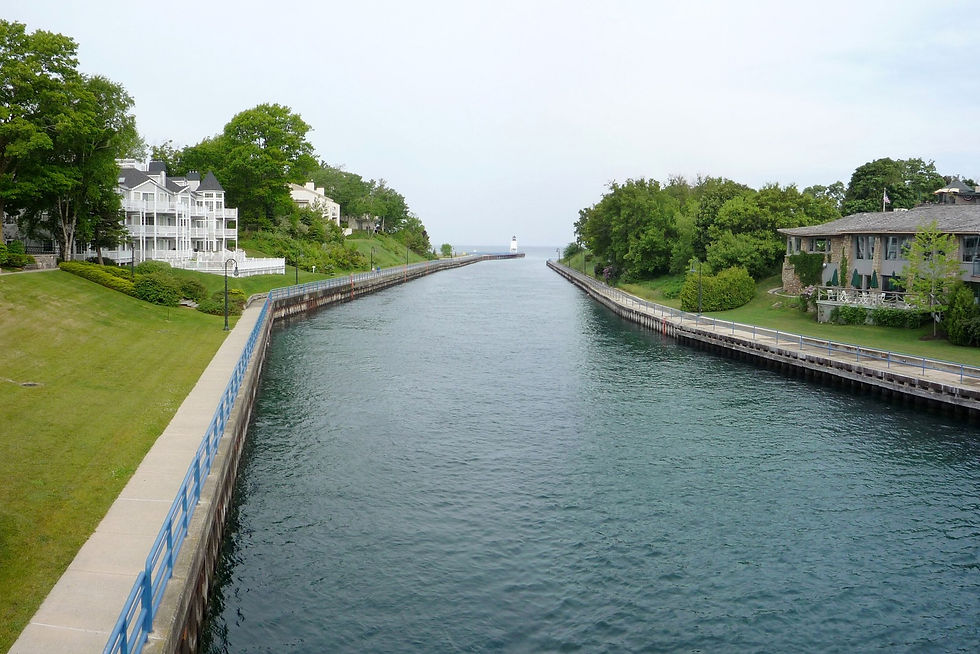
Charlevoix, Michigan sits on the isthmus between Round Lake and Lake Michigan, and its short-term rental numbers get borrowed more often than they get read. A lender packet built for a City of Charlevoix parcel has been known to arrive carrying Petoskey's revenue figure, or a blended number that splits the difference between the city and Charlevoix Township as if the two were one market. They are not. They sit under different halls, they print different occupancy, and they moved in opposite directions this year.
AirROI's extract for the City of Charlevoix, vintage August 2025 through July 2026, prints a typical year of $28,644 across 200 active listings, with an average daily rate of $380, occupancy of 29.8 percent, and RevPAR of $132. That is the number that belongs in a DSCR file for a city parcel. Charlevoix Township, a separate municipality with its own zoning and its own extract, prints $25,035 on 28 listings. Petoskey, a stronger neighboring market up the shore, prints $29,658. None of the three should be averaged into either of the other two.
This page does not build a coverage ratio, guess a purchase price, or guess a vacancy assumption. It names the published city year, keeps the township and Petoskey numbers on their own labeled lines, and lays out the zoning desk a lender or buyer would actually need to confirm before underwriting a Charlevoix short-term rental. This is not legal or financial advice, and it is not a substitute for a licensed lender's own underwriting process. This is not legal advice.
Start the File on $28,644, Not a Blend
A DSCR file for a City of Charlevoix address starts with the year that address actually sits inside. That year is $28,644 across 200 listings, drawn from the August 2025 through July 2026 AirROI window. August is the single busiest month, with July and June rounding out the peak three. March is the softest month on the calendar, and any vacancy haircut a lender applies should name March specifically rather than spreading a generic slow season evenly across the winter.
The composition behind that number matters for underwriting as much as the headline figure does. Average stay length on the sample is 3.9 nights, booked about 87 days ahead. Grand Rapids is the leading origin market, with Ann Arbor second. About 31.5 percent of the sample carries professional management, and one operator, Northern Michigan Escapes, manages 55 of the 200 listings — meaningful concentration for anyone trying to gauge how much of this market runs on owner-operators versus a handful of larger management companies.
None of that composition detail changes the $28,644 figure. It explains who is earning it and how the sample behaves, which is useful context for a lender deciding how much confidence to put in a typical-year number versus asking for the specific address's own trailing twelve months.
Why the Township's $25,035 Doesn't Transfer
Charlevoix Township is a separate, unincorporated jurisdiction that happens to share a name and a border with the city. Its extract prints a typical year of $25,035 across 28 listings, with 36.8 percent occupancy — higher occupancy than the city's 29.8 percent, on a much smaller sample. The township's peak three months are August, July, and April rather than the city's August, July, June, and its softest month is February rather than the city's March.
The township also moved differently over the past year. Its revenue is down 37.9 percent year over year, a far steeper decline than the city's 11.5 percent drop. Blending the two into a single 'Charlevoix area' number — a move that shows up often enough in casual packets — produces a figure that describes neither market accurately and obscures the fact that the township is currently the weaker of the two by a wide margin.
The fix is procedural, not analytical: confirm which jurisdiction the parcel actually sits in before pulling a number. A county tax map or the city clerk's office settles it in a phone call. Once that's confirmed, cite only the matching market — city numbers for a city parcel, township numbers for a township parcel — and leave the other one out of the ratio entirely.
Petoskey's $29,658 Is a Stronger Neighbor, Not This Town
Petoskey sits up the shore and publishes its own extract showing a typical year of $29,658 — roughly $1,000 higher than Charlevoix's city figure. It's an understandable number to reach for, since it makes a Charlevoix file look marginally stronger, but Petoskey is a separate market with its own listing base, its own tourism draw, and its own zoning desk. Using it in place of, or blended with, Charlevoix's own $28,644 overstates what a Charlevoix parcel is actually likely to earn.
The honest way to use Petoskey's figure in a packet is as clearly labeled regional context — a sentence noting that a comparable nearby market runs somewhat higher — never folded into the working number a lender will use to size debt service. A note that needs Petoskey's number to pencil is a note that isn't ready on Charlevoix's own numbers.
A Year Down 11.5 Percent, With Supply Holding Steady
City of Charlevoix revenue moved down 11.5 percent year over year on this 200-listing sample, even as active supply held roughly steady over the same window. That combination — flat listing count, declining typical revenue — is worth flagging plainly in a lender packet rather than burying behind the headline $28,644 figure. It reads as a softening market on a stable supply base, not a market getting flooded with new competition.
One year of movement on one vintage isn't proof of a multi-year trend, and this page won't claim it is. What it can say is that a packet presenting $28,644 as a number that's rising, without disclosing the 11.5 percent decline sitting behind it, is misrepresenting the trajectory a lender is actually underwriting. Put the direction in the file next to the number.
Zoning, Licensing, and the City's Own Ordinance
This is not legal advice, and nothing here should be read as a substitute for confirming current requirements directly with the City of Charlevoix. City zoning questions go to the zoning office at (231) 547-3265. Ordinance 860 of 2025 governs short-term rental licensing inside city limits: an annual license runs $300 with inspection, $150 without inspection, and the ordinance gives the city 30 days to accept or respond to a completed application. A waitlist deposit of $50 applies where caps are in effect, since the ordinance sets caps that vary by residential zone, and a violation carries a $100 penalty.
None of that licensing detail changes the revenue figure. It changes whether the use is legal to attempt in the first place, which is a separate question a lender or buyer should confirm before underwriting rests on the assumption that a short-term rental can legally operate at the address at all. Michigan's use tax applies at 6 percent on stays under thirty days — a remittance obligation, not a factor in occupancy or ADR, but a line an underwriter will likely ask about regardless.
Visitor Demand Isn't a Line on the Debt-Service Sheet
Charlevoix draws real visitor traffic — Venetian Festival week sits inside August, already the market's peak month, and the town's harbor, Round Lake, and downtown draw day-trippers and photographers well beyond that one week. All of that is genuine demand context, and none of it is a revenue figure. Festival headcount, harbor foot traffic, and downtown photo opportunities explain why a guest chooses Charlevoix. They do not belong in a DSCR numerator.
A packet that cites festival attendance or downtown foot traffic as if it were incremental revenue is asking a lender to underwrite a narrative rather than a number. The $28,644 typical year already reflects whatever lift August festival demand provides — it's baked into the peak-month figure. There's no separate line to add on top of it.
A 30-Plus Night Setting Isn't a Filled March
About 72 of the 200 listings in the sample, 36 percent, set a minimum stay of 30 nights or longer. That's a real share of the market, but it doesn't mean March — the sample's softest month — is quietly booked solid through long-stay guests. A one-night minimum is still the single most common setting across the sample, at 39.5 percent, and the actual average stay length across all listings is 3.9 nights. A 30-plus setting describes a booking-policy choice available to hosts, not evidence of occupied winter months.
Treat the long-stay share as composition data, useful for understanding what kind of product some hosts in this market are running, and keep it separate from the occupancy figure. Budgeting $28,644 as the underwriting year, rather than assuming eight months of it comes from long-stay bookings, keeps the packet honest about where the revenue actually comes from.
Why the Blend Happens in the First Place
The reason a Petoskey or township blend keeps showing up in Charlevoix packets isn't usually dishonesty — it's proximity. Petoskey is a twenty-minute drive up US-31, the township shares a name and a zip code with the city, and a broker or marketer building a quick comp set can reach for whichever number is easiest to find rather than confirming which extract actually matches the parcel. The three towns look interchangeable on a map. They are not interchangeable on a rent roll.
The same confusion shows up in marketing copy before it shows up in a loan file, which is often how it gets baked in. A listing description that leans on 'Petoskey-area' language to sound more familiar to a wider audience trains the person writing the eventual DSCR packet to think of the two towns as one market. Fixing the marketing copy first — anchoring it to Charlevoix's own landmarks, its own harbor, its own $28,644 year — tends to fix the finance file downstream, because there's no longer a habit of borrowing the stronger neighbor's story.
What a Lender Packet Should Actually Carry
A defensible City of Charlevoix DSCR file carries the $28,644 typical year on its 200-listing sample, with ADR, occupancy, and RevPAR all labeled to the same August 2025 through July 2026 vintage. It carries the 11.5 percent year-over-year decline alongside the steady supply figure, names August, July, and June as the peak three and March as the hole, and cites the zoning office's contact and Ordinance 860's $300 licensing fee. It carries Michigan's 6 percent use tax as a remittance line, and it carries Charlevoix Township's $25,035 and Petoskey's $29,658 figures only as clearly labeled neighboring-market context, never blended into the working number.
It also carries the composition facts that help a lender judge how much weight to put on a typical-year figure versus asking for the subject address's own history: 3.9-night average stay, 87-day booking lead time, 31.5 percent professional management, and the Northern Michigan Escapes concentration. None of those numbers add to $28,644. They describe the shape of the market that number came from.
If the subject address has its own trailing twelve months of actual bookings, those actuals outrank the typical-year figure and should anchor the file instead. Absent that, $28,644 on the city's own 200-listing sample is the number this market actually supports, and a note built on anything stronger is a note built on a neighbor's year.
Related Reading
More Charlevoix, Michigan reading already live on Crest & Cove.
Frequently Asked Questions
What revenue figure should anchor a City of Charlevoix DSCR file?
AirROI's City of Charlevoix extract, vintage August 2025 through July 2026, shows a $28,644 typical year across 200 listings, with a $380 average daily rate, 29.8 percent occupancy, and $132 RevPAR. That city-level figure, not the township's or a neighboring town's, belongs in a file for a City of Charlevoix parcel specifically.
Can Charlevoix Township's $25,035 figure be blended into a city loan file?
No. Charlevoix Township is a separate, unincorporated jurisdiction with its own extract: $25,035 across 28 listings, 36.8 percent occupancy, and a much steeper 37.9 percent year-over-year decline. If the parcel is actually in the township, use the township's figure instead of the city's — never a blend of the two.
Does Petoskey's $29,658 revenue figure belong in a Charlevoix loan packet?
Only as clearly labeled comparison context. Petoskey is a separate, stronger neighboring market with its own extract and its own zoning desk. Averaging it into Charlevoix's $28,644 figure, or substituting it outright, overstates what a Charlevoix parcel is actually likely to earn.
What does the year-over-year decline mean for underwriting?
City of Charlevoix revenue was down 11.5 percent year over year while active supply held roughly steady — a milder decline than the township's 37.9 percent drop, but a real one that should be disclosed in the file rather than hidden behind the headline $28,644 figure.
Which desk handles zoning and licensing questions for a Charlevoix short-term rental?
The City of Charlevoix zoning office, reachable at (231) 547-3265, handles licensing under Ordinance 860 of 2025. The annual license runs $300 with inspection or $150 without, caps vary by residential zone, and the city has 30 days to respond to a completed application. Confirm the parcel's zone and current requirements directly before assuming a specific cap applies.
Does Venetian Festival add revenue beyond Charlevoix's normal August numbers?
Not as a separate line item. Venetian week sits inside August, which is already the market's peak month, and the festival's visitor traffic is part of what makes August the strongest month rather than something to add on top of the typical-year figure. Harbor foot traffic and downtown photo opportunities are demand context, not a revenue input.
Do the 30-plus-night listings mean March books solid?
No. About 36 percent of the 200-listing sample sets a 30-night-or-longer minimum, but a one-night minimum is still the single most common setting at 39.5 percent, and actual average stay length is 3.9 nights. A long-stay setting is a booking policy choice, not proof that the sample's softest month, March, is actually filled.
What's the typical guest and host profile in this market?
The sample shows an average stay of 3.9 nights booked about 87 days out, with Grand Rapids as the top origin market and Ann Arbor second. About 31.5 percent of listings carry professional management, and Northern Michigan Escapes alone manages 55 of the 200 listings — the largest single operator in the sample.
What does Michigan's use tax apply to, and does it affect the revenue figure?
Michigan's use tax applies at 6 percent on stays under thirty days. It's a remittance obligation an underwriter will likely ask about, but it doesn't change the published $28,644 typical-year figure — tax and revenue are separate lines in the packet.
What should a complete Charlevoix lender packet include?
The city's own $28,644 typical year on its 200-listing sample with ADR, occupancy, and RevPAR labeled to the same vintage; the 11.5 percent year-over-year decline; August, July, and June as peak months with March as the hole; the zoning office's contact and Ordinance 860's licensing terms; and Charlevoix Township's and Petoskey's figures, both clearly labeled as separate markets, never blended in.
Work with Crest & Cove Creative
Charlevoix listings still get marketed with Petoskey's stronger revenue figure attached, when this city's own extract runs about $1,000 lower and is currently trending down. Name the failure mode the guest can check on the listing.
We help Charlevoix hosts write listing copy anchored to this city's own numbers, not a neighboring town's stronger year. Send your listing to crestcove.co or call (256) 998-7502. Send the live listing draft and the facts you can actually cite.
Reach out at crestcove.co or (256) 998-7502.


Comments