
Winterset and Pella Are Two Iowa Towns, Not One Year

Updated: Aug 27
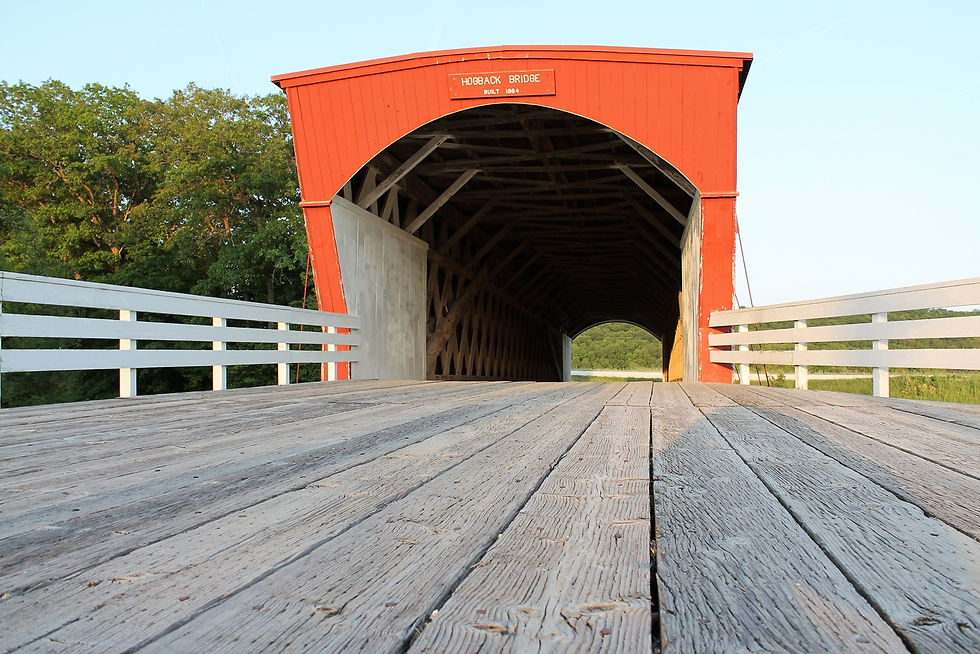
Winterset and Pella are both Iowa towns within roughly the same drive time of Des Moines, and that proximity is where the confusion usually starts. Winterset sits in Madison County, about 35 minutes southwest of Des Moines via IA-92, with a census of 5,353, known for its covered bridges and the John Wayne Birthplace Museum. Pella sits in Marion County, about 40 minutes southeast via IA-163, known for its Dutch-heritage square and the Tulip Time festival.
The two towns don't share a market sample, and they genuinely can't be combined into one. Pella has a published typical year - $20,593 across 56 listings. Winterset's own market data currently returns no result at all. That's not a rounding error or a small sample to treat cautiously; it's an actual absence of published data, and the honest response is stating that plainly rather than borrowing Pella's number to fill the gap.
This is not legal advice. It's a guide to keeping these two towns' identities, calendars, and local offices separate - because a Winterset listing that borrows Pella's numbers, festival, or Dutch-heritage imagery isn't describing Winterset at all, and a guest who books based on that borrowed identity is going to notice the mismatch the moment they arrive, well before they ever reach the front door.
Two Iowa Towns, Not One Combined Story
Winterset and Pella get mentally merged for an understandable reason: both sit within about a Des Moines-metro hour, and both sell a heritage-weekend kind of visit. But merged-town marketing serves neither town well, since Winterset is Madison County and Pella is Marion County - two separate jurisdictions, two separate drives, two separate identities that happen to share a general region.
The drive directions alone split the two apart clearly. Winterset runs about 35 minutes southwest of Des Moines on IA-92. Pella runs about 40 minutes southeast on IA-163. A guest who points their car in one direction didn't book the town in the other direction, and a listing that writes both drives into one description hasn't actually named either place clearly.
Des Moines shows up in both towns' guest-origin patterns, but origin isn't identity. A guest traveling from the Des Moines metro to either town is still choosing a specific destination once they arrive, and that destination is either Winterset or Pella - never some blended "Iowa satellite" experience that doesn't correspond to an actual place.
The practical rule for any listing in either town: write the specific town the parcel actually sits in, and let the other town's identity - its festival, its numbers, its square - stay entirely out of the description. A caption vague enough to sit on either listing hasn't actually named a place at all.
Winterset's Market Data Doesn't Currently Exist - and That's an Honest Thing to Say
As of this pass, Winterset simply doesn't have a published market sample - no typical revenue figure, no occupancy rate, no ADR, no confirmed peak months, no confirmed low months, no stay-length data, no lead-time figure. That's a genuine absence of data, not a small or thin sample that needs careful handling; there's currently no sample to work from at all.
The honest response to that absence is stating it plainly rather than reaching for a nearby town's number to have something to show. Writing Pella's $20,593 figure next to a Winterset listing, even as a rough comparison, risks that figure getting read as a Winterset number by anyone skimming the packet quickly.
A missing market figure doesn't mean a missing town. Winterset's actual landmarks and identity are real and unaffected by the data gap - the town, the bridges, and the museum all exist regardless of whether a market data provider has published a sample for the area yet. What's missing is specifically the revenue and occupancy data, not the place itself.
For a host or buyer working with this market, the practical move is carrying the absence honestly in any packet: state that a published typical year isn't currently available for Winterset specifically, rather than either guessing a placeholder figure or silently substituting a neighboring town's number.
What Winterset Actually Offers: Bridges, a Museum, and One Named Weekend
Winterset's real, confirmed identity centers on three named covered bridges - Roseman, Holliwell, and Cedar - along with the John Wayne Birthplace Museum. These are concrete, specific landmarks worth naming directly in marketing copy, rather than describing generically as "historic charm" or "small-town character" that could describe dozens of other towns.
The town's tourism calendar includes a named autumn weekend - Saturday, October 10, and Sunday, October 11, 2026 - built around the covered-bridge identity. That's a specific, two-day event on the calendar, not a season-long claim, and marketing copy should treat it with that same specificity rather than stretching it into a broader "fall is peak season" assumption the data can't currently support.
None of these identity facts function as occupancy or revenue data, and they shouldn't be presented as if they did. A guest drawn in by the bridges or the museum is responding to genuine landmarks worth visiting - that interest doesn't translate into a specific occupancy percentage or ADR figure, since Winterset doesn't currently have published numbers for either.
The honest marketing approach names these real landmarks specifically - the three bridges by name, the museum, the named October weekend - while being equally clear that stay length, peak months, and pricing patterns for this specific market aren't yet documented in available data.
Pella's $20,593 Year Belongs to a Different County
Pella's published typical year is $20,593 across 56 listings - a real, useful figure for Pella specifically, sitting in Marion County on a Dutch-heritage square roughly 40 minutes southeast of Des Moines. That figure describes a genuinely different market than Winterset, in every respect: different county, different town identity, different drive direction from the metro.
The temptation to use Pella's number as a stand-in for Winterset usually comes from wanting a dollar figure to include in a packet where none currently exists for the actual town in question. But labeling Pella's number as a "nearby Iowa town's comparison figure" and using it as if it applied to Winterset are two very different things - only the first is honest.
A labeled mention of Pella's figure can be useful context for someone trying to understand the broader south-central Iowa short-term rental landscape. What crosses the line is any framing that implies $20,593 describes Winterset's own performance, or that treats the 56-listing sample as evidence about how a Winterset property might perform.
The two markets' numbers simply don't transfer. A Winterset property isn't competing in the same 56-listing pool Pella's figure describes, and using that figure to set pricing expectations for a Winterset listing would be underwriting against a market the property doesn't actually operate in.
Tulip Time Is Pella's Calendar, Not Winterset's
Tulip Time is Pella's signature festival, with 2026 dates running from the first Thursday through Saturday in early May - a springtime, Dutch-heritage celebration tied specifically to that town's identity and square. Those dates don't correspond to anything on Winterset's own calendar, and Winterset's own named weekend runs in October, not May.
A Winterset listing that promises tulips, a Dutch square, or windmill imagery is describing Pella, not Winterset - regardless of how appealing that imagery might be for marketing purposes. The reverse is equally true: a Pella listing that leans on covered-bridge photography or a John Wayne reference is borrowing Winterset's identity for a town that doesn't actually have those landmarks.
Each town's calendar should stay exactly where it belongs. Winterset's named event is the October weekend built around the bridges. Pella's named event is Tulip Time in May. Neither festival's dates, imagery, or seasonal framing should migrate onto the other town's listing, no matter how close the two towns sit to each other on a map.
Confirming actual festival hours and dates before promising either weekend in listing copy is also worth doing directly with each town's own tourism contact, since festival scheduling can shift year to year and a listing that's specific about dates should have those dates actually confirmed rather than assumed from a prior year's calendar.
Two Local Offices, Two Sets of Contacts
Winterset's city government contact is city desk at 124 W. Court Avenue, (515) 462-1422. The county-level contact is Auditor Michele Brant, at 112 N. John Wayne Drive, (515) 462-3914. A separate court clerk line, (515) 462-4451, handles records rather than licensing, and a tourism line, (515) 462-1185, covers festival information rather than permitting.
Pella's local government contact sits on Broadway in Marion County - a genuinely separate office from any of the Winterset contacts listed above. A host or buyer with a Winterset property shouldn't call Pella's office for any Winterset-specific compliance question, and the reverse holds true for a Pella property.
A dedicated short-term rental permit hasn't been confirmed as published for the Winterset market as of this pass, which is worth flagging plainly in any compliance-focused packet rather than assuming either way. This unconfirmed status is a separate fact from the missing market data covered earlier - one is about revenue figures, the other about regulatory clearance - but both deserve the same honest "not currently confirmed" treatment.
Keeping these contacts straight matters most at the exact moment a host needs to actually call one of them. A host who's spent months describing their property with borrowed Pella language may, without realizing it, reach for the wrong office when a genuine Winterset compliance question comes up.
Why Guests Confuse These Two Towns - and How Not to Add to It
Guests conflate Winterset and Pella for the same reason marketers sometimes do: both sit roughly a Des Moines-metro drive away, and both offer a heritage-weekend kind of trip. That's a genuine, understandable point of confusion at the search stage - it becomes a real problem only when a listing's own copy fails to resolve it.
A guest who searched for Winterset wanted the bridges, the museum, or the named October weekend. A guest who searched for Pella wanted the Dutch square and Tulip Time. Serving the guest who actually typed your town's name means writing copy that clearly and specifically matches that search, rather than hedging broadly enough to also catch traffic meant for the other town.
A Winterset listing that inadvertently reads as if it could describe Pella - through borrowed imagery, borrowed festival dates, or a borrowed dollar figure - risks attracting a guest who was actually looking for the other town, which tends to produce a guest whose trip doesn't match their expectations before they've even left their driveway.
If a guest does end up booking the wrong Iowa town due to genuinely confusing marketing, the fair fix is direct: a clear map, an honest conversation, and likely a refund - not an improvised itinerary that tries to blend both towns into one trip to save the booking. The cleaner solution is preventing that confusion at the listing-copy stage in the first place.
What a Clean Winterset Listing Should Actually Contain
A Winterset listing should open with what's actually true about Winterset: Madison County, the drive southwest on IA-92, the census figure, the three named bridges, the John Wayne Birthplace Museum, and the named October weekend. It should not include Pella's $20,593 figure, its 56-listing sample, Tulip Time, or any Dutch-square or windmill imagery.
Where the market data is genuinely unknown - occupancy, ADR, peak months, stay length - the listing's underwriting or planning materials should say so directly rather than filling the gap with Pella's figures or with a vague "Iowa satellite corridor" estimate that doesn't correspond to any actual published sample.
Oskaloosa's own published figure, $13,204, belongs to yet another separate Iowa market (Mahaska County) and has no more place in a Winterset packet than Pella's number does. The same goes for several other nearby towns without published data of their own - none of those absences should get quietly filled by borrowing a number from wherever one happens to exist nearby.
The test for any line going into Winterset marketing or underwriting materials: could this sentence be pasted onto a Pella listing without anyone noticing? If yes, it hasn't actually named Winterset. The listing that survives that test is the one that still sounds distinctly like Winterset once every borrowed Iowa-generic phrase has been removed, and that same test applies equally well in the other direction for anyone writing Pella copy.
Related Reading
Related reading for Winterset Pella Identity hosts: same-town spine first, then nearby geo lines. Skip costume national dumps that do not underwrite this driveway.
https://www.crestcove.co/post/winterset-ia-str-market-report-2026
Frequently Asked Questions
Does Winterset have a published short-term rental market figure?
No - as of this pass, Winterset's market sample returns no result at all: no typical revenue figure, no occupancy rate, no confirmed peak months. That's a genuine data gap, not a small sample to round from. The honest approach in any packet is stating plainly that a published year isn't currently available, rather than substituting a neighboring town's number.
Can Pella's $20,593 figure be used to estimate Winterset's market?
No. Pella's figure describes 56 listings in Marion County, a genuinely separate market from Winterset's Madison County. The two towns don't share a sample, a drive direction, or an identity, and using Pella's number to fill Winterset's data gap would be underwriting against a market the property doesn't actually operate in.
What are Winterset's actual landmarks worth naming in marketing copy?
Three named covered bridges - Roseman, Holliwell, and Cedar - plus the John Wayne Birthplace Museum, and a named autumn weekend on the tourism calendar (Saturday, October 10, and Sunday, October 11, 2026). These are specific, checkable facts worth naming directly, rather than generic "historic charm" language that could describe any small Midwestern town.
Is Tulip Time part of Winterset's calendar?
No. Tulip Time is Pella's own festival, running the first Thursday through Saturday of May in 2026, tied to that town's Dutch-heritage identity. Winterset's own named event runs in October, built around its covered bridges. Neither festival's dates or imagery should appear on the other town's listing.
Which office should a host contact for a Winterset property?
Winterset city desk, at 124 W. Court Avenue, (515) 462-1422, or County Auditor Michele Brant, at 112 N. John Wayne Drive, (515) 462-3914, depending on the specific question. Pella's office sits on Broadway in a separate county and doesn't answer for Winterset matters. A dedicated STR permit isn't confirmed as published for Winterset as of this pass.
Why do guests sometimes confuse Winterset and Pella?
Both towns sit roughly a Des Moines-metro drive away and both sell a heritage-weekend trip, which creates genuine confusion at the search stage. That confusion becomes a real problem only when a listing's own copy fails to clearly resolve it - serving the guest who actually searched for the specific town they typed is the fix.
Should Oskaloosa's market figure appear in a Winterset or Pella comparison?
No. Oskaloosa publishes its own figure, $13,204, for a separate Mahaska County market. It doesn't belong folded into either the Winterset or the Pella conversation - a three-town blended "Iowa satellite" estimate isn't more accurate than a two-town one, it's simply a bigger version of the same mistake.
What should happen if a guest books the wrong Iowa town by mistake?
The fair response is a clear map and, likely, a refund conversation - not an improvised itinerary trying to blend both towns into one trip to salvage the booking. The better fix is preventing the confusion at the listing-copy stage, so a guest searching for Winterset or Pella specifically finds accurate, distinct information about the town they actually typed.
Is Winterset's covered-bridge weekend the same as a general fall season claim?
No. The named event is a specific two-day weekend - October 10 and 11, 2026 - not evidence of a broader fall peak season. Marketing copy should treat it with that same specificity, since stretching a single named weekend into a season-long occupancy claim isn't supported by any currently published data for this market.
What's the simplest test for whether Winterset marketing copy has drifted toward Pella?
Ask whether a given sentence could be pasted onto a Pella listing without anyone noticing. If it could - because it's vague enough, or because it borrows Pella's festival or figures - it hasn't actually named Winterset. The listing that passes this test consistently is the one that still reads distinctly as Winterset once every generic Iowa phrase is removed.
Work with Crest & Cove Creative
A Winterset listing that borrows Pella's $20,593 figure to fill a genuine data gap is describing a market that isn't actually this one. The two towns share a metro drive time and a heritage-weekend pitch - nothing else.
We help hosts write listing copy that names the actual town and actual data gaps honestly instead of borrowing a neighbor's numbers. Send us your listing and we'll flag every line that could describe the wrong Iowa town.
Reach out at crestcove.co or (256) 998-7502.


Comments