
Anacortes Tourism Numbers vs. Real Occupancy for Hosts

Updated: Aug 27

Cap Sante Viewpoint gets crowded every summer evening. So does the Washington Park Loop Drive, the ferry line for the San Juan Islands, and the sidewalk in front of the murals downtown. None of that foot traffic shows up as a night booked. Visitor volume and short-term rental occupancy are two different measurements, and tourism marketing routinely blends them into one story.
Here is what the rental data actually shows for Anacortes. Typical listings earned about $28,766 last year from 164 active rentals, per AirROI's trailing twelve months from August 2025 through July 2026. Average nightly rate was $257, occupancy came in at 43.0%, and revenue per available night (RevPAN) landed at $110. Year over year, revenue was down 4.1%, while active supply held essentially flat at 0.0% change. That's the host year. Everything below is context for how to market it honestly. This is not legal advice.
Cap Sante Viewpoint: Real Foot Traffic, Not Real Occupancy
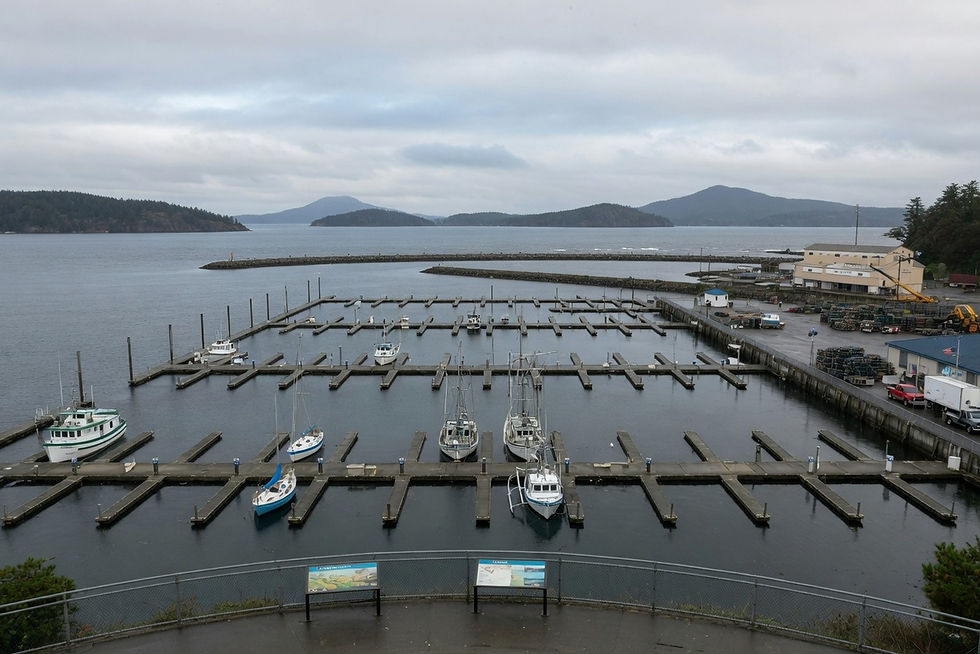
Cap Sante Viewpoint sits on a bluff above the marina, looking out over Guemes Channel toward the San Juan Islands. It's a short drive or a steep ten-minute walk from downtown, and it's one of the most photographed spots on Fidalgo Island - sailboats at anchor, the Cascades on a clear day, sunset over the water. It costs nothing to visit, which is exactly why it shows up in so much of the town's tourism marketing.
That volume of visitors is real, but it's demand for the view, not demand for a bed. A busy overlook in July says nothing about occupancy in January, which is Anacortes's slowest month even though Cap Sante looks exactly the same year-round. Full-year occupancy across the market's 164 tracked listings was 43.0%, meaning more than half the available nights went unbooked despite a marina full of boats and a parking lot full of tourists on any given weekend.
For a listing, that makes Cap Sante a photo asset, not a booking guarantee. Use the view in listing photos if a guest can actually walk to it from your driveway - that specificity converts. Don't use visitor counts at the overlook to justify a rate hike or to promise an occupancy level the trailing-twelve-month numbers don't support.
It's worth thinking about why this particular confusion happens so often in coastal tourism markets. A city's tourism board, chamber of commerce, or visitor bureau has a real incentive to publicize headcount at a free, popular landmark, since a busy overlook photo is genuinely good marketing for the town as a destination. But that same headcount number gets recycled uncritically in real estate pitches and STR marketing pieces as if it were evidence of rental demand, when it's actually a measure of something else entirely: how many people are willing to make a short, free stop on a drive. A host or investor reading a market report that leads with visitor counts rather than AirROI or comparable rental-specific data should treat that as a signal to ask for the actual booking numbers before trusting the pitch.
Washington Park's Loop Drive Sells the Area, Not the Booking
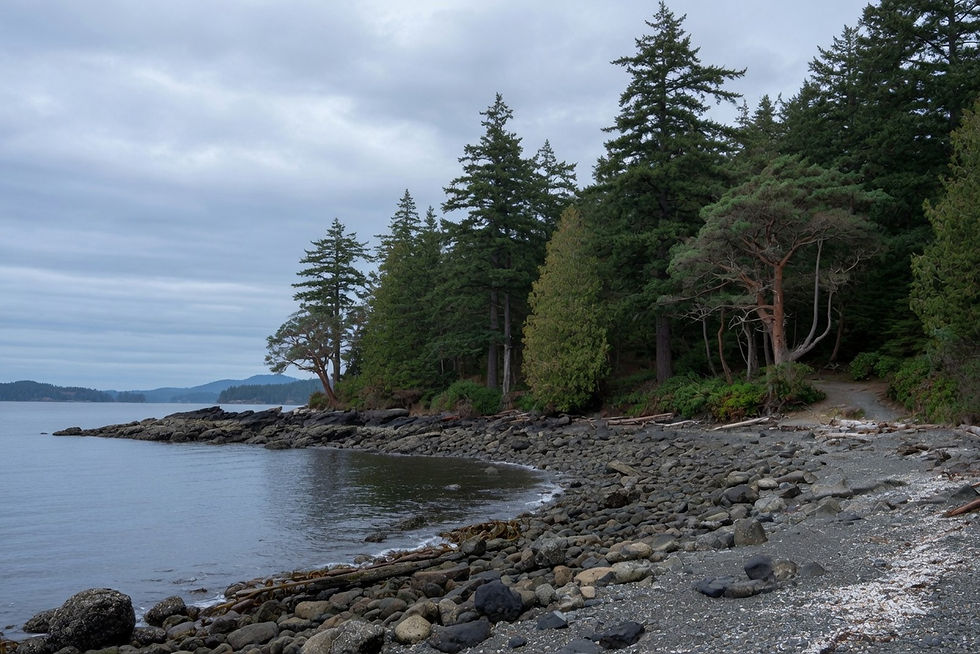
Washington Park, on the western tip of Fidalgo Island, is built around a 2.2-mile one-way loop road through second-growth forest, with pull-offs facing Rosario Strait and the Olympic Mountains. There's a boat launch, a campground, and trailheads that connect to the waterfront. It's the kind of place that photographs beautifully and drives real word-of-mouth for the area - which is exactly why so many Seattle- and Portland-based travelers point their car toward Anacortes in the first place.
Most guests booking in Anacortes do come from Seattle first, then Portland - consistent with a park built for a weekend drive from either metro. But the park explains why someone chose this town over another; it doesn't explain what a listing earned. The average booked night across the market was $257, with revenue per available night at $110 once vacant nights are factored in. Those two numbers sit far apart precisely because a scenic loop drive doesn't fill a calendar by itself.
The practical move is to write the park into a listing as the reason for the trip, not as a revenue projection. A guest deciding between two Anacortes properties is comparing actual walkability and view, not the park's acreage.
That's a distinction worth applying specifically to how a listing describes distance and access. Naming an exact drive time to the park's entrance, and being honest about whether a guest needs a car to reach it or can walk from the property, does more for conversion than a generic line about being "near Washington Park." A guest who has already decided Anacortes is the destination, in part because of the park's reputation, is now comparing specific properties against each other, and the property that answers the practical access question clearly is the one that reads as more trustworthy - which matters more at that stage of the search than restating why the park itself is appealing.
Deception Pass Pulls Day-Trippers, Not Necessarily Overnight Guests
Deception Pass, with its landmark bridge spanning the churning tidal narrows between Fidalgo and Whidbey Island, is one of the most-visited state parks in Washington. It draws day-trip traffic from well beyond Skagit County - visitors who may never set foot in an Anacortes rental. The bridge is a stop on a scenic drive, and plenty of people snap a photo and keep going toward Whidbey or back to the interstate.
That's an important distinction for a host pricing a property near the pass: a crowded overlook at Deception Pass does not assign an ADR to a listing the way a confirmed multi-night booking does. Confirm any seasonal event dates directly with the park or the city before promising them to a guest - named festival dates for 2026 weren't locked from a primary calendar as of this pass, so don't advertise specifics you haven't verified.
Where Deception Pass does matter for revenue is seasonality: the three strongest booking months in the data are August, June, and May, tracking the same window when day-trip traffic to the pass peaks. January is the slowest month for both the park and for bookings, and year-over-year revenue was down 4.1% - worth knowing before assuming a busy bridge means a busy calendar.
A host near Deception Pass can still use the seasonal correlation productively without overstating it. If the park's own visitation data shows a clear spike in a specific month, that's a reasonable signal for when to expect the strongest booking demand and price accordingly - not because the bridge itself is generating bookings, but because it's a proxy for the same underlying travel pattern (Pacific Northwest summer weather, school-schedule timing, and regional drive-market behavior) that also drives Anacortes's own rental season. Using the correlation as a pricing input is defensible; using bridge foot traffic as a substitute for an actual occupancy figure is not.
Old Town and the Murals: Great Marketing, Not a Revenue Line
Old Town Anacortes, centered on Commercial Avenue, is a working waterfront with a fishing fleet, art galleries, and a series of large historical murals painted on building facades depicting the town's maritime and industrial past. The Anacortes Arts Festival, typically held the first weekend of August, brings one of the larger regional gatherings of artists and vendors to these same blocks. It's genuinely a draw, and it photographs well in a listing description.
But foot traffic on Commercial Avenue is not revenue per available night, which sits at $110 across the market. Typical guest stays run 5.6 nights and are booked roughly 70 days out - timing that lines up with travelers planning around the arts festival and peak summer weeks, not with picnic tables downtown filling up on a given afternoon. Confirm festival dates and downtown business hours directly before promising either to a guest in listing copy - a wrong date in a description costs a review, not just a booking.
The 70-day average booking lead time is a useful planning detail on its own, separate from the festival question. It means a host has a genuine runway to see how a given week is shaping up before making seasonal staffing, cleaning-schedule, or supply-order commitments, rather than needing to react to last-minute bookings the way a shorter-lead-time market might require. A host who treats every summer week as equally last-minute, when the data shows guests are typically planning more than two months ahead, is missing a real opportunity to plan operations around a predictable booking curve.
What the Actual Rental Numbers Say
Stripped of tourism narrative, the Anacortes short-term rental market looks like this for the trailing twelve months of August 2025 through July 2026: 164 active listings, average annual revenue of $28,766, average nightly rate of $257, occupancy of 43.0%, and RevPAN of $110. Revenue was down 4.1% year over year while supply stayed essentially flat, which points to softer per-listing demand rather than a market being diluted by new competition.
On the regulatory side, short-term rentals in Anacortes are addressed under Anacortes Municipal Code 19.44.050. City Desk is at 904 6th Street, Anacortes, WA 98221, and the Planning Department keeps hours Monday through Thursday, 8 a.m. to 5 p.m. A dedicated STR permit fee wasn't confirmed on a primary city page as of this pass - call the Planning Department directly before budgeting for one, rather than relying on a secondhand figure.
It's worth reading the flat 0.0% supply growth alongside the 4.1% revenue decline as its own signal, distinct from the seasonal patterns discussed above. A market with essentially unchanged listing count but declining typical revenue points toward softer per-listing demand rather than dilution from new competitors - a different underlying story than South Haven's combination of double-digit revenue decline paired with double-digit supply growth, for example. A host or investor should read Anacortes's specific combination of numbers rather than assuming every coastal market with a revenue decline is experiencing the same underlying cause.
Anacortes vs. Wellfleet: Two Different Markets, Two Different Years
Anacortes is sometimes compared against Wellfleet, Massachusetts in host research because both are small coastal towns with a strong seasonal tourism identity. But the numbers don't transfer. Wellfleet's comparable market shows typical listings earning about $31,996 across 246 active rentals - a larger listing pool and a higher average payout than Anacortes's $28,766 across 164 listings.
Shared summer seasonality is not shared market identity. Different states, different permitting regimes, different visitor mix, and a different supply count all mean an Anacortes host shouldn't lift a Wellfleet occupancy or ADR figure and apply it here, and vice versa. in any analysis or pitch deck.
How to Use Tourism Data the Right Way When Marketing a Listing
Tourism copy has a job: explain why a guest picked Anacortes over somewhere else. It's not built to describe your calendar. When writing a listing description or a pitch to a broker, keep those two jobs separate - lead with the walkable, drivable, photographable reality of the property, and back it up with occupancy and rate figures you can actually stand behind.
In practice that means: photograph the view or the walk a guest can actually complete from the driveway, not a landmark ten miles away. Cite the trailing-twelve-month numbers - 43.0% occupancy, $110 RevPAN, $28,766 typical annual revenue - rather than a vague claim about how busy downtown looked on a Saturday. And don't promise event dates, permit costs, or hours that haven't been confirmed with a primary source. If a broker memo or a marketing pitch is treating visitor counts at Cap Sante or Deception Pass as if they were occupancy, that's the moment to push back and ask for the actual rental data behind the claim.
This same discipline applies just as much to a host's own internal planning as it does to outward-facing marketing copy. A host who privately assumes their own occupancy should track the town's tourist foot traffic is setting an internal expectation that the actual booking data won't support, which can lead to frustration, unnecessary rate cuts, or a false sense that a property is underperforming when it's actually tracking in line with the broader market. Anchoring expectations to the confirmed trailing-twelve-month figures, rather than to how busy the town felt during a personal visit, keeps both marketing copy and internal planning grounded in the same accurate picture.
Related Reading
More Anacortes, Washington reading already live on Crest & Cove.
Anacortes STR Rules: the Municipal Code That Governs Your Listing
Anacortes Shoulder: August Peak, January Hole, Not Wellfleet
DIY vs Hire in Anacortes: Independent Hosts Still Own This Desk
Buying a Anacortes Rental: Cite $28,766, Keep Wellfleet Separate
Anacortes vs Wellfleet Desks: Compare the Numbers, Not the Neighbor
Frequently Asked Questions
Is visitor traffic at Cap Sante Viewpoint the same as occupancy?
No. Cap Sante draws steady visitor demand year-round, but full-year occupancy across the market's 164 tracked listings was 43.0%. A crowded overlook in July says nothing about January, which is the slowest month of the year for bookings. Use the view to explain why a guest chose the trip, not to justify an occupancy claim the actual data doesn't support.
What did a typical Anacortes short-term rental earn last year?
About $28,766, per AirROI's trailing twelve months from August 2025 through July 2026, across 164 active listings. Average nightly rate was $257 and revenue per available night was $110. Revenue was down 4.1% year over year while active supply held essentially flat, pointing to softer demand rather than new competition diluting the market.
Does Deception Pass drive overnight bookings in Anacortes?
It drives day-trip traffic, some of which never books an Anacortes stay. It does correlate with seasonality, though: the three strongest booking months are August, June, and May, the same window when visits to the pass peak. Confirm any seasonal event dates directly with the park before promising them to a guest in listing copy.
Should I mention the Anacortes Arts Festival or downtown murals in my listing?
Yes, if a guest can realistically visit them, but confirm the current year's festival dates and downtown hours directly rather than repeating a secondhand date. Typical stays run 5.6 nights, booked about 70 days ahead, often timed around summer events, a wrong date in a listing description costs a review, not just a booking.
Are Anacortes and Wellfleet the same kind of rental market?
No. Wellfleet's comparable market shows about $31,996 in typical annual revenue across 246 active listings, versus $28,766 across 164 listings in Anacortes. Shared summer seasonality does not mean shared market identity, different states, permitting regimes, and supply counts mean neither town's figures should be applied to the other.
Where do most Anacortes rental guests come from?
Seattle first, then Portland, consistent with a weekend-drive market built around Washington Park, the ferry terminal, and the San Juan Islands. That guest-origin pattern is worth keeping in mind when deciding which amenities and photos to lead with, since both metros skew toward travelers planning a scenic weekend drive rather than a long-haul vacation.
What governs short-term rentals in Anacortes?
Short-term rentals are addressed under Anacortes Municipal Code 19.44.050. City Desk is at 904 6th Street, Anacortes, WA 98221, with Planning Department hours Monday through Thursday, 8 a.m. to 5 p.m. A dedicated permit fee wasn't confirmed on a primary city page as of this pass, confirm directly with the department rather than relying on a secondhand figure.
What's the single biggest mistake hosts make with Anacortes tourism data?
Treating visitor volume at a free attraction as proof of occupancy. Use tourism landmarks like Cap Sante or Deception Pass to explain why a guest chose the trip; use the trailing-twelve-month occupancy, ADR, and RevPAN figures to explain what the property actually earns. Confusing the two leads to rate and occupancy promises the market's own data doesn't back up.
Work with Crest & Cove Creative
Cap Sante Viewpoint gets crowded every summer evening, but Anacortes's actual occupancy is 43.0% - a busy overlook explains why a guest visits, not whether your calendar is full. Name the failure mode the guest can check on the listing.
We help Anacortes hosts market the property they can actually deliver, backed by the trailing-twelve-month numbers instead of a landmark's foot traffic. Reach out at crestcove.co or (256) 998-7502. Send the live listing draft and the facts you can actually cite.
Reach out at crestcove.co or (256) 998-7502.

Comments