
Anacortes STR Pricing Calendar: August Peaks, January Drops

Updated: Aug 28
Anacortes has a clear pricing calendar if you look at what the numbers actually say instead of copying a neighboring market's peak. August is the busiest month on this Fidalgo Island extract, June and May trail close behind, and January is the hard floor of the year. That's the whole shape of the season, three strong months, one deep dip, and a long shoulder in between.
Typical listings earned about $28,766 last year from 164 active rentals, per AirROI's trailing twelve months from August 2025 through July 2026. The average nightly rate was $257, occupancy sat at 43.0 percent, and revenue per available night landed at $110. Year over year, revenue was down 4.1 percent while active supply held flat at 0.0 percent change, more competition isn't the story here, softer demand is.
Keep Wellfleet's numbers, $31,996 in revenue across 246 listings, on their own line. It's a different town with a different peak story, and folding its calendar into Anacortes's just muddies the pricing decision you're actually trying to make. Guests here mostly arrive from Seattle, then Portland, staying an average of 5.6 nights and booking about 70 days out. None of that changes the fact that August still carries the year and January still drags it down.
August Is Anacortes's Peak Booking Month
August is the single busiest month on this market sample, and it should be priced accordingly rather than blended into an annual average. The $28,766 typical annual revenue and 43.0 percent occupancy figure already include August's contribution, they aren't separate from it. If you're setting nightly rates for the summer, August is where you push closest to the ceiling the market will bear.
Part of why August peaks is simple geography: Anacortes sits at the gateway to the San Juan Islands ferry terminal, and late-summer travelers heading to Orcas, Lopez, or San Juan Island often bookend their trip with a night or two on Fidalgo Island. Long daylight hours also make Washington Park's loop drive and shoreline trails, along with the waterfront at Cap Sante Marina, most appealing exactly when demand peaks. Read more in Anacortes Remote Stays and DIY vs Hire in Anacortes for how other operators plan around this window.
June and May Round Out the Strong Season
June and May are the other two strong months, and together with August they form the three-month core of the Anacortes booking calendar. Even these stronger months sit inside a 43.0 percent occupancy year, though, so treat them as the top of a moderate season rather than a second summer peak.
May and June both benefit from drier Pacific Northwest weather arriving before peak crowds, which is exactly the window travelers look for when they want island scenery without August's rates. Whale-watching season around the San Juans also ramps up through late spring into early summer, giving hosts a real, dated hook for marketing copy rather than a vague seasonal claim. Read more in DIY vs Hire in Anacortes and Who Books an Anacortes Rental.
January Is the Slowest Month, Plan For It
January is the slowest month in Anacortes, and occupancy is weakest exactly then. This isn't a gap to paper over with optimistic pricing, it's the floor the rest of your annual strategy should be built around. Budget for it the same way you budget for the August peak: as a known, recurring part of the calendar, not a surprise.
Some hosts use the January lull for the maintenance and refresh work that's hard to schedule during a booked-out summer, deep cleaning, replacing linens, repainting, or catching up on the kind of repairs that guests notice in reviews. Others drop rates modestly and lean into the 5.6-night average stay length to attract remote workers or longer winter getaways rather than trying to compete for the same short weekend trips that fill August. Read more in Who Books an Anacortes Rental and Buying an Anacortes Rental.
Wellfleet's Numbers Don't Belong in Your Anacortes Calendar
Wellfleet has its own peak story, and it doesn't line up with Anacortes's even in months where the calendars overlap. Keep Wellfleet's $31,996 revenue across 246 listings on its own line, it's a different market, with a different guest base, geography, and demand pattern.
The practical risk of mixing the two is real: a host who averages in Wellfleet's stronger revenue figure ends up pricing Anacortes listings too aggressively, then wonders why bookings lag. File $28,766 on 164 listings, August 2025 through July 2026, as this town's actual host year, and build your rate calendar from that number alone. Read more in Buying an Anacortes Rental and Anacortes Tourism Data.
Don't Substitute a Weekly Occupancy Guess for the Annual Number
Occupancy for the year is 43.0 percent, and revenue per available night is $110, both annual figures, not weekly snapshots. It's tempting to extrapolate a single busy week into a higher annual estimate, but that overstates what a full calendar year actually delivers.
Year over year, revenue is down 4.1 percent even though active supply hasn't grown, a sign the softness is on the demand side, not simply more listings splitting the same pie. That's a more useful planning signal than any single strong week, and it's why the annual occupancy and RevPAN figures should anchor your rate strategy rather than a snapshot from Cap Sante week or a busy holiday weekend. Read more in Anacortes Tourism Data and the Complete Visitor's Guide to Anacortes, Washington.
Cap Sante Week Drives Visitor Demand, Not Occupancy
Cap Sante week, the stretch when the marina and overlook draw the heaviest foot traffic, is a visitor-demand signal, not an occupancy number. A busy waterfront doesn't automatically translate into a booked-out January, and hosts who treat visitor counts as a stand-in for occupancy end up with pricing that doesn't match reality.
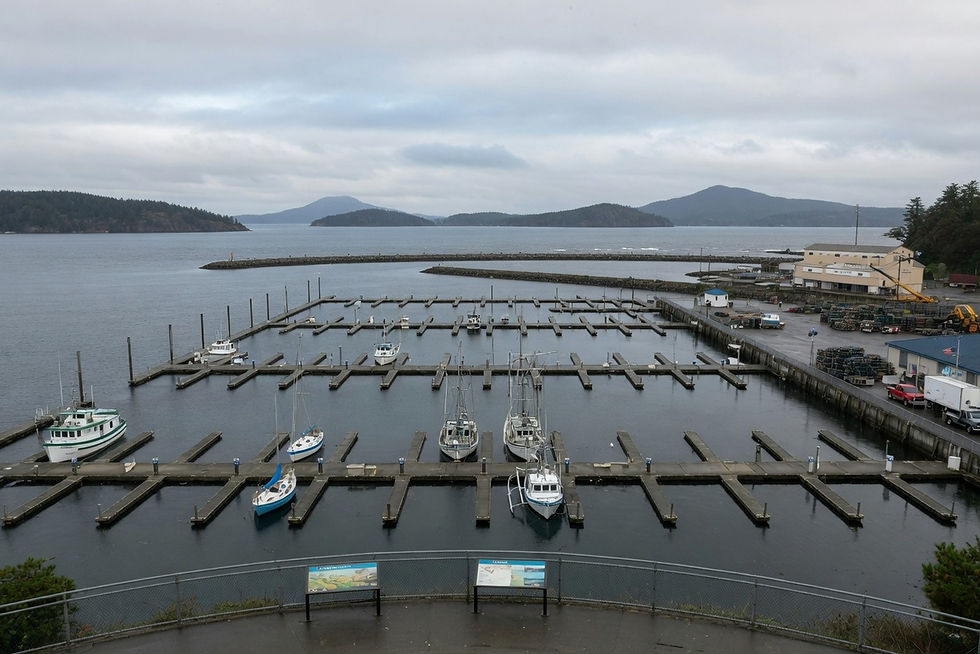
Cap Sante Park's overlook and the marina below it are genuinely worth featuring in listing photos and descriptions, it's one of the most recognizable views in town, and it's a fair selling point year-round. Just confirm current hours before promising guests a specific walk or view in your listing copy, since seasonal access and event schedules can shift. City Hall, at 904 6th Street, Anacortes, WA 98221, keeps planning hours Monday through Thursday, 8 to 5, if you need to confirm anything locally before publishing.
A 70-Day Booking Window Isn't the Same as a Filled Month
Guests here book about 70 days ahead on average, a real lead-time figure, but a booking window, not an occupancy guarantee. Long lead times mean guests plan ahead; they don't mean every calendar month fills up evenly.
Separately, 53 listings, 32.3 percent of the market, set a 30-night minimum stay. That's a stay-length rule some hosts use to target relocating workers or extended winter guests, not a reflection of how full the market actually runs. Neither the 70-day lead time nor the 30-night minimum changes the underlying fact that January is still the slowest month in Anacortes. Read more in What It Costs to Start a Legal Anacortes STR Stay and Financing an Anacortes Rental Without a Wellfleet Year.
Price Every Month by What the Data Actually Shows
Price August like August, and price January like January, don't average Wellfleet's $31,996 into your Anacortes rate, and don't smooth the two ends of the calendar into a single flat number. The whole point of pulling AirROI's trailing-twelve-month figures is to price against what actually happened here, not a rounded guess.
In practice, that means building a rate calendar with three tiers: premium pricing for August, June, and May; moderate rates for the shoulder months; and a deliberate discount or minimum-stay strategy for January and the depths of winter. Photograph the walk you can actually finish from your driveway, Washington Park's loop, Cap Sante's overlook, or the downtown murals, depending on location, rather than borrowing scenery or numbers that belong to Wellfleet or any other market. Read more in Financing an Anacortes Rental Without a Wellfleet Year and Anacortes vs Wellfleet Desks.
Frequently Asked Questions
What are Anacortes' actual peak months for short-term rentals?
The published sample names August, June, and May as the three-month core of the Anacortes booking calendar, with August as the single strongest month. Even these stronger months sit inside a 43.0 percent annual occupancy year, so they should be treated as the top of a moderate season rather than a second summer peak. Pricing these three months at a real premium, rather than a flat year-round rate, is where the revenue actually sits.
Is January really the slowest month for Anacortes rentals?
Yes, January is the market's confirmed low point for occupancy. Hosts should budget for it as a known, expected low rather than treat it as an anomaly worth chasing with discounts alone. Planning maintenance, deep cleaning, or off-season pricing around this specific month makes more sense than hoping for a surprise booking wave. That approach keeps expectations realistic without treating a quiet month as a problem to solve.
What's the typical annual revenue for an Anacortes short-term rental?
AirROI's trailing twelve months from August 2025 through July 2026 show a typical listing earning about $28,766 across 164 active rentals, with an average nightly rate near $257. That figure is drawn from a genuinely sized sample, not a handful of standout properties, so it's a reasonable annual benchmark rather than a best-case guess. Citing the sample size alongside the dollar figure gives a buyer or lender confidence the number reflects real market behavior.
What is Anacortes' average occupancy rate?
Annual occupancy across the sample sits at 43.0 percent, with revenue per available night at $110. Both are full-year figures rather than snapshots from a single busy week, so a strong August shouldn't be extrapolated into a higher year-round expectation. Reading the annual number alongside the monthly pattern gives a more accurate pricing baseline. Hosts modeling a purchase or a rate strategy should anchor to these annual figures first.
How far ahead do guests typically book an Anacortes stay?
Guests book about 70 days ahead on average in this market. That's a real lead-time figure worth using to plan when to open a calendar and start marketing peak months, but it's a booking window, not an occupancy guarantee. Long lead times mean guests plan ahead; they don't mean every month fills evenly. Marketing peak months early, within that window, gives guests the runway this lead time actually shows they use.
Should Anacortes hosts blend in Wellfleet's revenue numbers?
No. Wellfleet's own trailing-twelve-month figures run about $31,996 across 246 listings, a different market with a different guest base, geography, and demand pattern. Averaging another town's numbers into an Anacortes calendar misprices every month it touches, even in months where the two calendars happen to overlap. Keep each town's figures on its own labeled line.
What does the 30-night minimum stat actually mean for Anacortes hosts?
Fifty-three listings, or 32.3 percent of the market, currently set a 30-night minimum stay. That's a stay-length setting some hosts use to attract extended or remote-worker guests, not an occupancy figure, and it shouldn't be read as proof that those nights are actually filled. A platform minimum is a filter, not a booked-nights guarantee. Hosts who want to attract that segment can still set the minimum, but shouldn't count on it as guaranteed revenue.
Why did Anacortes revenue drop 4.1 percent year over year?
Revenue was down 4.1 percent year over year while active supply held essentially flat, which points to softer demand or pricing pressure rather than new competition diluting the market. That distinction matters for a host's own strategy, since flat supply means the softening likely reflects rate or demand factors worth addressing directly rather than a wave of new listings to wait out.
How should Anacortes hosts price the shoulder months around the peak-3?
The August-June-May core carries the calendar, but the months around it still sit inside a moderate 43.0 percent occupancy year rather than a second summer surge. Build a genuinely premium rate for the three strongest months, price January as the confirmed low, and avoid running one flat rate that treats every month the same. That structure reflects what this specific market's own data actually supports.
Related Reading
More Anacortes, Washington reading already live on Crest & Cove.
Work with Crest & Cove Creative
Anacortes' real peak-3 is August, June, and May, and January is the slow month the data actually names, not a borrowed Wellfleet calendar. Averaging in another market's numbers to smooth the shoulder season misprices every month it touches.
We help Anacortes hosts price and word each month against this market's own August-June-May peak, not a Wellfleet blend. Send us your current calendar and we'll flag the months priced wrong.
Reach out at crestcove.co or (256) 998-7502.


Comments