
Underwrite Anacortes, WA Rental: What a DSCR Lender Wants to See

Updated: Aug 30

DSCR loans price off the property's own rental income, not the borrower's W-2, which makes the underlying revenue figure the single most important number in an Anacortes short-term rental file. On this market's most recent trailing-twelve-month extract, typical listings earned about $28,766 from 164 active rentals, and that figure, not a projection, not a comparable market, not a headline number from somewhere else on the map, is what belongs in a lender packet.
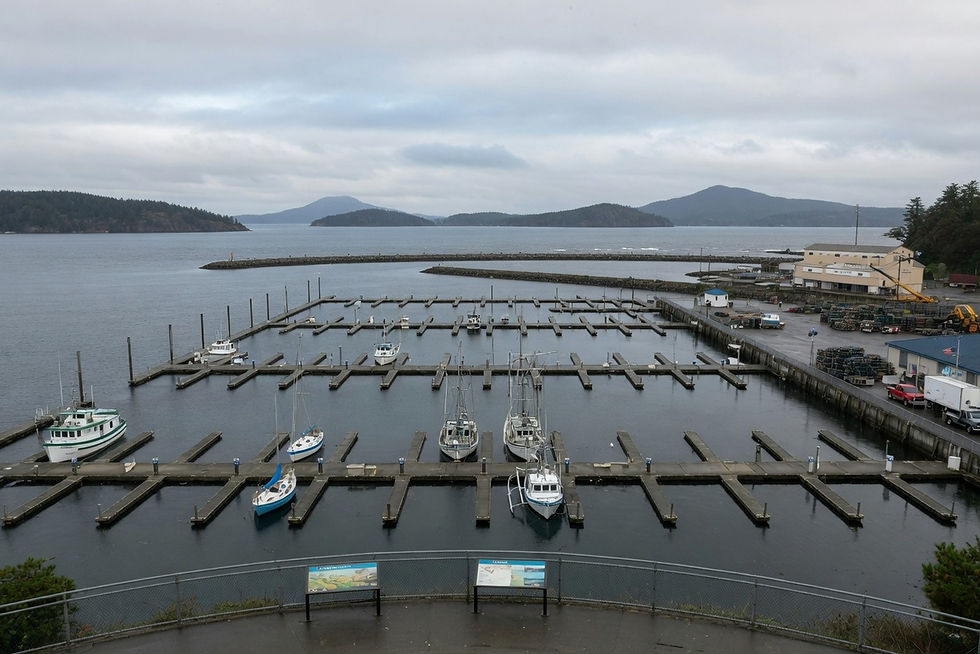
Anacortes sits on Fidalgo Island at the top of Puget Sound, the jumping-off point for the San Juan Islands ferry and a magnet for boaters headed to Cap Sante Marina. That geography drives a real, seasonal visitor economy, but visitor traffic and debt service are two different things. This guide walks through the actual DSCR-relevant numbers for this market, what a lender will want confirmed at the local level, and where the seasonality shows up in the underwriting math. This is not legal advice.
The DSCR Numbers for This Anacortes Extract
Typical listings earned about $28,766 over the trailing twelve months from August 2025 through July 2026, drawn from a sample of 164 active rentals (AirROI data). The average nightly rate across that sample was $257, against 43.0 percent occupancy, which nets out to revenue per available night (RevPAR) of $110. Year over year, that revenue figure is down 4.1 percent, while active supply in the market was essentially flat, up 0.0 percent.
Those figures describe one underwriting year on one sample size, not a multi-year trend and not a guarantee of forward performance. A DSCR lender will typically apply their own vacancy or expense haircut on top of a submitted rent roll, so the raw $28,766 figure is a starting point for the file, not the final number that clears underwriting. Naming the sample size (164 listings), the data window (August 2025 through July 2026), and the source (AirROI) up front tends to move a file through review faster than a bare income figure with no context attached.
Do not substitute a rent roll from a different market to make an Anacortes file look stronger. Every coastal or island short-term rental market has its own occupancy curve, its own permit regime, and its own revenue baseline, and a lender who catches a blended or mismatched rent roll is more likely to slow-walk or decline the file than to average two towns together in the borrower's favor.
It's worth being specific about what a lender or underwriter is actually checking for when they scrutinize a rent roll's source. Underwriters who work regularly with short-term rental files have generally seen enough submissions to recognize when a number doesn't match the property's own market - a revenue figure pulled from a busier, larger island market presented as if it belongs to a smaller, less-trafficked one is the kind of mismatch that raises a flag rather than closes a file faster. The safer approach is always to over-document the source rather than smooth over any gap: cite the exact data window, the exact sample size, and the exact platform or source the figure came from, and let the number stand on its own rather than dressing it up to look more favorable than the underlying market supports. A well-sourced, honest number that undershoots a buyer's hopes is a far better file than an inflated one an underwriter later flags.
How the $28,766 Figure Should Actually Be Used
It helps to separate what the $28,766 trailing-twelve-month figure is good for from what it isn't. It's a real, sourced, dated market average - useful for sanity-checking a broker's projection, useful for setting expectations with a buyer before they fall in love with a property, and useful as a benchmark a lender can cross-reference against an appraisal. It is not, on its own, a guarantee that any specific unit will hit that number, and it is not a substitute for a property-specific income appraisal once a particular Anacortes listing is under contract.
A host or buyer working with a broker should expect the broker to ask for more than the average alone: photos, amenity list, bedroom count, proximity to the marina or ferry terminal, and ideally the specific listing's own historical performance if it has one. The $28,766 figure is the floor of the conversation, not the entirety of it - it tells a lender what the market as a whole is doing, while the property-specific appraisal or income history tells them what this particular file is doing relative to that market, and both pieces belong in the same file.
What This Income Means for a DSCR Loan
A debt service coverage ratio (DSCR) loan qualifies the property on the income it produces rather than the borrower's personal income or tax returns, which is why these loans have become the default financing route for independent short-term rental investors. The lender divides the property's gross rental income by the proposed annual debt service (principal, interest, taxes, insurance, and often HOA dues); a ratio of 1.0 means the rental income exactly covers the debt payment, and most DSCR programs want to see somewhere above 1.0 to 1.25, though the exact minimum varies by lender and loan program.
For an existing Anacortes listing, the $28,766 trailing-twelve-month figure (or the host's own platform-reported income, if it differs) is the number a lender will run through that formula. For a purchase where the property has no rental history yet, lenders typically lean on a short-term rental income appraisal or a market rent schedule instead, and the AirROI-style market averages above become the benchmark a broker or lender uses to sanity-check that appraisal rather than the qualifying figure itself.
This page does not guess a purchase price, interest rate, or specific coverage ratio for any individual property - those depend on the loan amount, the lender's program, and the borrower's full file. What it does provide is the market-level income context an Anacortes host or buyer needs before sitting down with a DSCR broker, so the conversation starts from real local numbers instead of a generic national average.
One detail worth understanding before that first conversation with a broker: DSCR loan programs vary meaningfully on where they set their minimum acceptable ratio, and that variance can be the difference between a file that clears and one that doesn't at a given loan amount. Some programs will work with a DSCR as low as 0.75 to 1.0, typically at a higher rate or with a larger down payment to offset the added risk, while more conservative programs hold a hard line at 1.25 or higher. Shopping more than one DSCR lender or broker, rather than assuming the first program quoted represents the whole market, is a reasonable step for an Anacortes buyer whose file sits close to a given program's minimum threshold. That comparison shopping costs nothing but a few extra phone calls and can move a marginal file from a decline into an approval at a different program.
Permits and City Desk Requirements
Short-term rentals in Anacortes are addressed under Anacortes Municipal Code (AMC) 19.44.050, and licensing questions travel with the property's location, not with the borrower. Anacortes City Desk is at 904 6th Street, Anacortes, WA 98221, with planning department hours Monday through Thursday, 8 a.m. to 5 p.m. A dedicated, published STR permit fee was not confirmed on a primary city page as of this writing, so buyers and hosts should confirm current fee and licensing details directly with the city before finalizing a purchase or refinance timeline.
Lenders underwriting a DSCR loan on a short-term rental increasingly want confirmation that the property can legally operate as a short-term rental in its zoning district, separate from the income figures. Pairing the market revenue data above with a direct call or visit to the Anacortes planning desk, confirming zoning eligibility and any licensing timeline, keeps the loan file and the compliance file moving together instead of one holding up the other.
This zoning confirmation matters more than it might seem at first glance, because a DSCR loan underwritten on the assumption of short-term rental income becomes a materially different, weaker file if that income turns out to be legally unavailable. A property that can't operate as a short-term rental under its zoning has to fall back on long-term rental income for underwriting purposes, which for a market like Anacortes - priced and positioned around $257 average nightly rates and short getaway stays - is very unlikely to produce a comparable revenue figure. Confirming zoning status before signing a purchase contract, not after, protects both the buyer's financing plan and the timeline of the deal itself.
Seasonality: Where the Revenue Concentrates
The three strongest months in this sample are August, June, and May, with August the single busiest month of the year. January is the slowest month and the weakest for occupancy. That curve tracks the region's tourism calendar closely: Fidalgo Island's marina traffic, San Juan Islands ferry season, and the Anacortes Waterfront Festival crowd all cluster in the warmer months, while the off-season winter months see a real, predictable drop in demand.
A meaningful share of the market, 53 listings, or 32.3 percent of the sample, sets a 30-night minimum stay, which shifts those listings toward a longer-term or extended-stay model rather than classic weekend tourism. Even so, the typical stay length across the full 164-listing sample is 5.6 nights, and a 30-night minimum on some listings does not translate into a filled January for the market as a whole. A DSCR lender or appraiser modeling seasonal vacancy should treat January as the low point to stress-test against, not an average month.
Guest Origin, Booking Lead Time, and Host Mix
Most guests booking an Anacortes stay come from Seattle, with Portland the second-largest origin market, both within a half-day's drive, which fits a market built around weekend and short getaway trips rather than long-haul travel. Typical bookings are made about 70 days ahead of arrival, giving hosts a reasonable planning window without the extreme last-minute booking pattern seen in some urban short-term rental markets.
On the host side, professionally managed listings make up 22.0 percent of the sample, and Superhost status covers 72.0 percent of active listings, a sign this is a market where independent, hands-on hosts still hold most of the listing stock rather than large institutional operators. Guemes Island Resort, just across the short ferry hop from Anacortes, accounts for 13 listings in the broader sample and is worth noting as a concentrated, professionally run comparable rather than a typical single-unit host listing.
For a buyer running comparables, it's worth excluding a concentrated operator like Guemes Island Resort from a single-unit comparison rather than treating its 13 listings as 13 independent data points equivalent to a first-time host's one property. A multi-unit resort operation typically has pricing power, marketing reach, and operating efficiencies a single-listing host doesn't share, and folding those listings into an average without noting the concentration can skew a comparable set toward a number an individual buyer's file won't actually replicate.
What a Lender Packet Should Carry
A clean DSCR submission for an Anacortes property should carry: the trailing-twelve-month revenue figure ($28,766) and its data window (August 2025 through July 2026); the sample size behind it (164 listings) and source (AirROI); a stated vacancy assumption that accounts for the January low point rather than an average-month projection; and confirmation that the property's permit or zoning status has been checked directly with the city, not assumed.
What it should not carry is a rent roll borrowed from a comparable coastal market, an assumed future year that has not happened yet, or a coverage ratio backed into from a desired loan amount rather than actual income. A file built on this market's real numbers, clearly sourced and dated, is the version that moves through underwriting cleanly.
It's also worth carrying documentation of the zoning and permit confirmation itself, not just the revenue figures, in that same packet. A dated note or email from the Anacortes planning desk confirming the property's zoning eligibility for short-term rental use, kept alongside the AirROI sourcing and the vacancy assumption, gives an underwriter everything needed to evaluate the file's income legitimacy and legal operability in one pass, rather than generating a follow-up request that slows the loan down by another underwriting cycle entirely.
Related Reading
More Anacortes, Washington reading already live on Crest & Cove.
Frequently Asked Questions
What income figure should an Anacortes DSCR file start with?
Typical listings earned about $28,766 over the trailing twelve months from August 2025 through July 2026, from a sample of 164 active rentals (AirROI). RevPAR was $110 and year-over-year revenue was down 4.1 percent. Treat that figure as the underwriting starting point, not a guaranteed coverage ratio - the lender will still apply its own vacancy and expense assumptions on top of it.
Why shouldn't a host use income data from a different rental market?
Every short-term rental market has its own occupancy curve, seasonality, and permit environment, and blending in numbers from a different town risks looking like a misrepresented rent roll to underwriting. Anacortes's own trailing-twelve-month figures, $28,766 across 164 listings, are the only numbers that belong in an Anacortes file. Leave any comparable market's figures on their own labeled line if you reference them at all.
Where does an Anacortes short-term rental get permitted?
Short-term rentals fall under AMC 19.44.050. Anacortes City Hall is at 904 6th Street, Anacortes, WA 98221, with planning hours Monday through Thursday, 8 a.m. to 5 p.m. A specific published STR permit fee was not confirmed on a primary city page as of this writing, so confirm current fees and licensing steps directly with the city before closing on a timeline.
What does the year-over-year revenue decline mean for underwriting?
Revenue was down 4.1 percent year over year on the 164-listing sample, while active supply was roughly flat. That is one year of data on one sample and shouldn't be read as a multi-year trend by itself, but it's a real number worth naming rather than smoothing over in a lender packet, along with January as the market's confirmed seasonal low point.
Does Anacortes's tourism traffic count as rental income for underwriting?
No. Cap Sante Marina, Washington Park, Deception Pass, and the Old Town waterfront are why visitors come to Anacortes, and that traffic is a real demand driver, but it isn't debt service. A DSCR lender qualifies the loan on documented rental revenue, not on general visitor spending or tourism marketing statistics. Keep the two categories on separate lines in any lender file.
Does a 30-night minimum stay setting mean January is fully booked?
No. About 53 listings, 32.3 percent of the sample, run a 30-night minimum, but the average stay length across the full 164-listing sample is still 5.6 nights, and January remains the market's weakest occupancy month regardless of individual listings' minimum-stay settings.
How long is a typical Anacortes stay, and who is booking it?
Typical stay length is 5.6 nights, booked about 70 days in advance. Most guests come from Seattle, with Portland the second-largest origin market. Professionally managed listings are 22.0 percent of the sample, Superhost status covers 72.0 percent, and Guemes Island Resort accounts for 13 listings in the broader dataset. None of that changes the trailing-twelve-month revenue figure itself.
What should a complete Anacortes DSCR lender packet include?
The trailing-twelve-month revenue figure and its data window, the sample size and source behind it, a vacancy assumption that names January as the seasonal low, and direct confirmation of the property's permit and zoning status with the city. All of it should be built from this market's own numbers, not borrowed from a comparable town's file.
Work with Crest & Cove Creative
An Anacortes listing that leans on a neighboring island's comps sells a stay guests will not find at this address. The market's own $28,766 figure should drive the copy, not a borrowed average-month story.
We help Anacortes hosts write listing copy sourced entirely from this market's own $28,766 figure, not a neighboring island's numbers. We flag anywhere the draft still borrows a different market's demand story.
Reach out at crestcove.co or (256) 998-7502.


Comments