
Charleston Short Term: Host Copy, Not a Visitor Brochure

Updated: Aug 28
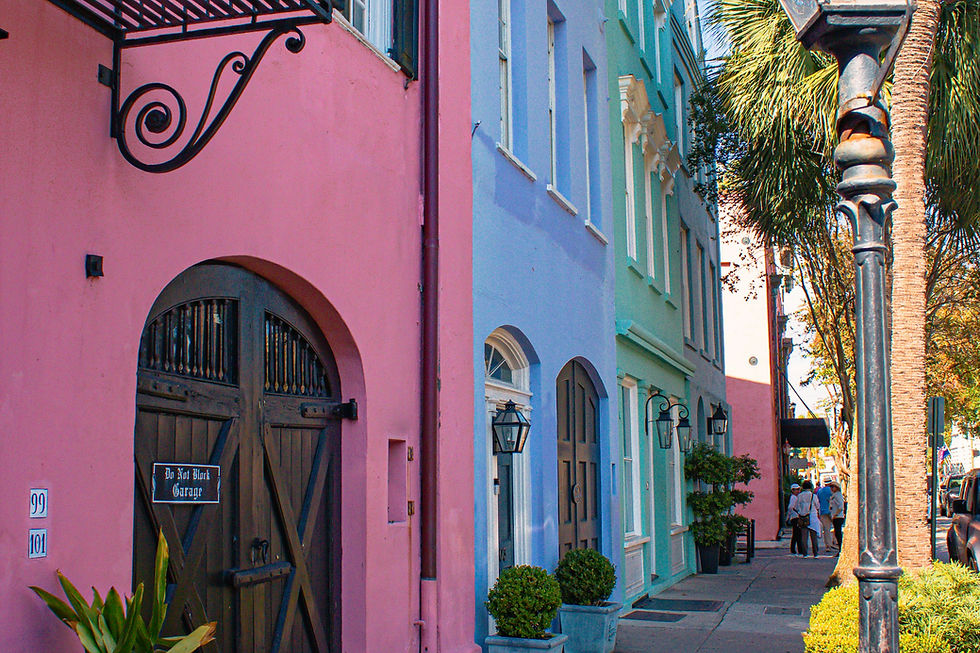
Nobody types “charming Lowcountry retreat” into Airbnb search. They type Rainbow Row, King Street, or the Battery — because Charleston's peninsula is small enough, and famous enough, that guests already know the landmarks by name before they ever open a listing. A description built on “historic charm” and “Southern hospitality” is competing against listings that name the actual place.
This guide is for hosts who run one to three Charleston-area properties and want to know which named places are worth putting in the listing, how far they really are from your door, and what to say instead of what every other listing already says. It's a place guide, not a regulation guide — the permit-category rules that govern where you can legally operate are covered in a separate post linked below.
What Guests Search vs. What Listings Say
Most Charleston listings describe location the same handful of ways: “in the heart of the historic district,” “steps from King Street,” “walking distance to everything downtown.” All three can be technically true and still tell a guest nothing, because the peninsula covers several square miles and “downtown” means something different from South of Broad than it does from the upper end of King Street. Guests searching for a Charleston stay are usually searching for one of a handful of named anchors — Rainbow Row, the Battery, King Street, Waterfront Park, or the City Market — plus a neighborhood name if they've already done some research. The listings that convert are the ones that name the actual anchor and give a real distance, not the ones that describe a feeling.
Rainbow Row and the Historic Peninsula
Rainbow Row is the stretch of thirteen pastel-colored historic houses along East Bay Street — one of the most photographed blocks in the city and a near-universal search term for anyone planning a Charleston trip. It sits at the southern end of the peninsula, a few blocks north of the Battery, in the neighborhood generally called South of Broad, which is mostly private residences rather than open STR territory.
If your property is within an easy walk of Rainbow Row, naming it and giving an honest walking time does more for your listing than any adjective. If it isn't, name the neighborhood you're actually in instead:
The French Quarter — the blocks around the City Market and the old customs house, dense with galleries and restaurants.
Ansonborough — quieter and mostly residential, north of the French Quarter.
Cannonborough-Elliotborough — west of King Street near the medical district, with its own small-business strip of cafes and boutiques.
The houses along Rainbow Row reflect the English single-house style common to Charleston's colonial-era building stock — narrow, side-facing lots with long piazzas built for the coastal heat. It's a detail worth a single sentence in a listing description if your property shares that architecture; guests who care about historic character notice the difference between a genuine single house and a newer build styled to look the part.
Each of these has a genuinely different character, and guests researching Charleston in any depth already know the difference — which means a listing that gets the neighborhood name right reads as more credible than one that defaults to a vague “downtown Charleston.”
The Battery and White Point Garden
The Battery is the seawall and promenade running along the southern tip of the peninsula, where the Ashley and Cooper Rivers meet to form Charleston Harbor. It's lined with some of the city's grandest historic homes and offers open harbor views that show up in a large share of Charleston listing photos, whether or not the property is actually nearby. White Point Garden sits at the point itself — a shaded park with Civil War-era cannons and a gazebo that's a common wedding-photo backdrop, and a genuine, walkable landmark for guests staying in South of Broad.
Properties within a few blocks of the Battery can reasonably reference it and White Point Garden by name. Properties further north on the peninsula are better served naming what's actually close — a stretch of King Street or the neighborhood itself — rather than stretching “near the Battery” to cover a fifteen-minute walk or a rideshare ride.
Waterfront Park
Waterfront Park runs along the Cooper River on the peninsula's eastern edge, built on a former shipping terminal and anchored by the Pineapple Fountain — a wading fountain that's one of the most-photographed spots in the city and a reliable landmark for families with kids. Vendue Range, the block leading into the park, has its own small cluster of restaurants and rooftop bars. It's a flat, easy walk from most of the French Quarter and Ansonborough, and a genuinely useful anchor for listings in that part of the peninsula — more specific and more search-relevant than a general “near the water” claim.
King Street: Lower, Middle, and Upper
King Street runs the length of the peninsula and is Charleston's main shopping and dining corridor, but it isn't one uniform strip — guests who've researched the city usually know it in three segments. Lower King, closest to the Battery, is known for antiques and galleries. Middle King is the main retail stretch, anchored by national and regional fashion brands. Upper King, sometimes called the Design District, is the newer, denser corridor of restaurants, bars, and boutique hotels that's grown fastest in recent years.
“Walking distance to King Street” means something different depending on which third of the street you're actually near, and a guest who books expecting the restaurant density of Upper King and lands three-quarters of a mile away in Lower King will notice the gap. Naming the specific stretch — and a couple of the businesses on it — is worth more than the street name alone.
The Charleston City Market
The City Market runs for several blocks along Market Street between Meeting Street and East Bay Street — a covered market with vendors selling sweetgrass baskets, local art, and Lowcountry food, surrounded by shops and restaurants. It's a reasonable, well-known anchor if your property is genuinely nearby, but like Rainbow Row, it covers a small, specific footprint. Don't stretch “near the Market” to describe a property that's actually most of a mile away; a guest who plans an evening walk there and finds it's twenty minutes each way will remember that in the review even if everything else about the stay was good.
Getting Around the Peninsula Without a Car
A meaningful share of Charleston's overnight guests fly into Charleston International Airport or arrive by rideshare and don't have a car for the stay, which changes what's worth naming in a listing. The peninsula's historic core is flat and walkable, but parking is genuinely difficult and largely permit-restricted for non-residents — telling guests exactly where to park, or that street parking near the Market or King Street isn't guaranteed, heads off a bad first review. CARTA operates a downtown trolley-style shuttle, and pedicabs and bike rentals are common in the flatter parts of the peninsula.
Cobblestone streets are common in the French Quarter and around the Market, which matters for anyone wheeling luggage or pushing a stroller straight from a rideshare drop-off — worth a mention in check-in instructions rather than something a guest discovers on arrival.
Horse-drawn carriage tours are a common sight on the peninsula's narrower streets, particularly around the Market and South of Broad, and they move slowly enough to briefly hold up rideshare pickups on tour routes — a useful one-line note for guests timing an early departure. If your property sits directly on a regular carriage route, it's also worth mentioning the clip-clop and occasional smell as an honest, low-key heads-up rather than something a guest associates with a bad first review.
Off-Peninsula: Daniel Island, James Island, Johns Island, and West Ashley
Not every Charleston-area short-term rental sits on the peninsula, and Charleston's own permit structure reflects that. Category 3 permits apply specifically to properties off the peninsula — Daniel Island, James Island, Johns Island, and West Ashley — each with its own character worth naming accurately rather than folding into a generic “Charleston” claim.
Daniel Island — a planned residential community northeast of downtown with its own town center, marina, and tennis facilities.
James Island — just south of the peninsula across the Ashley River, closer to Folly Beach than to downtown, good for guests wanting a quieter base with beach access.
Johns Island — further southwest, more rural, with farms, marshland, and a growing restaurant scene of its own.
West Ashley — directly across the Ashley River from downtown, largely residential and suburban, with a shorter drive into the peninsula than James or Johns Island.
If your property is in one of these areas, name the area and its actual distance to downtown rather than leaning on “Charleston” alone — a guest who books expecting a walkable peninsula stay and gets a twenty-minute drive from West Ashley will feel misled, even if nothing in the listing was technically false.
Permit Category and Listing Accuracy
Charleston's short-term rental permits fall into three categories, each capped at one unit per property. Category 1 applies to peninsula properties in buildings listed on the historic register. Category 2 applies to other peninsula buildings that are at least fifty years old. Category 3 applies to the off-peninsula areas covered above. A separate Short-Term Rental Overlay Zone is eligible for B&B or Commercial STR permits under different rules. None of this needs to appear in your guest-facing listing copy, but it's worth knowing which category your property falls under before writing a location claim your permit doesn't actually support — the full compliance breakdown is in the regulation guide linked below.
This matters most at the evaluation stage. A host or investor comparing a peninsula property against a West Ashley or James Island property is effectively comparing two different permit pathways, not just two neighborhoods — worth confirming before an offer goes in, not after.
Seasonal Swings Worth Planning Around
Spoleto Festival, running late May into early June, is the city's biggest annual draw and materially affects parking, noise, and short-term availability for anything near the peninsula's performance venues and squares — worth a direct mention if your property is close to the action. Hurricane season runs June through November, and a plain, calm cancellation and safety policy in your listing does more for guest trust than silence on the topic. Summer in Charleston runs hot and humid enough that air conditioning reliability and shaded outdoor space matter as much to guest satisfaction as anything else in the listing, and it's worth saying plainly rather than letting a guest discover it in July. The holiday season brings its own draw, with King Street and the Market decorated and events along the waterfront that pull visitors downtown even in the coolest stretch of the year.
What Every Charleston Listing Already Says
Search a handful of Charleston listings and the same phrases repeat: “steps from everything,” “historic charm,” “Southern hospitality,” “walk to King Street.” None of that differentiates one listing from another, and a guest scrolling past a dozen similar photos and similar copy defaults to price or review count instead. A few things that actually differentiate a listing:
The specific landmark or street segment and a real walking time, not an adjective.
Parking guidance — peninsula parking is genuinely difficult and permit-restricted; telling guests exactly where to park heads off a bad first review.
Heat and humidity honesty for June through September — AC quality and whether any porch or patio is actually shaded.
A specific nearby coffee shop or breakfast spot, named, instead of “great restaurants nearby.”
A one-line note on Spoleto Festival or another major event if you're within several blocks of the venues.
An honest note on stairs or cobblestones if your property or the walk to it involves either — historic Charleston buildings are old, and “historic” often means stairs.
Related Reading
Keep reading on same-cluster Crest & Cove pages that stay on labeled local lines without costume-corridor copy.
Hiring Property Your Charles DIY Ceiling: AirROI Pins, Not Leftover
How to Market a Short-Term Rental in Charleston SC Downtown Peninsula
Build a Direct Booking Engine for Your Charleston Vacation Rental
Charleston Beach Islands STR Report Folly vs Isle of Palms vs Kiawah
Real Estate to Airbnb Where to Invest in a Charleston Area STR
Photography That Books a Charleston STR Photography Shooting History
Get More Bookings in Charleston Slow Months a Shoulder Season
How to Choose a Vacation Rental Photographer in In Charleston
Hiring Charleston Agency Math: Costs Without Invented Occupancy
Should You Build a Direct Booking Site for a Charleston Beach Rental
Frequently Asked Questions
What are the real landmarks Charleston guests search for before booking?
Rainbow Row, the Battery, White Point Garden, Waterfront Park, King Street, and the City Market are the anchors most guests already know by name. Naming the one closest to your property, with an honest walking time, is more useful than describing the district generally. Guests searching for a Charleston stay are usually searching for one of a handful of named anchors — Rainbow Row, the Battery, King Street, Waterfront Park, or the City Market — plus a neighborhood name if they've already done some research.
Is Rainbow Row within walking distance of King Street?
Rainbow Row sits near Lower King in South of Broad, a short walk from the antique district there, but it's roughly a 20 to 25 minute walk from Upper King's restaurant corridor. Treat the two as separate anchors, not one walkable loop. Most Charleston listings describe location the same handful of ways: “in the heart of the historic district,” “steps from King Street,” “walking distance to everything downtown.” All three can be technically true and still tell a guest nothing, because the peninsula covers several square miles and “downtown” means something different from South of Broad than it does from the upper end of King Street.
How far is West Ashley from downtown Charleston?
West Ashley sits directly across the Ashley River from the peninsula — typically a 10 to 15 minute drive to downtown depending on traffic and bridge crossing, not a walkable distance. Name it as its own area rather than folding it into a downtown claim. If your property is in one of these areas, name the area and its actual distance to downtown rather than leaning on “Charleston” alone — a guest who books expecting a walkable peninsula stay and gets a twenty-minute drive from West Ashley will feel misled, even if nothing in the listing was technically false.
Can short-term rentals operate anywhere in Charleston?
Charleston runs three STR permit categories, each capped at one unit per property: Category 1 for peninsula buildings on the historic register, Category 2 for other peninsula buildings at least fifty years old, and Category 3 for off-peninsula areas — Daniel Island, James Island, Johns Island, and West Ashley. A separate Overlay Zone covers B&B and Commercial STR permits. See the full regulation guide linked below.
What's the difference between James Island and Johns Island?
James Island sits closer to the peninsula and to Folly Beach, with a more suburban feel. Johns Island is further southwest and more rural, with farms, marshland, and a growing restaurant scene of its own. Category 3 permits apply specifically to properties off the peninsula — Daniel Island, James Island, Johns Island, and West Ashley — each with its own character worth naming accurately rather than folding into a generic “Charleston” claim.
Is Spoleto Festival worth mentioning in a Charleston listing?
Yes, if your property is near the venues or squares involved. Spoleto runs late May into early June and materially affects parking, noise, and availability that weekend — worth a direct, one-line mention rather than letting guests discover it on arrival. Spoleto Festival, running late May into early June, is the city's biggest annual draw and materially affects parking, noise, and short-term availability for anything near the peninsula's performance venues and squares — worth a direct mention if your property is close to the action.
What should I name my Charleston listing to match how guests actually search?
Lead with the nearest real landmark — Rainbow Row, the Battery, a King Street segment, Waterfront Park, or the City Market — and an honest walking or driving time, rather than a general phrase like “historic charm” or “steps from everything.” Guests searching for Charleston already know these names. Search a handful of Charleston listings and the same phrases repeat: “steps from everything,” “historic charm,” “Southern hospitality,” “walk to King Street.” None of that differentiates one listing from another, and a guest scrolling past a dozen similar photos and similar copy defaults to price or review count instead.
What Guests Search vs. What Listings Say?
Nobody types “charming Lowcountry retreat” into Airbnb search. Crest & Cove Creative is a founder-led short-term rental marketing studio for independent hosts — we don't manage your calendar or take a commission; you stay in control of your listing.If you want a second read on how your Charleston listing is positioned against what guests actually search, visit crestcove.co or call(256) 998-7502.
What Every Charleston Listing Already Says?
They type Rainbow Row, King Street, or the Battery — because Charleston's peninsula is small enough, and famous enough, that guests already know the landmarks by name before they ever open a listing. Guests searching for a Charleston stay are usually searching for one of a handful of named anchors — Rainbow Row, the Battery, King Street, Waterfront Park, or the City Market — plus a neighborhood name if they've already done some research.
Work with Crest & Cove Creative
Write this town's year. Do not file another market's number as this stay.
Reach out at crestcove.co or (256) 998-7502.



Comments