
The Complete Visitor's Guide to Laughlin, NV for Hosts

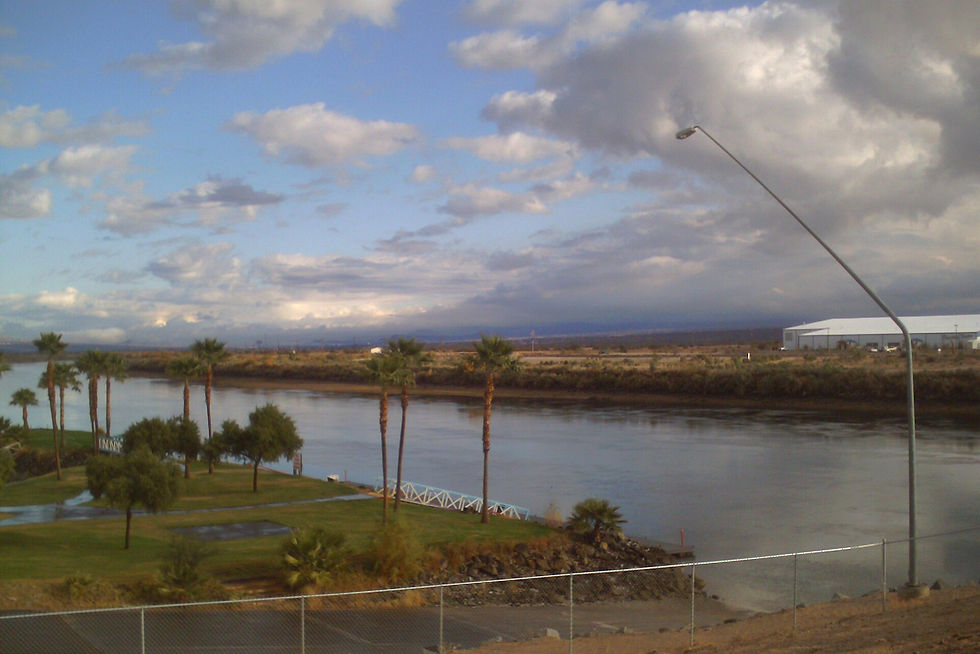
A Laughlin visitor's guide written for a short-term rental listing has one job: describe the trip a guest can actually take from this driveway, not the trip a guest could take from a different city an hour up the highway. Laughlin sits on the Colorado River, anchored by Davis Dam, and the guest who typed "Laughlin" into a search bar is looking for that river town, not a Strip substitute. Getting that distinction right in the listing description is the difference between attracting the guest who will actually book and losing them to a competitor's more specific copy.
The numbers back this up. On the current AirROI extract, covering August 2025 through July 2026, typical Laughlin listings earned about $4,222 for the year from a sample of 37 active rentals, with guests arriving mostly from Los Angeles, then Las Vegas, for a typical stay of about 7.4 nights and an average booking lead time of about 158 days. That is a river-town vacation pattern: longer stays, meaningful advance planning, and a guest base driving in from Southern California rather than flying into McCarran for a weekend.
Las Vegas listings earned about $25,178 last year from 4,381 active rentals on the same window, which is worth knowing but does not belong folded into Laughlin copy. The two towns have different guests taking different trips, and a listing that borrows Las Vegas language, whether that is a Strip photo, a casino-district promise, or a nightlife pitch, is selling a trip this driveway cannot deliver.
This guide walks through what a Laughlin listing should actually say: the river and dam experience guests are booking, the seasonal calendar that should drive pricing and photography timing, the registration requirements a host needs to have handled before advertising, and the specific mistakes that come from letting Las Vegas creep into Laughlin copy. This is not legal advice.
What Guests Are Actually Booking
The Colorado River is the reason most Laughlin trips exist. Guests come for river access, for Davis Dam, and for the specific pace of a smaller river town rather than a casino corridor. A listing description that leads with generic phrases like "Nevada getaway" or "gaming destination" without naming the river or the dam is failing to describe the trip the guest actually searched for, and it reads as interchangeable with any other Nevada town rather than as a Laughlin-specific stay.
Guest origin data from the extract shows most visitors arriving from Los Angeles, followed by Las Vegas, for a typical stay of about 7.4 nights. A Los Angeles-based guest driving in for a week-plus stay is planning a different trip than a Las Vegas day-tripper, and the listing copy, house guide, and photography should speak to that longer, more deliberate visit: parking instructions, the walk from the unit to the water, and what a full week on the river actually looks like day to day.
Average booking lead time runs about 158 days, meaning guests are often planning a Laughlin stay five months out. That lead time is a signal to have peak-season photography, pricing, and calendar availability live well ahead of June rather than scrambling to update a listing once the season is already underway. A guest booking in January for a June stay is looking at whatever the listing shows right now, not whatever it might look like closer to the date.
This also means a visitor's guide is not a one-time document. A host should revisit the guide at least once a season, checking that river conditions, seasonal hours at nearby attractions, and any changes to parking or access are current before the next wave of five-months-out bookings starts arriving. A guide written once and left untouched for a year tends to drift out of sync with the actual guest experience, particularly around a shifting seasonal calendar.
Why the Listing Should Never Borrow Las Vegas
Las Vegas listings earned about $25,178 last year from 4,381 active rentals on the same extract window, a different city with a different guest and a different trip entirely. A guest guide that names Las Vegas as part of the walk, whether that means describing a casino night on the Strip or a day trip to Las Vegas attractions as if they were steps from the unit, is promising something this driveway cannot deliver, and a guest who books expecting that access will arrive disappointed.
A listing that still says generic "Nevada" in its description in the middle of the year is already behind the guests planning ahead from Los Angeles and Las Vegas. Specificity is not a nice-to-have here; it is what separates a Laughlin listing that reads as a real, plannable river-town trip from one that reads as a template pasted in from somewhere else. Name the river. Name the dam. Name the actual walk from the property to the water.
A generic gallery that could belong to any Nevada town is a signal to a guest who searched for Laughlin specifically that they may have the wrong listing. Keep any neighbor-city photography, including Las Vegas skyline shots or Strip imagery, off a Laughlin listing entirely. A Las Vegas gallery belongs on a Las Vegas listing, not borrowed to fill out a Laughlin one that is short on real river photography.
This distinction extends to any comparative market reporting a host references publicly. A Laughlin market report should stand on its own, describing this town's revenue, occupancy, and guest pattern, with Las Vegas cited only as a labeled neighbor comparison rather than presented as a stand-in for local performance. Guests and prospective buyers researching Laughlin deserve a clear, unmixed picture of the town they are actually considering, not a blended narrative built for a much larger neighboring market.
The Seasonal Calendar Guests Are Booking Around
The extract identifies June, February, and July as Laughlin's peak revenue months, and October as the point where both revenue and occupancy are weakest on this sample. A visitor's guide, and the listing calendar behind it, should treat those as real planning inputs: peak-season pricing and availability should already be locked in well before June, and October copy should describe October honestly rather than repeating peak-season language into a month the data shows is genuinely slower.
Occupancy across the extract sits at about 23.5 percent with an average daily rate near $125, producing revenue per available rental of roughly $33. Those figures describe a market with real seasonal swings rather than flat year-round demand, and a guest-facing calendar that treats every month identically is missing the actual shape of Laughlin's visitor season.
About 24.3 percent of Laughlin listings currently carry a 30-night minimum stay setting. A host running a shorter-stay vacation rental should be clear in the listing about the actual minimum-stay policy in place, since a guest planning a typical 7.4-night river trip needs to know upfront whether a listing is even bookable for that length of stay before they invest time reading the rest of the guide.
Year over year, the extract shows Laughlin revenue down about 40.9 percent while supply held roughly steady, a shift a visitor's guide will not mention directly but that a host should keep in mind when setting expectations for how competitive the current booking environment is. A softer revenue year does not change what guests are looking for; it changes how much a precise, well-written guide matters relative to a generic one when a guest is choosing among several river-town options.
What a Visitor Actually Needs to Know Before Arrival
A useful pre-arrival guide answers the practical questions a Los Angeles or Las Vegas-origin guest will actually have: how to get from the highway to the property, where to park, what the first-night walk to the water looks like, and what is within reach on foot versus what requires a car. These are the details that make a 7.4-night stay feel planned rather than improvised, and they matter more to guest satisfaction than another paragraph of generic Nevada scenery description.
Because Laughlin sits more than 35 miles from the Las Vegas Convention Center, a guest guide should not imply that Las Vegas attractions are a quick add-on to a Laughlin stay. If a host wants to mention Las Vegas as an optional day trip for guests who want it, that should be clearly labeled as a separate excursion requiring real travel time, not folded into the property's core selling points as though it were a short walk away.
Superhost share across the current Laughlin sample sits at about 18.9 percent, which is a useful data point for a host thinking about what separates a strong Laughlin listing from an average one: consistent, honest, locally specific guest communication rather than a template that could apply to any Nevada rental. The guests booking a river-town stay months in advance are making a deliberate choice, and the listing that respects that specificity earns the booking.
A pre-arrival message sequence is a practical place to put this detail to work. Rather than a single generic welcome message, a host can walk a booked guest through the actual drive from Los Angeles or Las Vegas, note where market service tends to thin out along the way, and confirm parking before the guest ever arrives. This kind of specific, sequenced communication does more to reduce day-of confusion than a longer listing description, and it is the kind of detail that shows up in the reviews that eventually build toward Superhost status.
Building the Guide Itself
A complete Laughlin visitor's guide should be organized around what the extract actually shows: the river and dam as the core attraction, June, February, and July as the months to have the calendar and pricing fully ready, October as a month to describe honestly rather than oversell, and a 7.4-night typical stay planned around Los Angeles and Las Vegas guest origin. Every section should be specific to this driveway, this river, and this town.
Registration status belongs in the guide's operational backbone even if it is not guest-facing copy: Laughlin operates under unincorporated Clark County's Chapter 7.100, and the research on file shows the application period for a new Short-Term Rental Unit License closed on August 21, 2023, with a remaining annual license fee of $750 for units with three bedrooms or fewer, or $1,500 for larger units. Confirm current status at clarkcountynv.gov before publishing any guide implying the listing is fully compliant.
None of this operational detail needs to appear in the guest-facing sections of the guide, but it should sit in a host's internal reference document alongside the guide itself, reviewed each time the seasonal calendar is updated. A host who treats registration status as a one-time check rather than an ongoing confirmation risks discovering a lapsed or misunderstood license status at the worst possible time, in the middle of a peak booking season rather than well ahead of it.
Where a specific detail is missing from the current research, such as an exact address for a particular river access point or a precise walking distance from a given unit to the water, do not guess it to fill out the guide. A guest who arrives to find a described landmark is not where the listing said it was loses trust fast, faster than a guide that simply says to confirm the walk with the host directly.
The same discipline applies to the combined lodging tax rate that applies to a Laughlin stay. This research does not supply a specific verified rate, so a guide or checkout summary referencing local taxes should point a guest or a host to the county's own transient lodging pages rather than stating a figure that has not been confirmed. A guide that gets one number wrong invites a guest to question every other detail in it.
Related Reading
More The Complete Visitor's Guide to Laughlin, NV for Hosts host reading on desks, calendars, and listing clarity.
Frequently Asked Questions
What should a Laughlin listing description actually lead with?
It should lead with the Colorado River and Davis Dam, since those are the reasons most guests are booking a Laughlin stay in the first place. Generic phrases like "Nevada getaway" fail to describe the specific trip a guest searched for and read as interchangeable with any other town in the state. Guest origin data shows most visitors arriving from Los Angeles, then Las Vegas, for a typical stay of about 7.4 nights, so the description should speak to a real, plannable river-town visit rather than a vague regional pitch.
Can a Laughlin listing mention Las Vegas attractions to make the stay sound bigger?
Only with real caution, and never as though they are close by. Laughlin sits more than 35 miles from the Las Vegas Convention Center, and Las Vegas listings earned about $25,178 last year from 4,381 active rentals, a completely different city and guest pool. If Las Vegas is mentioned at all, it should be clearly labeled as an optional day trip requiring real travel time, not folded into the property's core selling points as though it were a quick walk from the river.
When should peak-season photography and pricing be ready?
The extract identifies June, February, and July as Laughlin's peak revenue months, and average booking lead time runs about 158 days. That means guests are often planning a stay five months ahead, so peak-season photography, pricing, and calendar availability should be live well before June rather than updated once the season has already started. A listing still showing generic photos going into spring is already behind the guests who are booking now for a summer trip.
Is October a bad month to advertise a Laughlin stay?
October shows up on the extract as both the revenue hole and the weakest occupancy month for Laughlin. That does not mean a listing should go dark; it means October copy should describe October honestly, rather than recycling peak-season language into a genuinely slower month. Being straightforward about what a stay looks like in October, including any quieter pace or off-season pricing, tends to build more guest trust than overselling a month the data shows is different from June, February, or July.
How long do guests typically stay in Laughlin, and where do they come from?
Typical stays run about 7.4 nights, with most guests arriving from Los Angeles, followed by Las Vegas, and an average booking lead time of about 158 days. This is a longer, more deliberately planned trip than a weekend getaway, so the listing and pre-arrival guide should be built around that pace: parking, the first-night walk to the water, and what a full week on the river actually involves, rather than short-stay language borrowed from a weekend-destination market.
What does a 30-night minimum stay setting mean for a visitor's guide?
About 24.3 percent of current Laughlin listings carry a 30-night minimum stay setting, which is a booking filter rather than a description of typical guest behavior. A host running a shorter-stay vacation rental should state the actual minimum-stay policy clearly in the guide, since a guest planning the typical 7.4-night river trip needs to know upfront whether a listing is even bookable for that length before reading further into the rest of the description.
Do I need a permit before publishing a Laughlin visitor's guide and listing?
Yes. Laughlin operates under unincorporated Clark County's Chapter 7.100, and the research on file shows the application period for a new Short-Term Rental Unit License closed on August 21, 2023. Properties with an existing license owe a remaining annual fee of $750 for three bedrooms or fewer, or $1,500 for larger units. Confirm current registration status at clarkcountynv.gov before publishing guest-facing copy that implies the listing is fully compliant and ready to accept bookings.
What separates a strong Laughlin listing from an average one?
Specificity. Superhost share across the current Laughlin sample sits at about 18.9 percent, and what tends to separate those listings from an average one is consistent, honest, locally specific guest communication rather than a generic Nevada template. Guests planning a river-town trip five months in advance are making a deliberate choice, and a listing that names the actual river access, the actual walk to the water, and the actual seasonal calendar earns that booking over one reading like a copy-paste.
Should I include generic Nevada stock photography if I don't have real river shots yet?
No. A gallery that could belong to any Nevada town signals to a guest who searched specifically for Laughlin that the listing may not be what they are looking for. It is better to use fewer, real photographs of the actual property and its actual proximity to the river than to pad a gallery with generic or borrowed imagery, including Las Vegas skyline or Strip shots, which do not belong on a Laughlin listing under any circumstance.
What revenue and occupancy numbers should inform how I price a Laughlin listing seasonally?
On the current extract, typical Laughlin listings earned about $4,222 for the year from 37 active rentals, with an average daily rate near $125 and occupancy of about 23.5 percent, producing revenue per available rental of roughly $33. June, February, and July stand out as peak months while October is the weakest. Pricing should reflect that real seasonal shape rather than a flat rate applied evenly across all twelve months of the calendar.
Work with Crest & Cove Creative
Guests search for Laughlin because they want the river, not a Strip substitute an hour away. A listing that names the Colorado River and Davis Dam books faster than one still speaking in generic Nevada language.
Crest & Cove Creative writes Laughlin visitor guides and listing copy that describe the actual river-town trip guests are booking, seasonal calendar included, instead of recycled Nevada boilerplate that could belong to any town in the state. If your Laughlin listing still reads like a template, reach out and we will rebuild it around what this specific driveway can actually deliver.
Reach out at crestcove.co or (256) 998-7502.


Comments