
Laughlin Tourism Data Hosts Should Track, Not Confuse in 2026


Laughlin's tourism story is genuinely appealing to write about: a riverfront town on the Colorado River with a walkable strip and a landscape that photographs well in a listing description. That appeal is real, and it's worth using in guest-facing copy. What it isn't, and what this post is here to keep separate, is a revenue figure. Typical listings in Laughlin earned about $4,222 last year, from 37 active rentals on the extract filed for August 2025 through July 2026, and that number needs to stay on its own line, distinct from any description of the river, the walk, or the town's general appeal to visitors.
This distinction matters more than it might sound like at first. It's easy, when writing a listing description or a pitch to a potential buyer, to let a strong sense of place quietly stand in for actual performance data. A river view is demand, in the sense that it draws visitors to the area, but it is not occupancy, and it is not the $4,222 typical annual figure this sample actually shows. Hosts who blur that line end up with guest-facing copy that oversells the destination without any of it being backed by the market's own numbers.
This post walks through what the tourism side of Laughlin actually contributes to a listing's story, what the extract's own numbers say about how that translates into bookings, and how to keep the two threads, visitor appeal and booked revenue, on separate, clearly labeled lines rather than letting one quietly substitute for the other in your own materials. This is not legal advice.
The Colorado River Is Demand, Not Occupancy
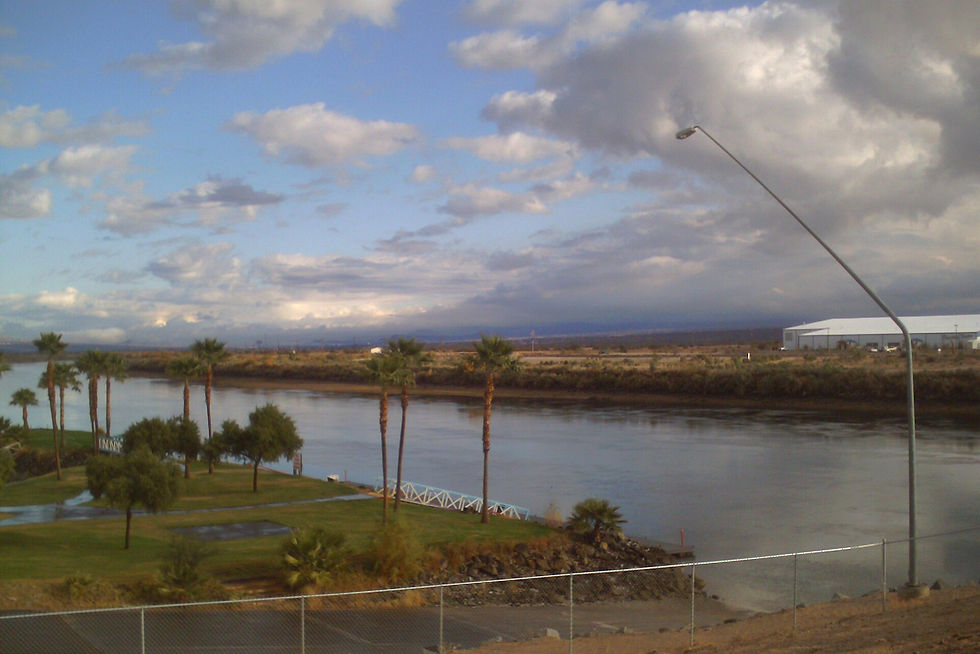
The Colorado River is the defining feature of Laughlin's setting, and it's a legitimate driver of visitor interest in the area. But it's worth being precise about what that means for a listing: the river is demand, in that it's part of why people choose to visit, not occupancy, which is a specific, measured figure. in this sample, occupancy came in at 23.5 percent, and that number reflects actual booked nights across the full year, not a general sense of how appealing the riverfront setting is to a prospective guest.
Using the river in a listing description is entirely reasonable, and probably a smart move for photography and the first few lines of a listing's copy. The risk is treating that appeal as though it were interchangeable with an occupancy or revenue projection. A listing description can say the river is beautiful and still need to be priced and calendared around the actual 23.5 percent occupancy figure this market shows, rather than an assumption that river-adjacent listings automatically fill at a higher rate simply because the setting is desirable.
The Riverwalk Is Landscape, Not Occupancy
The same logic applies to Laughlin's riverwalk specifically. The riverwalk is landscape, not occupancy: it's a real, walkable feature that adds to a guest's experience once they've booked, and it's worth mentioning in a listing description for exactly that reason. But like the river itself, it isn't a number, and it shouldn't be treated as a substitute for one when a host or a buyer is trying to underwrite a property's actual performance.
A listing that names the riverwalk clearly in its description is doing something useful for guest experience and search visibility. A listing description, or worse, a buyer packet, that implies the riverwalk's presence explains or predicts a specific occupancy or revenue outcome is doing something different, and less accurate. Keep the riverwalk in the sections of your copy that describe the experience, and keep $4,222, $125 ADR, 23.5 percent occupancy, and $33 RevPAR in the sections that describe performance.
Keep Laughlin Tourism Off the Revenue Line
Pulling this together into a single working principle: keep Laughlin tourism off the revenue line. Tourism content, the river, the riverwalk, the general appeal of the area, belongs in the parts of your materials that describe what a guest will experience. The extract's actual numbers, $4,222 typical annual revenue from 37 active rentals, a $125 average night, 23.5 percent occupancy, and about $33 RevPAR, belong in the parts of your materials that describe what a listing actually earns.
This separation matters most when these materials get combined into a single document, a buyer packet, an investor pitch, or even a detailed listing description that tries to do both jobs at once. The moment tourism language starts filling in for a missing or unclear revenue figure, the resulting document stops being reliable. Keeping the two threads distinct, even within the same piece of writing, protects the credibility of both.
What the Extract Actually Shows About Timing
Beyond the general tourism-versus-revenue distinction, the extract offers a specific, useful signal about when demand actually shows up in Laughlin: June is the strongest revenue month in this sample. That's a concrete, dated data point, distinct from a general sense that the area is popular with visitors year-round. If a listing's calendar and pricing strategy isn't reflecting June as a standout month, that's worth revisiting against this sample's actual seasonal pattern rather than a general assumption about river towns being consistently busy.
It's also worth being clear about what this sample does not establish. It does not attempt to translate visitor counts, tourism board figures, or general regional promotional material into a Laughlin-specific occupancy or revenue number. The $4,222 typical annual figure, the $125 average night, and the 23.5 percent occupancy rate are the actual booked-and-recorded figures behind this market, and June's strength as a revenue month is drawn from that same source, not from a separate tourism dataset that happens to describe the wider area.
Using the Colorado River Frame Without Overusing It
A reasonable question follows from all this: should every Laughlin listing use the same Colorado River frame in its description? Probably not as a blanket rule. The river is a genuine feature of the area, but leaning on identical language across every listing in a small, 37-listing market risks making descriptions blur together rather than standing out. Use the Colorado River to name the walk, the view, or the setting specifically as it applies to your property, not to replace the $4,222 figure with a generic regional pitch that could describe any riverfront listing in the area.
The more useful approach treats tourism language as one ingredient in a listing's overall description, alongside specifics about the property itself, honest photography, and pricing grounded in the actual $125 average night and 23.5 percent occupancy this sample shows. A listing that leads entirely with river scenery and never grounds itself in a specific, honest sense of what a stay actually costs and includes is missing half of what a strong description needs to do.
Where Remaining Rules Show Up in Tourism Copy
Tourism-focused listing copy still needs to stay compatible with what's actually allowed under Laughlin's rules. Quiet hours and house rules you can keep should be confirmed after remaining Chapter 7.100 files are confirmed at clarkcountynv.gov, since a listing description that promises an unlimited riverside gathering space or an open-ended evening atmosphere risks setting guest expectations the ordinance doesn't actually support.
This is where tourism appeal and compliance genuinely intersect: do not advertise a walk, or an experience, the ordinance does not actually allow this property to host. A description that leans heavily on the riverwalk and an active, social evening atmosphere needs to be checked against actual house rules and quiet-hour requirements before it goes live, rather than assuming the setting alone justifies whatever atmosphere the copy implies.
Keeping Laughlin and Las Vegas Tourism Copy Separate
The same discipline that applies to keeping tourism language separate from revenue figures also applies to keeping Laughlin's tourism identity separate from Las Vegas's. Las Vegas listings earned about $25,178 last year from 4,381 active rentals on the same August 2025 through July 2026 extract window, a much larger figure describing a genuinely different town with a different guest experience. Las Vegas is another market entirely at that scale, and its tourism identity, built around the Strip and a much larger entertainment footprint, shouldn't bleed into Laughlin's listing copy just because the two towns sit in the same corner of Nevada.
Hosts who underwrite Laughlin stays should keep $4,222 on 37 listings as its own figure, confirm the county desk that matches the actual parcel, and leave Las Vegas's tourism identity and revenue figures on a separate line entirely. A listing description that borrows Las Vegas language, an implied Strip-adjacent energy, or Las Vegas-scale expectations for a Laughlin property, is mixing two distinct guest experiences that this sample's own numbers show are genuinely different markets.
Putting It Together: A Description That Uses Tourism Without Misusing It
A strong Laughlin listing description can absolutely use the Colorado River and the riverwalk to set a compelling scene for a prospective guest. The river's presence is real, the riverwalk is a genuine amenity for anyone staying nearby, and naming both specifically helps a listing stand out in a small market of 37 active properties. None of that needs to be softened or avoided; it just needs to stay in its own lane within the broader description.
What separates a strong description from a misleading one is whether the performance claims elsewhere in the same materials, whether that's a buyer packet, an investor pitch, or a detailed FAQ section on the listing itself, actually trace back to this sample's real figures: $4,222 typical annual revenue, a $125 average night, 23.5 percent occupancy, and about $33 RevPAR, with June standing out as the strongest revenue month. Use the Colorado River to name the walk, not to replace $4,222. That single discipline, kept consistently across every piece of copy a listing produces, is most of what separates accurate tourism-informed marketing from an overpromising pitch that happens to have nice photos of the river.
A Small Market Where Every Listing's Story Counts
It's worth pointing out why this distinction between tourism appeal and actual revenue data matters more in a market like Laughlin than it might in a much larger one. With only 37 active listings in this sample, there isn't a deep pool of comparable properties diluting the impact of any single listing's marketing choices. A handful of descriptions that lean too heavily on river scenery without grounding themselves in real pricing and occupancy figures can meaningfully shape how the whole market gets perceived by prospective guests and prospective buyers alike.
That cuts both ways. A host who gets this balance right, using the Colorado River and the riverwalk to set a genuine, specific scene while keeping pricing and availability grounded in the extract's actual $125 average night and 23.5 percent occupancy, stands out more in a 37-listing market than the same approach would in a market with thousands of competing descriptions. Precision here is a real competitive advantage, not just good practice for its own sake.
The same logic applies to anyone building a pitch deck or a buyer packet that spans this market. In a small market, a single mismatched figure, a river photo standing in for an occupancy claim, or a vague reference to visitor counts substituting for the extract's actual $4,222 typical annual revenue, is more likely to get caught and questioned than it might be in a larger, more anonymous market where reviewers have less specific context to check claims against. Treating precision as a feature of the pitch, not a constraint on it, tends to produce materials that hold up better under real scrutiny.
Related Reading
More Laughlin Tourism Data Hosts Should Track, Not Confuse in 2026 host reading on desks, calendars, and listing clarity.
Frequently Asked Questions
Does the Colorado River explain Laughlin's occupancy numbers?
Not directly. The river is demand, meaning it's part of why visitors come to the area, but it is not occupancy, which is a specific measured figure. in this sample, occupancy came in at 23.5 percent, a number based on actual booked nights across the full year rather than a general sense of how appealing the riverfront setting is to a prospective guest.
Should I feature the riverwalk in my Laughlin listing description?
Yes, it's a genuine, walkable amenity worth mentioning for guest experience and search visibility. Just keep it in the sections of your copy that describe the experience, not the sections that describe performance. The riverwalk is landscape, not occupancy, so it shouldn't substitute for the extract's actual $4,222 typical annual revenue or 23.5 percent occupancy figures in a buyer packet or pitch.
What did the typical Laughlin listing earn last year?
Typical listings earned about $4,222 last year from 37 active rentals on the extract filed for August 2025 through July 2026. That figure, along with a $125 average night and 23.5 percent occupancy, is the actual performance data behind this market, separate from any description of the river, the walk, or the town's general tourism appeal.
Which month shows the strongest demand on this Laughlin extract?
June is the strongest revenue month in this sample, a specific, dated data point distinct from a general sense that the area draws visitors year-round. If a listing's calendar and pricing strategy doesn't reflect June as a standout month, it's worth revisiting against this sample's actual seasonal pattern rather than an assumption about river towns being uniformly busy.
Should every Laughlin listing use the same river-focused description?
Probably not as a blanket approach. The river is a genuine feature, but identical language across every listing in a small, 37-listing market risks descriptions blurring together. Use the Colorado River to name the specific walk, view, or setting for your property, alongside honest pricing grounded in the extract's actual $125 average night and 23.5 percent occupancy, rather than a generic regional pitch.
Can tourism appeal justify skipping specific pricing data in a buyer packet?
No. A buyer packet needs the extract's actual figures, $4,222 typical annual revenue, $125 average night, 23.5 percent occupancy, and about $33 RevPAR, regardless of how strong the tourism narrative around the river and riverwalk might be. Tourism language can support a pitch, but it can't substitute for the performance numbers a buyer actually needs to underwrite a decision.
Do Laughlin's house rules limit what tourism-focused listing copy can promise?
Yes. Do not advertise a walk or an experience the ordinance does not actually allow the property to host. Quiet hours and house rules should be confirmed after remaining Chapter 7.100 files are checked at clarkcountynv.gov, since a description promising an active riverside gathering space needs to match what's actually permitted under current rules, not just what sounds appealing in a listing draft.
Is Laughlin's tourism identity the same as Las Vegas's?
No. Las Vegas listings earned about $25,178 last year from 4,381 active rentals on the same extract window, a much larger figure describing a genuinely different guest experience built around the Strip. Laughlin's riverfront identity and Las Vegas's entertainment-district identity are distinct, and listing copy for one shouldn't borrow language or implied scale from the other.
How should I balance tourism language against performance data in my listing?
Use tourism language, the river, the riverwalk, the general setting, to describe the guest experience, and keep the extract's actual numbers, $4,222 typical annual revenue, a $125 average night, and 23.5 percent occupancy, in the sections describing performance. Blending the two into a single vague pitch is where listing copy and buyer materials start to lose credibility.
Is a strong tourism narrative enough to underwrite a Laughlin purchase decision?
No. A strong sense of place is a real asset for guest-facing copy, but underwriting a purchase decision needs the extract's actual figures: $4,222 typical annual revenue across 37 listings, a $125 average night, and 23.5 percent occupancy. Treat the tourism narrative as supporting context, not as a replacement for confirming these specific performance numbers.
What's the single rule for using the Colorado River in Laughlin listing copy?
Use it to name the walk, not to replace $4,222. The river and the riverwalk are legitimate, useful details for describing a guest's experience, but they should never substitute for the extract's actual performance figures, $4,222 typical annual revenue, a $125 average night, and 23.5 percent occupancy, in any material meant to describe how the listing actually performs.
Does featuring the river guarantee higher occupancy for a Laughlin listing?
No, and that assumption is worth avoiding directly. The river is demand in a general sense, not a guarantee of occupancy for any individual listing. this sample's 23.5 percent occupancy figure reflects the market as a whole, and a specific property's actual performance still depends on pricing, presentation, and calendar strategy rather than the riverfront setting alone.
Work with Crest & Cove Creative
The Colorado River and Laughlin's riverwalk are real reasons guests visit, but neither one is a revenue figure. See how this sample's actual $4,222 typical annual number should drive your pricing instead.
Guest-facing copy that names the river honestly, without letting it replace real performance data, builds more trust than a generic regional pitch. Make sure your listing balances tourism appeal with numbers you can actually stand behind.
Reach out at crestcove.co or (256) 998-7502.


Comments