
How to Market a Laughlin, NV Stay So It Actually Books


Marketing a Laughlin short-term rental well starts with a decision most listings get wrong: whether to describe this specific river town or to lean on generic Nevada language borrowed from somewhere else. On the current AirROI extract, covering August 2025 through July 2026, typical Laughlin listings earned about $4,222 for the year from a sample of 37 active rentals, with an average daily rate near $125 and occupancy of about 23.5 percent, producing revenue per available rental of roughly $33. Those numbers describe a specific, real market, and a listing's marketing should describe it just as specifically.
The most common marketing mistake in this town is borrowing from Las Vegas, where listings earned about $25,178 last year from 4,381 active rentals on the same window. Las Vegas is a different city, a different guest, and a different regulatory desk, sitting more than 35 miles from the Las Vegas Convention Center. A Laughlin listing that leans on Las Vegas photography, Las Vegas language, or Las Vegas comparisons is marketing a trip this driveway cannot actually deliver, and the guest who books expecting that trip will not leave a good review.
This page covers how to market a Laughlin stay using what the extract actually supports: naming the Colorado River and Davis Dam instead of generic Nevada language, timing photography and pricing around June, February, and July as peak months with October as the town's slow point, and being honest with guests about registration status and what a 30-night minimum stay setting does and does not mean for availability.
None of the guidance below invents a number or a landmark not already confirmed in the current research. Where a detail is missing, that gap is named rather than filled with a plausible-sounding guess.
Guest origin data from the extract shows most Laughlin visitors arriving from Los Angeles, followed by Las Vegas, for a typical stay of about 7.4 nights. That is a longer, more deliberately planned trip than a weekend getaway, and marketing built for that guest looks different from marketing built for a short-notice, impulse-driven traveler. The rest of this guide walks through exactly how that difference should show up in listing copy, photography, and timing. This is not legal advice.
Name the River, Not a Generic Nevada Caption
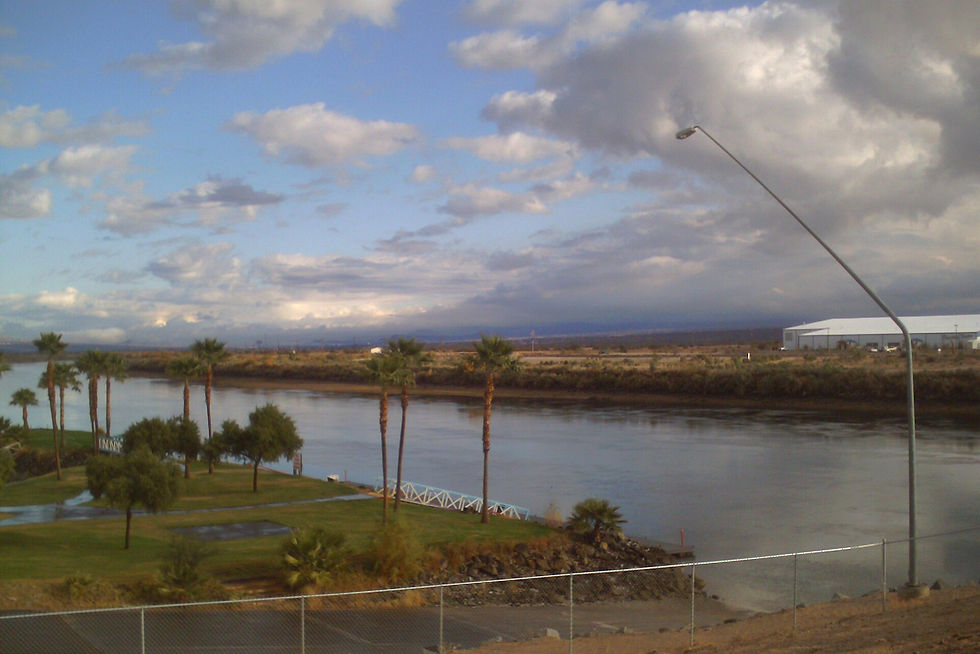
The single highest-leverage marketing change most Laughlin listings can make is replacing generic phrasing like "Nevada getaway" with specific language about the Colorado River and Davis Dam. Guests searching for Laughlin are searching for a river-town trip, not a state-level vacation, and a listing description that reads as interchangeable with any other Nevada town is failing the guest who typed this specific town's name into a search bar.
This matters even more given that a listing still using generic Nevada language deep into the year is already behind the guests planning ahead. With average booking lead time around 158 days, a guest searching in the middle of winter is often planning a June stay, and specific, river-focused language needs to be live and ready to be found well before that peak season arrives, not written reactively once the season has already started.
This is worth restating because it is easy to underestimate: a listing that waits until April or May to rewrite its description around the river and dam is publishing that improvement after a large share of June's bookings have already been made by guests who found a more specific competitor months earlier. Treat the rewrite as a winter task tied to the booking calendar, not a spring task tied to the season itself.
Specificity extends past the headline description into every section of the listing: name the actual walk from the property to the water, name Davis Dam if it is visible or nearby, and describe what a guest can realistically do on foot versus what requires a car. Vague, generic language forces a guest to do the work of imagining the trip; specific language does that work for them and builds the confidence that leads to a booking.
This same specificity should carry into the listing's title and its first line of description, since those are what a guest sees before deciding whether to click through at all. A title built around "Colorado River Retreat in Laughlin" or a similarly specific phrase does more marketing work than a generic "Cozy Nevada Getaway," because it immediately tells a searching guest that this listing understands exactly what kind of trip they are planning, before they ever reach the full description or gallery.
Do Not Paste Las Vegas Copy on a Laughlin Listing
Las Vegas listings earned about $25,178 last year from 4,381 active rentals on the same extract window, a completely different city and guest experience from Laughlin's own $4,222 typical revenue on 37 listings. A listing that borrows Las Vegas photography, references Strip attractions as though they are nearby, or leans on Las Vegas nightlife language to make a Laughlin stay sound more exciting is misrepresenting the actual trip a guest is booking.
This shows up most often in stock photography and in copy pulled from a template built for a bigger market. If a Laughlin listing's gallery could belong to any Nevada town, or if its description reads as though it were written for a Strip-adjacent property, that is a signal the listing needs a rewrite grounded in what this specific driveway actually offers, rather than what a bigger neighboring city offers.
Leave any Las Vegas gallery or Las Vegas-specific language on a Las Vegas listing. If a host wants to mention Las Vegas as an optional day trip, since Laughlin sits more than 35 miles from the Las Vegas Convention Center, that should be clearly labeled as a separate excursion requiring real travel time, not woven into the property's core marketing as though it were part of the immediate experience.
The same rule applies to guest-facing house guides and welcome messages, not just the public listing. A house guide that recommends Las Vegas restaurants or attractions as though they were a short trip away sets an inaccurate expectation before the guest even arrives, and correcting that expectation in person, mid-stay, is a worse guest experience than setting it accurately from the start. If Las Vegas belongs anywhere in Laughlin guest materials, it belongs in a clearly labeled optional day-trip section, with an honest note about the drive.
Protect June, the Month That Carries the Year
The extract identifies June, February, and July as Laughlin's peak revenue months, with October standing out as both the revenue hole and the weakest occupancy month on the same sample. Marketing effort, including refreshed photography, updated pricing, and any promotional push, should be concentrated ahead of June rather than spread evenly across the calendar, since the town's real seasonal shape means peak-season nights are worth protecting more aggressively than October nights.
A listing that still shows outdated photos or stale pricing going into spring is giving away its most valuable listing stock. Given the roughly 158-day average booking lead time, a host should treat mid-winter as the real deadline for having June-ready marketing live, not late spring when much of the peak-season booking window has already passed.
October should be marketed honestly rather than with recycled peak-season language. A listing that describes October the same way it describes June is not being straightforward with guests about what the stay actually looks like that time of year, and guests tend to notice and distrust marketing copy that does not match the actual experience once they arrive.
Year over year, the extract shows Laughlin revenue down about 40.9 percent while supply held roughly steady, which is a useful reminder that marketing effort matters more, not less, in a softer market. A listing competing for a smaller pool of bookings against a roughly steady number of competitors benefits disproportionately from being the most specific, most accurate, and most current option a guest finds, rather than one relying on the town's overall demand to carry a generic listing.
What a 30-Night Minimum Does and Does Not Solve
About 24.3 percent of listings currently set a 30-night minimum stay, while typical guest stays run about 7.4 nights across the sample. A host considering a long minimum stay as a marketing shortcut, a way to reduce turnover management without doing the harder work of marketing a shorter-stay listing, should understand that this setting is a booking filter, not an occupancy strategy, and it does not change the underlying 23.5 percent occupancy baseline.
Raising the minimum stay can actively work against a listing's marketing goals by excluding the roughly 7.4-night guest who represents the town's typical booking pattern. A host should weigh that trade-off explicitly rather than adopting a long minimum stay because it sounds like a way to reduce marketing effort; it may instead reduce the pool of guests the marketing is even reaching.
If a host does run a 30-night minimum listing, marketing for that specific model should target guests actually looking for extended stays, rather than using generic short-stay vacation language that will attract inquiries the listing cannot accommodate. Mismatched marketing and minimum-stay policy wastes inquiry volume on guests who were never going to be able to book.
Independent hosts still write most of Laughlin's 37-listing sample, which means the minimum-stay decision is usually made by the same person writing the marketing copy. That is an advantage: a host can align the listing's language, photography, and pricing calendar with the minimum-stay policy directly, rather than coordinating that alignment across a management company or a third-party marketing service that may not fully understand why the policy was set the way it was.
What Should Never Appear in Marketing Without Confirmation
Laughlin sits in unincorporated Clark County under Chapter 7.100, and the research on file shows the application period for a new Short-Term Rental Unit License closed on August 21, 2023. A listing's marketing should never imply full registration compliance without the host confirming current status directly, since guest-facing claims about being a licensed, compliant rental carry real weight with a guest deciding where to book.
Where a specific dollar figure is not available in current research, such as an exact local lodging tax rate a guest might see at checkout, marketing copy or a house guide should not guess one. Directing a guest to confirm details through the booking platform or county resources is more accurate than presenting an unverified number as settled fact.
For properties with an active license, the research shows a remaining annual license fee of $750 for three bedrooms or fewer, or $1,500 for more than three, under Chapter 7.100. A host is not obligated to display this fee to guests, but should be prepared to confirm registration status if a guest or platform asks, and should keep the underlying documentation current rather than treating a past confirmation as permanently settled.
The same discipline applies to any market-performance claim a host might want to use in marketing themselves as a listing manager or in outreach to prospective owners. Any revenue or occupancy figure cited should specify Laughlin's own $4,222 typical revenue, 23.5 percent occupancy, and 37-listing sample size, rather than a number pulled from Las Vegas or rounded up to sound more impressive than the extract actually supports.
Superhost share across the current sample sits at about 18.9 percent, and honest, accurate marketing tends to be part of what separates that group from an average listing. Guests who receive exactly the stay a listing described, rather than a stay that fell short of embellished or borrowed marketing claims, are the guests who leave the reviews that eventually build toward that status, which makes accuracy a long-term marketing advantage rather than a short-term constraint.
Related Reading
More How to Market a Laughlin, NV Stay So It Actually Books host reading on desks, calendars, and listing clarity.
Frequently Asked Questions
Should every Laughlin listing promise the Colorado River?
A listing should promise what it can actually deliver relative to the river, whether that is direct access, a nearby view, or simply proximity within a short drive, described specifically rather than vaguely. Guests searching for Laughlin are searching for a river-town trip, and a gallery or description that could belong to any Nevada town signals to that guest they may have the wrong listing. Name the actual walk from the property to the water rather than a generic river reference.
Why shouldn't a Laughlin listing use Las Vegas photography or language?
Las Vegas listings earned about $25,178 last year from 4,381 active rentals, a different city and guest pool sitting more than 35 miles from Laughlin. Borrowing Las Vegas photography, Strip references, or nightlife language to market a Laughlin stay misrepresents the actual trip a guest is booking. If Las Vegas is mentioned at all, it should be clearly labeled as an optional day trip requiring real travel time, never presented as part of the immediate property experience.
When should peak-season marketing be ready for June?
Given an average booking lead time of about 158 days, marketing for June, one of Laughlin's three peak revenue months alongside February and July, should be live by roughly mid-winter, not updated reactively once spring has already started. A listing with outdated photos or stale pricing going into spring is giving away its most valuable listing stock to competitors whose marketing was ready months earlier for the same guest search.
How should October be marketed differently from peak months?
October is Laughlin's revenue hole and its weakest occupancy month on the current extract, so October marketing should describe October honestly rather than recycling June-style peak-season language. Guests tend to notice and distrust copy that oversells a period the actual experience does not match. Being direct about what an October stay looks like, including any quieter pace or seasonal pricing, tends to build more trust than an inflated pitch.
Does a 30-night minimum stay help or hurt marketing efforts?
It can hurt if adopted as a shortcut, since about 24.3 percent of listings use that setting while typical guest stays run about 7.4 nights. Raising the minimum stay excludes the guest who represents the town's typical booking pattern and does not change the underlying 23.5 percent occupancy baseline. A host running a long-minimum-stay listing should target marketing specifically at extended-stay guests rather than generic short-stay language the listing cannot actually accommodate.
What revenue figures are safe to cite in Laughlin marketing materials?
Only Laughlin's own figures: about $4,222 typical annual revenue from 37 active listings, an average daily rate near $125, and occupancy of about 23.5 percent, all drawn from the August 2025 through July 2026 AirROI extract. Any revenue figure cited in marketing to guests, owners, or partners should specify this source and sample size rather than borrowing or rounding up numbers from Las Vegas, which describes an entirely different city and guest base.
Can a listing claim to be fully registered without confirming current status?
No. Laughlin operates under Chapter 7.100 of unincorporated Clark County's code, and the research on file shows the application period for a new Short-Term Rental Unit License closed on August 21, 2023. A listing's marketing should never imply full registration compliance without the host confirming current status directly with the county, since a guest-facing claim about being licensed carries real weight with a guest deciding whether to trust and book the property.
Where do most Laughlin guests come from, and how should that shape marketing?
Most guests arrive from Los Angeles, followed by Las Vegas, for a typical stay of about 7.4 nights. Marketing copy, including parking instructions and the first-night walk to the water, should speak directly to a guest driving in from Southern California for an extended stay, rather than language written for a fly-in weekend visitor. That origin pattern should inform practical details in the listing, not just the tone of the description.
What is the biggest marketing mistake a new Laughlin host tends to make?
Writing generic, Nevada-wide marketing copy instead of Laughlin-specific copy naming the Colorado River, Davis Dam, and the town's actual seasonal calendar. A listing description or gallery that could apply to any Nevada town fails the guest who searched for Laughlin specifically and signals a lack of local knowledge. Specific, accurate language describing the actual property and its actual surroundings consistently outperforms generic regional language in this market.
Should local lodging taxes or fees be quoted in marketing materials if the exact rate isn't confirmed?
No. Where current research does not supply a verified figure, such as an exact local lodging tax rate, marketing copy or a house guide should not guess or estimate one. It is more accurate to direct a guest to confirm checkout details through the booking platform or to reference official county resources than to present an unverified number as settled fact in guest-facing marketing materials.
Work with Crest & Cove Creative
A Laughlin listing that still speaks in generic Nevada language is losing bookings to one that names the Colorado River. Market this town's actual stay, on its actual $4,222 revenue baseline, not a borrowed Las Vegas pitch.
Crest & Cove Creative writes and rebuilds Laughlin listing marketing around what this specific driveway can actually deliver, from river-specific photography language to peak-season timing built on the real June, February, and July calendar. If your Laughlin listing is still leaning on generic Nevada copy or borrowed Las Vegas language, reach out and we will rewrite it around what actually books.
Reach out at crestcove.co or (256) 998-7502.


Comments