
Family Lake Traditions: Positioning That Holds Up Past Check-In

Updated: Aug 27
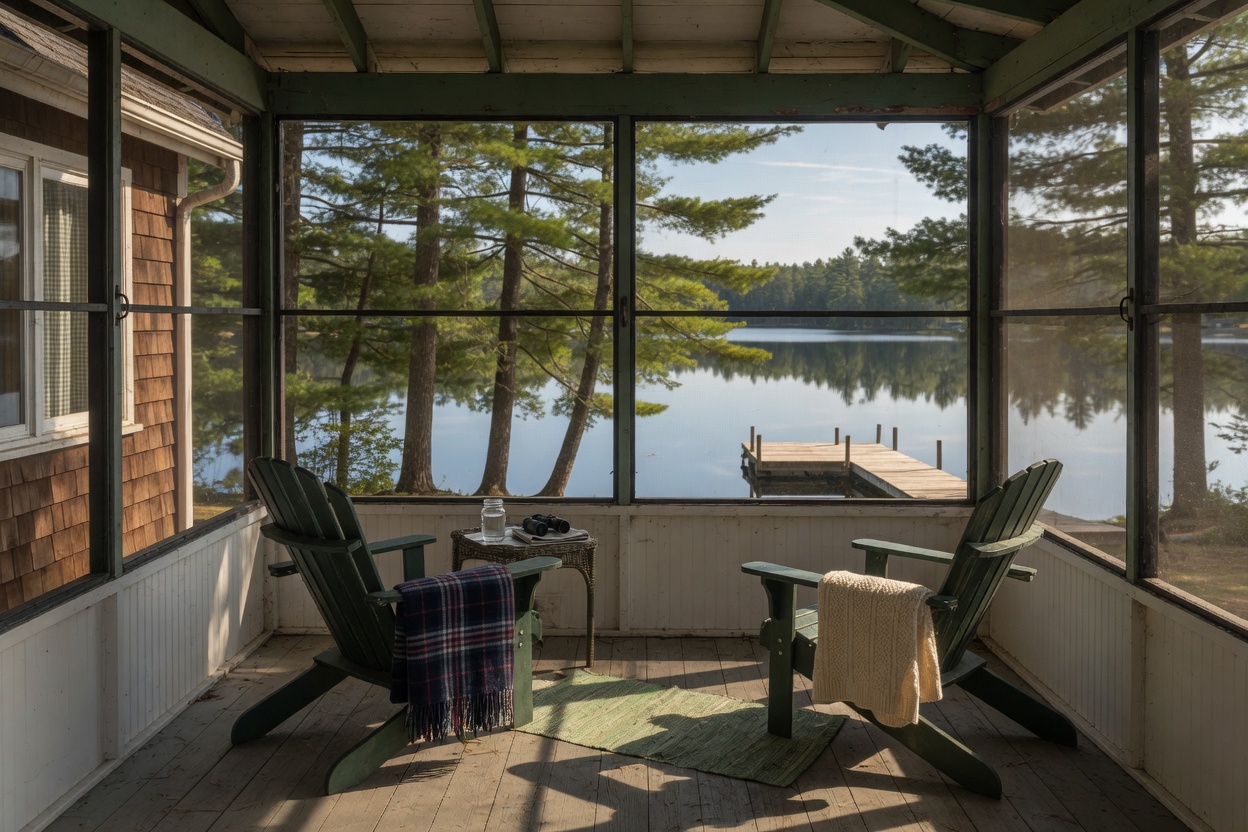
Ask a lake host why the same family books their house every July, and the answer is rarely the bedroom count. It's usually a dock, a porch, a fire ring, or some small ritual the kids have attached themselves to without anyone planning it that way.
Lake rentals get booked on nostalgia more than almost any other short-term rental category. Families return to the same shoreline, sometimes the exact same house, because the trip itself has become part of what the kids will remember — not just where everyone happened to sleep. Positioning a listing around that fact, using language about family lake traditions, works when it's true and backfires when it's decoration. The difference between the two isn't tone. It's whether the thing being described actually exists on the property.
The test a host can run themselves is simple and doesn't require touching occupancy data: does a tradition claim point at something concrete — the same dock, the same fire pit, the same porch, a routine that shows up consistently in photos, in the house rules, and in what past guests mention unprompted in reviews? A nostalgia pitch with nothing specific behind it reads as filler to a search algorithm and to a renter alike, and worse, it sets an expectation for the trip that a plainer, more accurate listing never would have created in the first place.
What follows is why the tradition framing works when it's earned, exactly where it tends to fall apart, the five most common ways hosts misuse it without realizing it, what a guest experiences when the story behind the listing is actually real, and a thirty-day self-check any host can run without any data beyond their own reviews. This is not legal advice.
Why the Tradition Frame Actually Works for Lake Hosts
Lake rentals skew heavily toward repeat, multi-generational trips. Grandparents, parents, and kids returning to the same lake summer after summer is common enough that many lake hosts recognize the same guest names showing up in their booking history year after year, sometimes for the exact same week. A tradition-based pitch taps directly into a decision that's already happening inside the guest's head before they ever open a search results page: choosing a specific house partly because of what it represents to the family, not purely its bedroom count or its nightly rate.
That gives a lake host a real differentiation lever that a purely amenity-driven listing simply doesn't have available to it. Two nearly identical houses on the same stretch of shoreline can compete on price and photo quality, and that competition tends to be a race to the bottom on both. Or one of those two houses can compete on a story instead — provided the story points at something a guest can actually verify once they arrive: a named dock, a specific fire ring, a recurring game night, a porch that shows up the same way in every guest's own photos, not just the listing's hero shot.
The lever only works when it's attached to something repeatable. A single great guest experience three summers ago isn't a tradition yet; a detail that shows up consistently enough that guests plan around it and mention it unprompted is. That distinction is the entire difference between marketing copy that converts and marketing copy that just sounds nice.
Where the Positioning Breaks Down
The most common failure is treating the phrase 'family tradition' as a caption rather than a description. A title or about-section that promises 'generations of memories' without naming a single space or ritual doesn't answer the two questions a family is actually asking before they book: what will we do here, and will the house still look like this when we arrive. Vague nostalgia language photographs identically to every other listing that borrowed the same phrase from a template, which means it does none of the differentiation work the host is hoping for.
The gap becomes obvious in operations long before it shows up in a review. If the about section leans hard on tradition language while the house rules page is thin — unclear quiet hours, no real trash-night instructions, a dock policy nobody explains until check-in — the emotional promise and the operational reality start to diverge from day one. It is that operational reality a guest actually runs into at 9 p.m. on a Saturday, not the warm paragraph in the listing description, that decides whether the trip felt like what was promised.
This matters more for lake properties than for most other categories because the dock and the water access are usually the single detail carrying the entire tradition pitch. If the listing photographs a dock that's shared with three neighboring properties, or a fire pit that's actually a portable ring stored in the garage most of the season, the gap between the pitch and the reality is the first thing a repeat-minded family notices, and the first thing they mention when they don't come back.
Five Ways Hosts Misuse a Tradition Message Without Meaning To
The same handful of patterns show up across listings that lean on tradition language without having earned it yet. The first is writing the story into the title while the photo set shows a generic rental with nothing distinct actually in frame — no named dock, no recognizable porch, nothing a returning guest could point to. The second is describing a 'family game night' or a 'dock tradition' that isn't actually set up for a guest to use: no games left out anywhere in the house, no marked or explained dock access, nothing physically present to back the phrase.
The third pattern is letting the tradition story live entirely in the marketing copy while check-in instructions and house rules stay bare-bones and inconsistent — which is the fastest way to create the gap described above. The fourth is changing the property's real amenities, removing a fire pit or swapping out porch furniture between seasons, without updating a listing that still sells the old version to a new guest who has no way of knowing the swap happened. The fifth is borrowing tradition language wholesale from a template or a competitor's listing without adapting a single word to what this specific house actually offers.
The mismatch from any of these five surfaces in reviews and in pre-arrival guest messages, not before booking. A guest who chose the house specifically because of a nostalgia pitch and then doesn't find what was promised is measurably more likely to mention the letdown publicly, because the pitch raised expectations higher than a plain, accurate amenities listing ever would have. The fix in all five cases isn't better phrasing — it's making the listing describe something that is genuinely, physically there.
What a Guest Experiences When the Tradition Is Real
When this kind of positioning actually works, it turns out to be nothing more exotic than accurate description with a consistent thread running through it. The same specific space — a screened porch, a particular swimming rock, a fire ring with a name the family gave it — shows up in the hero photo, gets named again in the about section, and is referenced a third time in a house rule or a welcome note left on the counter. None of it needs to be guessed. It needs to be the same true detail, told the same way, in the three different places a guest is actually going to read it before and during the stay.
The strongest version of this includes something a repeat guest can plan around on their own: a board-game shelf that's reliably stocked, a guest logbook left at the dock for people to write in, a recommended sunset-viewing bench with a specific name or location. None of this requires new construction or a furniture budget. It requires naming what's already sitting on the property consistently enough that a guest can form an expectation and then be right about it the moment they walk in.
This is also where a host's own routine matters more than the copy. A family that finds the same logbook at the dock three summers running, with entries from their own kids alongside strangers', has effectively co-authored the tradition the listing is describing. That's a far stickier form of loyalty than anything a paragraph of warm language can generate on its own, and it costs the host nothing beyond leaving the logbook where it's always been.
A Thirty-Day Check for Whether the Positioning Holds
A host can audit this without touching a single occupancy number. Read the title, the about section, and the house rules back to back and ask a plain question: do they describe the same house? It's common to find that the about section was written once, in an enthusiastic afternoon, and the house rules were bolted on later by someone else entirely — and the two documents no longer agree on what the property actually offers.
Then pull the most recent set of guest reviews and check whether anyone mentioned, entirely unprompted, the exact detail the listing is built around — the dock, the porch, the recurring routine — and whether they described it as present or as missing. This is the single most reliable signal available, because it's the only version of the feedback that wasn't solicited by a review-request template.
If the tradition language in the listing doesn't show up in anything guests mention on their own, that's the signal to either name the specific detail far more clearly and consistently across every section of the listing, or to drop the tradition framing entirely until the house has something concrete to attach it to. A vague nostalgia pitch with no guest confirmation behind it is doing measurably less conversion work than a plain, accurate description would do in its place — and it's actively raising the odds of a disappointed review from a guest who expected more than the house delivers.
When the Listing Already Tells the Story Without Saying So
Some lake houses don't need an explicit 'family tradition' line at all, because the photos, the consistent layout, and the reviews are already carrying that weight on their own. If several consecutive reviews independently mention the same porch, the same dock routine, or the same small welcome gesture, the story is already being told through guest voices, and it doesn't need a marketing paragraph stapled on top of it.
In that situation, the better use of a host's time is protecting what's already working rather than trying to write a better version of it. That means keeping the same furniture and layout that returning guests already recognize on sight, keeping the house rules current as anything on the property actually changes, and responding quickly enough that a returning family never has a reason to second-guess booking again. Positioning that matches lived guest experience will reliably outperform positioning that's purely aspirational, and it does so without the risk that comes from a promise the house can't quite back up.
The lake hosts who get the most out of this are usually the ones who treat the tradition not as a marketing asset but as a maintenance responsibility — the same dock cleared and usable every spring, the same fire ring in the same spot, the same logbook restocked when it fills up. The story writes itself once the physical continuity is actually there; the mistake most hosts make is trying to write the story before the continuity exists.
Turning a One-Time Detail Into an Actual Tradition
Most tradition claims start life as a single good moment that a host happened to notice and then generalized too quickly. A family leaves a review mentioning how much their kids loved the fire pit, and by the next season the listing description has been rewritten to promise 'a beloved family fire pit tradition' — a phrase describing something that has, so far, happened exactly once. The gap between a genuinely repeatable tradition and a single nice review is easy to miss from the host's side of the listing, and it's exactly the gap a returning family notices when the second visit doesn't match the first.
The more reliable approach is to let a detail earn its place in the copy over multiple seasons rather than a single stay. If the same fire pit gets mentioned by three or four different guest parties across two separate summers, unprompted and independently, that's a pattern worth naming explicitly in the listing. If it's mentioned once, it's worth keeping the fire pit well-maintained and waiting to see whether the pattern repeats before building marketing language around it. Patience here costs nothing and prevents the exact mismatch that turns a promising detail into a broken promise.
This also gives a host a practical way to build a tradition deliberately rather than hoping one emerges on its own. Leaving the same board games out every season, keeping a guest logbook at the same spot on the dock, printing a short welcome note that names the same specific space every time — these are small, repeatable, low-cost choices that, given enough seasons, turn into exactly the kind of verifiable detail this piece has been describing all along. The tradition isn't discovered in a burst of marketing inspiration. It's built one consistent season at a time, and the listing copy is the last step, not the first.
Related Reading
Related reading for Family Lake Traditions hosts: same-town spine first, then nearby geo lines. Skip costume national dumps that do not underwrite this driveway.
Frequently Asked Questions
What makes family lake traditions positioning credible instead of just decorative?
It names a specific, repeatable detail — a dock, a porch, a particular ritual — in the title, the about section, and the house rules, and that same detail shows up consistently in guest photos and in unsolicited reviews. Positioning without a named, verifiable detail is just a caption sitting on top of a generic listing, and guests notice the gap the moment they arrive.
Can a brand-new lake listing use tradition-based positioning honestly?
Yes, but conservatively. A house with no rental history yet can describe what's physically present on the property — a fire ring, a dock, a shelf of board games — without claiming a history of returning families that doesn't exist yet. The language should describe the setting accurately, not manufacture a track record the listing hasn't earned.
How many tradition details should a single listing actually include?
One or two, described well and backed up consistently, will outperform five described vaguely. A single ritual or space that's reliably confirmed in the photos and the house rules is more convincing to a family deciding where to book than a long list of nostalgic phrases with nothing specific attached to any of them.
Does emotional, nostalgia-driven copy actually help direct bookings?
It can, because a returning family's decision is often driven as much by the kids' experience as by price or square footage. But it only helps when the copy matches what guests actually get once they arrive. Mismatched nostalgia copy tends to generate more pre-arrival questions and post-stay complaints, not fewer, because it raises expectations the property then has to meet.
What's the fastest way to check whether tradition messaging is actually landing?
Read through the most recent set of guest reviews and look for whether anyone independently mentions the specific detail the listing promotes. If nobody has after several stays, the messaging isn't working the way it reads on the page, no matter how well it's written, and it's worth either sharpening the detail or dropping the framing.
Should house rules match the warm tone of a tradition-based listing description?
The tone can stay warm, but the substance underneath it — quiet hours, parking, trash pickup, dock policy — needs to be exact and easy to find. A rules section that reads like an afterthought sitting next to warm marketing copy is one of the fastest ways to create the exact mismatch guests notice first, usually within the first evening of their stay.
What happens if a property's amenities change after a tradition-based listing goes live?
The listing needs to be updated immediately. A tradition pitch built around a fire pit or a dock that no longer exists in that form, or that's since changed use, is one of the fastest ways to generate a genuinely negative review, because it directly contradicts the emotional promise the guest booked on.
Does tradition-based positioning replace the standard fundamentals of STR marketing?
No. Photo order, accurate house rules, response time, and pricing still do the majority of the conversion work on any listing. Tradition positioning is a differentiator layered on top of those fundamentals for a lake property specifically — it's never a substitute for getting the basics right first.
Is tradition positioning more useful for lake rentals than for other property types?
It tends to be, because lake trips are disproportionately repeat and multi-generational compared to other short-term rental categories. A mountain cabin or a city apartment can use similar language, but the repeat-visit pattern that makes a tradition claim verifiable shows up most reliably in lake markets, where the same families return to the same shoreline year after year.
What's the single biggest mistake hosts make when writing this kind of copy?
Writing the tradition into the title and the about section before confirming the house can actually back it up — no games left out for the 'game night' mentioned in the listing, no marked dock for the 'private dock access' claim. The fix is always the same: make the listing describe something that's physically, verifiably there before publishing the promise.
Work with Crest & Cove Creative
Family Lake Traditions: Positioning That Holds Up Past Check-In only works when the listing shows operable facts guests can check. Cut soft slogans that hide the real stay.
If the tradition in your listing description isn't showing up in your own guest reviews yet, that's the fix to make before writing another word of copy. Reach out at crestcove.co or (256) 998-7502. Send the live listing draft and the facts you can actually cite.
Reach out at crestcove.co or (256) 998-7502.


Comments