
Market Melbourne Beach for the Guest Who Actually Books

Updated: Aug 29
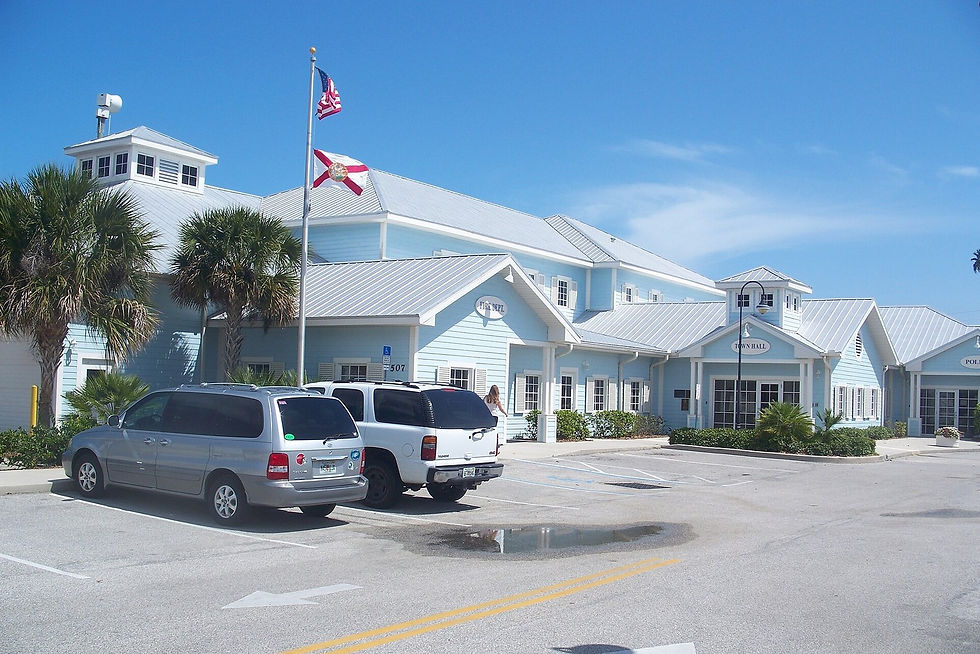
A guest who searched Melbourne Beach specifically has already made a choice, and marketing that stay well means honoring that choice rather than overwriting it with borrowed Space Coast branding. Melbourne Beach's typical listing earns about $61,047 a year across 288 active listings, with a $519 average daily rate, 39.3 percent occupancy, an average stay of 6.1 nights, and a 78-day average lead time, and every marketing decision on this page gets weighed against that actual, confirmed picture rather than a wishful projection.
The most common way a Melbourne Beach listing loses that guest is by leaning on Cocoa Beach costume language, a pier, a boardwalk scene, a level of tourist bustle Melbourne Beach's quieter, more residential stretch of coast simply doesn't offer, or by quietly averaging in Indialantic's separate, smaller $43,931 year. Both mistakes point the same direction: describing a town the guest didn't actually book, and setting an expectation the actual stay can't meet on arrival day.
What follows covers where to point the camera and the copy, how to read this town's actual peak calendar, and what belongs in a marketing plan built specifically for the guest this data shows is already choosing Melbourne Beach over its neighbors, month by month and photo by photo, rather than a generic year-round approach borrowed from a different market entirely. This is not legal advice.
Market Ocean Avenue and the Sand Out Front, Not a Regional Postcard
Put Ocean Avenue, or the specific stretch of sand directly in front of the house, in the very first photo and the opening line of the listing description. A guest comparing Melbourne Beach listings against each other, and against Indialantic and Cocoa Beach listings a search algorithm might also surface, notices immediately which description actually names a real, checkable place and which one recycles generic beach-town language that could describe any stretch of Florida coast.
Spessard Holland is genuine scenery and a real mention worth including, provided it's reachable from the actual door in question, but it functions as mood and context, not as an occupancy driver. Naming it accurately, as a nearby park rather than a private amenity, keeps the marketing honest about what the stay actually offers versus what's simply nearby and worth a short drive during the trip.
This specificity is the entire competitive advantage a Melbourne Beach listing has over a broader regional search result. A guest who already typed the town's name into a search bar is rewarding exactly this kind of concrete, checkable detail over generic "steps to paradise" copy that could describe any Florida beach town, and that reward shows up directly in click-through and booking conversion rates a host can actually track.
Price and Pitch Against the Real $61,047 Year, Not Indialantic's
Melbourne Beach's confirmed typical year is $61,047 across 288 listings, with $519 ADR and 39.3 percent occupancy. Indialantic, the neighboring town to the north, runs its own separate year of about $43,931 across 67 listings, with different peak months and a New York-heavy guest origin, distinct from Melbourne Beach's own pattern. Marketing copy, and internal pricing decisions, should be built on Melbourne Beach's own figures, never Indialantic's smaller sample, no matter how close the two towns sit geographically.
This distinction matters beyond simple accuracy. A marketing plan that quietly borrows a neighboring town's rate or occupancy assumption risks setting prices or expectations that don't match what Melbourne Beach's own market can actually support, in either direction, and either error costs bookings or leaves revenue on the table over the course of a full season.
Keep every rate benchmark, every occupancy assumption, and every seasonal claim labeled to Melbourne Beach specifically in your own marketing notes, the same discipline this page applies throughout, so a marketing plan built today still holds up when you revisit it next season and need to check whether the underlying assumptions still match what the town's data actually shows, rather than a set of figures that quietly drifted out of date somewhere along the way.
Read the Peak-3 Calendar Before You Set a Promotional Schedule
Melbourne Beach's peak-3 months are March, June, and February, with March the single strongest month in this data. September is the clear seasonal hole. A marketing and promotional calendar built around this actual pattern, pushing harder on demand generation ahead of the March peak, planning conservative pricing and a targeted push around September specifically, will outperform a generic year-round promotional cadence spread evenly across every month regardless of actual demand.
Indialantic's own peak-3 runs March, February, and April, a genuinely different stretch that shares March but does not share June. That difference is a useful, concrete example of why blending the two towns' calendars into one regional seasonal narrative produces a marketing plan that's wrong for both towns some of the year, missing real opportunity in one and overspending in the other.
June deserves particular attention here specifically because it's easy to overlook: it's one of Melbourne Beach's own peak-3 months, but it is not on Indialantic's peak-3 list. A marketing plan copied from a neighboring town's calendar, or from a generic Florida beach-season assumption, would likely under-market June, missing real demand this town's own data shows is already there and ready to be captured with the right pricing and promotional attention.
Turtle Lighting Season Is a Guest Promise, Not an Occupancy Lever
Turtle nesting and lighting season is genuine, worth-featuring context for guests visiting during the relevant months, since it affects appropriate outdoor lighting and offers a real, tangible local detail that helps a listing feel specific rather than generic. Feature it as a guest promise and a piece of local etiquette, something the house can actually deliver on, when it can genuinely be kept without overstating what the season actually involves for a visiting guest.
It should never be marketed as a driver of booking demand or folded into occupancy projections. Treating a seasonal environmental note as though it explains a spike in bookings conflates two different categories of information, and a marketing plan that leans on turtle season as a revenue story is building on a foundation the actual data doesn't support, which can lead to disappointing results when the season passes without the projected lift.
The honest version of this marketing element is simple: mention it where it's true, be specific about the lighting curfew and why it matters, and keep it entirely separate from the pricing and occupancy assumptions built from the town's actual $61,047 typical year and its confirmed peak-3 and low-season calendar.
Build the Gallery Around the Actual Stay, Not Just the Landmark
For every landmark-framed photo in a listing gallery, at least two photos should show the actual stay itself, the rooms, the layout, the specific view from the specific windows, across what a typical 6.1-night visit actually looks like. A gallery dominated by landmark shots and light on interior, livable detail sets an expectation about the surroundings while leaving the guest guessing about the thing they're actually paying to stay in for nearly a week of their trip.
This ratio matters more in Melbourne Beach specifically because the town's own identity, quieter, more residential, is easy to lose if the gallery leans too heavily on wide beach shots that could be Cocoa Beach, Indialantic, or any other stretch of Space Coast sand. Interior and layout photos anchor the listing to the actual house in a way landmark photos alone cannot, and they answer the practical questions a guest is actually trying to resolve before booking.
With an average stay of 6.1 nights and a 78-day average lead time, guests booking here are planning a real, extended visit well in advance, and they're evaluating the gallery carefully during that planning window rather than making a snap decision. A gallery that answers their practical questions, where do we actually sleep, cook, and sit, alongside the scenic promise earns more of that extended browsing time than landmark photos alone ever could.
What Doesn't Belong in the Marketing Plan
Do not mash Cocoa Beach's pier-town branding, or the broader City of Melbourne's own separate data, into Melbourne Beach's marketing copy or pricing notes. Melbourne Beach is a specific, smaller, quieter town with its own confirmed operating year, and any borrowed branding or borrowed data undermines the accuracy that makes a hyper-local marketing plan actually work in a competitive, 288-listing market.
Do not treat the town's own $61,047 typical year as an annual guarantee applied evenly across every month; the peak-3 and September-hole pattern above should shape both pricing and promotional spend across the calendar rather than a flat, undifferentiated approach that leaves real seasonal opportunity uncaptured during the strongest months and overspends during the weakest ones.
do not guess a local registration fee or overstate what any single amenity, turtle season included, does for occupancy. A marketing plan built on the town's own confirmed figures, honestly stated including the seasonal hole and the neighboring town's separate numbers, is the version that survives real guest scrutiny and repeat-booking word of mouth over the long run.
Reviewing and Updating the Plan Each Season
A marketing plan built from this data should not be treated as a one-time setup task. Revisit the peak-3 calendar, the town's typical year, and the 30-plus minimum-stay share at least once a season, since supply and demand patterns can shift as new listings enter Melbourne Beach's board and as Indialantic's own separate market continues to move on its own trajectory alongside it.
Check the listing's actual booking data against the town-wide averages periodically rather than assuming a plan built once at launch still fits a full year later. A listing consistently underperforming the town's 39.3 percent occupancy figure during the March, June, or February peak-3 window deserves a closer look at its pricing, photography, or copy before the next peak season arrives and the same underperformance repeats itself.
Pay particular attention to how the listing performs during September specifically, since a marketing push aimed at the town's named seasonal hole is exactly the kind of effort that's easy to skip once the peak-3 months have already delivered strong results earlier in the year. A host who tracks September's performance year over year, alongside the town's own broader trend, will notice a genuine shift long before it shows up as a surprise in annual revenue at the end of the season.
Finally, keep a simple internal record of which claims in the listing are verified against this town's own data versus which are general impressions carried over from an earlier draft. That record makes it far easier to catch a Cocoa Beach phrase or a borrowed Indialantic figure that crept back in during a quick edit, before a guest, or a future host taking over the listing, ever has the chance to notice it first.
This kind of periodic review costs little time relative to the risk it prevents. A listing that quietly drifts toward generic Space Coast language over several small edits, each individually harmless, can end up sounding indistinguishable from a dozen other nearby listings within a year or two, losing exactly the hyper-local advantage that made it competitive with Melbourne Beach's own 288-listing board in the first place, an advantage worth actively protecting rather than assuming will simply persist on its own without any ongoing attention or periodic review.
Related Reading
Related reading for Melbourne Beach hosts: same-town spine first, then nearby geo lines. Skip costume national dumps that do not underwrite this driveway.
Frequently Asked Questions
What is Melbourne Beach's actual typical annual revenue?
Approximately $61,047 across a sample of 288 active listings, with a $519 average daily rate, 39.3 percent occupancy, a 6.1-night average stay, and a 78-day average lead time. Use this figure specifically for Melbourne Beach marketing and pricing decisions, not a number borrowed from a neighboring town's separate, smaller market that runs a different seasonal calendar entirely.
Should Melbourne Beach marketing copy mention Cocoa Beach?
No, not as the lead. Cocoa Beach's pier-town energy and tourist density don't describe Melbourne Beach's own quieter, more residential character. Copy that borrows Cocoa Beach's branding sets an expectation the actual stay can't deliver on arrival, and that mismatch shows up in reviews rather than repeat bookings, costing more in lost future demand than any short-term marketing shortcut could save.
What are Melbourne Beach's peak months for marketing purposes?
March, June, and February make up the peak-3, with March the single strongest month in this data. September is the clear seasonal hole. A promotional calendar built around this actual pattern, pushing harder ahead of March and planning specifically for the September dip, outperforms a generic year-round marketing cadence spread evenly across every month regardless of real demand.
Can I use Indialantic's peak season for Melbourne Beach marketing?
No. Indialantic's own peak-3 runs March, February, and April, sharing March with Melbourne Beach but not June. June is one of Melbourne Beach's own peak-3 months and is not on Indialantic's list, so a marketing plan copied from Indialantic's calendar would likely under-market a real demand month for Melbourne Beach specifically, missing bookings a correctly targeted push would capture.
Does turtle nesting season help fill bookings in Melbourne Beach?
Not directly. Turtle lighting season is genuine, worth-mentioning guest context, real and specific enough to feature honestly, but it isn't an occupancy driver and shouldn't be marketed or budgeted as one. Feature it as a guest promise and etiquette note, kept entirely separate from the town's actual pricing and occupancy figures used to build a realistic marketing budget.
What should the first photo in a Melbourne Beach listing show?
Ocean Avenue, or the specific stretch of sand directly in front of the house, named clearly rather than a generic beach-town image. That specificity is the primary competitive advantage a hyper-local listing has over broader regional search results, and it's worth prioritizing above a more generic, polished but placeless photo that could belong to any listing on the Space Coast.
How many photos in the gallery should show the actual stay versus landmarks?
For every landmark-framed photo, aim for at least two showing the actual interior, layout, and views of the stay itself. With guests planning an average 6.1-night visit 78 days ahead, a gallery heavy on scenery but light on livable detail leaves them guessing about the thing they're actually paying to stay in for nearly a full week of their trip.
Is Melbourne Beach's revenue growing or shrinking?
The town's typical year has moved in a direction worth including honestly in a marketing and pricing plan, alongside supply growth over the same period. A pricing strategy should account for both the confirmed $61,047 revenue level and how the market has been trending, rather than treating the headline figure as a static, permanent number that never changes season to season.
Who manages the most Melbourne Beach short-term rental listings?
Villatel holds the largest single managed share, with 42 of the town's 288 listings, though the majority of listings remain independently run. That fragmentation means there's no single dominant professional standard already set for the whole market that an independent listing's marketing needs to match to compete effectively for the same 288-listing pool of guests.
Should local tax desks be mentioned in guest-facing marketing?
Generally no; local registration and tax details, like the Town Desk or Brevard County Clerk desks, belong in a host's own compliance checklist rather than guest-facing marketing copy. This page focuses on marketing decisions; confirm any specific local requirement directly with the relevant office rather than including unverified figures in either compliance notes or marketing materials aimed at guests.
Work with Crest & Cove Creative
A gallery heavy on borrowed Cocoa Beach frames sells a Saturday this quieter driveway can't deliver. Market the stay guests already searched for.
Crest & Cove Creative helps independent Melbourne Beach hosts build listing copy and galleries around the town's own confirmed guest data, not a borrowed neighbor's branding. Reach out at crestcove.co or call (256) 998-7502 to have your listing reviewed.
Reach out at crestcove.co or (256) 998-7502.


Comments