
How to Market a Flagstaff or Williams Rental for All Four Seasons, Not

Updated: Aug 26
Walk through the listing photos on most short-term rentals in Flagstaff or Williams and you can usually guess which month they were shot in, because it's the same month every year: a July afternoon, blue sky, maybe a Grand Canyon day-trip photo dropped in for good measure. The description reads the same way — built for one traveler, one season, one pitch — and then left alone while three other seasons of demand pass through the search results without ever being addressed directly.
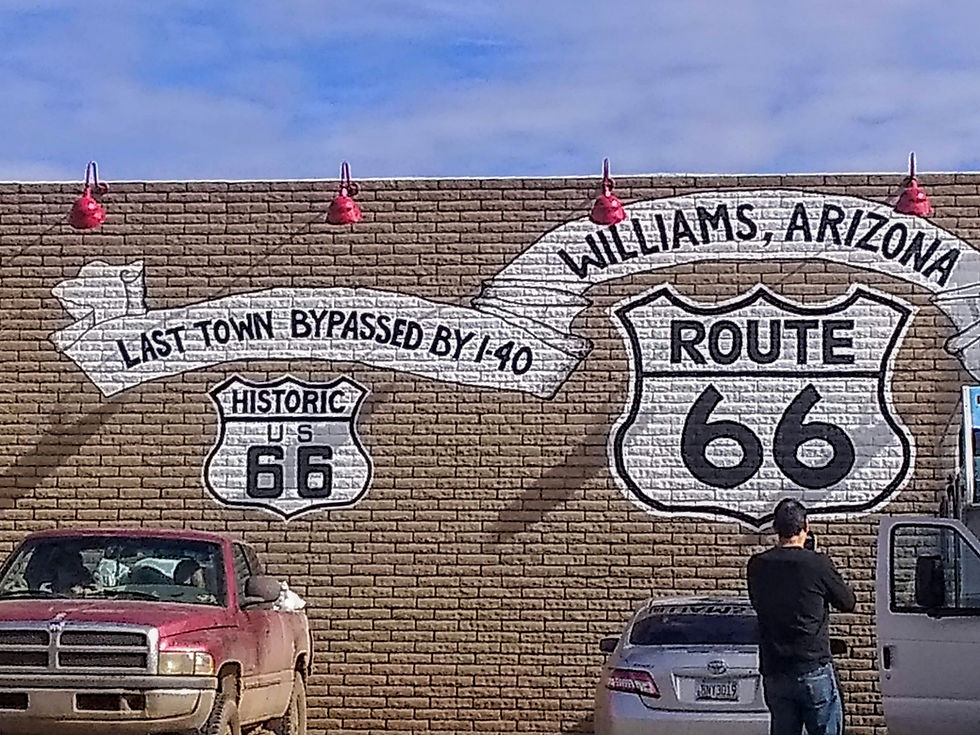
That's the gap worth closing, because this corner of northern Arizona doesn't actually have one demand driver. It has four, spread across the calendar, each pulling a different kind of traveler who is searching for different things: summer heat-escape and Grand Canyon travelers, fall color-chasers, winter ski travelers headed to Arizona Snowbowl, and a steady baseline of Northern Arizona University family traffic and Route 66 heritage travel that doesn't care what season it is at all. Almost none of that shows up in a listing built around one photo set and one paragraph of copy.
None of what follows requires touching the property. It's a description and photo strategy — updating emphasis, not renovating a room — built around who is actually searching in each part of the year, and what a Williams listing should say differently from a Flagstaff listing even though they're twenty-some minutes apart on the same highway.
The advantage available here isn't subtle. A host who updates seasonal framing four times a year is already doing more marketing work than most of the competition manages in five, and in a market that leans on organic search rather than referral traffic to fill a calendar, that gap between a listing that rotates and one that doesn't shows up directly in which page a guest actually lands on. This is not legal advice.
Summer: Two Audiences Reading the Same Month Differently
Summer is the demand driver almost every host in this market already understands, which is exactly why it's usually the only one that makes it into the listing at all. The problem isn't that summer copy exists — it's that most of it is written for a single reader, when summer in Flagstaff actually carries two distinct audiences who are searching for different reasons in the same weeks.
The first is the Grand Canyon-bound traveler: someone planning a multi-day itinerary who needs a comfortable overnight base and is comparing listings on proximity, comfort, and how easy the logistics look on paper. The second is the Phoenix-area guest who isn't interested in the Canyon at all — they're escaping triple-digit heat and searching for elevation, shade, and cooler evenings within driving distance of home. A listing that only speaks to the first audience is invisible to the second, even though both are booking the exact same July week.
A Flagstaff listing has room to run both angles at once, because both audiences are searching for Flagstaff specifically: Grand Canyon gateway language aimed at out-of-state visitors planning ahead, and heat-escape framing timed to run alongside Phoenix's worst summer stretches, when local searches for cooler nearby lodging spike. They don't need to be blended into one paragraph — they read better as two clearly separated pitches inside the same description, since a Phoenix guest skimming for relief from the heat and a Grand Canyon planner mapping a multi-day route are looking for entirely different reassurances in the first few lines.
Fall: Selling a Real Window Without Promising a Date
High-country aspen color runs roughly from late September into November as a general shoulder-season stretch, and the traveler it draws looks nothing like a summer guest. These are shorter trips, more scenery-focused, and guests who tend to book closer to the actual date once color reports start circulating rather than planning months ahead the way a Grand Canyon itinerary usually gets planned.
That unpredictability is exactly why so many listings default to summer photos year-round instead of reshooting for fall. It's the path of least resistance — and it's also the reason a listing that does put in the seasonal photo work stands out immediately against a search results page full of identical July shots. A handful of fall images and a paragraph naming the season is a small lift that most competitors simply haven't bothered with.
The honest way to market this window is to describe it without pinning it to a specific date, since color timing shifts year to year with the weather and no host can promise a guest that a particular week will deliver peak color. What a listing can do instead is mention nearby drives and viewpoints in general terms, note that the window runs from late September into November, and let a guest do their own research on timing closer to the trip.
That kind of honesty — naming the season and its uncertainty rather than staying silent about it or overpromising a date — is the sort of detail that builds trust well past the booking itself. It shows up later in reviews that mention the host set accurate expectations, and in repeat searches from guests who come back once they've learned to trust that a listing tells them the truth about what a season can and can't guarantee.
Winter: Naming the Mountain Most Listings Never Mention
Arizona Snowbowl sits about 14 miles, roughly a 30-minute drive, from Flagstaff, and it's the demand driver a surprisingly large share of listings never name directly. Skiers and snowboarders don't search generically for "Flagstaff lodging" the way a Canyon day-tripper might — they search for lodging near the mountain by name, which means a listing that never mentions Snowbowl is functionally invisible to that entire pattern of search behavior, no matter how close the property actually sits.
The fix is specific and cheap: name Arizona Snowbowl directly in the title or the first line of the description during ski season, rather than burying it deep in a paragraph a guest may never scroll to. The 2025-26 season runs November 21, 2025 through April 12, 2026 — close to 134 days — with average winter snowfall in the area running around 108 inches, which is a real, recurring window worth marketing against rather than treating as an afterthought to summer.
It's also worth remembering that a strong snow year can stretch that window well past what a listing's copy assumes. The prior 2024-25 season ran from November 8 through June 1, a 185-day record season — a useful reminder that ski-season copy shouldn't be too rigid about an end date, since the mountain itself sometimes runs longer than the calendar a listing was written against.
Guests booking a ski trip are reading for these details specifically — distance, drive time, snowfall, season length — and a listing that answers them upfront converts better than one that only shows summer photos with a winter price tag attached. That kind of specificity is a small addition to a listing description, but it's exactly the sort of detail generic Canyon-focused copy never includes, because it was never written with a skier in mind in the first place.
The Baseline Underneath the Three Peaks
Underneath the three seasonal peaks — summer, fall color, and ski season — sits a baseline of travel that isn't tied to any single season at all: Northern Arizona University family visits and Route 66 heritage travel. This is the steadiest traffic a listing can build calendar stability around between the seasonal peaks, and it's also the segment most listings never think to write for, because it doesn't show up as dramatically in search volume the way "Grand Canyon" or "ski trip" does.
NAU enrolled 28,468 total students as of fall 2024, with 21,398 on the Flagstaff campus itself, and that population drives real, recurring visitor traffic around move-in weekends, family weekend, graduation, and athletics events — whatever the calendar says about aspen color or snowpack that particular week. A listing that mentions proximity to campus and names these recurring dates directly is speaking to a guest who is searching for something very specific and time-bound, and who often can't find lodging any other way once the closest hotels sell out around those weekends.
This baseline demand doesn't replace the seasonal peaks — it fills the gaps between them, which is exactly the role it's suited for. A listing that only markets to Canyon travelers, color-chasers, and skiers is still leaving the calendar weeks between those peaks unaddressed, and NAU and Route 66 travel is the most reliable way to fill them without guessing a new audience out of nothing.
Williams and Flagstaff Are Not the Same Pitch
A Williams listing should lead with Grand Canyon Railway proximity and value positioning, because that's the specific thing a Williams stay offers that a Flagstaff stay doesn't. The Grand Canyon Railway departs from Williams and runs a roughly two-hour-and-fifteen-minute ride each way to Grand Canyon Village, operating daily year-round through the current season — a genuinely different logistics story than driving yourself, and one worth naming explicitly rather than assuming a guest already knows Williams has a train station at all.
Flagstaff, in exchange, gets NAU traffic, closer Snowbowl access, and a broader base of shoulder-season and steady-state demand that a Williams listing simply doesn't have on its own. Flagstaff to the South Rim runs about 80 miles, roughly one hour and 41 minutes via US-180 and AZ-64 — a longer drive than from Williams, which is part of why a Flagstaff listing shouldn't try to compete on Canyon-access value the way a Williams listing can. It should compete on everything else the town offers instead.
A Flagstaff listing has room to run all four seasonal angles across the year — summer, fall, winter, and the NAU/Route 66 baseline — while a Williams listing does better leaning hard into the one thing it does better than anywhere nearby: getting a guest onto that train without the drive. The right move for a Flagstaff host is a listing description and photo set that rotates emphasis by season, not one fixed pitch that assumes every guest is a Canyon day-tripper. The right move for a Williams host is closer to the opposite: one consistent, value-forward pitch built around the railway, refreshed seasonally in the details but not in the core message.
Why Search Visibility Carries More Weight Here
In most established short-term rental markets, a meaningful chunk of bookings comes from local host networks trading referrals, cross-promoting in a dedicated Facebook group, or pointing overflow guests to each other when their own calendar is full. That infrastructure exists in plenty of markets and quietly does real work filling gaps a listing's own marketing never touches.
Flagstaff and Williams don't have much of that infrastructure to lean on. As of this writing, no dedicated Flagstaff STR-specific Facebook group turned up in research, which means organic search visibility — not local word of mouth — is the primary discovery channel for a new listing here. That changes the math on everything above: seasonal copy, named landmarks, and honest fall-color framing aren't a nice-to-have polish pass. They're most of what determines whether a guest finds the listing at all, because there's no informal referral network quietly picking up the slack when the listing itself doesn't do the work.
Building the Four-Season Calendar Without a Rebuild
None of this requires a rebuild of the listing itself — it requires four update passes a year, each one swapping emphasis rather than starting over. Heading into summer, the description leads with Grand Canyon gateway language and Phoenix heat-escape framing side by side. Heading into fall, that gets replaced with color-season photos and honest, undated seasonal language about the late-September-through-November window. Heading into ski season, Snowbowl gets named in the title or first line, along with the current season's dates and snowfall context. And year-round, underneath whichever seasonal pitch is live, the NAU and Route 66 baseline framing stays in place as the connective tissue between peaks.
The listing photos should follow the same rhythm — not a full reshoot four times a year, but a rotating hero image and a few supporting shots that match whichever season is currently live, so a guest searching in October doesn't land on a page that still looks like July. That single change, done consistently, is often the difference between a listing that reads as actively managed and one that reads as abandoned after the initial launch.
The host who treats this as a quarterly fifteen-minute task — swap the lead paragraph, swap a few photos, check that the current season's specific details are still accurate — is doing more seasonal marketing work than most of the competition attempts in a full year. In a market where organic search is the primary discovery channel and there's no local referral network to fall back on, that discipline compounds directly into which listings guests actually find.
Related Reading
Keep reading on Crest & Cove — same-cluster pages and the listing system we use nationwide:how-to-market-a-short-term-rental-in-destin-fl-the-world-s-luckiest-fishing-village-playbook·str-platform-fee-comparison-what-airbnb-vrbo-and-booking-com-actually-cost-mountain-cabin-operato·Cape May Nj Report: AirROI Towns, Not Leftover Occupancy.
Frequently Asked Questions
Do I need separate listings for each season, or can one listing cover all four?
One listing can cover all four seasons well. The work isn't building separate listings — it's rotating the lead paragraph and a handful of photos four times a year so the description matches whichever audience is actually searching that month. A Grand Canyon traveler, a Phoenix heat-escapee, a color-chaser, and a skier can all be served by the same property with the same core amenities, just described differently depending on when they're reading it.
How do I market fall color season without promising a guest a specific date?
Name the general window — roughly late September into November — without claiming a peak date, since color timing shifts year to year with the weather and no host can guarantee it. Mention nearby drives and viewpoints in general terms rather than a specific overlook on a specific day, and let the guest do their own closer-to-the-date research once color reports start circulating. Being upfront about that uncertainty builds more trust than a confident date that might turn out wrong.
Why should a Flagstaff listing mention Arizona Snowbowl by name instead of just saying "near skiing"?
Skiers and snowboarders search for lodging near the mountain by name, not with a generic term like "near skiing." A listing that never says Snowbowl directly is invisible to that specific search behavior, even if the property sits close enough to be a genuinely convenient base. Naming it in the title or the first line of the description during ski season puts the listing in front of the exact search a skier is actually running.
What's the actual difference in how a Williams listing should be marketed versus a Flagstaff listing?
A Williams listing should lead with Grand Canyon Railway proximity and value positioning, since the train departs from Williams and runs about two hours and fifteen minutes each way to Grand Canyon Village, operating daily year-round. A Flagstaff listing doesn't have that same single strong hook, but it has more to work with overall — NAU traffic, closer Snowbowl access, and a broader base of shoulder-season demand — so it does better rotating through all four seasonal angles rather than leaning on one fixed pitch.
How far is Flagstaff from the Grand Canyon compared to Williams?
Flagstaff to the South Rim runs about 80 miles, roughly one hour and 41 minutes via US-180 and AZ-64, which is a longer drive than the trip from Williams. That's part of why a Flagstaff listing shouldn't try to compete with Williams on Canyon-access value directly — Williams has the shorter drive and the railway option, and a Flagstaff host is better served leaning into the other three seasonal audiences instead.
Who books during Arizona's ski season, and what are they looking for in a listing?
Skiers and snowboarders headed to Arizona Snowbowl, which sits about 14 miles — roughly a 30-minute drive — from Flagstaff. They're reading for specifics: distance to the mountain, drive time, current-season snowfall and dates, and whether the listing acknowledges skiing at all. The 2025-26 season runs November 21, 2025 through April 12, 2026, close to 134 days, with average winter snowfall around 108 inches — details worth stating directly rather than assuming a skier will infer them from generic winter photos.
Does NAU actually drive enough visitor traffic to be worth marketing toward?
NAU enrolled 28,468 total students as of fall 2024, with 21,398 on the Flagstaff campus, and that population generates real, recurring visitor traffic around move-in weekends, family weekend, graduation, and athletics events. It's not a seasonal peak the way summer or ski season is — it's steadier, calendar-anchored demand that fills gaps between the bigger seasonal pulls, which makes it worth naming in a listing even though it won't show up as a dramatic spike in search interest.
Is it worth reshooting listing photos for every season?
A full reshoot four times a year isn't necessary, but rotating a hero image and a few supporting photos to match the current season is worth the modest effort. Most competing listings default to the same summer photos year-round because reshooting feels like more work than it actually is, which is exactly why a listing that does update its photos seasonally stands out against a results page full of identical July shots.
Why does search visibility matter more in Flagstaff and Williams than in other short-term rental markets?
Many established markets have host networks trading referrals or a dedicated local Facebook group that quietly fills booking gaps. As of this writing, no dedicated Flagstaff STR-specific Facebook group turned up in research, meaning that infrastructure largely doesn't exist here. That makes organic search the primary way new guests find a listing, which raises the stakes on writing seasonal, specific, search-friendly copy rather than treating it as optional polish.
How often should I actually update the seasonal framing on my listing?
Four times a year lines up naturally with the demand pattern here: once heading into summer, once for fall color season, once for ski season, and the NAU/Route 66 baseline framing staying constant underneath all three as connective tissue. Each update is a lead-paragraph and photo swap, not a rebuild, which keeps the task small enough to actually happen on schedule instead of being deferred indefinitely.
Work with Crest & Cove Creative
Two towns, one highway between them, and four completely different reasons guests are searching for a place to stay — most listings here are still only answering one of them. Name the failure mode the guest can check on the.
If your Flagstaff or Williams listing still shows the same July photos in December, start with the season that's live right now: swap the lead paragraph, name the landmark that season's guest is actually searching for, and let the rest wait for its turn. Name the failure mode the guest can check on the listing.
Reach out at crestcove.co or (256) 998-7502.



Comments