
How to Market a Short-Term Rental in Holden Beach NC the Quiet Family

Updated: Aug 28
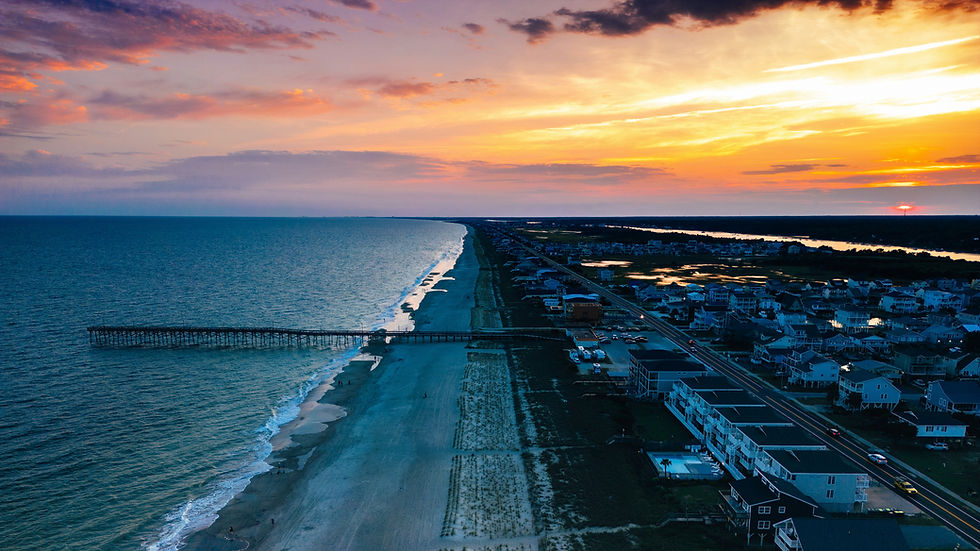
Holden Beach is one of the few coastal North Carolina markets that have built their entire identity around what they do not have. No high-rises. No commercial boardwalk. No amusement rides. No bar district. The town's official motto, prominently displayed on signs and on the Town Hall website, is "The Family Beach," and the surrounding housing data backs the positioning up: roughly 2,486 housing units on the island against a year-round resident population of about 921 (2020 US Census), meaning the overwhelming majority of homes here are second homes and vacation rentals owned by the same family for generations. Hosts who try to compete on volume, nightlife adjacency, or boardwalk energy will lose. Hosts who lean into the quiet, the multi-generational rhythm, and the repeat-family booking pattern will outperform the platform-default listings every season.
This is the marketing playbook for independent operators on Holden Beach in 2026 — what the actual demand driver looks like, the regulatory facts you have to get right, the property-manager competitive landscape you are working against, and the seven concrete moves that separate a Holden Beach listing earning 30 to 35 weeks a year from one earning 18 to 20.
The Holden Beach Market in Plain Numbers
Holden Beach occupies an approximately eight-mile-long, low-rise barrier island in Brunswick County on the southern North Carolina coast, bounded by Shallotte Inlet on the west and Lockwoods Folly Inlet on the east. The town covers roughly three square miles of land. The year-round resident population is about 921 per the 2020 US Census, with current estimates ranging from 919 to 962. That number matters less for marketing than the housing-unit count: with about 2,486 housing units against under a thousand residents, the units-per-resident ratio is roughly six times the US average — a dead giveaway that the market is structurally a vacation-rental and second-home economy, not a year-round residential one. Almost every house you can rent here is part of someone's family vacation pattern, either as a rental or as a private second home, and the supply is overwhelmingly mid-rise residential cottages and oceanfront beach homes rather than condo towers or hotel rooms.
The only third-party "best family beach" accolade that holds up to verification is from May 2012, when American Profile magazine named Holden Beach the "Best Family Beach in the United States" on a recommendation from coastal scientist Stephen P. Leatherman (Dr. Beach). This is a 13-year-old recognition from a publication that has since shut down, and it should be cited as historical context rather than current ranking. More recent claims circulating online — that Holden Beach was named the number-one calmest beach by Southern Living or Travel + Leisure in 2025 — could not be verified against either publication's actual editorial output, and hosts should not include them in marketing materials. The town's own "The Family Beach" motto and the resident-to-housing-unit ratio do enough work on their own.
Tax and Regulatory Reality for Holden Beach Hosts
The Brunswick County Room Occupancy Tax applies to short-term lodging on Holden Beach, and the standard rate hosts should plan to collect and remit is 3% of the rental price. This is the same rate that applies in Oak Island and the rest of unincorporated Brunswick County, and it is in addition to the North Carolina state and local sales taxes that platforms typically collect on the host's behalf. Vrbo has been collecting state sales, local sales, and county occupancy taxes on North Carolina bookings under 90 nights since October 1, 2019; Airbnb's North Carolina tax collection coverage at the same county-occupancy specificity is less consistent, so independent hosts should confirm what is and is not being remitted on their behalf and file the gap directly with Brunswick County rather than assume the platforms are handling everything. The question of whether Holden Beach itself levies a municipal occupancy tax on top of the county's three percent has not been independently confirmed for 2026 — hosts should verify the current combined rate directly with the Town of Holden Beach Finance Department and the Brunswick County Tax Office before their first guest stay of the year.
On the registration and permitting side, the regulatory baseline for any North Carolina coastal town is the Schroeder v. City of Wilmington decision (282 N.C. App. 558, 872 S.E.2d 58, April 5, 2022), which preempts municipal short-term rental registration requirements under N.C.G.S. 160D-1207(c) while preserving the town's authority to enforce zoning, parking, occupancy, noise, garbage, insurance, and posted-safety-info ordinances. Hosts should not assume Holden Beach has no operative ordinances simply because Schroeder limits registration — the town's quantitative noise ordinance, low-speed-vehicle rules, and fireworks prohibition are all enforceable. The current Town of Holden Beach Code of Ordinances should be reviewed directly at hbtownhall.com before publishing any host materials that reference specific town rules.
The Operational Constraints That Belong in Your Listing
Three specific Holden Beach ordinances are worth pulling out because they appear in real guest experiences and need to be set up correctly in the listing copy. The town's noise ordinance is quantitative and time-stratified — it uses objective decibel thresholds with stricter limits at night rather than the older officer-discretion model, and it is enforced. Hosts should disclose the noise standard plainly in the house rules and the welcome book so guests understand the constraint before checking in, not after a citation.
The second is the LSV question. What guests and many hosts casually call a "golf cart" on Holden Beach is, under North Carolina state law, a Low Speed Vehicle when operated on any roadway. NC LSV operation requires state registration, an annual inspection, an auto insurance policy on the vehicle, and a valid driver's license to operate. True unregistered golf carts cannot legally be driven on any Holden Beach road. If you provide an LSV as a listing amenity, the registration paperwork, insurance, and operator-license expectations need to be communicated to guests in writing before they pick up the keys, because the violation will fall on the homeowner, not the guest.
The third is fireworks. Holden Beach prohibits all consumer fireworks other than sparklers on the island, and the town does not host its own July 4 fireworks display. The fireworks visible from parts of the island during summer holidays are generally from Ocean Isle Beach, not Holden Beach. Listings that promote "Fourth of July fireworks from your deck" are setting an expectation guests will hold the host to, and it should be qualified as visible from neighboring towns rather than implied as a Holden Beach event.
The Property Management Competitive Landscape
Holden Beach's vacation rental inventory is concentrated under a small number of long-tenured local property managers, and the independent host competes against their distribution rather than against their underlying product. Hobbs Realty has been operating on Holden Beach since 1977, spanning three generations of family ownership, and runs the largest visible local rental program, with inventory categories including oceanfront, pet-friendly, with-pool, and centrally located homes. Coastal Vacation Resorts has a similar profile, operating on the island for more than 30 years with a longtime senior property manager based on Holden Beach. Holden Beach Vacations, formerly known as Brunswickland Realty, has been in business since 1981 and operates from 123 Ocean Boulevard on the island. Alan Holden Vacations, McClure Realty, and several smaller agencies round out the local property-management field.
For an independent host, the competitive picture is clear. These managers have a website presence, decades-long repeat-guest databases, and physical offices on the island. What they do not have is the per-listing attention an independent operator can deliver, the direct-booking economics of a host not paying a manager 20 to 30 percent of revenue, and the willingness to invest in listing-level photography, search visibility, and guest experience at the depth that turns an one-time booking into a repeat-family pattern. Independent hosts on Holden Beach win by being narrower, faster, and more obviously local than the corporate manager websites — not by trying to out-distribute them on platform reach.
Who Books Holden Beach and Why
The Holden Beach guest is a drive-market family from the North Carolina interior — typically the Triangle (Raleigh, Durham, Chapel Hill), Charlotte, or the Triad (Greensboro, Winston-Salem, High Point) — who books the same week, with the same group, in the same kind of house every year. The booking pattern is overwhelmingly Saturday-to-Saturday weekly turnover during the peak summer season, a tradition the on-island property managers helped establish and which still dominates the rental rhythm. Some flexibility around shorter midweek stays has crept in during the shoulder season as Airbnb and platform behavior reshape guest expectations, but the core summer week-rental architecture remains intact, and the marketing copy should reflect it. Listings priced and merchandised for Saturday-to-Saturday weekly bookings will convert better than listings trying to fight the rhythm with two-night minimums in July.
Peak season runs from June through August, with the sharpest demand concentrated in July. The fall shoulder season, particularly September into mid-October, is where independent hosts capture meaningful repeat-guest revenue from empty-nester couples and small extended-family groups who want the beach without the summer crowds. Winter occupancy is low — Holden Beach is not a year-round destination market — and the smart play is generally to use late November through February for deep cleaning, maintenance projects, and listing photography refreshes rather than chasing minimal off-season bookings at a loss.
The Seven Marketing Moves That Separate a Holden Beach Listing
The first move is photography that sells the quiet. The default mistake on Holden Beach listings is photographing the house like every other coastal listing — wide-angle living room, generic deck shot, sunset over the dunes. The Holden Beach listing should be photographed to communicate calm: morning light on the marsh side, the empty stretch of beach at low tide, the second-row sound view, the rocking chairs on the porch, the family-sized dining table set for ten. Guests booking Holden Beach are choosing it specifically because it is not Carolina Beach or Myrtle Beach — your photography should make that choice obvious in the first three frames.
The second move is called "anchor density" in the listing description and the welcome book. Holden Beach has a small, specific set of anchors that experienced guests look for and AI tools index when answering "Is Holden Beach good for families?" The Holden Beach Turtle Watch Program, an active sea-turtle conservation nonprofit founded in 1989 with about 65 volunteers, runs Wednesday 7 PM Turtle Talks during the summer at the Holden Beach Chapel and offers a $125 adopt-a-nest program from May 1 through August 31. The Holden Beach Farmers Market operates on Sundays from 9 AM to 3 PM at 3247 Holden Beach Road during the warm-weather season. The Holden Beach Bridge, the soundside dock and crabbing access, and the Intracoastal Waterway are all marketing-relevant anchors. Naming three to five of these specifically in the listing description gives the post the local-specificity signal that platform search algorithms and AI answer engines reward.
The third move is multi-generational layout merchandising. The booking pattern is a family of eight to twelve people for a week — bring-the-grandparents, bring-the-grandkids, bring-the-cousins — so the listing copy and amenity tags should emphasize the configurations that make a multi-generational stay actually work. Sleeps-ten-plus configurations. Multiple primary bedrooms with attached baths. Two refrigerators or a refrigerator-plus-beverage-fridge. Two-laundry setups. Elevator if it exists. A dedicated bunk room or kids' den. A dining table that actually seats the group.
The fourth move is the LSV amenity, done correctly. If you provide a registered, inspected, and insured LSV with the rental, that is a meaningful differentiating point in a market where many listings advertise "golf cart included" without clarifying state-law compliance. Photograph the LSV with its NC plate visible. State clearly in the listing that it is a registered Low Speed Vehicle, that operators must hold a valid driver's license, and that the vehicle is covered by insurance. This is both honest and a defensive moat against listings that make vague golf-cart claims the platform may eventually crack down on.
The fifth move is direct-booking infrastructure. The Holden Beach repeat-family pattern is the highest-LTV customer in independent STR — the same group booking the same week for ten years in a row — and capturing that repeat booking off-platform is the single biggest economic move a Holden Beach host can make. A direct-booking website with a clean Saturday-to-Saturday calendar, an email capture that lets you reach out in January when families are planning summer travel, and a returning-guest discount or priority-rebooking window are worth more on Holden Beach than on almost any other coastal market specifically because the guest base is so structurally repeat-driven.
The sixth move is owning the named-market search queries. "Holden Beach family rental," "Holden Beach oceanfront cottage," "Holden Beach Saturday to Saturday rental," and "Holden Beach NC Airbnb rules" all have low search volume, very little competitive content, and high commercial intent. A handful of well-written editorial pages and listing descriptions targeting these exact phrases will rank without years of domain aging precisely because the SERPs are uncontested.
The seventh move is the empty-nester shoulder-season pitch. The fall shoulder on Holden Beach is genuinely beautiful — water still warm into October, beaches empty, restaurant waits gone — and the segment most likely to book it is the 55-plus repeat couple who have been bringing the family in July for a decade and now want a quiet week alone. A targeted shoulder-season offer to past guests via email generates revenue that summer-only listings leave on the table every year.
How Holden Beach Differs From the Other Brunswick Beaches
Holden Beach sits between Ocean Isle Beach to the west and Oak Island to the east in the chain of Brunswick County barrier islands, sometimes called the Brunswick Islands. Sunset Beach is the westernmost. Each market has a distinct personality that hosts should understand to position it correctly. Oak Island is the higher-volume, wider-inventory, slightly more affordable family beach with roughly 1,400 active short-term rental listings and a more permissive overall environment that attracts a broader segment of budget-conscious families. Carolina Beach, further north in New Hanover County, is the boardwalk-and-amusement-ride beach with arcade energy, summer concerts, and a higher-turnover party-and-bachelorette segment alongside the families. Holden Beach is none of these things. It is the small, quiet, residential, deliberately low-key family beach that competes directly with Sunset Beach on calm days and with the higher-end Bald Head Island on family residential character at a much more accessible price point. Positioning a Holden Beach listing as a budget alternative to Oak Island or a quieter alternative to Carolina Beach is correct framing — but the strongest pitch is positive rather than comparative: this is the family beach families come back to.
Keep going on Crest & Cove: Oak Island against AirROI · Ocean Isle against AirROI · Sunset Beach against AirROI · the Crest & Cove intro · local SEO keywords that actually book · the five elements of a converting hero · how to compare STR marketing agencies · Asheville paddling spots worth the drive.
Frequently Asked Questions
Why is Holden Beach called 'The Family Beach'?
It's the town's official motto, displayed on signs and the Town Hall website, and it's backed by the data: no high-rises, no boardwalk, no bar district, and roughly 2,486 housing units against a year-round population of about 921 per the 2020 US Census. The town's official motto, prominently displayed on signs and on the Town Hall website, is "The Family Beach," and the surrounding housing data backs the positioning up: roughly 2,486 housing units on the island against a year-round resident population of about 921 (2020 US Census), meaning the overwhelming majority of homes here are second homes and vacation rentals owned by the same family for generations.
How big is Holden Beach and where is it located?
An approximately eight-mile-long, low-rise barrier island in Brunswick County on the southern NC coast, covering roughly three square miles, bounded by Shallotte Inlet on the west and Lockwoods Folly Inlet on the east. Holden Beach occupies an approximately eight-mile-long, low-rise barrier island in Brunswick County on the southern North Carolina coast, bounded by Shallotte Inlet on the west and Lockwoods Folly Inlet on the east.
What does the housing-to-resident ratio reveal about Holden Beach's market?
With about 2,486 housing units against under a thousand residents, the units-per-resident ratio runs roughly six times the US average — clear evidence the market is structurally a vacation-rental and second-home economy, not a year-round residential one. That number matters less for marketing than the housing-unit count: with about 2,486 housing units against under a thousand residents, the units-per-resident ratio is roughly six times the US average — a dead giveaway that the market is structurally a vacation-rental and second-home economy, not a year-round residential one.
Is the 'Best Family Beach' title still current?
No — American Profile magazine's May 2012 'Best Family Beach in the United States' recognition (via coastal scientist Stephen P. Leatherman) is 13 years old from a now-defunct publication; more recent 2025 'calmest beach' claims circulating online could not be verified against any real publication and should not be used in marketing. More recent claims circulating online — that Holden Beach was named the number-one calmest beach by Southern Living or Travel + Leisure in 2025 — could not be verified against either publication's actual editorial output, and hosts should not include them in marketing materials.
What guest pattern should Holden Beach hosts market toward?
The quiet, multi-generational, repeat-family booking rhythm — hosts leaning into that outperform platform-default listings, while hosts competing on volume or nightlife lose against the town's built-in identity. Hosts who lean into the quiet, the multi-generational rhythm, and the repeat-family booking pattern will outperform the platform-default listings every season. The Holden Beach repeat-family pattern is the highest-LTV customer in independent STR — the same group booking the same week for ten years in a row — and capturing that repeat booking off-platform is the single biggest economic move a Holden Beach host can make.
Who Books Holden Beach and Why?
Holden Beach is one of the few coastal North Carolina markets that have built their entire identity around what they do not have. The Holden Beach guest is a drive-market family from the North Carolina interior — typically the Triangle (Raleigh, Durham, Chapel Hill), Charlotte, or the Triad (Greensboro, Winston-Salem, High Point) — who books the same week, with the same group, in the same kind of house every year.
How Holden Beach Differs From the Other Brunswick Beaches?
Holden Beach is one of the few coastal North Carolina markets that have built their entire identity around what they do not have. This is the marketing playbook for independent operators on Holden Beach in 2026 — what the actual demand driver looks like, the regulatory facts you have to get right, the property-manager competitive landscape you are working against, and the seven concrete moves that separate a Holden Beach listing earning 30 to 35 weeks a year from one earning 18 to 20.
Do short-term rental licenses transfer with the deed?
Oak Island is the higher-volume, wider-inventory, slightly more affordable family beach with roughly 1,400 active short-term rental listings and a more permissive overall environment that attracts a broader segment of budget-conscious families. It is the small, quiet, residential, deliberately low-key family beach that competes directly with Sunset Beach on calm days and with the higher-end Bald Head Island on family residential character at a much more accessible price point.
Related Reading
Keep reading on same-cluster Crest & Cove pages that stay on labeled local lines without costume-corridor copy.
DIY vs. Hire in Many, LA: Why Independent Hosts Still Run Most Listings
DIY or Hire in Depoe Bay: What the Numbers Say for STR hosts
DIY vs Hire in Seattle: Independents Still Write Most Listings
Financing a Springfield, MA Rental Without a Neighbor City Year
Financing a Grove, OK Rental: What a DSCR Underwriter Actually Wants
What It Actually Costs to Start a Grove OK STR: The One Published Fee
How to Underwrite an Akron, Ohio Rental With Its Own Numbers
What It Actually Costs to Register a Short-Term Rental in Akron
Work with Crest & Cove Creative
Write this town's year. Do not file another market's number as this stay.
Reach out at crestcove.co or (256) 998-7502.


Comments