
Ski-In/Ski-Out Claims: What Independent Hosts Can Honestly Promise
- Jacob Mishalanie

- Aug 20
- 9 min read
Updated: 3 days ago
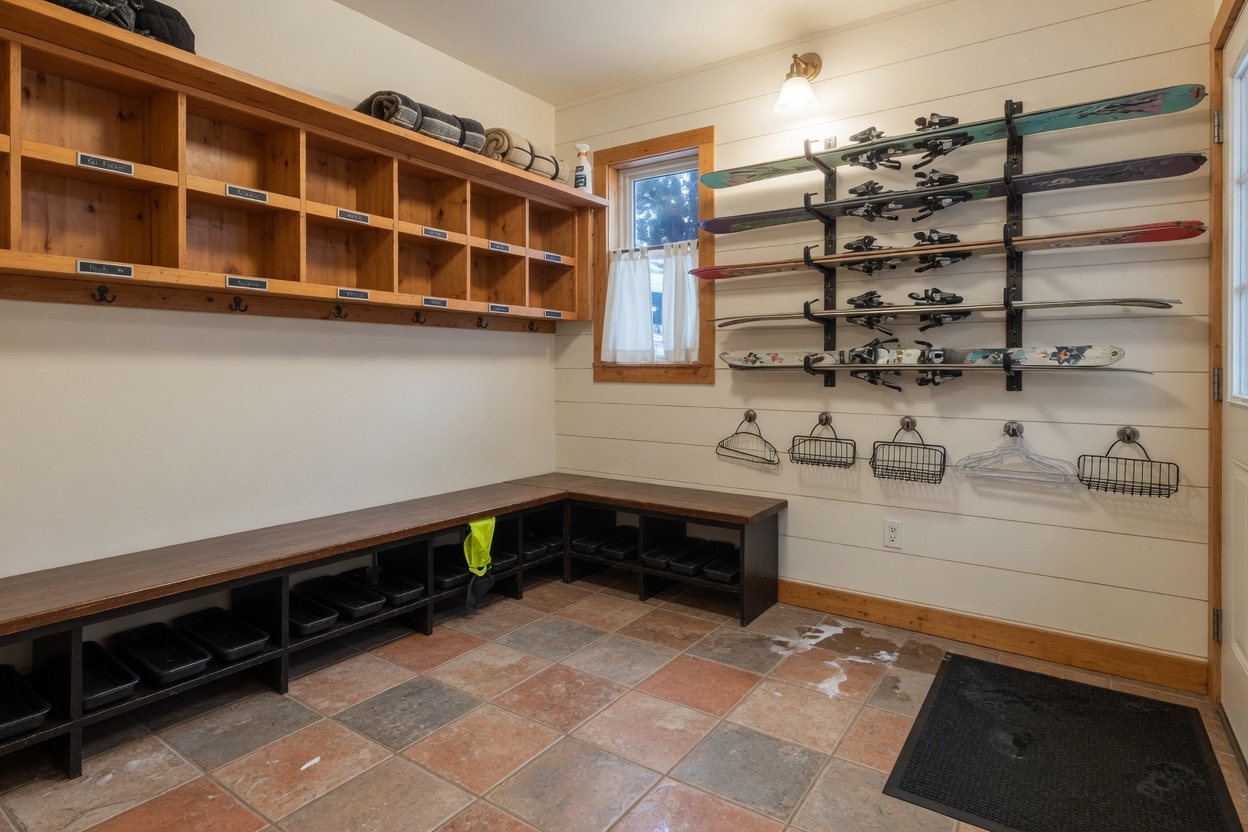
"Ski-in/ski-out" is one of the highest-value phrases in mountain-market short-term rental marketing, and one of the easiest to misuse. Guests searching for a ski trip treat the term as a literal promise: they expect to click into their boots at the door and glide toward a lift, not load skis into a car for a ten-minute drive. When a listing borrows the phrase loosely, because the property is "close to skiing" or sits near a shuttle stop, the gap between the claim and the arrival experience becomes the first thing a guest mentions, often in a public review. This is about drawing that line precisely: what the claim actually requires, where independent hosts commonly stretch it, and how to write access copy that survives a guest's first fifteen minutes on the mountain.
What Guests Actually Expect From "Ski-In/Ski-Out"
In ski country, "ski-in/ski-out" traditionally means a property borders a groomed trail or the base area itself, so a guest can step outside already in boots and skis and reach lift-served terrain without a car, a shuttle, or a long walk on pavement. Large resorts that certify their own ski-in/ski-out inventory apply that bar strictly, and guests who have stayed at a certified property before carry that exact standard into every future search. When an independent listing uses the same phrase more loosely, it is being measured against that memory, not against whatever definition the host had in mind when writing the copy.
The practical test is simple: can a guest, already dressed in ski gear, walk from the unit's door to chairlift-accessible terrain without changing out of boots, crossing a public road on foot, or driving? If the honest answer involves a five-minute walk down a connector path or a short shuttle ride, the property may still be an excellent base for a ski trip, but it is not ski-in/ski-out in the sense a guest will assume from the phrase, and the listing should say so plainly instead of leaning on the label.
Where the Claim Falls Apart at Check-In
The mismatch almost never surfaces in the booking message. It surfaces the first time a guest gets dressed to ski and reads the actual distance to the lift. A driveway that requires crossing a two-lane road, a groomed connector trail that closes early in a low-snow year, or a "ski-out" run that is only skiable with several inches of fresh base are all common gaps between the marketing phrase and the on-the-ground reality a guest meets that morning.
These gaps show up as specific complaints, not vague dissatisfaction. Guests ask why they are loading skis into a car, or why the "ski-out" trail is closed and they have been told to drive to the base area instead. Those specifics are what land in a review, and they read as a broken promise rather than a minor inconvenience, because the phrase ski-in/ski-out sets a factual expectation, not an atmospheric one.
Five Ways the Claim Gets Stretched
Most inaccurate claims are not deliberate; they accumulate from small compromises made while writing the listing. The most common patterns are worth naming directly, because each one is easy to catch once a host knows to look for it.
Calling a property "ski-in/ski-out" because it is walking distance to a resort shuttle stop, not the lift itself. Shuttle access is a real, marketable amenity, but it is a different amenity, and it needs different words. Pairing accurate access language with the photo order a search tile actually rewards does more for bookings than a Keep the property can't back up.
Two more patterns are seasonal rather than structural. Using the phrase for a unit that requires driving to the base during low-snow months, but leaving the Keep unqualified year-round, sets an expectation the property can't meet every week of the season. Describing a "ski-out" run that is only groomed and open during peak weeks has the same effect: the claim is true in January and false in a thin March.
The last two are inherited rather than written from scratch. Borrowing resort- or neighborhood-wide marketing language, such as a development calling itself a "ski-in/ski-out community," for one specific unit inside that development that is not actually trailside passes someone else's overstatement on as fact. And leaving the claim in a listing after a trail reroute, a lift closure, or a land-access change quietly turns an old truth into a current lie, which is why the access line needs the same seasonal review as pricing and calendar settings.
What an Inaccurate Claim Actually Costs
Picture a three-bedroom condo marketed as ski-in/ski-out that in reality sits a quarter mile from the nearest lift-accessible trail, reachable only by a paved road with no dedicated ski path connecting the two. Guests arrive expecting to click in at the door. Instead they discover they need either a five-minute drive or a fifteen-minute walk through a parking lot in ski boots, and the mismatch is the first thing they mention when they write a review, ahead of anything about the unit itself.
The fix is not a discount or an apology message after the fact. It's rewriting the claim before the next guest books: "steps from the free resort shuttle, five minutes to lift access" instead of "ski-in/ski-out." That phrasing sets an expectation the property meets every single time, and reviews stop mentioning access altogether, because there's nothing left to be surprised by.
When You Can Make the Claim Without Hedging
A handful of conditions have to hold before ski-in/ski-out belongs in a title without qualification: the door opens onto a groomed run or the resort base area itself; a guest can walk in boots directly to lift-served terrain under normal conditions, not only in peak snowpack; the access holds up in a low-snow year, not just a good one; and the host has personally walked the route in ski gear and timed it, rather than repeating what a listing site auto-suggested. Properties that clear all four are rare, which is exactly why the claim carries weight when it's true. For hosts weighing how that kind of precise, seasonal-access language fits into a broader shoulder-season repositioning strategy, the short version is that specific claims outperform generic ones in every season, not just winter.
A Seasonal Accuracy Check
Before each ski season opens, and again mid-season if snowpack has been thin, walk the actual route from the door to the lift in boots and time it. Confirm the connector trail is still grooming-maintained rather than informally packed by other skiers, and check whether any land-access agreement, easement, or lift configuration has changed since last year. This is a five-minute check per property, and it is the difference between a season of reviews that mention nothing about access and a season of reviews that open with a complaint about it.
If anything has changed, update the listing title, the about section, and any photo captions the same day, not at the next seasonal refresh. An outdated ski-in/ski-out claim doesn't just disappoint one guest; it disappoints every guest who books before the copy catches up to reality.
Related Reading
Keep reading on same-cluster Crest & Cove pages that stay on labeled local lines without costume-corridor copy.
How to Market a Short-Term Rental in Crested Butte Owning Ski Season
How to Market a Short-Term Rental in Sandpoint Coeur D Alene
How to Market a Short-Term Rental in Mccall Waterfront Ski Access
Vermont Ski Village Corridor STR Market Report for Independent Hosts
Catskills STR Market Report 2026: What Hosts Should Underwrite
Colorados National Park and Ski Resort Periphery Towns STR Market
Sandpoint Coeur D Alene STR Market Report for Independent Hosts
Massanutten WaterPark vs the Ski Hill: Two Calendars, One McGaheysville House
Drive vs Fly Ski Markets: Messaging After Parking and Access Are
Ski Holiday Spikes Fill Fast. Your Listing Still Has to Be True
Reposition Your Ski Property for the Eight Months It Isn't Winter
Frequently Asked Questions
What does a guest expect from a 'ski-in/ski-out' claim?
A guest reading a 'ski-in/ski-out' claim expects to put skis on at the door and reach a lift or a maintained trail without driving or walking any significant distance first. That's the plain-language promise the phrase makes, regardless of how a host privately qualifies it in their own head. Guests don't parse the fine print of what counts as 'nearby' — they take the claim at face value and plan their whole trip, including boot bags and gear, around not needing a car once they arrive. Any gap between that expectation and the actual walk to snow shows up immediately at check-in.
What's a common way this claim gets stretched inaccurately?
One common way this claim gets stretched is describing access via a trail that actually requires walking with skis in hand for a meaningful distance before reaching real snow. Another is claiming reliable access that only actually works in above-average snow years, leaving guests stranded on a thin-snow season with a claim the listing never qualified. Both versions are technically defensible in the host's mind — the trail does exist, the access has worked before — but neither delivers what the plain phrase 'ski-in/ski-out' promises a guest who hasn't seen the property in person.
Is claiming shared or easement-based access the same as claiming private access?
No, and this distinction matters more than it might seem. Presenting a shared or easement-based access point as a guaranteed, private one misrepresents what a guest will actually experience on the ground, since shared access can mean other property owners, seasonal closures, or usage rules the guest never agreed to. A guest who books expecting exclusive, private ski access and instead finds a shared trail used by several other households is likely to feel misled, even if the access technically works. Naming the access as shared, specifically, lets the guest form accurate expectations before they arrive.
Why is an inaccurate ski-access claim especially costly?
An inaccurate ski-access claim is especially costly because it's one of the easiest things a guest can verify and call out precisely in a review. There's no ambiguity in the outcome — either a guest could put skis on at the door and reach the lift, or they couldn't, and the review will say exactly which one happened. Unlike a vaguer claim about mountain views or a cozy atmosphere, where guests might disagree on interpretation, a ski-access claim resolves to a simple yes or no the moment the guest steps outside. That binary nature is what makes stretching it so risky.
When can I make a ski-in/ski-out claim without hedging?
A host can make the claim without hedging when access is reliable across a normal season, not just in the best years. It should also not require a meaningful walk with skis in hand before reaching maintained snow, and it shouldn't depend on unusually good snow conditions to actually work as described. If all three of those hold true in a typical season, the claim can stand on its own without qualifying language. If any one of them is shaky, the listing needs either a hedge or a rewrite rather than the unqualified claim.
What should I do if a trail closes or a resort boundary changes?
Update the listing title, the about section, and any photo captions the same day the change happens — don't wait for a seasonal refresh to correct an outdated claim. A trail closure or a resort boundary change can turn a previously accurate claim into a misleading one overnight, and every booking that comes in before the copy is corrected is a guest arriving with the wrong expectation. Same-day correction is a small task compared to the review damage from even a handful of guests discovering the access no longer works as advertised.
Are inaccurate claims usually intentional?
No, most inaccurate ski-access claims aren't intentional deception. They tend to accumulate from small compromises made while writing the listing — rounding up a walking distance, describing a trail from a best-case memory, or reusing old copy after conditions changed slightly. Each individual compromise can feel minor in the moment, but stacked together they add up to a claim that no longer matches what a guest will actually experience. Recognizing that the drift is usually gradual, not deliberate, is what makes a regular accuracy check worth building into a host's routine.
What's the practical goal of a seasonal accuracy check?
The practical goal of a seasonal accuracy check is to make sure the claim on your listing stays one your guest can actually verify at check-in, season after season, not just the season it was originally written. Trail conditions, resort boundaries, and even snow patterns can shift from year to year in ways a host might not notice without deliberately checking. A seasonal review catches that drift before a guest does, and it's a much smaller task than dealing with a review that calls out a claim the listing should have already corrected.
Work with Crest & Cove Creative
Ski-in ski-out claim accuracy fails when a ski-in costume claim replaces what this driveway can keep overnight. Guests deserve the stay the gallery and house rules can actually hold.
We help independent hosts keep ski-access claims honest against the overnight they can deliver, with access the driveway cannot keep left on labeled lines. Decide what you can rewrite yourself this week, then hire only the gap that remains. Send the live listing if the about block still could sit on the wrong town.
Reach out at crestcove.co or (256) 998-7502.


Comments