
Reposition Your Ski Property for the Eight Months It Isn't Winter
- Thomas Garner

- Aug 20
- 12 min read
Updated: 4 days ago
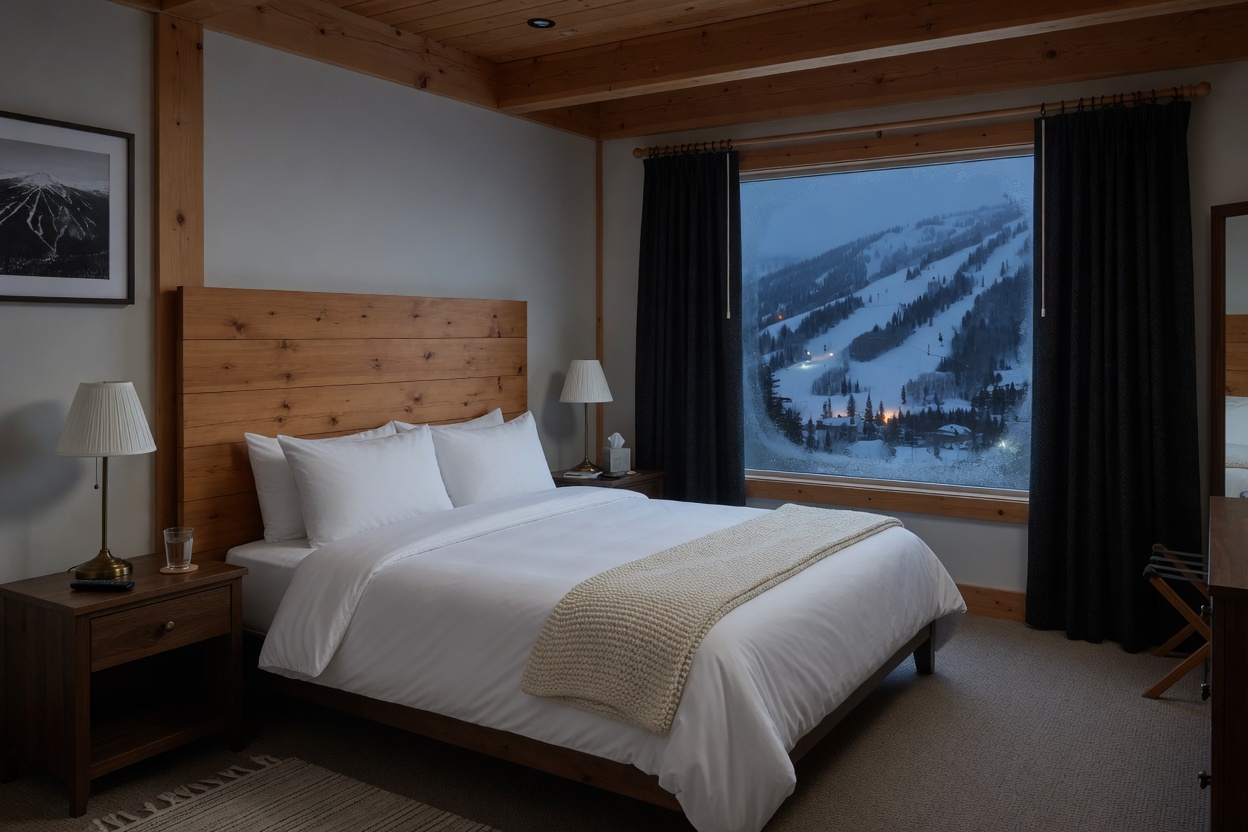
Winter is when a ski property earns its reputation, its peak rates, and almost all of its marketing attention, which makes a certain kind of sense — it is genuinely the season the property was likely purchased for, and it is the season most of the listing's existing photos and copy were built around. The problem is that winter, even in a strong mountain market, covers only a portion of the calendar year, and a property marketed exclusively as a ski destination gives guests no reason to consider it for the other eight-plus months, even when the mountain town around it has real, marketable appeal in summer and shoulder season too.
This is not a claim that every ski property can or should chase year-round occupancy at winter-level rates — that would be an unrealistic promise this page has no basis for making. It is a narrower, more defensible claim: most mountain towns have genuine non-winter draws — hiking, mountain biking, alpine lakes, festivals, cooler summer temperatures relative to lowland heat — and a listing that never mentions any of it is leaving a real, honest marketing opportunity on the table, not because summer will match winter revenue, but because summer and shoulder months currently sit closer to empty than they need to.
This page covers what actually needs to change in a ski property's marketing to reposition it for summer and shoulder demand: what access and road conditions really look like outside ski season, which amenities need re-explaining for a non-skiing guest, and where mud season genuinely limits what can honestly be promised. It does not estimate occupancy or revenue lift from repositioning, since that depends entirely on a specific mountain market this page cannot see. This is not legal advice.
Why Winter-Only Marketing Leaves the Rest of the Year Empty
A listing photographed exclusively in snow, described exclusively in ski-adjacent language — ski-in/ski-out distance, lift ticket proximity, snow conditions — gives a summer traveler searching the same mountain town almost nothing to go on. They cannot tell from the listing whether the property has any appeal outside ski season, because the listing itself never says. In a competitive mountain market, that traveler simply books a property that did bother to describe its summer appeal, even if the winter-only listing would have suited them just as well.
This gap tends to compound over a full year: a property earning strong winter revenue and near-empty spring, summer, and fall calendars can look, on paper, like a seasonal business that's simply doing what mountain properties do. In many cases, though, part of that emptiness is a marketing gap rather than a true demand gap — the town has real summer visitors, and the property's listing simply never told them anything relevant to their trip.
Repositioning does not mean abandoning the winter identity that likely built the property's reputation in the first place. It means adding a second, equally specific identity for the rest of the year, so the listing has something real to say to whichever traveler is actually searching in a given month, rather than defaulting to ski language regardless of season.
What Summer Actually Offers, Named Specifically
Most mountain towns have a genuine summer identity distinct from their winter one, and the repositioning work starts with naming it as specifically as the winter copy already names lift access and snow conditions. Hiking trailheads, mountain biking terrain, alpine lakes, whitewater access, and cooler summer temperatures relative to lowland cities are common real draws — the specific mix depends entirely on the actual town and should be described using real, local, checkable details rather than generic "mountain adventure" language that could describe any range in the country.
Many ski towns also host real summer festival and event calendars — music festivals, farmers markets, arts events — that draw a completely different visitor than the winter ski crowd, often a visitor with no interest in skiing at all who is simply looking for a cool-climate summer escape. Naming specific, real recurring events, where they genuinely exist, gives a summer-searching traveler a concrete reason to consider the property that has nothing to do with snow.
The property itself often needs a second photo set to support this repositioning — a green, warm-weather shot of the same porch or deck that was photographed under snow for the winter listing, ideally showing whatever the property actually offers in summer: a grill, an outdoor seating area, easy trailhead access. A listing that only ever shows snow, marketed to a summer searcher, undermines its own repositioning before the copy even gets read.
What Changes Practically for a Non-Skiing Summer Guest
Certain property features that matter enormously to a winter guest are irrelevant or need reframing for a summer one. Ski storage, boot dryers, and proximity to a specific lift are non-issues in summer and can be de-emphasized in summer-targeted copy in favor of features that actually matter for that season — air conditioning or cooling strategy, since many mountain properties built primarily for winter were not designed with serious summer cooling in mind, screened outdoor space, and parking or access for hiking and biking gear rather than ski gear.
Road and access conditions genuinely differ by season in many mountain locations, and this is worth stating honestly rather than assuming a guest already knows. A road that is reliably plowed and maintained all winter specifically because it serves an active ski area can see reduced maintenance priority in the off-season, and a property accessed by an unpaved or seasonal road should say so plainly for summer bookings, since a guest unfamiliar with mountain access patterns may not think to ask.
Elevation-related weather also deserves a plain mention for summer guests unfamiliar with mountain climate: even a warm regional summer can bring genuinely cold nights at higher elevation, and a guest packing based on lowland summer weather expectations can be caught off guard by a chilly evening the listing never mentioned.
Mud Season Is the Honest Limit on Shoulder Marketing
Between winter and summer, most mountain regions go through a period commonly called mud season — the thaw window when snow is largely gone but trails, unpaved roads, and outdoor amenities are not yet in their stable summer condition. This is a genuinely difficult period to market honestly, because conditions can vary significantly week to week and even the property owner may not know exactly how a specific trail or road will look on a given date weeks out.
The honest approach is naming mud season as a real, current limitation rather than either avoiding shoulder bookings from that window entirely or marketing them with unchanged winter or summer language that will not hold up. A listing can state plainly that certain trails or outdoor features may not be accessible during the thaw transition, that road conditions can vary, and that the exact timing shifts year to year — genuinely useful information for a shoulder-season traveler deciding whether the tradeoff of lower rates and thinner crowds is worth the real uncertainty.
Fall shoulder season, after summer and before ski season starts, is generally more marketable than spring mud season in most mountain regions — many areas see a real fall color draw similar to other parts of the country, with more stable access conditions than spring thaw typically offers. Distinguishing the two shoulder windows in the listing, rather than treating "shoulder season" as one undifferentiated block, gives a more accurate picture to a guest evaluating either one.
Five Repositioning Mistakes Ski Property Hosts Make
The first mistake is a listing with zero non-winter photography, forcing a summer-searching guest to imagine the property's warm-weather appeal entirely from a snow-covered photo set. The second is generic "mountain adventure" summer copy with no real, local, checkable detail — no named trail, no named lake, no named event — that could describe any mountain property in the country rather than this specific one.
The third mistake is failing to address summer cooling directly when the property was built primarily with winter heating in mind, leaving a guest to discover inadequate air conditioning on a genuinely hot mountain-town afternoon. The fourth is marketing spring mud season with the same confident, stable language used for summer or winter, when the actual conditions during that window are meaningfully less predictable and deserve their own honest framing.
The fifth is failing to distinguish spring shoulder from fall shoulder at all, treating both as one generic "off-season" block, when the two windows typically have quite different access conditions and different real draws for a traveler deciding between them. Correcting any one of these is usually a matter of adding specific content, not restructuring the property's core winter identity.
A Composite Case: The Ski Chalet With No Summer Story
Consider a fairly typical ski-in/ski-out property in a mountain town that also has a genuinely strong summer hiking and mountain biking scene, plus a well-attended local summer music festival. The listing, built entirely around its winter identity, shows snow in every photo, names its exact lift distance in the headline, and says nothing at all about summer.
The property books well in winter and sits close to empty from May through September, which the host has long assumed simply reflects low summer demand in a ski town. A closer look at the town's actual summer tourism numbers, however, shows a real, sizable summer visitor base — they are simply booking other properties, ones whose listings actually mentioned trailheads, the festival, and a summer-usable outdoor space.
The fix does not require the host to abandon or de-emphasize the winter identity that built the property's reputation. It requires a second, equally specific summer photo set and a genuinely local summer paragraph — the actual trailhead name, the actual festival, a note about the deck's summer use — added alongside the existing winter content, giving the listing something real to say to a summer searcher for the first time.
Building a Repositioning Plan Without Overpromising Occupancy
Repositioning should be framed, honestly, as reducing an empty calendar rather than as promising near-winter occupancy the rest of the year — most mountain markets simply do not support that level of demand outside peak ski and peak summer windows, and a host who repositions expecting winter-equivalent results will likely be disappointed regardless of how well the marketing itself performs. The realistic goal is turning some of the eight-plus non-winter months from empty into occupied, at whatever rate the actual local summer and shoulder market supports.
Start with summer, since it is generally the strongest of the non-winter seasons in most mountain markets and the easiest to market with genuinely compelling, checkable local detail. Add fall shoulder content once summer repositioning is established and showing real results. Treat spring mud season as the lowest priority and the hardest to market honestly, given its inherent unpredictability, and consider whether it is worth active marketing at all versus simply being honest that the property may see minimal bookings during that specific window.
The test for whether repositioning is working is the same test that applies to any seasonal marketing change: are non-winter inquiries increasing, and are they converting into bookings that reflect accurate expectations rather than disappointed guests expecting a ski-season experience in July. Track that pattern deliberately rather than assuming a summer photo shoot alone will solve the underlying gap.
Pricing the Off-Season Honestly Instead of Copying Winter's Structure
A pricing strategy built entirely around winter's demand curve, then simply extended flat across summer and shoulder months, usually undersells the low season and oversells the shoulder windows at the same time. Winter rates typically reflect genuinely scarce peak demand; applying that same rate structure to a July week with real but more modest demand, or to a mud-season week with minimal demand, prices the property out of bookings it could otherwise capture.
A more honest approach treats each season as its own smaller demand curve rather than a discount applied uniformly off the winter baseline. Summer, as the generally strongest non-winter season in most mountain markets, can often support pricing closer to a moderate shoulder rate than to a steep winter discount, while true mud season may need pricing aggressive enough to attract the narrower set of guests actually willing to accept its real uncertainty.
This also affects minimum-stay requirements, which hosts frequently leave unchanged from winter defaults without reconsidering them for other seasons. A minimum-stay rule calibrated for a winter ski trip may not fit a summer hiking weekend or a shorter shoulder-season visit, and adjusting it season by season, alongside the pricing itself, removes another quiet barrier to non-winter bookings that has nothing to do with the marketing copy at all.
Related Reading
More independent-host reading on honest listing copy, distribution, and when hiring help is worth it.
Frequently Asked Questions
Why does a ski property need separate marketing for summer if winter already books well?
Because winter-focused photography and copy give a summer-searching guest nothing to go on — they can't tell from a snow-covered listing whether the property has any appeal outside ski season. In a competitive mountain market, that traveler will typically book a property whose listing actually described its summer draws, even when the ski property would have suited them just as well.
What should replace ski-specific language in a summer-targeted listing description?
Real, local, checkable summer detail — a named trailhead, a named lake, a real recurring local festival or event — rather than generic 'mountain adventure' language that could describe any range in the country. Ski storage, boot dryers, and lift proximity, which matter enormously in winter, are irrelevant in summer and can be de-emphasized in favor of features that actually matter for that season.
Is air conditioning a real concern for ski properties trying to attract summer guests?
Often yes. Many mountain properties were built primarily with winter heating in mind and were not designed with serious summer cooling as a priority. Stating the property's actual cooling situation honestly — whether that's real air conditioning, fans, or a cooling strategy that relies on mountain evening temperatures — sets an accurate expectation for a guest arriving on a genuinely hot summer afternoon.
What is mud season, and why is it hard to market?
It's the thaw window between winter and summer in most mountain regions, when snow is largely gone but trails, unpaved roads, and outdoor amenities aren't yet in stable summer condition. Conditions vary significantly week to week and even year to year, which makes confident, specific marketing difficult — the honest approach names the real uncertainty rather than either avoiding the season or reusing summer or winter language that won't hold up.
Should spring shoulder season and fall shoulder season be marketed the same way?
No — they typically have meaningfully different access conditions and different real draws. Fall shoulder, after summer and before ski season, is generally more marketable in most mountain regions, often with a real fall-color draw and more stable access than spring thaw. Treating both as one generic 'off-season' block gives guests a less accurate picture than distinguishing them.
Does road access to a ski property change outside of ski season?
In many mountain locations, yes. A road that's reliably plowed and maintained all winter specifically because it serves an active ski area can see reduced maintenance priority in the off-season. A property accessed by an unpaved or seasonal road should state this plainly for non-winter bookings, since a guest unfamiliar with mountain access patterns may not think to ask before booking.
Can a ski property expect near-winter occupancy after repositioning for summer?
Generally no, and that's not a realistic goal for most mountain markets. The honest target for repositioning is reducing an empty calendar, not matching winter-level demand — most markets simply don't support that level of demand outside their true peak windows. A host expecting winter-equivalent summer results is likely to be disappointed regardless of how well the marketing performs.
Where should a ski property host start with repositioning if they can only tackle one season first?
Summer, generally — it's usually the strongest of the non-winter seasons in most mountain markets and the easiest to market with genuinely compelling, checkable local detail like trailheads and festivals. Fall shoulder is a reasonable second step once summer repositioning shows results, with spring mud season treated as the lowest priority given its inherent unpredictability.
What's the fastest fix for a ski listing that has zero summer content right now?
A second, honest photo set showing the property in warm weather — the same deck or porch photographed under snow for winter, now shown as it actually looks in summer — paired with one genuinely local summer paragraph naming a real trailhead, lake, or event. This is usually a smaller project than a full listing overhaul and directly closes the biggest gap.
How can a host tell if repositioning is actually working?
Track whether non-winter inquiries are increasing and whether they're converting into bookings that match accurate expectations, rather than guests arriving expecting a ski-season experience in July. A summer photo shoot alone doesn't guarantee results — the real test is whether the pattern of inquiries and guest satisfaction in non-winter months actually shifts over time.
Work with Crest & Cove Creative
A ski property marketed only in snow photography and lift-distance language gives a summer-searching guest nothing to go on. Eight-plus months of real, honest mountain-town appeal sit unmarketed while the calendar stays empty.
We help mountain-property hosts build a genuine second identity for the non-winter months — real local trailheads and events, honest mud-season framing, and summer-specific amenity language — without overpromising winter-level occupancy the rest of the year. If your calendar goes quiet the moment the snow melts, that gap is often more of a marketing problem than a demand problem.
Reach out at crestcove.co or (256) 998-7502.


Comments