
Topsail Island STR Market Report for Independent Hosts

Updated: Aug 28
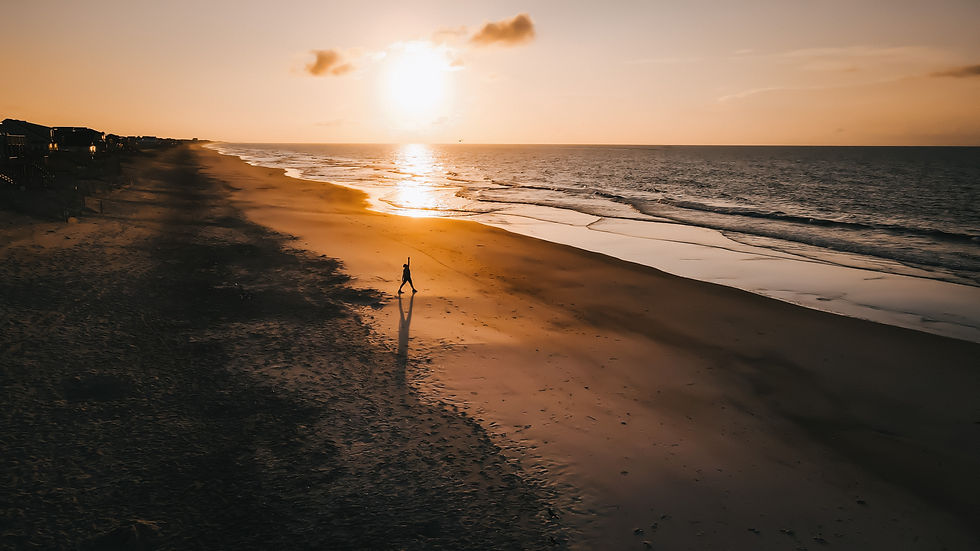
Topsail Island is a 26-mile barrier island that reads like one destination on a map but operates as three distinct short-term rental markets split across two counties. AirROI's trailing-12-month window (June 2025-May 2026, updated June 2, 2026) counts 1,894 active listings across Surf City (733), North Topsail Beach (975), and Topsail Beach (186) , with supply growing 52% to 63% year-over-year in each town while revenue still climbs. Pender County visitor spending reached $202.25 million in 2024 (+1.6%); Onslow County , anchored by North Topsail and the Jacksonville/Camp Lejeune corridor , hit a record $415.26 million (Greater Topsail Chamber, Onslow County). Investors and hosts constantly conflate the three towns, and that confusion is expensive: a Surf City pier-corridor merchandising strategy applied to a Topsail Beach no-high-rise south-end house competes in the wrong comp set, while a North Topsail oceanfront condo underwritten on Pender County tax filing leaves money on the compliance table and risks filing errors that audits catch months later.
Surf City is the commercial hub with the swing-bridge gateway, pier corridor, and broadest amenity stack. Topsail Beach is the quiet south end where town ordinances prohibit high-rise development and rental-agency culture runs deepest. North Topsail Beach is the Onslow County north end with the fastest revenue growth (+50.5% YoY on AirROI), a smaller-unit condo skew, and inlet/erosion considerations buyers must weigh before they price an oceanfront condo on headline ADR alone. This report is the three-town, two-county decoder no single-locale AirDNA or Rabbu page provides , which town to buy in, how county lines change your tax filing, and where the old-school NC family beach positioning actually wins against busier Cape Fear inventory.
Read it as an investment and operations map for a market adding inventory faster than almost any other NC beach corridor , supply growth of +51.8% in Surf City, +61.7% in Topsail Beach, and +63.0% in North Topsail on AirROI , while revenue still rises, especially at North Topsail (+50.5%). That combination signals a hot market, not a settled one; saturation risk is real for undifferentiated inventory entering in 2026, and the town you choose determines which guest segment, which tax office, and which coastal-risk underwriting frame you inherit on day one.
The Topsail Island STR Landscape by the Numbers
AirROI is the primary spine for this report: entire active market (Airbnb + Vrbo de-duplicated), trailing-12-month realized averages including part-year listings. Rabbu and Airbtics project higher figures for typical full-time operators , cite both when investors ask "what will my listing earn?" and Keep your universe every time you quote a figure, because methodology spread is not error; it is the difference between market-wide averages and median full-time operator performance.
*Table 1 , Topsail Island STR performance by town (AirROI market-wide averages, trailing 12 months June 2025-May 2026).*. AirROI , Surf City, Topsail Beach, and North Topsail Beach market reports, trailing 12 months June 2025-May 2026 (updated June 2, 2026) (https://www.airroi.com/report/world/united-states/north-carolina/). *Source: AirROI per-town reports, trailing 12 months June 2025-May 2026 (updated June 2, 2026).*. On AirROI (June 2025-May 2026), Surf City carries 733 active listings, 37.7% trailing occupancy, $420 ADR, $41,851 average annual revenue per listing, and peak July performance at $10,882 monthly revenue, 65.5% occupancy, and $480 ADR.
Town | County | Active listings | Market occupancy (T12M) | Average daily rate | Avg annual revenue per listing | Revenue change (YoY) | Supply change (YoY) |
Surf City | Pender* | 733 | 37.7% | $420 | $41,851 | +19.6% | +51.8% |
Topsail Beach | Pender | 186 | 35.9% | $440 | $34,444 | +25.8% | +61.7% |
North Topsail Beach | Onslow | 975 | 37.6% | $462 | $42,499 | +50.5% | +63.0% |
*Surf City's commercial core and bridge gateway sit in Pender County; a portion of the town limits extend into Onslow , verify county assignment per parcel before filing occupancy tax. The Surf City Bridge (the island's high-rise gateway from the mainland) feeds retail, surf shops, mini-golf, restaurants, and 25+ public beach accesses into a walkable commercial core , the broadest amenity stack on the island.
*Source: AirROI per-town reports, trailing 12 months June 2025-May 2026 (updated June 2, 2026).*. *Table 1 , Topsail Island STR performance by town (AirROI market-wide averages, trailing 12 months June 2025-May 2026).*. AirROI's trailing-12-month window (June 2025-May 2026, updated June 2, 2026) counts 1,894 active listings across Surf City (733), North Topsail Beach (975), and Topsail Beach (186) , with supply growing 52% to 63% year-over-year in each town while revenue still climbs.
Island-wide themes hold across all three towns: July is the revenue anchor everywhere; January or December is the trough. Houses dominate Topsail Beach (91.9%) and Surf City (75.7%); North Topsail skews smaller with 2-bedroom units the modal size (24.2%) and more condo/duplex inventory at the north end. Supply growth is among the fastest on the NC coast , +51.8% Surf City, +61.7% Topsail Beach, +63.0% North Topsail , yet revenue still rises, especially at North Topsail (+50.5%).
Cross-reference check: Airbtics shows ~54% median occupancy and ~$49K typical host income for Surf City versus AirROI's $41,851 market average; North Topsail median runs ~53% occupancy and ~$45K projected income (Airbtics) versus $42,499 on AirROI. The spread is methodology, not error , name your provider when you model acquisition returns or set host expectations on a single listing.
The comparison that matters for marketing strategy is your town versus the other two Topsail towns, not Topsail versus Holden Beach or Oak Island generically. Surf City wins on rentable breadth and amenity-rich merchandising; Topsail Beach wins on no-high-rise premium family positioning; North Topsail wins on growth exposure and military overflow , if you underwrite erosion and nourishment costs honestly.
Which Town Fits Which Strategy
Broadest demand, most rentable, amenity-rich hub: Surf City. Largest listing count (733), highest July occupancy (65.5% on AirROI), Soundside Park and pier-corridor oceanfront as top performers, 67-day average booking lead time, and +149% revenue uplift for hot-tub listings on AirROI , the island's strongest amenity-ROI signal. Choose Surf City when you want the most guest segments (families, pier fishermen, turtle-center visitors, retail/restaurant walkability) and can compete on photos and amenities in a 700-plus listing pool. Quiet, low-density, premium family identity: Topsail Beach.
Smallest inventory (186), highest professional-management share in the regional dossier (62.9% on AirROI), 91.9% houses, 4-bedroom modal size, 81-day lead time, 5.6-night average stay. Town zoning prohibits high-rise development , the structural "no high-rise" moat that preserves low-density shoreline and supports a low-turnover weekly-rental culture. Choose Topsail Beach when you want agency-grade family houses and can compete on reputation inside a tight, relationship-led market (Ward Realty, Topsail Realty).
Growth play with county and coastal caveats: North Topsail Beach. Highest revenue growth (+50.5% YoY) and highest listing count (975) on AirROI, with $462 ADR and January trough occupancy still at 24.0% , a milder winter floor than Surf City or Topsail Beach. Oceanfront condos and duplexes dominate the north-end product mix. Read it as an investment and operations map for a market adding inventory faster than almost any other NC beach corridor , supply growth of +51.8% in Surf City, +61.7% in Topsail Beach, and +63.0% in North Topsail on AirROI , while revenue still rises, especially at North Topsail (+50.5%).
Choose North Topsail when you want Onslow County exposure, Camp Lejeune/Jacksonville military and TDY overflow, and can underwrite inlet erosion and nourishment assessments , the town's 3% occupancy-tax share funds the Shoreline Protection Fund (North Topsail Beach, Onslow County). None of the three towns is universally "better"; product type, county tax filing, turnover tolerance, and appetite for professional-management culture decide which strategy fits a specific acquisition or repositioning project.
Surf City: The Commercial Hub
Surf City is what most drive-market guests picture when they say "Topsail Island" without naming a town. The Surf City Bridge (the island's high-rise gateway from the mainland) feeds retail, surf shops, mini-golf, restaurants, and 25+ public beach accesses into a walkable commercial core , the broadest amenity stack on the island. On AirROI (June 2025-May 2026), Surf City carries 733 active listings, 37.7% trailing occupancy, $420 ADR, $41,851 average annual revenue per listing, and peak July performance at $10,882 monthly revenue, 65.5% occupancy, and $480 ADR.
Summer (June-August) averages $9,062 per month at 57.4% occupancy. Oceanfront houses near the Surf City Pier and the swing-bridge corridor remain top earners, and operationally Surf City is the island's most competitive listing pool , differentiation with hot-tub and pool amenity stacking (AirROI cites +149% hot-tub revenue uplift here), pier-walk photography, and pier-and-park distances in the first three description sentences is baseline, not optional growth tactics.
Demand anchors beyond the beach give Surf City hosts merchandising depth corporate templates rarely match. The Karen Beasley Sea Turtle Rescue and Rehabilitation Center draws an estimated 40,000-60,000 visitors annually, concentrated Memorial Day through Labor Day (Karen Beasley Center). Soundside Park adds a sound-side access and event-venue hook for families who want calmer water. Listing copy that names turtle-hospital visit distance, pier proximity, and bridge-access convenience converts better than generic "Topsail Island beach house" titles , guests search Surf City by name when they want the amenity-rich middle of the island, and AI trip-planners index those anchors together when families compare Surf City to Topsail Beach or North Topsail on quiet versus amenity density.
Topsail Beach: The No-High-Rise South End
Topsail Beach occupies the quiet south end of the island in Pender County , the most exclusive of the three towns in both zoning posture and operating culture. Town ordinances prohibit high-rise development, preserving a low-density, natural shoreline that contrasts sharply with commercial Surf City and the condo-heavy north end. The Missiles & More Museum anchors WWII Operation Bumblebee history for the fraction of guests who want educational depth beyond the beach.
AirROI shows 186 active listings, 35.9% occupancy, $440 ADR, $34,444 average annual revenue, and peak July at $11,887 monthly revenue , the highest peak-month figure of the three towns despite the smallest inventory count. December trough runs $2,145 at 17.8% occupancy. The property mix is 91.9% houses, 42.5% four-bedroom modal, 64% sleeping 8+ guests , classic family week-rental product.
Topsail Beach is also the most agency-heavy: 62.9% professionally managed on AirROI, 97.8% charging cleaning fees (avg $389), 81-day booking lead time, 5.6-night average stay. Independent hosts can win here, but the guest often arrives expecting a managed-rental experience , professional photography, turtle-nesting compliance copy in the welcome book, and Saturday-to-Saturday calendar discipline are baseline, not differentiators. The marketing angle is exclusivity without high-rise density: "Topsail Beach no high-rise" is both a zoning fact and a guest filter. Sell the south-end quiet, Jolly Roger Pier proximity, and low-density beach , not Surf City's retail energy , and price peak July with the confidence that Topsail Beach's July monthly revenue ceiling is the highest of the three towns on AirROI even though its listing count is the smallest.
North Topsail Beach: Onslow County's North End
North Topsail Beach is geographically continuous with the rest of the island but administratively distinct , Onslow County, not Pender, with its own town occupancy-tax split and shoreline-protection funding mechanics. It is the largest listing pool (975 on AirROI) and the fastest-growing revenue story (+50.5% YoY) in the regional dossier, with +63.0% supply growth tracking close behind. Performance on AirROI: 37.6% occupancy, $462 ADR, $42,499 average annual revenue, summer average $10,155 per month at 58.2% occupancy and $514 ADR.
The product mix differs from Topsail Beach: 62.3% houses but 2-bedroom units are the most common segment (24.2%), reflecting oceanfront condos and duplexes at the north end. Entire-home share hits 99.8% , the highest in the regional dossier. The town's 3% goes to the Shoreline Protection Fund; the county's 3% supports beach nourishment and inlet cost-share (Onslow County, North Topsail Beach).
Feeder markets extend beyond the Triangle and Triad drive audience that fills all NC beaches. Jacksonville and Camp Lejeune military families, TDY assignments, and post-deployment leave blocks create a meaningful mid-week and shoulder-season demand layer that Surf City and Topsail Beach capture less directly , especially for 2-3 bedroom condos priced under the big-house tiers. Merchandise "North Topsail Beach oceanfront condo" and military-friendly cancellation language where your house rules allow it.
The investment caveat is coastal, not cosmetic: North Topsail's town occupancy-tax revenue funds the Shoreline Protection Fund; Onslow County's share supports beach nourishment and inlet cost-share (Onslow County, Coastal Review). Buyers should verify current nourishment assessments, service-district fees, and erosion exposure on any oceanfront parcel , AI travel queries about "is North Topsail Beach a good investment" consistently raise inlet and erosion concerns, and your listing materials should answer them honestly, not dodge them with generic oceanfront copy.
The Two-County Tax Split: Pender vs. Onslow
The county line is not administrative trivia , it changes sales tax, occupancy-tax rate, filing office, and nourishment funding. Pender County (Surf City and Topsail Beach): combined sales tax is 6.75% (4.75% state + 2.00% local). Occupancy tax is 6% paid to the respective town , Surf City remits to Surf City Finance; Topsail Beach remits to Topsail Beach.
Pender's unincorporated rate increased from 3% to 6% under NC Session Law 2024-21 (HB 911); town rates in Surf City and Topsail Beach are 6% with town portions funding tourism and county-authorized portions funding beach nourishment (Pender County). Total guest tax ≈ 12.75% (6.75% sales + 6% occupancy). Remittance is monthly, due by the 15th of the following month (quarterly if ≤$25/quarter).
Onslow County (North Topsail Beach): combined sales tax is 7.00% (4.75% state + 2.25% local). Occupancy tax is 6% total , 3% Onslow County + 3% Town of North Topsail Beach, revenues split equally. The town's 3% goes to the Shoreline Protection Fund; the county's 3% supports beach nourishment and inlet cost-share (Onslow County, North Topsail Beach).
Total guest tax ≈ 13% (7% sales + 6% occupancy). North Topsail requires owners to register with NCDOR, file Form E-500, and collect/file/remit even when a marketplace facilitator remits on platform bookings. North Topsail Beach is geographically continuous with the rest of the island but administratively distinct , Onslow County, not Pender, with its own town occupancy-tax split and shoreline-protection funding mechanics.
A property manager running listings in both Surf City and North Topsail maintains two occupancy-tax filing relationships, two sales-tax county rates, and two nourishment-funding contexts. Platform remittance covers most Airbnb/Vrbo bookings, but direct bookings require self-remittance to the correct town or county office. Verify parcel county before you model net yield , a "Topsail Island" address is not one tax jurisdiction.
Seasonality, Sea Turtles, and the Regulatory Through-Line
Topsail Island seasonality follows the NC beach norm , July peak, winter trough , with a May-through-October overlay that matters for both compliance and marketing. Sea turtle nesting season runs roughly May through October along NC beaches; Topsail is a documented nesting beach and the Karen Beasley Center makes turtle conservation part of the island's brand identity. Host-facing materials should include red-light/no-disturbance guidance, fill-in hole reminders, and a link to the hospital's visit hours , guests increasingly search "sea turtle nesting Topsail rental" and expect hosts to know the rules.
Peak revenue month is July on all three towns. Surf City July: 65.5% occupancy, $480 ADR. AirROI shows 186 active listings, 35.9% occupancy, $440 ADR, $34,444 average annual revenue, and peak July at $11,887 monthly revenue , the highest peak-month figure of the three towns despite the smallest inventory count. Sell the south-end quiet, Jolly Roger Pier proximity, and low-density beach , not Surf City's retail energy , and price peak July with the confidence that Topsail Beach's July monthly revenue ceiling is the highest of the three towns on AirROI even though its listing count is the smallest.
Topsail Beach July: 61.9% occupancy, $514 ADR. North Topsail summer: 58.2% occupancy, $514 ADR on the June-August average. Winter troughs hit January for Surf City (18.5% occupancy) and North Topsail (24.0%), December for Topsail Beach (17.8%). Surf City, Topsail Beach, and North Topsail Beach cannot require STR registration , towns regulate through zoning, parking, occupancy-per-bedroom, and nuisance enforcement instead.
The booking rhythm is family-week, not long-weekend. Average stays run 4.9 nights (Surf City) to 5.6 nights (Topsail Beach) on AirROI, with 67-81-day lead times , Saturday-to-Saturday merchandising aligns with how Triangle and Triad families plan summer blocks. August publishing sits in pure family-beach demand between spring and fall event spikes; hosts should lock 2027 summer calendars during the January-March planning surge that drive-market beaches depend on.
Feeder markets: Raleigh-Durham, Charlotte, and the Triad per the 2021 NC Visitor Profile; North Topsail adds Jacksonville/Camp Lejeune military overflow. Topsail is moderately seasonal versus the Outer Banks , drive-market, not flight-dependent , but still punishing for hosts who leave November through February unmerchandised. Topsail sits between the Outer Banks' flight-dependent seasonality and Brunswick Islands' golf-and-snowbird dual-season model , a drive-market family beach with three administratively distinct towns on one barrier island.
North Carolina G.S. 160D-1207(c) and Schroeder v. City of Wilmington (NC Court of Appeals, April 5, 2022) bar municipal STR registration mandates, numeric caps, and lotteries statewide (UNC School of Government Coates' Canons). UNC School of Government Coates' Canons , Schroeder and N.C.G.S. Topsail sells old-school NC family beach identity with turtle conservation brand equity, pier culture in Surf City, no-high-rise moat in Topsail Beach, and military overflow in North Topsail.
Surf City, Topsail Beach, and North Topsail Beach cannot require STR registration , towns regulate through zoning, parking, occupancy-per-bedroom, and nuisance enforcement instead. HOA covenants and condo regimes are the practical supply governor on Topsail, especially at North Topsail's oceanfront condo complexes and any deed-restricted subdivision. Investors and hosts constantly conflate the three towns, and that confusion is expensive: a Surf City pier-corridor merchandising strategy applied to a Topsail Beach no-high-rise south-end house competes in the wrong comp set, while a North Topsail oceanfront condo underwritten on Pender County tax filing leaves money on the compliance table and risks filing errors that audits catch months later.
Minimum-stay rules, rental caps, and tenant screening requirements in private declarations are enforceable regardless of town permissiveness. Topsail Beach's no-high-rise zoning is the standout land-use fact , a town-level constraint that preserves low density and supports premium family positioning without relying on Schroeder-vulnerable registration schemes. North Topsail's shoreline service districts and nourishment assessments are the north-end parallel: public-cost recovery tied to oceanfront exposure.
The Property Management Competitive Landscape
Topsail Beach runs the deepest professional-management culture in the regional dossier , 62.9% professionally managed on AirROI, with Ward Realty and Topsail Realty anchoring decades of repeat-guest databases and Saturday-to-Saturday family-week discipline. Surf City's 733-listing pool mixes national operators and regional managers competing on amenity stacking , hot-tub listings show +149% revenue uplift on AirROI, making pool-and-hot-tub photography depth baseline in the pier corridor. North Topsail's 975-listing pool skews condo-heavy with property-management companies handling turnover for oceanfront duplex inventory.
Corporate managers win on distribution and inventory count. Independent hosts win on per-listing attention, town-specific photography, turtle-nesting compliance copy in welcome books, and named-search content targeting phrases like "Surf City pier rental" and "Topsail Beach no high-rise family" , queries corporate property pages rarely pursue. Your marketing job is not to out-list the island's largest manager. It is to out-position the commodity beach house that has no story beyond sand proximity in a market adding +51.8% to +63.0% supply year-over-year.
Seven Marketing Moves by Topsail Town
Surf City hosts should lead with pier-corridor and Karen Beasley Sea Turtle Center proximity in the first three description sentences, stack hot-tub and pool amenities where ROI signals justify it (+149% hot-tub uplift on AirROI), and name Soundside Park and bridge-access convenience for families comparing amenity density across the island. Topsail Beach hosts should merchandise "no high-rise" as a filterable guest intent, run Saturday-to-Saturday summer calendar discipline, include turtle-nesting compliance in welcome books, and price peak July with confidence , Topsail Beach's $11,887 July monthly revenue ceiling is the highest of the three towns despite the smallest inventory.
North Topsail hosts should merchandise military-friendly cancellation language where house rules allow, answer erosion and nourishment questions honestly in listing copy, and target "North Topsail Beach oceanfront condo" intent for 2-3 bedroom product. All three towns should lock 2027 summer calendars during January-March planning surge, build turtle-season compliance into May-October guest materials, and own named-town search on direct sites , corporate templates do not Keep host-education pages targeting town-specific phrases.
How Topsail Island Differs From Cape Fear and Brunswick Beaches
Topsail sits between the Outer Banks' flight-dependent seasonality and Brunswick Islands' golf-and-snowbird dual-season model , a drive-market family beach with three administratively distinct towns on one barrier island. Holden Beach sells quiet Saturday-to-Saturday family rhythm; Oak Island sells big-inventory affordable family beach; Ocean Isle sells premium ADR with golf-and-festival fall tiers. Topsail sells old-school NC family beach identity with turtle conservation brand equity, pier culture in Surf City, no-high-rise moat in Topsail Beach, and military overflow in North Topsail.
Conflating the three towns in one listing title , "Topsail Island beach house" without naming Surf City, Topsail Beach, or North Topsail , competes in the wrong comp set and confuses guests who search by town when they want amenity-rich middle island versus quiet south end versus north-end condo product. Front-load town name, bedroom count, sleeps count, and named anchors with distances; consistency across OTA, direct site, and Google Vacation Rentals feed builds the topical signal platform search rewards.
Carolina Beach against AirROI·Kure Beach against AirROI·the Crest & Cove intro·local SEO keywords that actually book·the five elements of a converting hero·how to compare STR marketing agencies·North Carolina coast against AirROI pins·Asheville paddling spots worth the drive.
Frequently Asked Questions
What is the difference between Surf City, Topsail Beach, and North Topsail Beach for rentals?
Surf City is the commercial hub in Pender County with the largest inventory (733 listings), pier and Karen Beasley Sea Turtle Center proximity, and the broadest retail and restaurant walkability. Topsail Beach is the quiet south end in Pender County, with no high-rise zoning, the smallest pool of listings (186), and the highest professional-management share. North Topsail Beach is the Onslow County north end, with the largest supply (975 listings), the fastest revenue growth (+50.5% year-over-year), more condo and duplex product, and inlet/erosion considerations to weigh.
Which Topsail town is best for a vacation rental investment in 2026?
It depends on strategy: Surf City offers breadth of demand and amenity-rich merchandising in the island's largest rentable pool, Topsail Beach offers low-turnover family houses in a supply-constrained, no-high-rise south end for those who can compete inside an agency-heavy culture, and North Topsail offers growth exposure and military overflow demand for those who underwrite nourishment costs and erosion risk on oceanfront parcels. None is universally best; county tax filing, product type, and turnover tolerance decide.
What county is each Topsail town in, and why does it matter for occupancy tax?
Topsail Beach and Surf City's commercial core sit in Pender County, with a 6% town occupancy tax plus 6.75% sales tax for roughly 12.75% total guest tax, remitted to the town finance office by the 15th of the month. North Topsail Beach is in Onslow County, with a 6% occupancy tax (3% town plus 3% county) plus 7% sales tax for roughly 13% total guest tax, with the town's share funding shoreline protection. Cross-county operators need separate filing relationships with each county.
Is Topsail Beach really no-high-rise, and does that affect STR positioning?
Yes — Topsail Beach town ordinances prohibit high-rise development, preserving low-density shoreline that Surf City and North Topsail cannot replicate. For STR marketing, that's a filterable guest intent: families choosing the south end want quiet and low density rather than pier-corridor retail energy, and peak July revenue on AirROI runs highest in Topsail Beach despite having the smallest listing count of the three towns.
How does Surf City's vacation rental performance compare to the other Topsail towns?
Surf City averages $41,851 in annual revenue per listing, 37.7% occupancy, and $420 ADR on AirROI — mid-tier ADR with the highest July occupancy at 65.5%. Topsail Beach runs a higher ADR of $440 on fewer listings with deeper professional management, while North Topsail runs higher revenue at $42,499 with the fastest year-over-year growth. Surf City wins on rentable breadth; the other towns win on positioning specificity.
Is North Topsail Beach a good STR investment?
Revenue growth is the strongest on the island at +50.5% year-over-year on AirROI, and military and TDY demand from Camp Lejeune and Jacksonville adds shoulder-season depth. Supply also grew 63.0% year-over-year, signaling a hot market rather than a mature one, so oceanfront buyers should verify erosion exposure, nourishment assessments, and Shoreline Protection Fund mechanics before modeling returns.
Is an STR permit or registration required on Topsail Island?
No municipality on Topsail Island can mandate STR registration or numeric caps following the Schroeder ruling and N.C.G.S. § 160D-1207(c). Hosts still owe occupancy tax to whichever town the parcel sits in, NCDOR sales-tax registration, and compliance with any HOA covenants that may restrict rentals, and zoning, parking, and turtle-nesting ordinances remain enforceable.
Does sea turtle nesting affect STR marketing or house rules on Topsail Island?
Yes — Topsail Island is an active sea turtle nesting area, and marketing and house-rule copy should account for the seasonal restrictions that come with it, such as exterior lighting rules and beach-equipment removal expectations during nesting season. This is a regulatory-adjacent detail worth naming specifically for guests rather than leaving it as a vague 'eco-friendly' claim, since turtle-nesting rules are enforceable and enforced separately from the STR-permit question covered elsewhere in this report.
About the Authors
Crest & Cove Creative is a nationwide short-term rental marketing agency founded by Thomas Garner and Jacob Mishalanie. We build direct-booking brands, listing optimization systems, and market-specific content strategies for independent STR operators across the Gulf Coast, Appalachian Mountains, Coastal Georgia, the Carolinas, and Southeast lake country. Independent hosts win on per-listing attention, town-specific photography, turtle-nesting compliance copy in welcome books, and named-search content targeting phrases like "Surf City pier rental" and "Topsail Beach no high-rise family" , queries corporate property pages rarely pursue.
Related Reading
Keep reading on same-cluster Crest & Cove pages that stay on labeled local lines without costume-corridor copy.
DIY vs. Hire in Many, LA: Why Independent Hosts Still Run Most Listings
DIY or Hire in Depoe Bay: Why Independent Hosts Still Win the Copy
DIY vs Hire in Seattle: Independents Still Write Most Listings
Financing a Springfield, MA Rental Without a Neighbor City Year
What It Actually Costs to Start a Many, LA Short-Term Rental in 2026
How to Underwrite an Akron, Ohio Rental With Its Own Numbers
What It Actually Costs to Register a Short-Term Rental in Akron
Sources
AirROI , Surf City, Topsail Beach, and North Topsail Beach market reports, trailing 12 months June 2025-May 2026 (updated June 2, 2026) (https://www.airroi.com/report/world/united-states/north-carolina/). Airbtics , Surf City and North Topsail Beach annual revenue reports. Pender County , occupancy tax (6%, HB 911 increase for unincorporated Pender) (https://pendercountync.gov/1787/Occupancy-Tax). Onslow County , occupancy tax (3% county share) (https://www.onslowcountync.gov/874/Occupancy-Tax). North Topsail Beach , realtors/landlords tax page (https://www.northtopsailbeachnc.gov/community/page/realtors-landlords). Greater Topsail Chamber , Pender/Onslow 2024 visitor impact. Visit Pender , tourism facts ($202.25M, 2024). Karen Beasley Sea Turtle Rescue and Rehabilitation Center , visit data (https://www.seaturtlehospital.org/visit.html). Coastal Review , North Topsail Beach shoreline service districts and nourishment funding. UNC School of Government Coates' Canons , Schroeder and N.C.G.S. § 160D-1207(c). Visit NC , 2021 NC Visitor Profile feeder-market data. Avalara , North Carolina vacation rental tax guide; Pender and Onslow county sales-tax rates.
<!-- batch-tracked: 2026-07-02-editorial-r2-deep -->. That combination signals a hot market, not a settled one; saturation risk is real for undifferentiated inventory entering in 2026, and the town you choose determines which guest segment, which tax office, and which coastal-risk underwriting frame you inherit on day one.
Work with Crest & Cove Creative
Surf City, Topsail Beach, and North Topsail post different supply-growth rates and different guest profiles, and a listing that treats all three as one island brand undersells its own town's identity.
We help Topsail Island hosts write listing copy specific to their town's amenity mix instead of a blended barrier-island pitch. Bring your listing to crestcove.co or call (256) 998-7502.
Reach out at crestcove.co or (256) 998-7502.


Comments