
Blairsville vs Ocoee: Seasonal Demand Against AirROI

Updated: Aug 28
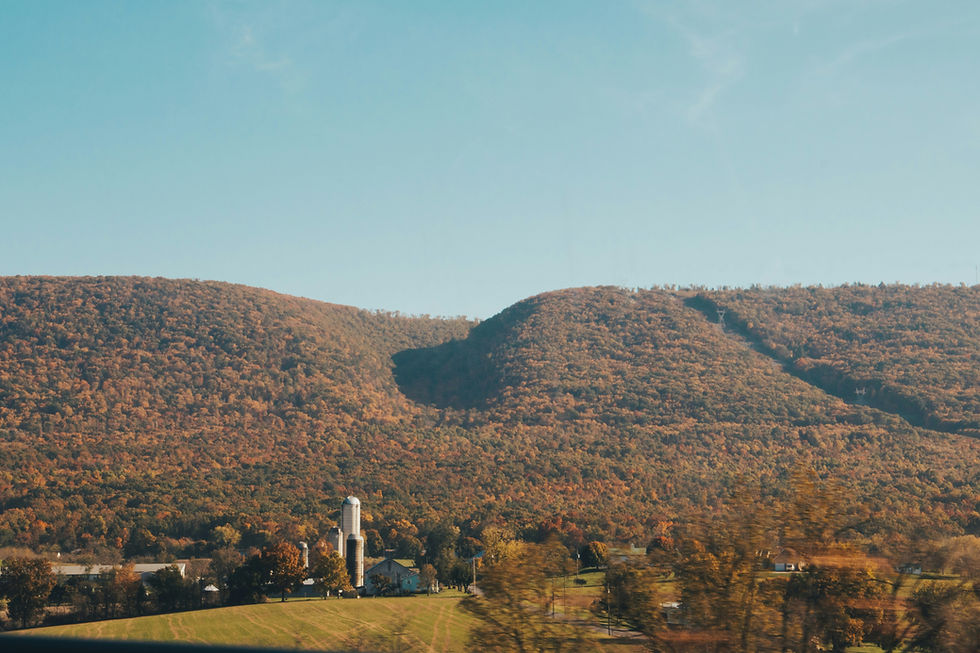
Two mountain markets, two very different demand profiles. Blairsville, Georgia — the Union County seat anchored by Brasstown Bald and Lake Nottely — and the Ocoee/Copperhill corridor in Polk County, Tennessee — anchored by one of the Southeast's premier whitewater rivers — sit within roughly an hour of each other, and both draw from the Atlanta weekend market. But the shape of their revenue year, the seasonality of their demand, and the structural risks for STR operators look meaningfully different. This is a side-by-side comparison of both markets, calibrated to the data we track for each.
We treat both markets as small enough that directional benchmarks carry more weight than aggregate precision — individual properties and events can move the needle on market-level figures in markets this size. The patterns below are drawn from operator benchmarking and market research and are presented as reads rather than reported statistics.
Blairsville: The Balanced Four-Season Curve
Blairsville's STR market follows a relatively balanced annual curve compared to most Southern Appalachian mountain markets. Research on the Blairsville market shows Do not keep leftover 44% occupancy as the Blairsville year. AirROI typical year is $24,357 at 33.1% listing pool — with a peak-month occupancy of approximately 53.8% in October during fall foliage season, and an ADR that moves from a February trough up to roughly $277 in peak periods against a market average of $259–$267. The RevPAR implied by those figures (approximately $114–$117) reflects a market that performs modestly by mountain standards but shows notable consistency across the shoulder seasons.
The demand architecture is built on three distinct visitor flows: the Atlanta weekend market (a two-hour drive from the northern suburbs), lake and outdoor recreation visitors drawn to Lake Nottely's 4,180 surface acres and Brasstown Bald at 4,784 feet — Georgia's highest peak — and a repeat-visit base that returns specifically for the Union County character rather than treating Blairsville as a generic mountain destination. Average annual revenue per listing is approximately $25,157–$30,000, according to available estimates, with top-decile performers at $415+/night and a median nightly rate around $190.
The pricing tier spread is instructive: the distance between the bottom quartile ($151/night) and the top decile ($415+/night) reflects how much differentiation within the market matters. The operator at the bottom of the Blairsville tier is not competing with the operator at the top — they're competing with each other in a band where photography, listing quality, and specific positioning drive most of the performance variance.
Ocoee/Copperhill: The Summer Peak and the Winter Floor
The Ocoee/Copperhill corridor runs a fundamentally different curve — concentrated into roughly a five-month revenue window, with the river as the primary demand driver. The middle Ocoee's Class III–IV rapids and the upper Ocoee's 1996 Olympic course make this one of the most recognized whitewater venues in the country; on peak summer weekends, commercial outfitters run dozens of trips, and the corridor draws a genuinely national audience. Research on the Copperhill/Ducktown STR market suggests active listings in the 30–60 range (a very small inventory), average occupancy of 40–50% (highly seasonal), and ADR benchmarks in the $130–$180 range.
The concentration of that revenue window is the defining structural characteristic of the Ocoee market. June through August is the core period; March through May and September through October add shoulder demand from spring rafting and fall foliage visitors. November through February is, according to most operator reports, a period of negligible demand for properties positioned solely around the Ocoee experience. Properties that can credibly market a winter use case — a Cherokee National Forest hiking base, a work-from-cabin property, a foliage-to-ski-season transition — have more tools to address the winter floor than properties locked into adventure positioning.
Entry economics are notably different: Polk County median home prices in the $160,000–$240,000 range make the acquisition cost substantially below Blairsville ($285,000–$417,000 median) and dramatically below Blue Ridge or Ellijay. The lower entry enables stronger seasonal returns on a percentage basis, even if absolute revenue is modest in comparison. An Ocoee property generating $18,000–$22,000 in seasonal revenue against a $200,000 acquisition is a different math problem than a Blairsville cabin generating $28,000 against a $350,000 basis.
The Seasonal Demand Curve Comparison
The fundamental difference between the two markets: Blairsville's demand curve has a meaningful floor in its softest months that the Ocoee market does not. January and February are slow in Blairsville — ADR dips and occupancy softens — but they're not zero. The combination of holiday proximity, the Lake Nottely winter aesthetic, and the repeat-visit base that books Blairsville cabins for non-recreation reasons provides a baseline that Copperhill's winter calendar largely lacks.
Conversely, the Ocoee's summer peak is sharper, and the rafting demand it drives is more reliably convertible at maintained ADR than Blairsville's summer, which competes against a broader set of mountain destinations. A well-positioned Ocoee property during a peak July weekend, sold to a rafting group of eight to twelve that needs lodging for the whole group, runs at maintained rates with minimal last-minute discounting — the demand is purpose-driven and relatively price-inelastic on peak weekends.
The comparison comes down to risk tolerance and operating model. Blairsville's more even annual curve produces more predictable cash flow and less dramatic variance between the best and worst months. Ocoee's compressed curve means that pricing and availability management in June, July, and August accounts for most of the annual revenue — and that mistakes in those months (unnecessary discounting, lost weekends to maintenance holds, late booking-window mispricing) carry proportionally larger annual consequences.
Want a free audit of your listing's visibility? Get your free visibility score to see exactly where your property stands.
What Each Market Rewards
Blairsville rewards operators who understand the repeat-visit dynamic and the specific positioning levers available in a multi-anchor market. A property that markets Lake Nottely access, Brasstown Bald proximity, and the Sorghum Festival calendar (a major October event in Blairsville with direct STR demand impact) — while also capturing the Atlanta weekend visitor who didn't specifically plan around any single draw — covers more of the annual demand curve than a property positioned around any single anchor alone.
The Ocoee rewards operators who understand group dynamics and adventure positioning. The primary demand unit is a rafting group of six to twelve, not a couple or a small family. Properties with large-group capacity, outdoor social spaces (fire pits, grills, game rooms, hot tubs), and explicit marketing that positions the property as an 'Ocoee base camp' rather than a generic mountain cabin reach the core demand segment that drives the market's summer revenue. The Olympic heritage of the upper Ocoee course — the 1996 Atlanta Olympics used this stretch — gives the market a marketing asset that most adventure destinations lack.
Ready to reposition? Start with our free visibility audit — a complete read on where your listing wins and where it leaves money on the table.
Revenue Curve Analysis: Month-by-Month Comparison
Mapping the two markets month by month reveals where each wins and where each struggles. January–February: Blairsville edges Ocoee on occupancy — the lake, Brasstown Bald, and mountain escape positioning generate modest but real demand in the coldest months, while the Ocoee's rafting calendar is essentially inactive, and winter occupancy in Copperhill often drops to 15–20% without deliberate off-season positioning. March: roughly comparable — early spring shoulder, both markets see tentative pre-season bookings. April: Ocoee starts pulling ahead as TVA releases begin and rafting season opens; Blairsville holds steady with AT thru-hiker season and spring wildflower bloom. May–August: Ocoee's strongest consecutive window by peak-weekend revenue; Blairsville's summer is solid but lacks the concentrated group-rafting demand that drives Ocoee's July peaks.
September–October: Blairsville's turn — the Sorghum Festival (first full weekend in October), foliage peak, and AT section hiking demand combine to produce the North Georgia mountain October compression. Blairsville's October is stronger than the Ocoee's on a percentage-above-baseline basis because the foliage draw produces genuine scarcity and compression across the area's accommodations inventory in ways that the Ocoee's more activity-specific summer peak does not. November–December: Blairsville's extended fall positioning holds modest but meaningful demand through Thanksgiving; Ocoee rafting season ends, and winter occupancy requires active management in both markets, with Blairsville holding a modest advantage.
Investment Profile: What Each Market Demands from Operators
Blairsville's investment profile rewards breadth: properties that can serve the AT hiker in April, the lake recreation family in July, the foliage seeker in October, and the quiet mountain escape couple in January achieve the steadiest annual curves. This breadth requires a diverse marketing content library — specific copy and photography for each demand segment rather than a single positioning that covers the whole year. The operational demand in Blairsville is relatively evenly distributed across the calendar; there's no single window where execution mistakes carry outsized annual consequences (though October pricing errors are the costliest single mistake available).
The Ocoee's investment profile rewards depth: the property that maximally captures the June–August rafting group market needs to be configured specifically for that purpose — large group capacity, outdoor social infrastructure, proximity to put-in points, explicit marketing to the group organizer who is comparing properties for a bachelor party, corporate team trip, or annual friend group getaway. The operational concentration means that a single mispriced July weekend or a maintenance closure during a TVA release window carries larger annual consequences than comparable mistakes in Blairsville's more distributed demand curve. The Ocoee rewards operational excellence during a compressed window; Blairsville rewards consistency across a broader one.
The Sorghum Festival: Blairsville's Underappreciated Demand Event
The Blairsville Sorghum Festival — held the first full weekend of October — is one of the oldest and most distinctive agricultural festivals in North Georgia, celebrating Appalachian sorghum syrup production with a craft fair, live music, and traditional cooking demonstrations. The festival has been running for over 30 years and draws 10,000–15,000 visitors to the Blairsville town square over its weekend run. For STR operators, the Sorghum Festival is a specific-demand event that warrants the same pricing discipline as foliage peak — the two events coincide closely on the first October weekend, creating genuine demand compression that well-positioned Blairsville properties should price 40–55% above their seasonal baseline.
Most Blairsville STR listings don't mention the Sorghum Festival specifically. They describe October as foliage season without identifying the festival's direct demand impact or its dates. An operator who adds a Sorghum Festival section to their listing description — with dates, festival highlights, and specific recommendations for attending — captures the festival-intent guest searching for Blairsville specifically during that first October weekend. This is a low-cost, high-impact content addition that most competitors have not made and that creates meaningful search differentiation in the exact window when October demand is highest.
Which Market Wins on Seasonal Demand: The Honest Answer
Neither market 'wins' on seasonal demand in an absolute sense — they optimize for different operating models and reward different operator strengths. Blairsville wins on seasonal consistency: the spread between its best and worst months is narrower, cash flow is more predictable, and a well-run Blairsville property rarely experiences the winter floor that an Ocoee property must actively manage to avoid. The Ocoee wins on seasonal peak intensity: a well-configured group property during July and August on a TVA release weekend can generate weekend revenue that Blairsville's equivalent property won't match until its best October foliage weekends.
The question for a prospective operator is which operating model fits their financial situation and management bandwidth. If you need consistent monthly revenue to cover mortgage and operating costs without significant variance, Blairsville's curve is better suited to that need. If you can tolerate a winter floor below your costs and structure the operation to maximize peak-window revenue, Ocoee's intensity offers higher peak-season upside — particularly for properties configured for group bookings. Neither model is categorically superior; both are viable for operators who understand the specific demands of each market and build their operations accordingly.
Final Operator Recommendations
If you're in Blairsville: Build seasonal content depth — not just fall foliage photography, but spring AT imagery, summer lake photography, and winter cozy-cabin visuals. Write separate seasonal positioning statements in your listing or update your listing's opening paragraph quarterly to match the current demand driver. Price the Sorghum Festival weekend specifically, with a rate floor 50% above your fall baseline. Build a direct booking infrastructure now, while your guest pool is still manageable, so that repeat guest capture compounds over your first 3 years of operation.
If you're in the Ocoee/Copperhill corridor: Configure the property for the group. A three-bedroom cabin with one bathroom and no outdoor social space is structurally misaligned with the Ocoee's primary demand segment. If the renovation budget allows, prioritize adding a hot tub, fire pit, outdoor grill station, and game room before interior finishes — the group booking organizer filters on those amenities first. Download the TVA release schedule and configure your pricing tool to treat release weekends as demand peaks. Add the Olympic heritage angle to your listing description. And build a Hiwassee tailwater section into your welcome guide as your primary winter occupancy strategy.
Ready to reposition? Start with our free visibility audit — a complete read on where your listing wins and where it leaves money on the table.
Keep going on Crest & Cove: what Blairsville tourism dollars measure · Blairsville overlooks worth the drive · Ocoee overlooks off the main road · the Crest & Cove intro · local SEO keywords that actually book · the five elements of a converting hero · what Chattanooga tourism spend measures · how to compare STR marketing agencies.
Frequently Asked Questions
What is Blairsville's peak-month occupancy and when does it occur?
Approximately 53.8% in October during fall foliage season, against an average occupancy around 44% across the active listing pool. AirROI typical year is $24,357 at 33.1% listing pool — with a peak-month occupancy of approximately 53.8% in October during fall foliage season, and an ADR that moves from a February trough up to roughly $277 in peak periods against a market average of $259–$267.
How does the Ocoee/Copperhill corridor's demand season compare to Blairsville's?
The Ocoee corridor concentrates into roughly a five-month window (June-August core, with March-May and September-October shoulder demand), while Blairsville maintains a meaningful floor even in its softest winter months. The Ocoee/Copperhill corridor runs a fundamentally different curve — concentrated into roughly a five-month revenue window, with the river as the primary demand driver. The fundamental difference between the two markets: Blairsville's demand curve has a meaningful floor in its softest months that the Ocoee market does not.
What is the median home price in Blairsville versus Polk County (Ocoee/Copperhill)?
Blairsville's median home price runs $285,000-$417,000, while Polk County, TN (Ocoee/Copperhill) runs $160,000-$240,000, a substantially lower entry cost. Entry economics are notably different: Polk County median home prices in the $160,000–$240,000 range make the acquisition cost substantially below Blairsville ($285,000–$417,000 median) and dramatically below Blue Ridge or Ellijay. Blairsville, Georgia — the Union County seat anchored by Brasstown Bald and Lake Nottely — and the Ocoee/Copperhill corridor in Polk County, Tennessee — anchored by one of the Southeast's premier whitewater rivers — sit within roughly an hour of each other, and both draw from the Atlanta weekend market.
What is Lake Nottely's size?
4,180 surface acres, a key recreation draw alongside Brasstown Bald at 4,784 feet, Georgia's highest peak. The demand architecture is built on three distinct visitor flows: the Atlanta weekend market (a two-hour drive from the northern suburbs), lake and outdoor recreation visitors drawn to Lake Nottely's 4,180 surface acres and Brasstown Bald at 4,784 feet — Georgia's highest peak — and a repeat-visit base that returns specifically for the Union County character rather than treating Blairsville as a generic mountain destination.
What is the Ocoee River known for?
The middle Ocoee's Class III-IV rapids and the upper Ocoee's 1996 Olympic whitewater course make it one of the most recognized whitewater venues in the country, drawing a national audience on peak summer weekends. The middle Ocoee's Class III–IV rapids and the upper Ocoee's 1996 Olympic course make this one of the most recognized whitewater venues in the country; on peak summer weekends, commercial outfitters run dozens of trips, and the corridor draws a genuinely national audience.
What is Blairsville's median nightly rate compared to its top decile?
The median nightly rate runs around $190, while top-decile performers reach $415+/night -- a spread reflecting how much differentiation like photography and positioning matters within the market. The pricing tier spread is instructive: the distance between the bottom quartile ($151/night) and the top decile ($415+/night) reflects how much differentiation within the market matters. Average annual revenue per listing is approximately $25,157–$30,000, according to available estimates, with top-decile performers at $415+/night and a median nightly rate around $190.
What Each Market Rewards?
Blairsville, Georgia — the Union County seat anchored by Brasstown Bald and Lake Nottely — and the Ocoee/Copperhill corridor in Polk County, Tennessee — anchored by one of the Southeast's premier whitewater rivers — sit within roughly an hour of each other, and both draw from the Atlanta weekend market. The demand architecture is built on three distinct visitor flows: the Atlanta weekend market (a two-hour drive from the northern suburbs), lake and outdoor recreation visitors drawn to Lake Nottely's 4,180 surface acres and Brasstown Bald at 4,784 feet — Georgia's highest peak — and a repeat-visit base that returns specifically for the Union County character rather than treating Blairsville.
How should a host read this: The Seasonal Demand Curve Comparison?
The Seasonal Demand Curve Comparison. Skift — Southern Appalachian STR seasonal demand curve analysis. For STR operators, the Sorghum Festival is a specific-demand event that warrants the same pricing discipline as foliage peak — the two events coincide closely on the first October weekend, creating genuine demand compression that well-positioned Blairsville properties should price 40–55% above their seasonal baseline.
Related Reading
Keep reading in the Ocoee market spine and nearby towns in the same region: same-cluster pages hosts can use without costume-corridor copy.
Average Daily Rate Face-Off: Cherokee Properties vs. Ocoee Properties
Murphy, NC vs. Ocoee, TN: Why One Side of the State Line Has a
The Ocoee Corridor Doesn't Have Its Own Rate Desk Yet, and Hosts
Ocoee Overlooks: What to Put in the Listing for Independent Hosts
Dahlonega vs Ocoee: What the Revenue Distribution Means for the
Ocoee, Tennessee: The Guest Proof Points Worth Naming in Your Listing
Polk County Ocoee: Five-Month Season Against Adjacent AirROI
Waynesville vs. Ocoee at the Budget Tier: Why a Cheaper Purchase Price
What It Actually Costs to Start a Lake James Airbnb , Dock and HOA First
Work with Crest & Cove Creative
Write this town's year. Do not file another market's number as this stay.
Reach out at crestcove.co or (256) 998-7502.



Comments