
How to Market a Short-Term Rental in Rosemary Beach FL the Luxury

Updated: Aug 28

Rosemary Beach is not a vacation rental market where volume wins. It is a luxury micro-market where consistency wins — where the difference between a five-star review and a four-star review is the difference between a $900-per-night listing that books six months out and one that sits empty during shoulder season waiting for a discount traveler who will never come. This is the eastern anchor of the 30A corridor, an European-influenced New Urbanist town built around cobblestone streets, interior courtyards, and a town center designed to feel more like a village on the Amalfi Coast than a Florida beach community. The architecture is intentional — Caribbean shutters, Bermuda-influenced rooflines, walled gardens, pedestrian-only lanes — and every detail signals to the arriving guest that they have entered a place where the standard is higher than whatever they left behind.
The guest who books Rosemary Beach is paying a premium and knows it. They are not comparison-shopping against Destin condos or Panama City Beach high-rises. They chose Rosemary because of what it conveys about their taste, expectations, and the experience they intend to give their family, wedding party, or travel group. Your marketing challenge as a Rosemary Beach operator is not generating awareness — the town's reputation handles that. Your challenge is to justify a luxury nightly rate through every touchpoint, from the first listing photo to the checkout message, and to protect your rate position against the single bad review that can crater a premium listing's conversion overnight. This guide covers market-specific data, luxury guest psychology, regulatory requirements, and marketing strategies that separate Rosemary Beach operators who hold the rate from those who eventually discount their way to mediocrity.
The Rosemary Beach Market Position: Top of the 30A Rate Band
Rosemary Beach sits at the absolute top of the 30A corridor's rate structure alongside its neighbor, Alys Beach. AirROI Rosemary Beach typical year is $65,951 at $718 ADR and 36.8%. Corridor leftover $542–$699 is not the Rosemary year depending on the data source — AirROI tracks $564 to $579 on a realized basis, AirDNA reports $699 on a curated set, and the Walton County VRRP shows $542 as the registered-unit average. Rosemary Beach listings consistently exceed the corridor average, with well-positioned townhomes and carriage houses Peak nights can print $700–$1,200. AirROI Rosemary Beach typical year is $65,951 at 36.8% — peak ADR is not the year and maintaining rate floors above $400 even in the winter trough. Annual revenue for top-tier 30A properties projects at $119,000 or more on the Rabbu basis, and Rosemary Beach's best-performing units meet or exceed that figure through a combination of high rates and longer minimum stays that filter out guests unwilling to commit to a full week at premium pricing.
The corridor-wide data provides essential context for understanding Rosemary's position. The 30A market contains AirROI Santa Rosa Beach,447 — not leftover 3,200–7,600 as the corridor year. Rosemary typical year is $65,951 at 36.8% depending on the platform and methodology, with Walton County's registration program reporting 6,786 active business accounts covering an estimated 23,000-plus rentable rooms. Occupancy runs 39% on the platform all-listings basis to 55% to 68% on the officially reported paid-accommodation basis. The seasonality swing is significant — a 3.8-to-1 peak-to-trough revenue ratio with July generating approximately $13,728 in average monthly revenue at 65.2% occupancy and $670 ADR, while January drops to approximately $3,587 at 20.7% occupancy and $481 ADR. The swing is occupancy-led, not rate-led — operators hold rate and lose nights, which means the marketing opportunity is to fill shoulder and off-peak weeks, not to discount peak season.
What makes Rosemary Beach structurally different from the broader corridor is the quality of the floor. The town's architectural covenants, the community infrastructure (four pools, maintained streetscapes, the Town Center), and the price of entry create a self-selecting inventory in which the worst listing in Rosemary Beach is still positioned above the median listing in the broader corridor. This quality floor is your competitive advantage and your marketing constraint simultaneously — you are competing against other luxury listings within Rosemary Beach, not against the 3,000-plus listings scattered across the rest of 30A. The guest who searches "Rosemary Beach vacation rental" has already filtered for quality and price tolerance. Your job is to be the listing that converts that pre-qualified search into a booking.
The Rosemary Beach Amenity Stack: Community Infrastructure as Differentiator
The physical assets of Rosemary Beach function differently from amenities in other STR markets because the community infrastructure — not the individual property — carries the weight of the guest experience. Understanding and marketing these assets is what separates a Rosemary Beach listing from a generic "luxury 30A rental."The Town Centeris Rosemary Beach's commercial and social core — a walkable cluster of restaurants, boutiques, a wine bar, and gathering spaces organized around courtyards and pedestrian lanes. Unlike the strip-mall retail that serves most beach markets, the Town Center is architecturally integrated into the community's residential fabric. Your listing's proximity to the Town Center is a headline feature: "4-minute walk to the Town Center" converts better than "near shopping and dining." Name specific restaurants. Mention the wine bar. The guest paying $900 per night wants to know that dinner is a two-minute walk through a cobblestone courtyard, not a car ride to a strip-center restaurant.
The four community poolsare among Rosemary Beach's most significant differentiators and among the most under-marketed. While many 30A rental homes compete on private pool access, Rosemary Beach offers four architecturally distinct community pools — each with its own character, from lap lanes to family wading areas — that are available to all residents and guests. This means even a carriage house without a private pool has access to resort-grade pool amenities. Market the pools by name and location relative to your property. Include photos. Describe which pool is best for families with small children, which is quieter for adults, and which has the most convenient layout for your specific property. The four-pool system makes Rosemary Beach competitive with private-pool properties at neighboring communities while maintaining the walkable, communal design that defines the town.
The Pearl Hotelanchors Rosemary Beach's luxury positioning with approximately 55 rooms, AAA Four-Diamond status, and a Forbes Travel Guide recommendation. The Pearl's restaurant, bar, and rooftop lounge function as a social anchor for the wider community — Rosemary Beach rental guests use the Pearl's dining and bar as extensions of their vacation experience. Your listing's relationship to the Pearl matters: walking distance, dinner recommendations, the rooftop sunset drink that becomes the trip's signature memory. The Pearl validates the luxury positioning that your listing claims — when the town's hotel is Four-Diamond, the implied standard for the rental next door rises accordingly.
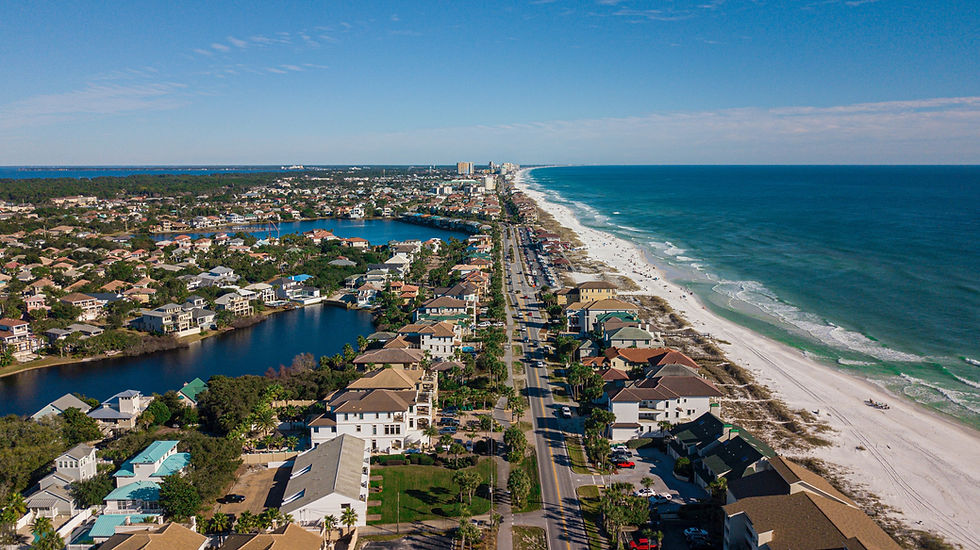
The cobblestone streets, walking paths, and walled gardensare not decorative details — they are the physical texture that makes Rosemary Beach feel like an European village rather than a Florida beach development. The narrow lanes, the interior courtyards visible through iron gates, the way the architecture closes around you as you walk from the beach access through the town — this is the sensory experience your photography and listing copy must capture. Lead with exterior shots that show the cobblestones, the shutters, the courtyard walls. The guest is buying the feeling of walking these streets, not just the square footage behind the front door.Proximity to Alys Beach and 30Avenue/Inlet Beachextends the experiential footprint of a Rosemary Beach stay. Alys Beach's white-walled Bermuda architecture, the Caliza Pool, and the Digital Graffiti festival (May 15-16, 2026) are a short walk or bike ride east. The 30Avenue retail and dining cluster at Inlet Beach provides additional evening options. The Timpoochee Trail, the 24-mile multi-use path spanning the entire 30A corridor, connects Rosemary Beach to these neighbors and to Seaside, WaterColor, and Grayton Beach to the west.
Luxury Guest Psychology: What the $900-Per-Night Guest Actually Demands
The Rosemary Beach guest profile is a refinement of the broader 30A visitor data. Walton County's Summer 2024 Visitor Tracking Study reports a corridor-wide median household income of $144,400, a median age of 53, and an average travel party of 5.3 people, with 61% traveling with at least one person under 20. Rosemary Beach guests track above these corridor averages on income and expectations. The feeder market is Southeast-concentrated and affluent: Texas 16%, Georgia 14%, Tennessee 13%, Alabama 9%, with the Atlanta DMA alone accounting for 12% of corridor visitors and Nashville at 8%. Dallas-Fort Worth contributes 7%. Seventy-five percent of Walton County visitors drive, though Rosemary Beach's luxury segment includes a higher proportion of fly-in guests via Northwest Florida Beaches International Airport (ECP), approximately 30 minutes west, and Destin-Fort Walton Beach Airport (VPS), approximately 45 minutes west.
The demand segments that define Rosemary Beach bookings are distinct from the family-vacation traffic that dominates the broader corridor.Destination weddings and rehearsal-dinner partiesrepresent a significant and high-value booking segment — the Rosemary Beach Town Center, the Pearl Hotel, and the architectural backdrop create a wedding venue that requires no decoration. These are multi-unit bookings where one party reserves two to four properties for a long weekend, often at premium rates with extended minimum stays.Multigenerational family reunions— grandparents, parents, and adult children with young kids — are the backbone of peak season. These guests book the same Rosemary Beach property or cluster of properties year after year, often six months or more in advance.Luxury couples and romantic getawaysdrive the strongest off-season demand in Rosemary Beach, filling shoulder weeks that family-only markets cannot — the Pearl's restaurant, the wine bars, the walkable evening atmosphere create a romantic-getaway product that is stronger in Rosemary Beach than anywhere else on the corridor.Remote-work parentsbooking extended shoulder-season stays represent a growing segment — they need fast, reliable Wi-Fi, a dedicated workspace, and a property quiet enough to take a conference call while the family walks to the pool.
What unites these segments is a shared expectation that luxury means consistency, not spectacle. The $900-per-night guest is not looking for a water slide, a game room, or a themed bedroom. They are looking for the confidence that every detail has been considered: that the linens are premium, that the kitchen is stocked with quality cookware, that the check-in process is seamless, that the property is immaculately clean, and that the communication from host to guest reads as both professional and personal. Luxury is the absence of friction. Your marketing must signal that absence — not by listing what you have, but by demonstrating through photography, copy, and communication that nothing has been overlooked.
The review sensitivity in this segment is extreme. A four-star review on a $200-per-night listing is recoverable. A four-star review on a $900-per-night listing shifts the conversion curve measurably — it introduces doubt at exactly the price point where the guest cannot afford doubt. Your operations are your marketing: the turnover cleaning protocol, linen quality, pre-arrival communication, mid-stay check-in, and post-checkout follow-up are all marketing touchpoints that either protect or erode your rate position. A Rosemary Beach operator who invests in photography and listing copy but uses economy-tier cleaning and communication will watch their premium positioning collapse, one review at a time.
Seasonality and the Luxury Off-Season Advantage
The 30A corridor's seasonal pattern — a 3.8-to-1 peak-to-trough revenue swing, with occupancy dropping from 65% in July to 21% in January — applies to Rosemary Beach, with one critical modification: luxury off-season demand is stronger here than in family-dominant markets. The corridor's trough months (November through January) average approximately $4,187 in monthly revenue with 25% occupancy and $510 ADR on the AirROI basis.
Rosemary Beach's rate floor holds higher, and the off-season demand segments — romantic getaways, foodie weekends, small-group celebrations — are less price-sensitive than the family-vacation segment that drives summer peaks.Peak season (June through July)books early and commands maximum rates. The 30A corridor's average booking lead time is 67 days, but Rosemary Beach's peak-season properties — particularly larger townhomes suitable for multigenerational groups and wedding parties — book six months or more in advance. Longer minimum stays (seven-night minimums are standard for peak-season luxury inventory) filter for the committed, high-spend guest and reduce turnover costs that erode margins on shorter stays.Spring break (March through April)creates a secondary peak that is particularly strong for Rosemary Beach's family segment. March ranks as the corridor's third-highest revenue month.Shoulder season (May, September, October)is when marketing efforts create the widest performance gap between actively marketed and passively listed properties. The 30A Songwriters Festival (January 16-19, 2026, 17th year, 30-plus venues across South Walton) is the corridor's most important winter demand driver. Digital Graffiti at Alys Beach (May 15-16, 2026) draws a design-and-architecture audience that aligns perfectly with Rosemary Beach's aesthetic identity.Low season (November through January)drops to approximately $3,587 per month with 20.7% occupancy and $481 ADR across the corridor, though Rosemary Beach's rate floor holds higher than the market average.
The shoulder-season strategy for a Rosemary Beach luxury listing should lean into the romantic-getaway and foodie-weekend segments rather than discounting rates to attract the price-sensitive family traveler who will never return at full rate. Shorter minimum stays (three to four nights versus peak season's seven-night requirement), curated experience content (a "Rosemary Beach Fall Wine Weekend" positioning in your listing copy, a "Winter at the Pearl" dining guide in your digital guidebook), and geo-targeted advertising to Atlanta and Nashville couples deliver higher-quality bookings at rates that protect your premium positioning. Discounting a $900-per-night property to $400 to fill a November weekend does not fill the weekend — it trains the algorithm and the guest to expect $400, and it signals to every future searcher that the property is not worth its asking rate.
Photography and Listing Optimization: Selling the European Village
Photography is the highest-leverage marketing investment for a Rosemary Beach listing, and the approach is fundamentally different from that of standard STR photography.Lead with the architecture, not the interior.Your exterior shots — the facade, the courtyard entry, the cobblestone street, the architectural details (shutters, ironwork, roofline) — are what make a Rosemary Beach listing scroll-stopping. Every luxury beach listing on 30A has a white kitchen and a king bed. Only Rosemary Beach listings have cobblestones, walled gardens, and Caribbean shutters. Photograph at golden hour when the warm light hits the stucco facades. Include streetscape context — the view down the lane, the neighboring architecture, the glimpse of a courtyard through an iron gate. These exterior shots establish the luxury positioning before the guest clicks through to the bedroom photos.
Interior photography must signal designer quality without looking staged or generic. Show the details a $900-per-night guest expects: premium linens (close-up texture shots, not just wide-angle bed shots), quality cookware and tableware, a well-lit workspace for the remote-work parent, and bathroom fixtures that read as current rather than builder-grade. Avoid the generic luxury staging — the bowl of lemons, the throw blanket artfully draped — that appears in every upscale listing. Instead, show the property in a state that suggests someone sophisticated lives there: a book on the nightstand, bikes by the courtyard gate, a wine glass on the porch. Lifestyle shots convert luxury guests; catalog shots do not. Your listing copy should mirror the photography approach: lead with the location and the experience, support with the specifics. "Your courtyard opens onto one of Rosemary Beach's cobblestone walking lanes — turn left and you are at the Town Center in three minutes, turn right and you are at the Western Green pool in two" is doing more conversion work than "Beautiful 3BR townhome with designer finishes in prestigious Rosemary Beach.".
The Direct-Booking Imperative at Luxury Rates
The economics of platform commissions at Rosemary Beach rates make direct booking not optional but essential. A $900-per-night week-long booking on Airbnb generates $400 to $700 in host-side commission, depending on the fee structure. Over a 19-booking annual average (corridor-wide), that commission leakage represents $7,600 to $13,300 per year — the equivalent of one to two full bookings lost to platform fees. With 34% of corridor visitors having returned 10 or more times and Rosemary Beach's repeat-guest loyalty running even higher, a direct-booking website is the single highest-ROI marketing investment available.
Build a professional direct-booking website with imported reviews, real-time calendar sync, and secure payment processing. The website does not need to be elaborate — it needs to be trustworthy. A clean design, professional photography, clear pricing, and a straightforward booking flow convert repeat guests who already know they want your property. Build an email list from your first guest. Segment by booking season and group type (wedding, family reunion, couples). A pre-season email to past guests offering early-access booking — "Your week is opening next Monday — book direct before it goes live on Airbnb" — is the most powerful marketing message in the Rosemary Beach operator's toolkit. Social media for a Rosemary Beach listing should lean heavily into the architectural and lifestyle content that makes the town visually distinctive. Instagram content should feature the cobblestones, the courtyards, the Town Center dining, the pool scenes, and the beach-access paths — not generic sunset shots. Use location tags for Rosemary Beach specifically, and geo-target paid social to the primary feeder DMAs: Atlanta (12%), Nashville (8%), Dallas-Fort Worth (7%), and Houston (4%). The 67-day average booking window means your March advertising captures June planners, though Rosemary Beach's longer luxury lead time means starting in January or February delivers results for summer bookings.
The Regulatory Layer: Walton County Compliance
Rosemary Beach falls within Walton County's Short-Term Vacation Rental Ordinance, approved January 24, 2023, with updated fees effective February 1, 2025. Every property rented for periods of less than 30 days requires annual registration through the county's MuniRevs portal. Prerequisites include separate registrations with the Florida Department of Revenue and the Florida DBPR for a vacation-rental license, a Walton County TDT account, and a South Walton Fire District safety inspection. Individual registration costs $300 per year, community registration costs $227 per year, and operating without registration carries a $500-per-day penalty. Renewals align with the Florida DBPR cycle, due before June 1 annually. There is no cap on STR registrations — Walton County has not implemented a moratorium, and Florida's SB 280, a statewide preemption bill, was vetoed in June 2024. The total lodging tax burden in South Walton is approximately 12%: 6% Florida state sales tax, 1% Walton County surtax, and 5% South Walton Tourist Development Tax. At Rosemary Beach's rate levels, the absolute tax amount per booking is significant — a $900-per-night, seven-night stay generates approximately $756 in lodging taxes — and should be clearly communicated in your booking flow to prevent guest surprise at checkout.
Parking and occupancy limits apply through the county ordinance and are enforced through the safety inspection process.Parking is a genuine constraint in Rosemary Beach— the town was designed for pedestrians and bikes, not SUVs. Many properties have limited on-site parking, and overflow parking requires navigating small community lots during peak season. Communicate parking availability clearly in your listing, including the number of dedicated spaces and arrival instructions specific enough to eliminate confusion. The luxury guest's first impression of your property begins in the driveway, not the living room.
Visiting Rosemary Beach: What Your Guests Need to Know
Rosemary Beach is located on the eastern end of County Road 30A in unincorporated Walton County, Florida. The nearest airport is Northwest Florida Beaches International Airport (ECP) in Panama City, approximately 30 minutes west — ECP offers direct flights from key feeder markets including Atlanta, Dallas, Nashville, and Houston. Destin-Fort Walton Beach Airport (VPS) is approximately 45 minutes west and serves direct routes from Dallas, Nashville, and Atlanta as well. Driving distances from primary feeder markets: Atlanta approximately 5.5 hours, Nashville 7 hours, Birmingham 4.5 hours, Dallas 10 hours. Seventy-five percent of Walton County visitors drive, and the arrival corridor on US-98 carries heavy summer-weekend traffic — include specific turn-by-turn directions from US-98 to your property in your pre-arrival communication.
Once in Rosemary Beach, the car becomes unnecessary, and the walkable design becomes the experience. The Town Center, all four community pools, the beach access points, and the Pearl Hotel are reachable on foot from any property in the community. The Timpoochee Trail connects Rosemary Beach to neighboring Alys Beach (a short walk east), Inlet Beach and the 30Avenue retail corridor (east), and the full 30A corridor westward through Seagrove, Seaside, WaterColor, and Grayton Beach — 24 miles of paved multi-use path ideal for biking and running. Day trips from Rosemary Beach include Seaside's Central Square and Airstream food trucks (15 minutes west by car), Grayton Beach State Park with its approximately 2,000 acres of trails and coastal dune lake paddling (20 minutes west), and Destin's HarborWalk Village and charter fishing fleet (35 minutes west). The beaches feature sugar-white quartz sand, and the water runs from emerald green to turquoise, depending on depth and season.
Rosemary Beach vs. Alys Beach: The Comparison Your Guest Is Already Making
Every prospective Rosemary Beach guest has also looked at Alys Beach. The comparison is inevitable, and your marketing should address it rather than ignore it. Alys Beach is newer, whiter (literally — the architecture is uniformly white-walled Bermuda-modern), and positions itself as the most exclusive address on 30A. Rosemary Beach is warmer, more textured (the European-village aesthetic versus Alys Beach's Bermuda-minimalist), and offers a more communal social infrastructure through the Town Center and the four community pools. Rosemary Beach reads as "sophisticated and approachable." Alys Beach reads as "exclusive and architectural." Both command top-of-corridor rates; the distinction is in the experience the guest is buying. Address this comparison in your listing or digital guidebook. A Rosemary Beach operator who can articulate why a guest should choose Rosemary over Alys — the walkable Town Center dining, the four pools, the cobblestone texture, the Pearl Hotel's bar — gives the undecided guest a reason to commit. Including Alys Beach as a day-trip destination in your guidebook positions the two communities as complementary rather than competitive, which is how the luxury 30A guest actually uses them.
Comparable Markets: Rosemary Beach in Context
Metric |
Rosemary Beach (est.) |
30A Corridor |
Alys Beach (est.) |
Seaside |
ADR |
$700–$1,200+ |
$542–$699 |
$800–$1,500+ |
$700–$1,000+ |
Inventory Scale |
~200–300 units |
3,200–7,600 |
~100–200 units |
~300 homes |
Off-Season Demand |
Strong (romantic/foodie) |
Moderate |
Strong (design/exclusive) |
Moderate-Strong |
Community Pools |
4 |
Varies |
1 (Caliza) + private |
None (beach-focused) |
Rosemary Beach's competitive position is defined by the combination of luxury rates, strong off-season demand from non-family segments, the four-pool community infrastructure, and the European-village architectural identity. The marketing challenge is not differentiation from the broader 30A market — the town does that automatically — but differentiation within the Rosemary Beach inventory itself, where every listing meets a minimum quality threshold, and the guest's decision comes down to specific positioning, photography quality, review consistency, and the operator's ability to deliver a frictionless luxury experience.
Content Prescriptions by Operator Type
Luxury Town Home Owner:Your four-plus-bedroom town home targets the multigenerational reunion and wedding-party segment. Lead with group-accommodation capacity, multiple-bathroom count, and proximity to Town Center for rehearsal dinners. Create content for "Rosemary Beach wedding rental" and "30A family reunion house."
Carriage House Operator:Position the smaller scale as an advantage for couples and small families — intimate, architecturally embedded, walkable to the pools and Town Center, and priced below the full townhome rate while maintaining the Rosemary Beach luxury positioning.
Gulf-View Premium Operator:You hold the highest-value inventory in one of the highest-value markets on the coast. Your marketing is rate-defense: immaculate photography, five-star review consistency, and a direct-booking system that captures repeat guests at full rate.
Pool-Adjacent Operator:Your proximity to one of the four community pools is a headline differentiator. Name the specific pool, include pool photos, and describe the walk from your front door. Families with young children choose based on pool convenience more than any other single amenity.
Wedding and Event Specialist:Build content explicitly targeting the Rosemary Beach wedding market — rehearsal-dinner venues at the Town Center, multi-unit booking coordination, group-rate structures. This is a high-ADR, multi-night booking segment that most operators leave unaddressed.
Shoulder-Season Luxury Specialist:Target the romantic-getaway and foodie-weekend segments with content tied to the Songwriters Festival (January), Digital Graffiti (May), and the fall shoulder season. Shorter minimum stays, curated dining guides, and couple-focused photography fill weeks that family travelers leave empty.
Remote-Work Extended-Stay Operator:Position for the 30A work-from-anywhere segment with fast Wi-Fi speed tests in your listing, dedicated workspace photos, and content about Rosemary Beach's walkable lifestyle for the parent who works mornings and takes the kids to the pool after lunch.
Keep going on Crest & Cove:Santa Rosa Beach against AirROI·Seaside against AirROI, not leftover 30A mash·the Crest & Cove intro·local SEO keywords that actually book·the five elements of a converting hero·how to compare STR marketing agencies·Destin against AirROI, not leftover year·Asheville paddling spots worth the drive. The 30A market contains AirROI Santa Rosa Beach,447 — not leftover 3,200–7,600 as the corridor year.
Keep going on Crest & Cove:Santa Rosa Beach against AirROI·Seaside against AirROI, not leftover 30A mash·the Crest & Cove intro·local SEO keywords that actually book·the five elements of a converting hero·how to compare STR marketing agencies·Destin against AirROI, not leftover year·Asheville paddling spots worth the drive. Your marketing challenge as a Rosemary Beach operator is not generating awareness — the town's reputation handles that.
Frequently Asked Questions
What kind of market is Rosemary Beach — volume or consistency?
A luxury micro-market where consistency wins — the difference between a five-star and four-star review is the difference between a $900-per-night listing that books six months out and one that sits empty waiting for a discount traveler. It is a luxury micro-market where consistency wins — where the difference between a five-star review and a four-star review is the difference between a $900-per-night listing that books six months out and one that sits empty during shoulder season waiting for a discount traveler who will never come.
What ADR does Rosemary Beach command relative to the broader 30A corridor?
It consistently exceeds the corridor average ($542 to $699 depending on source), with well-positioned townhomes and carriage houses commanding $700 to $1,200-plus per night in peak season and rate floors above $400 even in winter. Rosemary Beach listings consistently exceed the corridor average, with well-positioned townhomes and carriage houses Peak nights can print $700–$1,200. AirROI Rosemary Beach typical year is $65,951 at 36.8% — peak ADR is not the year and maintaining rate floors above $400 even in the winter trough.
What architectural style defines Rosemary Beach?
An European-influenced New Urbanist design with cobblestone streets, interior courtyards, Caribbean shutters, Bermuda-influenced rooflines, walled gardens, and pedestrian-only lanes intended to feel like a village on the Amalfi Coast. This is the eastern anchor of the 30A corridor, an European-influenced New Urbanist town built around cobblestone streets, interior courtyards, and a town center designed to feel more like a village on the Amalfi Coast than a Florida beach community.
What is the primary marketing challenge for a Rosemary Beach operator?
Not generating awareness — the town's reputation handles that — but justifying a luxury nightly rate through every touchpoint and protecting rate position against the single bad review that can crater a premium listing's conversion. Your challenge is to justify a luxury nightly rate through every touchpoint, from the first listing photo to the checkout message, and to protect your rate position against the single bad review that can crater a premium listing's conversion overnight.
What annual revenue can top-tier Rosemary Beach properties project?
$119,000 or more on the Rabbu basis for top-tier 30A properties, achieved through a combination of high rates and longer minimum stays that filter for guests willing to commit to a full week at premium pricing. Annual revenue for top-tier 30A properties projects at $119,000 or more on the Rabbu basis, and Rosemary Beach's best-performing units meet or exceed that figure through a combination of high rates and longer minimum stays that filter out guests unwilling to commit to a full week at premium pricing.
What should I photograph first?
It is a luxury micro-market where consistency wins — where the difference between a five-star review and a four-star review is the difference between a $900-per-night listing that books six months out and one that sits empty during shoulder season waiting for a discount traveler who will never come. The shoulder-season strategy for a Rosemary Beach luxury listing should lean into the romantic-getaway and foodie-weekend segments rather than discounting rates to attract the price-sensitive family traveler who will never return at full rate.
Does a 30-night setting fill the slow month?
A 30-night minimum is a platform filter. Typical stay on these extracts is still a short trip. The filter is not a filled slow month and it is not a remote-work product you did not photograph. These guests book the same Rosemary Beach property or cluster of properties year after year, often six months or more in advance.Luxury couples and romantic getawaysdrive the strongest off-season demand in Rosemary Beach, filling shoulder weeks that family-only markets cannot — the Pearl's restaurant, the wine bars, the walkable evening atmosphere create a romantic-getaway product that is stronger in Rosemary Beach than anywhere else on the corridor.Remote-work parentsbooking extended shoulder-season stays represent a growing.
Do short-term rental licenses transfer with the deed?
Rosemary Beach falls within Walton County's Short-Term Vacation Rental Ordinance, approved January 24, 2023, with updated fees effective February 1, 2025. The marketing challenge is not differentiation from the broader 30A market — the town does that automatically — but differentiation within the Rosemary Beach inventory itself, where every listing meets a minimum quality threshold, and the guest's decision comes down to specific positioning, photography quality, review consistency, and the operator's ability to deliver a frictionless luxury experience.
Related Reading
Keep reading on same-cluster Crest & Cove pages that stay on labeled local lines without costume-corridor copy.
DIY vs. Hire in Many, LA: Why Independent Hosts Still Run Most Listings
DIY or Hire in Depoe Bay: What the Numbers Say for STR hosts
DIY vs Hire in Seattle: Independents Still Write Most Listings
Financing a Springfield, MA Rental Without a Neighbor City Year
Financing a Grove, OK Rental: What a DSCR Underwriter Actually Wants
What It Actually Costs to Start a Grove OK STR: The One Published Fee
How to Underwrite an Akron, Ohio Rental With Its Own Numbers
What It Actually Costs to Register a Short-Term Rental in Akron
Work with Crest & Cove Creative
Write this town's year. Do not file another market's number as this stay.
Reach out at crestcove.co or (256) 998-7502.


Comments