
Is Temecula a Good STR Investment in 2026? Clerk First

Updated: Aug 27
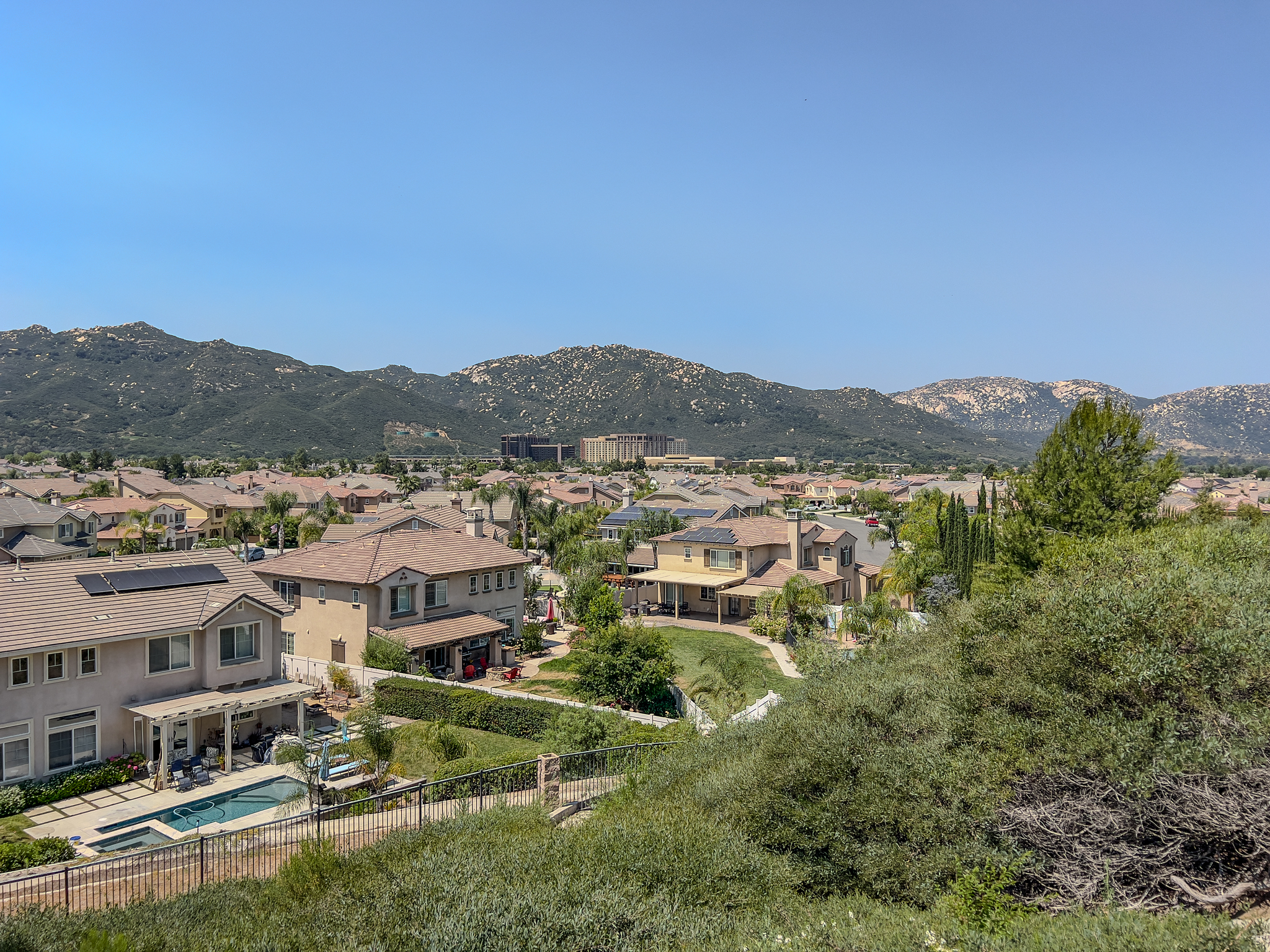
A Temecula purchase is a clerk question before it is a yield question. The AirROI cell dated 2026-08-08 prints five hundred four listings, a $55,092 clear year, and a $4,248 month. Those figures describe one active unit in the current set. They do not describe a City of Temecula house, because short-term rentals are prohibited under TMC 17.06.030. They do not describe a county house until Planning issues a 927.2 certificate. AirROI Low is a vendor badge, not the ban and not the paper.
Leftover underwriting that treated harvest from late August through October as the peak, with spring as a second thought, will buy the wrong calendar. Peak revenue month is May. The three strongest months are May, June, and October. January, February, and September are the hole, and february is the lowest revenue month. Occupancy is lowest in January and highest in October. ADR peaks in July, and do not annualize a May screenshot. Leave out unverified a weekly cut to make February look like a wine-country average.
This page is the purchase file. It will keep Temecula at $55,092, Murrieta at $39,956, and Healdsburg at $89,368, and it will not blend those extracts. If you still need the map, open therules file. For the competitive set, use themarket report. If you need the note, thefinance filesits after this underwrite, not before the GIS lookup.
Underwrite Temecula $55,092, not a blended wine-country year
Build the base case on $55,092 and $4,248 for one active Temecula-cell unit that can already list. ADR is $496, and occupancy is 34.0 percent. RevPAR is $180, and the year sits on a clear line. The median month sits on a watch line below the forty-five-hundred mark this shop prefers. Those figures are the locked inputs, and they are not Temecula Valley visitor spend. They are not Avant Stay Temecula’s $4,075,654 book, and they are not twelve Mays.
Do not divide Visit Temecula Valley’s $1.2 billion by five hundred four and call the result a door. Visitor dollars are not host dollars. Thetourism fileowns that sentence. This purchase page only needs you to lock the host year. Supply grew 14.0 percent while revenue moved minus 3.3 percent. That is more doors chasing a slightly smaller pie. A new listing does not get to invent a better average because the last listing felt tight.
Healdsburg and Murrieta stay off this line. A broker packet that pastes a Northern California plaza year or a neighbor-city year onto a Riverside County wine-country house is not a Temecula underwrite. Print this cell only. Then decide whether the expense stack still stands when January, February, and September go dark. The year clears. The median is the month you take to a lender, not a May Saturday you liked. Keep the APN next to that sentence. Keep Old Town as a day, not a bed.
The city ban is the first acquisition fact
Open the city GIS lookup before you Keep an offer. If the parcel is inside the incorporated city, the short-term rental is prohibited. TMC 17.06.030 is the citation. Council re-affirmed the existing ban on January 14, 2020, and set the fine at $1,000 per day. The city did not newly invent the ban that year. It re-affirmed a prohibition that already existed and then charged operators who listed anyway. Old Town is city. Many residential tracts are city. A mailing address that says Temecula is not the test.
A live Airbnb published market year is not a grandfather clause. A seller calendar is not a license, and the city does not issue an STR registration. A bed-and-breakfast conditional use is a different land-use paper. Hotel and motel stock is hospitality, not this certificate path. Do not coach a workaround. Do not budget 55,092 on an Old Town lot.Old Town versus wine-country filekeeps the sidewalk off the rent roll.
If you love Front Street brick, buy a house you will sleep in, or a commercial lodging use the city actually permits. Do not buy an STR thesis, and your DSCR packet cannot survive a $1,000-a-day fine. The extract can still show Old Town as a neighborhood label. Neighborhood labels are not TMC 17.06.030. Stop the deal if the GIS published market year is city. Walking distance is not a license, and the clerk file is still the product.
County 927.2 is not a maybe
Unincorporated wine country can list only if Planning issues a 927.2 certificate before anyone advertises. The initial fee is $740, and annual renewal is $540. The paper does not run with the land, and a new owner files a new certificate. Applications go through the Deckard portal. A TOT certificate from the Treasurer-Tax Collector is required before Planning will finish the STR file. Unincorporated TOT is 10 percent of gross rent including mandatory fees. The wine-country assessment adds 2 percent on stays under thirty days.
The county page splits four district caps, and winery District is 129. Residential District is 105, and equestrian District is 8. North Wine Country is 16. Certificates cannot sit within 500 feet of another certificate. No owner or entity may hold more than two. Responsible guests in Wine Country must be at least twenty-five. Class I occupancy is ten. Class II is twenty and needs the planting test in the Winery District only. January and July the county checks whether a district has fallen below its cap. If the cap is full, the lottery stays closed.
Treat those objects as deal terms, not as footnotes. A parcel outside a Wine Country district, or inside a full cap, or inside a 500-foot circle, is not a $55,092 story. Ordinance 927.3 is a draft with 2026 Board traffic, not enacted law on this page. Thestartup stackprices the live file. This purchase page only needs you to see that 927.2 is a gate, not a vibe. If the lottery is closed, the $55,092 year is not your year yet.
Murrieta $39,956 does not transfer
Murrieta is a separate extract and a neighbor city. Its $39,956 year is a comparison cell only, and it is not a Temecula floor. It is not a Temecula ceiling. It is not permission to average two Inland Empire pins and call the result wine country. Guests may drive I-15 past both towns, and the clerks do not. Temecula city’s ban and Riverside County’s 927.2 file are not Murrieta’s paper. Print the neighbor year only in the comparison column.
Do not use Murrieta occupancy, Murrieta ADR, or Murrieta neighborhood labels to rescue a Temecula city lot. Do not use Temecula’s $55,092 to dress a Murrieta purchase you have not extracted. Thecomparison filekeeps three years on three lines. This page only needs one refusal: $39,956 does not move. If the parcel is Temecula city, the number you need is the $1,000-a-day fine, not a neighbor-city year.
A buyer who wants a cheaper Inland Empire door should underwrite that city’s own extract and that city’s own clerk. A buyer who wants the vineyard corridor should budget 55,092, $4,248, 34.0 percent occupancy, and the certificate path. Mixing the two is how a packet starts lying. Print Murrieta only when you are buying Murrieta, not as a Temecula shortcut. Do not hide a banned Temecula lot under a neighbor-city year. Do not import Healdsburg’s year onto this published market year.
Healdsburg $89,368 does not transfer
Healdsburg city’s $89,368 is a different published market year, a different clerk, and a different guest. Plaza rules and a Northern California wine-country year do not travel to Rancho California Road. Temecula clears $55,092, and that is real money on a five-hundred-four-listing cell. It is not $89,368. Do not raise the Temecula base case because a broker said both towns have vines. Do not cut the Temecula base case because Healdsburg felt more established. The year stays on this market sample.
The products look similar in a photograph and they are not similar on a map. Temecula is a dual-clerk published market year: a city ban on Old Town lots and a county certificate on the vineyard corridor. Healdsburg is not that file. Keep Healdsburg in thecomparison file. Keep this offer on $55,092, $496 ADR, 34.0 percent occupancy, and the May-June-October spine. A stolen plaza year will not survive the first lender who opens both extracts.
A lender who asks why your pro forma shows $89,368 on a Temecula APN is asking the right question. Answer with this extract, dated 2026-08-08: five hundred four listings, a clear year, a watch median, supply up 14.0 percent, revenue down 3.3 percent. That is the competitive set you would join if the parcel can list. It is not a Sonoma plaza set with a Temecula caption. Bring the Temecula year or do not bring the deal.
May is not the year
May is the peak revenue month, and it is not the year. Peak-season averages on this pull sit near $7,432, 41.2 percent occupancy, and a $490 ADR. Low-season averages sit near $4,861, 31.7 percent occupancy, and a $458 ADR. The three strongest months are May, June, and October. The three weakest are January, February, and September, and february is the revenue hole. Occupancy is lowest in January. ADR is lowest in February and peaks in July.
Do not annualize a May weekend and call it $55,092. Do not treat October as a second May that erases September. September is a low on this file. Theshoulder-season calendarowns the month-by-month language. This purchase page only needs the underwrite rule: the year is the year. The median month of $4,248 is the month you stress. If the note, the tax, the 10 percent TOT, the 2 percent assessment, and the $320 median clean cannot survive that month, the deal does not survive May either.
Thirty-four percent occupancy is a wine weekend, not a seventy percent resort. More than half the available nights do not clear. Expense stacks that assume conference demand will break in the first January. Hold May, June, and October as the months that carry the file. Fund the hole. Leave out unverified a 15 to 20 percent weekly discount as a substitute for a reserve. May is a peak, and february is the hole.
17 percent PM is not a franchise vacuum
Professional management is 17.1 percent. That is not an empty field and it is not a monopoly. Avant Stay Temecula shows twenty-seven listings, $4,075,654 combined, 47.0 percent occupancy, and a $899 ADR. Sunny Days shows nineteen and $1,483,417, and fieldtrip Hospitality shows five and $1,353,253. Those totals are their books, and they are not your year. They are not permission to invent a story that no national operator is present on this pull. a published market year is not a certificate.
Cohost share is 37.1 percent, and superhost share is 64.3 percent. The set already looks finished. A purchase thesis that says you will beat the cell because you will finally hire a manager is not an underwrite.DIY versus hire fileowns the labor split. This page only needs you to see that 17.1 percent is a real layer and that most doors still run without a full-service firm.
A manager does not repeal TMC 17.06.030. A manager does not create a 927.2 slot inside a full district cap, and a manager does not move the 500-foot circle. Your year, if the parcel can list, is still $55,092 against that set. Do not buy their twenty-seven-home book. Do not use their $899 ADR as your base case. Use $496, 34.0 percent, and $4,248. Hiring is an expense after the clerk, not a substitute for the clerk.
What a purchase file must include
The file starts with the GIS printout, and city or county. If city, stop. If county, add the Wine Country district, the live cap, the 500-foot check, and the owner-entity count. Add the Deckard status, and add the treasurer TOT certificate. Add $740 and $540 as live Planning lines, hedged if the county later moves the schedule. Add 10 percent TOT and 2 percent TWCTMD on stays under thirty days. Add the sign, the sixty-minute operator, and the twenty-five-and-over guest if you are in Wine Country.
Then add the extract, dated 2026-08-08: $55,092, $4,248, $496, 34.0 percent, $180 RevPAR, May-June-October up, January-February-September down. Add the $320 cleaning median, and add a January reserve. Add the 33.1 percent thirty-plus share as a listing-setting fact, not as booked winter occupancy.remote-stay fileonly if you intend that gate. Add thehow-to fileonly after the certificate exists.
Do not add Healdsburg’s $89,368, Murrieta’s $39,956, Visit Temecula Valley’s $1.2 billion, or Avant Stay’s $4,075,654. Do not add a leftover harvest-only year or a City of Temecula license. We do not make the DSCR loan. We will not dress a banned city lot as a wine-country year. Bring the clerk answer first, then the $4,248 month, then decide whether one more legal county house can stand next to five hundred four listings. The file is the map, the paper, and this extract. It is not a harvest postcard. Print the APN, the clerk path, and the $4,248 month on the same page before anyone talks about May.
Related Reading
Related reading for Temecula, CA hosts: same-town spine first, then nearby geo lines. Skip costume national dumps that do not underwrite this driveway.
Frequently Asked Questions
Is Temecula a good short-term rental investment in 2026?
The 2026-08-08 AirROI extract shows a $55,092 clear year and a $4,248 median month on 504 listings, but that number only applies to a parcel that can legally list. A house inside the City of Temecula is banned outright under TMC 17.06.030. An unincorporated wine-country house still needs an active Riverside County 927.2 certificate before it can operate. Confirm which side of that line the parcel sits on before treating $55,092 as achievable income.
Can I underwrite a Temecula house with Healdsburg or Murrieta numbers?
No. The $55,092 clear year belongs only to the Temecula cell. Healdsburg's $89,368 and Murrieta's $39,956 are separate markets with their own clerks and guest bases, and they are comparison figures only, not substitutes. Blend in a neighbor-city number and the $4,248 median month will no longer cover the note, the 10 percent TOT, the 2 percent wine-country assessment, and the $320 median cleaning fee. Underwrite this parcel on its own extract.
Is a City of Temecula mailing address enough to list?
No. If the parcel sits inside the incorporated city limits, short-term rentals are prohibited under TMC 17.06.030, a ban the City Council reaffirmed on January 14, 2020, with a $1,000-per-day fine for operating anyway. Many residential tracts carrying a Temecula mailing address are inside the city line, including Old Town. A live AirROI market year or an active Airbnb listing elsewhere is not proof of legality — check the parcel against the city GIS lookup first.
Does a Riverside County STR certificate come with the house?
No. Ordinance 927.2 certificates do not run with the land, so a new owner must file a new application even if the seller already held one. The initial application fee is $740 and annual renewal is $540. District caps, a 500-foot spacing rule between certificates, and a two-certificate limit per owner or entity all still apply. Confirm the certificate path and the parcel's district cap status before modeling $55,092 as income.
Should I annualize a May Temecula weekend as the year?
No. May, June, and October are the three strongest months on this market sample, while January, February, and September form the seasonal hole, with February the lowest-revenue month and 34.0 percent the year-round occupancy figure. Pricing a single May weekend across all twelve months overstates the year. Older assumptions that treated a late-August-through-October harvest window as the sole peak also miss the mark — stress-test the deal against the $4,248 median month instead.
Does 17 percent professional management mean the Temecula market is saturated?
No. Professional management covers 17.1 percent of the 504 listings, led by firms like Avant Stay Temecula (27 homes, $4,075,654 combined) and Sunny Days (19 homes, $1,483,417) — but those totals describe their own portfolios, not the market as a whole. Most doors on this pull are still run independently. Hiring a manager is an added expense that comes after securing the clerk paperwork, not a substitute for it.
What has to be in a Temecula STR purchase file?
Start with a GIS printout confirming city or county jurisdiction — if it's inside the city, the deal stops there. If it's county, add the wine-country district cap status, the 500-foot spacing check, the certificate application status, and the Treasurer-Tax Collector TOT paper, budgeting $740 for the initial 927.2 application and $540 for renewal. Then attach the dated market extract: $55,092 clear year, $4,248 median month, $496 ADR, and 34.0 percent occupancy.
Is Visit Temecula Valley's $1.2 billion part of my rent roll?
No. That figure represents total valley visitor spending across lodging, food, retail, recreation, and transportation — it is not host revenue. Dividing $1.2 billion by the 504 listings in the market sample does not produce a meaningful per-door income figure. Keep tourism-economy statistics separate from the host-level numbers that actually belong on a purchase file: the $55,092 clear year and the $4,248 median month for a unit that can legally list.
Which months are strongest for Temecula STR revenue?
May, June, and October are the three strongest months on the current extract, while January, February, and September are the softest, with supply up 14.0 percent year-over-year against revenue down 3.3 percent. That combination means more listings are competing for a slightly smaller overall pie. Price the strong months accordingly, and build a January reserve rather than assuming a strong October alone will carry a soft winter.
What Wine Country district caps and rules apply to a Riverside County STR certificate?
Riverside County splits Wine Country into four certificate districts: Winery District (cap of 129), Residential District (105), Equestrian District (8), and North Wine Country (16). Certificates cannot sit within 500 feet of another certificate, and no owner or entity may hold more than two. Guests must be at least 25, and occupancy is capped at 10 for Class I or 20 for Class II. The county reviews caps each January and July, and a full district closes the lottery.
Work with Crest & Cove Creative
Short-term rentals are banned inside the City of Temecula under TMC 17.06.030 — a $1,000-a-day fine, not a gray area — so the $55,092 figure only applies to parcels outside that line.
We build listing marketing around whichever parcel status you've confirmed, never around a number that quietly ignores the citywide ban.
Reach out at crestcove.co or (256) 998-7502.


Comments